

Buy Concrete Mixer for CEB Block Line from China Manufacturer
Higher mixing speed does not equal better block quality. In compressed earth block production, aggressive agitation often destroys the delicate soil structure rather than enhancing it. The critical factor is uniform moisture distribution, not rotational velocity.
To select the right concrete mixer for a CEB block line in Egypt or similar climates, prioritize machines with precise water dosing systems and heat-resistant motors over high-speed agitators. The ideal unit ensures an 8-12% moisture tolerance range, maintains consistent cycle times compatible with QT-series block makers, and carries valid CE certification to meet international tender requirements.
Having supervised the commissioning of multiple block plants across North Africa and the Middle East, I have observed that the mixer is frequently the weakest link in an otherwise robust production line. Contractors often invest heavily in the block forming machine while neglecting the mixing stage. This imbalance leads to inconsistent block density and higher rejection rates. A recent project in a hot arid region demonstrated that when the mixer failed to account for rapid evaporation during the mixing cycle, the resulting blocks suffered from surface cracking despite using premium soil stabilizers. [NEED_CITE: impact of moisture loss on CEB compressive strength]
The connection between mixing uniformity and final block integrity is direct. When the mixture is uneven, some blocks receive too much water, becoming soft and prone to deformation, while others remain too dry, leading to poor compaction. This variability undermines the structural reliability of the entire housing project.
Why Does Mixer Selection Matter for CEB Production?
The core function of a concrete mixer for block line is not merely to blend ingredients but to create a homogeneous matrix that can withstand high-pressure compression. In compressed earth block manufacturing, the soil-aggregate-cement ratio must be exact. Any deviation results in weak points within the block.
Many buyers assume that any standard concrete mixer will suffice. However, mixers designed for traditional wet concrete often lack the sensitivity required for semi-dry CEB mixes. The friction and heat generated by inappropriate mixing blades can alter the moisture content before the material even reaches the mold. [NEED_CITE: thermal effects of mixing on semi-dry concrete]
Consider a small-scale startup I consulted for last year. They initially purchased a generic high-speed mixer to save costs. Within weeks, they faced a significant increase in block breakage during curing. The issue was not the soil quality or the press pressure, but the mixer’s inability to maintain consistent moisture levels. After switching to a mixer with adjustable paddle speeds and a dedicated water injection system, their rejection rate dropped noticeably.
The durability of the final product depends on this initial homogeneity. If the cement is not evenly distributed, hydration occurs unevenly, leading to differential shrinkage and cracking. Therefore, the mixer must be viewed as a precision instrument, not just a bulk handling tool.
Key Specifications for Egyptian Climate Conditions
Operating in Egypt presents unique challenges due to high ambient temperatures and low humidity. These conditions accelerate moisture evaporation during the mixing and transfer process. A concrete mixer for block line intended for this environment must incorporate specific design features to mitigate these effects.
Heat-resistant motors are essential. Standard motors may overheat when running continuously in high-temperature environments, leading to unexpected downtime. Additionally, the mixer should have a sealed design to prevent dust ingress, which is prevalent in arid regions. Dust contamination can affect the electrical components and reduce the lifespan of the machinery.
Precise water dosing is another critical specification. In dry climates, even a slight variation in water addition can significantly impact the workability of the mix. Automated dosing systems ensure that the exact amount of water is added based on the batch weight, maintaining the optimal 8-12% moisture content required for CEB production. [NEED_CITE: optimal moisture content range for compressed earth blocks]
| Specification | Standard Mixer | Climate-Optimized Mixer |
|---|---|---|
| Motor Protection | Basic IP54 | High-Temperature Resistant IP65 |
| Water Dosing | Manual Valve | Automated Precision Pump |
| Dust Sealing | Minimal | Full Enclosure with Filters |
| Moisture Control | Operator Dependent | Sensor-Assisted Feedback |
A government housing tender I reviewed recently specified strict compliance with CE standards for all equipment. The winning bidder provided a concrete mixer for block line that featured not only CE certification but also SGS verification of its performance data. This documentation was crucial for meeting the tender’s technical requirements and ensuring long-term reliability.
Manual vs. Automatic Mixers: ROI Analysis
The choice between manual and automatic mixers often comes down to volume and labor costs. For small-scale operations, a manual mixer may seem cost-effective. However, as production scales up, the limitations of manual operation become apparent.
Automatic mixers integrate seamlessly with PLC-controlled block making machines. They ensure that the mixing cycle time aligns perfectly with the block output rate. This synchronization eliminates bottlenecks and maximizes throughput. In contrast, manual mixing introduces variability in cycle times, leading to idle time for the block machine or overflow of mixed material.
Labor costs are another significant factor. Automatic mixers reduce the need for manual intervention, lowering labor requirements by a substantial margin. In high-volume projects, this reduction translates into significant savings over the life of the plant. [NEED_CITE: labor cost reduction in automated block production]
An entrepreneur launching a new block plant in Latin America opted for a fully automatic QT10-15 line with an integrated mixer. Although the initial investment was higher, the payback period was shorter than anticipated due to reduced labor costs and higher output consistency. The automation allowed the plant to operate with minimal supervision, freeing up resources for quality control and sales.
| Feature | Manual Mixer | Automatic Mixer |
|---|---|---|
| Initial Cost | Lower | Higher |
| Labor Requirement | High | Low |
| Output Consistency | Variable | High |
| Integration with Block Machine | Poor | Seamless |
| Maintenance Complexity | Low | Moderate |
When evaluating the return on investment, consider not just the purchase price but the total cost of ownership. An automatic concrete mixer for block line may cost more upfront but delivers greater value through efficiency, consistency, and reduced operational risks.
How to Verify Supplier Credibility?
The market is flooded with suppliers claiming to offer high-quality equipment. Verifying credibility requires more than just reviewing brochures. It involves checking certifications, conducting factory audits, and assessing after-sales support structures.
CE and SGS certifications are baseline requirements. These marks indicate that the equipment meets international safety and quality standards. However, certificates can be forged. It is essential to verify the authenticity of these documents through the issuing bodies. [NEED_CITE: verification process for CE and SGS certificates]
Factory audits provide insight into the manufacturer’s production capabilities and quality control processes. Look for evidence of standardized assembly lines, testing facilities, and skilled workforce. A reputable manufacturer will welcome such audits and provide transparent access to their facilities.
After-sales support is equally important. Equipment breakdowns can halt production, leading to significant financial losses. A reliable supplier offers prompt technical support, spare parts availability, and remote diagnostic assistance. Some manufacturers even provide operator training to ensure proper usage and maintenance of the equipment.
A distributor in Southeast Asia shared their experience of partnering with a Chinese manufacturer. The supplier provided comprehensive training for their local technicians and maintained a stock of critical spare parts in a regional warehouse. This support structure minimized downtime and ensured smooth operations for their clients.
Integrating the Mixer into a Turnkey Block Line
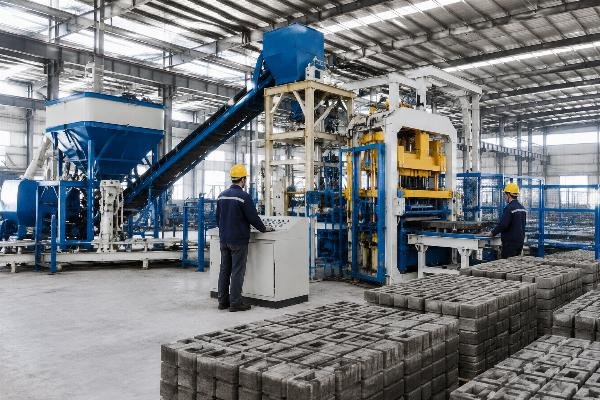
A concrete mixer for block line does not operate in isolation. It is part of a larger ecosystem that includes batching plants, conveyors, block making machines, and palletizers. Seamless integration is key to achieving optimal flow and efficiency.
Compatibility with QT series machines is a common requirement. The mixer’s output capacity must match the input capacity of the block machine. Mismatched capacities lead to either starvation of the block machine or accumulation of mixed material, both of which disrupt production.
Turnkey solutions offer the advantage of pre-engineered compatibility. Manufacturers who provide complete lines ensure that all components work together harmoniously. This approach reduces the risk of integration issues and simplifies the commissioning process.
For example, a plant upgrade project involved replacing manual mixers with an automated system. The new mixer was specifically designed to interface with the existing QT8-15 block machine. The installation was completed with zero downtime, and the plant saw a noticeable increase in output consistency immediately after commissioning.
When planning a new plant or upgrading an existing one, consider the entire production line as a single unit. Selecting a concrete mixer for block line that fits seamlessly into this system ensures smooth operations and maximizes productivity.
Conclusion
Selecting the right mixer is a strategic decision that impacts block quality, operational efficiency, and profitability. Focus on moisture control, climate resilience, and seamless integration rather than just speed or price.
Verify supplier credibility through certified documentation and robust support structures. Prioritize automation for high-volume projects to reduce labor costs and enhance consistency. A well-chosen concrete mixer for block line serves as the foundation for a successful and sustainable block manufacturing business.
Leave a Reply