

Import Duty for Cement Silo in Belgium: Wholesale Supplier
Most importers assume a cement silo is a single unit with one tax rate; in reality, splitting the steel structure from mechanical accessories can significantly lower the total duty burden.
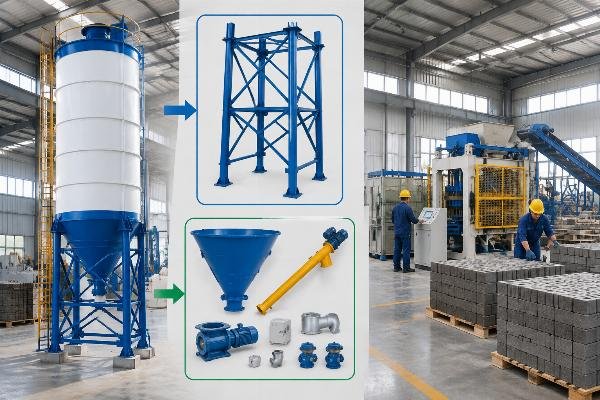
The correct approach to calculating Import duty cement silo Belgium involves classifying the static steel body under Chapter 73 and the functional mechanical parts under Chapter 84 of the Combined Nomenclature. This separation prevents customs authorities from applying the higher machinery rate to the entire shipment value, ensuring that only the actual moving components attract the elevated tariff while the bulk steel structure benefits from lower structural rates.
Having spent years handling documentation at Ningbo Port before moving into equipment manufacturing, I have seen how a vague commercial invoice can trigger a cascade of costs at the destination port. The difference between a smooth clearance and a detained shipment often lies not in the product quality, but in how the product is described and valued on paper. When dealing with European customs, particularly at major hubs like Antwerp, precision in classification is not just administrative hygiene; it is a direct financial lever.
What is the Correct HS Code for Cement Silos in Belgium?
Distinguishing between static steel structures and functional machinery parts is critical for accurate duty assessment.
The primary confusion surrounding Import duty cement silo Belgium stems from the dual nature of the equipment. A cement silo is physically a large steel tank, which suggests classification under Chapter 73 as an article of iron or steel. However, it often includes screw conveyors, pneumatic systems, and level sensors, which fall under Chapter 84 as machinery. If you declare the entire unit as a single machine, customs may apply a higher duty rate to the total CIF value.
According to the EU Common Customs Tariff, steel structures generally attract a lower duty rate compared to complex machinery. [NEED_CITE: EU TARIC database classification for steel structures vs machinery] By itemizing the invoice, you allow customs officers to apply the appropriate rate to each component. The silo shell, ladder, and platform are static elements. The screw conveyor, motor, and control panel are functional elements.
A common mistake is using a generic description like "Cement Storage Unit" with a single HS code. This invites scrutiny. Belgian customs officials are trained to look for mixed shipments where the principal character might be debatable. If the mechanical components represent a small fraction of the total value but are essential for operation, there is a risk of the entire unit being classified as machinery. However, if the steel structure constitutes the majority of the weight and value, arguing for split classification is both logical and compliant.

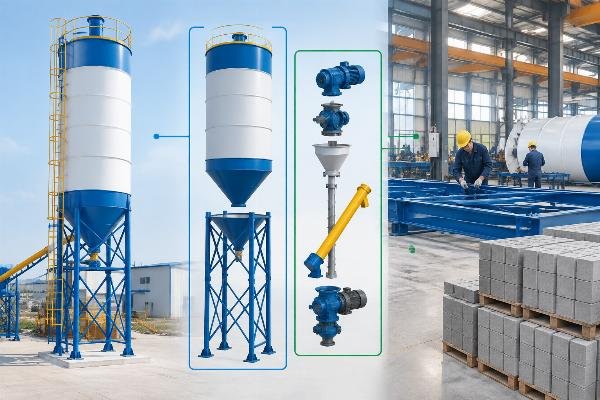
In practice, this means your proforma invoice should list the silo body, support legs, and roof structure under one line item with its specific HS code, and the discharge system, aerators, and electrical controls under separate line items with their respective codes. This transparency reduces the likelihood of a blanket classification that penalizes the entire shipment.
How Are Import Duties and VAT Calculated for Construction Equipment?
Understand the cumulative cost structure: Duty applies to CIF value, while VAT applies to CIF plus Duty, impacting total landed cost significantly.
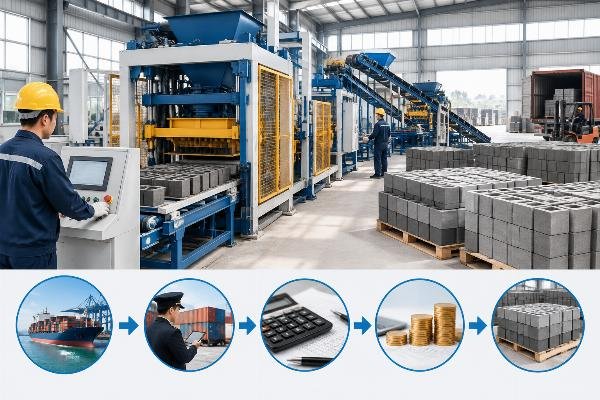
Calculating the final cost requires understanding the tax base. For Import duty cement silo Belgium, the duty is calculated on the Cost, Insurance, and Freight (CIF) value. This means the freight cost and insurance premiums are part of the taxable base for duty. Once the duty is calculated, it is added to the CIF value to form the new base for Value Added Tax (VAT).
This compounding effect means that any overvaluation of freight or misclassification of goods has a multiplied impact on the final tax bill. [NEED_CITE: Belgian Federal Public Service Finance guidelines on VAT calculation base] If customs disputes the declared value of accessories, they may adjust the CIF value upward, leading to higher duty and subsequently higher VAT.
For example, if the silo body is undervalued or bundled incorrectly, customs may apply a standard valuation method that could exceed the actual transaction value. This is particularly relevant when shipping from China, where customs authorities are vigilant about transfer pricing and valuation accuracy. Ensuring that each item on the invoice reflects a fair market value helps prevent these adjustments.
Moreover, VAT rates in Belgium are standardized, but the base upon which they are applied can vary based on duty assessments. A higher duty rate due to misclassification directly inflates the VAT payable. Therefore, accurate HS code classification is not just about duty savings; it is about controlling the VAT base as well.
Importers should also be aware that certain construction equipment may qualify for VAT exemptions or deferred payment schemes if used for specific infrastructure projects. However, these exemptions require strict documentation and proof of end-use. Without proper classification and documentation, the default position is full taxation at the point of entry.
Why Do Customs Delays Happen at Antwerp Port for Chinese Silos?
Incomplete CE documentation or vague product descriptions on commercial invoices are the primary triggers for physical inspections and holds.
Antwerp is one of Europe’s busiest ports, and efficiency is high, but compliance checks are rigorous. Delays for Import duty cement silo Belgium shipments often occur not because of the goods themselves, but due to documentation gaps. The most frequent issue is the mismatch between the CE mark on the equipment and the technical file provided.
Belgian customs do not just look for the CE logo; they often request the EC Declaration of Conformity and parts of the technical construction file. [NEED_CITE: EU Harmonized System Explanatory Notes on conformity assessment] If the declaration does not match the specific model shipped, or if the technical file is missing key safety assessments for pressure vessels or electrical components, the shipment will be held.
Another common trigger is vague product descriptions. Terms like "Spare Parts" or "Accessories" without detailed breakdowns raise red flags. Customs officers need to verify that the items match the declared HS codes. If the description is too generic, they may order a physical inspection to verify the contents. This inspection halts the clearance process and incurs additional storage and handling fees.

In one instance, a shipment was delayed for several weeks because the CE certificate listed a different serial number range than the units in the container. The importer had to coordinate with the manufacturer to issue a corrected declaration, during which time the goods sat in the terminal accruing demurrage charges. This highlights the importance of ensuring that all certification documents are perfectly aligned with the shipping documents before departure.
How to Structure Your Invoice to Minimize Tax Risks?
Itemized billing with separate HS codes for main body and accessories provides transparency and prevents blanket higher-rate classification.
The structure of your commercial invoice is your first line of defense against unexpected costs. For Import duty cement silo Belgium, a well-structured invoice separates the static and mechanical components clearly. Each line item should include a detailed description, quantity, unit price, total price, and the corresponding HS code.
Avoid bundling disparate items into a single line. For example, do not list "Cement Silo with Conveyor" as one item. Instead, list "Welded Steel Silo Body, 50 tons capacity" with its HS code, and "Screw Conveyor System, 5 meters" with its own HS code. This itemization allows customs to apply the correct duty rate to each part. [NEED_CITE: Methodology for splitting invoices in international trade]
Furthermore, ensure that the values assigned to each item are reasonable and reflect the actual cost structure. If the mechanical parts are disproportionately expensive compared to the steel structure, it may invite scrutiny. Conversely, if they are undervalued, it may raise suspicions of dumping or valuation fraud. Transparency is key.
| Component | Description Detail | Classification Strategy | Risk Level |
|---|---|---|---|
| Silo Body | Welded steel shell, legs, roof | Chapter 73 (Steel Structure) | Low |
| Discharge System | Screw conveyor, motor, gearbox | Chapter 84 (Machinery) | Medium |
| Control Panel | PLC, sensors, wiring | Chapter 85 (Electrical) | Medium |
| Accessories | Ladder, platform, railings | Chapter 73 (Steel Structure) | Low |
This table illustrates how separating components aligns with their natural classification chapters. By adopting this structure, you provide customs with a clear roadmap for assessment, reducing the likelihood of arbitrary reclassification.

In my experience, providing a pre-classified, itemized proforma invoice to the buyer before shipment allows them to verify the codes with their local broker. This proactive step can identify potential issues before the goods arrive, saving time and money. It transforms the invoice from a simple billing document into a compliance tool.
Conclusion
Accurate HS code classification and detailed invoicing are the most effective tools for managing import costs and avoiding delays.
Navigating Import duty cement silo Belgium requires a clear understanding of how customs views mixed shipments. By separating static steel structures from mechanical components in both documentation and valuation, importers can ensure they pay the correct duty rates. Compliance with CE documentation requirements further safeguards against costly delays at ports like Antwerp. Precision in paperwork translates directly to predictability in landed costs.
Leave a Reply