

Multi-Site Compressed Earth Block Palletizer Manufacturer for Sale
Customizing equipment for each site creates hidden logistical nightmares.
Standardizing block palletizer specifications across multiple production sites simplifies logistics, accelerates customs clearance, and ensures uniform product quality for large-scale sustainable housing initiatives.
The smell of diesel and wet concrete is distinct, but the scent of stagnant cargo sitting in a tropical port is far more pungent. I have stood on docks where containers labeled as "construction machinery" were held for weeks because the declared Harmonized System (HS) code did not match the automation level of the internal components. A single discrepancy between a manual lever system and a PLC-controlled arm can trigger a full physical inspection, halting an entire project timeline. For contractors managing multi-site developments, the temptation to tailor each production line to local conditions often backfires. The complexity of maintaining different spare parts inventories and training operators on varied interfaces outweighs any perceived site-specific benefit. [NEED_CITE: impact of supply chain complexity on construction project timelines]
This reality drives the shift toward uniformity. When a developer commissions several plants across different regions, the goal is not just production capacity but operational predictability. A Multi-Site Compressed Earth Block Palletizer Manufacturer for Sale must offer more than just hardware; they must provide a replicable system that survives the rigors of international shipping and local regulatory scrutiny.
Why Do Multi-Site Projects Fail at Customs?
Inconsistent documentation and equipment specifications are the primary drivers of costly port delays.
Customs officials do not inspect bricks; they inspect paperwork. When a shipment arrives, the declared value and classification must align perfectly with the physical goods. In many emerging markets, the difference between a semi-automatic machine and a fully automatic one lies in the control panel and the palletizing mechanism. If the invoice lists a basic mechanical unit but the container holds a PLC-driven Multi-Site Compressed Earth Block Palletizer Manufacturer for Sale solution, the discrepancy raises red flags.
I recall a shipment destined for West Africa where the palletizer was integrated into the main block making line. The documentation treated it as an accessory, while the physical inspection revealed a sophisticated robotic arm. This mismatch led to a reclassification dispute. The cargo sat idle, accruing demurrage fees that quickly surpassed the cost of the machine itself. The root cause was not malice but a lack of standardization in how the equipment was described and coded. [NEED_CITE: common causes of customs delays for industrial machinery imports]
To avoid this, the technical specifications must be transparent and consistent. The HS code should reflect the highest level of automation present in the unit. If the palletizer uses programmable logic controllers, the documentation must state this clearly. Standardizing these details across all sites ensures that every container faces the same scrutiny level, reducing the risk of unexpected hold-ups. A Multi-Site Compressed Earth Block Palletizer Manufacturer for Sale that provides pre-verified CE and SGS certification documents helps mitigate this risk by offering third-party validation of the equipment’s capabilities.
How Does Standardization Streamline Operations?
Uniform palletizers ensure consistent block quality and significantly reduce operator training time.
Quality control in compressed earth block (CEB) production is heavily dependent on the final handling stage. The way blocks are stacked and cured affects their density and structural integrity. If one site uses a manual stacking method and another uses an automated cuber, the resulting product will have different characteristics. This inconsistency is unacceptable for government contracts that require uniform material standards across multiple housing projects.
By deploying identical PLC-controlled palletizing units, manufacturers can guarantee that block dimensions and density remain within tight tolerances. The pressure applied during the palletizing process is consistent, leading to uniform curing. This uniformity is critical for achieving CE certification compliance, which often dictates the upstream mixing and molding parameters. [NEED_CITE: role of post-molding handling in concrete block strength consistency]
From an operational standpoint, standardization simplifies human resource management. Operators trained on one site can seamlessly transfer to another without relearning complex interfaces. The learning curve drops noticeably when the control panels, emergency stops, and maintenance points are in the same locations across all machines. This mobility allows companies to deploy experienced staff to new sites quickly, ensuring faster ramp-up times. A Multi-Site Compressed Earth Block Palletizer Manufacturer for Sale that offers unified control systems enables remote diagnostics, allowing central technical teams to support multiple sites simultaneously.
What Are the Key Logistics Benefits?
Simplified spare parts management and faster clearance through accurate HS coding drive efficiency.
Managing a supply chain for multiple production sites is a logistical puzzle. When each site has unique equipment, the spare parts inventory becomes fragmented. A broken sensor at one site cannot be replaced by a part from another if the models differ. This fragmentation leads to excessive stockpiling of rarely used components and critical shortages of common ones.
Standardizing the palletizer model across all sites consolidates the spare parts requirement. A single inventory pool can serve multiple locations, reducing the total capital tied up in stock. Furthermore, bulk ordering of identical units often secures better pricing and prioritized shipping from the manufacturer. The logistics of moving these units also benefit from standardization. Container loading plans can be optimized for identical pallet patterns, maximizing space utilization and reducing shipping costs per unit. [NEED_CITE: economic benefits of standardized spare parts inventory in manufacturing]
The clarity in documentation extends to insurance and financing as well. Lenders and insurers prefer assets with verifiable, standard specifications. A Multi-Site Compressed Earth Block Palletizer Manufacturer for Sale that provides detailed, consistent technical dossiers for each unit simplifies the appraisal process. This transparency reduces the administrative burden on project managers, allowing them to focus on construction timelines rather than paperwork disputes.
How to Implement a Standardized Line?
Choose turnkey solutions with integrated PLC controls and certified documentation for seamless deployment.
Implementing a standardized system requires careful planning from the outset. It is not enough to simply order the same machine twice; the integration with upstream and downstream processes must be consistent. The batching plant, mixer, and block maker must all communicate with the palletizer using the same protocols. This integration ensures that the production flow is balanced and that bottlenecks are identified and resolved centrally.
The first step is to define the technical specifications clearly. This includes the power requirements, hydraulic pressures, and control software versions. These specifications should be locked in before placing orders for any site. The next step is to verify the certification status. Ensure that the manufacturer provides CE and SGS certificates that cover the entire line, including the palletizer. These documents are essential for customs clearance and local regulatory approval. [NEED_CITE: importance of CE certification for machinery exports to European and African markets]
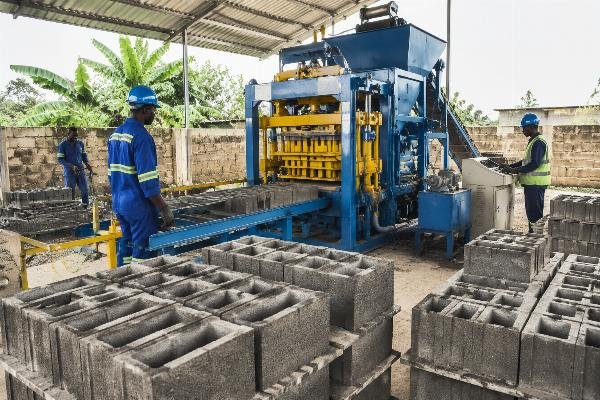
Training is the final critical component. Develop a standardized training module that covers operation, maintenance, and troubleshooting. This module should be delivered by the manufacturer’s technical team during the initial installation. Remote support capabilities should be established early, with secure access granted to central engineers. A Multi-Site Compressed Earth Block Palletizer Manufacturer for Sale like Shiyue offers turnkey QT series lines that come with these integrated features, ensuring that each site is a replica of the last in terms of performance and reliability.
Conclusion
Standardization is the key to unlocking efficiency in multi-site CEB projects.
By aligning equipment specifications, documentation, and training across all locations, developers can eliminate the hidden costs of customization. This approach not only speeds up customs clearance but also ensures consistent product quality and operational resilience. Choosing a partner who understands these logistical nuances is essential for successful global deployment.
Leave a Reply