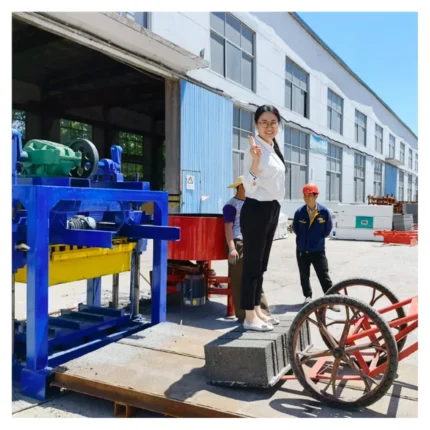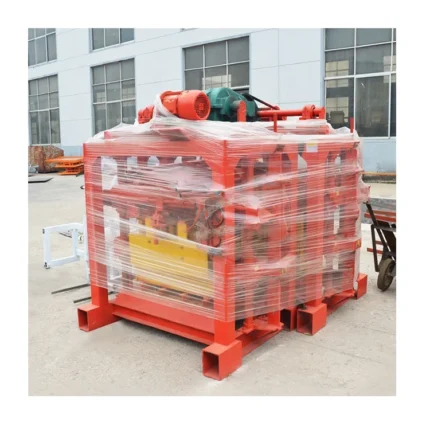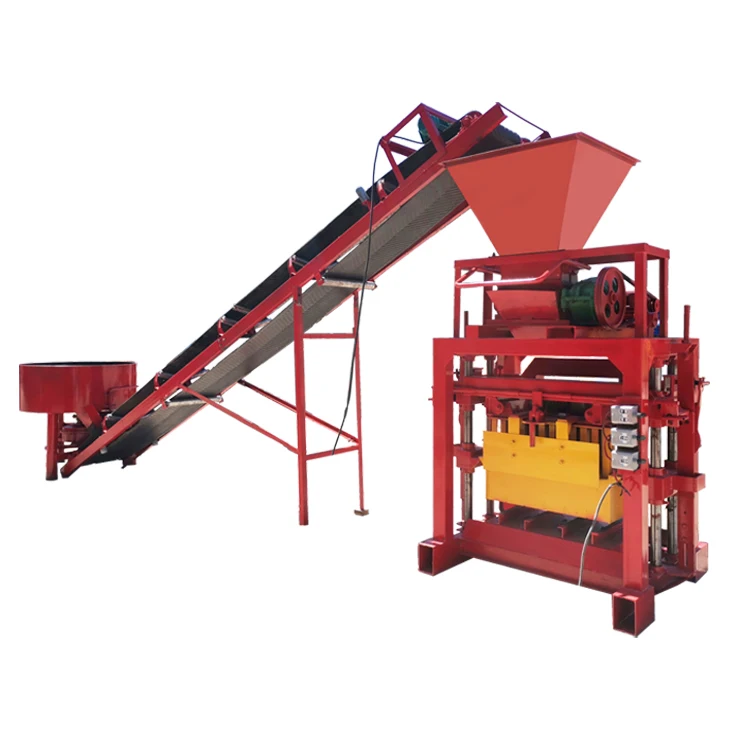



Description
Intelligent control configuration — every QTJ4-35 leaves the workshop with its control panel tested in the buyer’s language, preventing day-one commissioning failures.
Technical Specifications
| Parameter | Value |
|---|---|
| Model | QTJ4-35 |
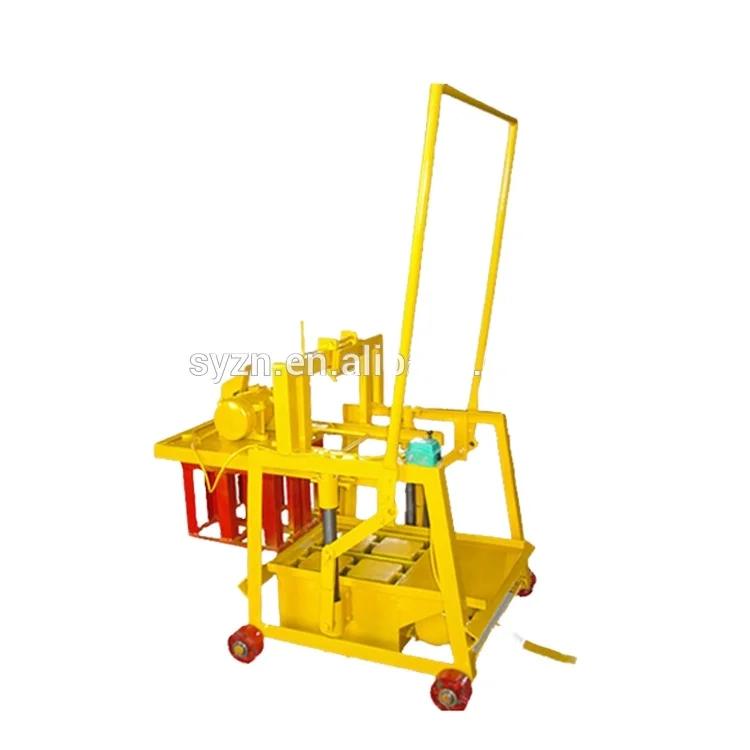
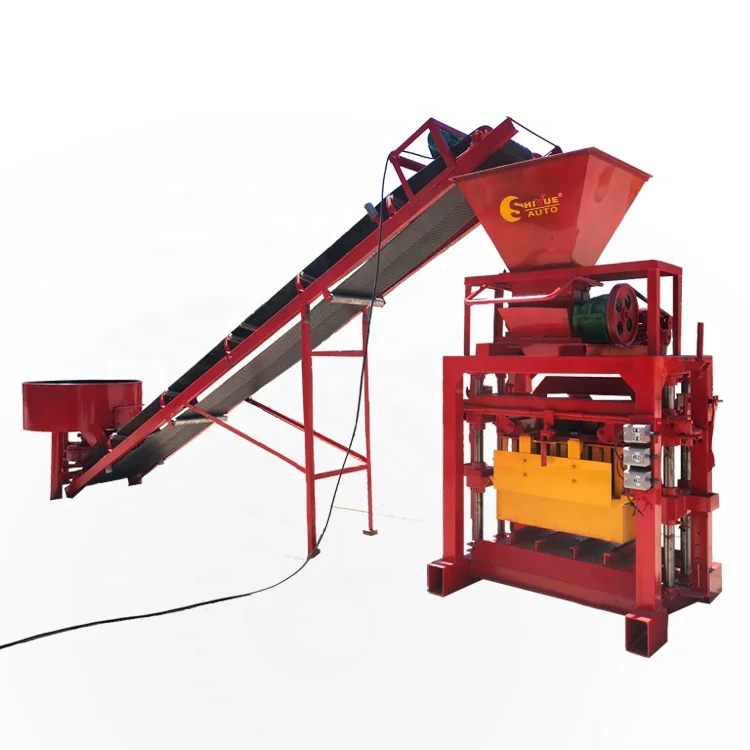
| Product Type | Concrete Block Making Machine |
| Overall Dimensions (L×W×H) | 1350×1460×1800 mm |
| Molding Cycle | 35 s |
| Vibration Frequency | 2800 r/min |
| Exciting Power (Vibration Force) | 30 kN |
| Rated Power | 11.15 kW |
| Mixer Model | JQ350 |
| Pallet Size | 850×450×20 mm |
| Net Weight | 1500 kg |
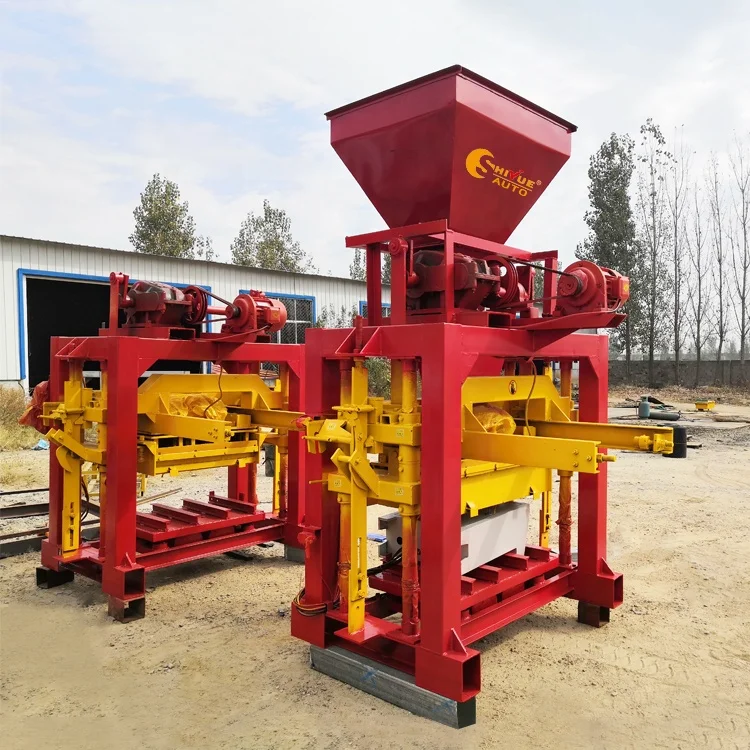
| Frame Construction | Four-lead guide, channel steel stand |
| Mould Compression | Upper mould and bottom mould compression |
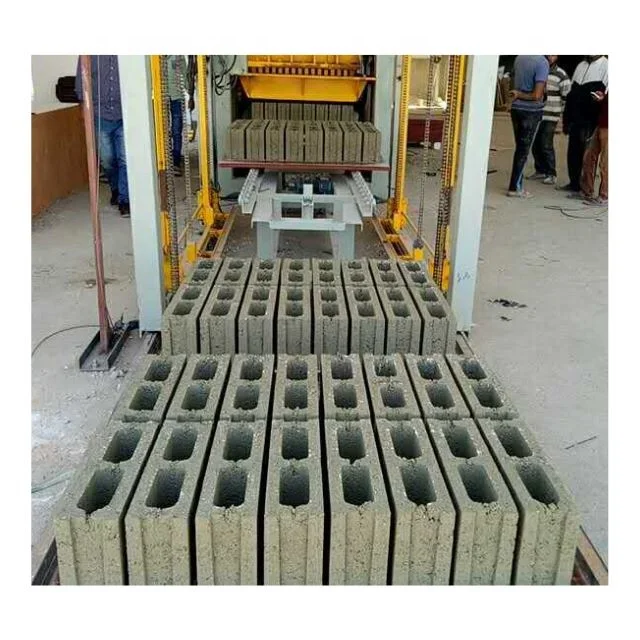
| Applied Products | Concrete hollow block (8 inch, 6 inch), solid brick |
| Output Capacity (Hollow Block 400×200×200 mm) | 408 pcs/hr, 3264 pcs/8hr (based on 4 pcs/mould) |
| Output Capacity (Hollow Block 400×150×200 mm) | 510 pcs/hr, 4080 pcs/8hr (based on 5 pcs/mould) |
| Output Capacity (Solid Brick 240×115×53 mm) | 2100 pcs/hr, 17000 pcs/8hr (based on 18 pcs/mould) |
| Automation Level | Semi-automatic / Manual pallet handling (basis to be confirmed) |
| Control System | PLC or relay-based (basis to be confirmed) |
| Voltage & Frequency | Configurable per buyer’s market (basis to be confirmed) |
| Raw Materials | Crushed stone, sand, cement, dust, fly ash |
Application Suitability
| Application | Material or Output |
|---|---|
| Small-scale hollow block production | Crushed stone, sand, cement and fly ash mixes for 8-inch and 6-inch hollow blocks |
| Solid brick manufacturing | Cement and sand blends for 240×115×53 mm solid bricks |
| On-site block production for contractors | Local aggregate and cement for construction-grade hollow blocks |
| First plant setup for entrepreneurs | Fly ash, dust and cement combinations for entry-level block output |
Why the Control Panel Language Must Be Confirmed Before Crating
An unreadable HMI stalls commissioning before the first block is pressed.
I once watched a block machine sit idle in a Nigerian workshop for three days because the HMI displayed every menu in Chinese. The operator could not navigate a single screen, and the local electrician had no way to interpret fault codes. The automatic QTJ4-35 block machine ships with configurable PLC display language, but only if the buyer specifies the required language at the order stage. Leaving this detail to post-shipment discovery turns a straightforward installation into a multi-day troubleshooting exercise [NEED_CITE: common commissioning delays caused by unconfirmed control language in exported machinery].
How Automation Level Shapes Daily Operation
The QTJ4-35 occupies a position where buyers choose between manual pallet handling and semi-automatic pallet feeding. This decision determines how many operators stand on the production floor during each shift. A PLC controlled concrete block machine at the semi-automatic level removes the heaviest manual steps from the cycle, while the base configuration keeps the investment accessible for first-time plant owners.
The Upgrade Path From Semi-Automatic to Full Line Control
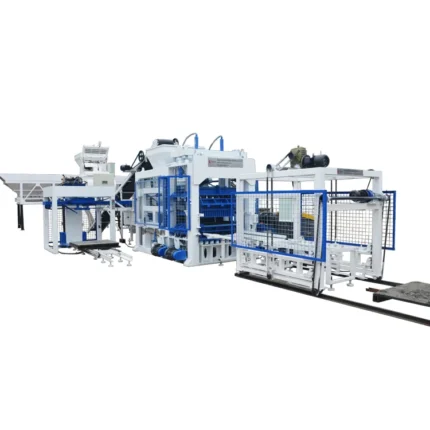
Starting with the QTJ4-35 in semi-automatic mode does not lock the buyer into that configuration permanently. The control architecture allows additional stations — automatic stacking, curing rack handling, cubing — to be integrated later as production volume justifies the expansion. This PLC controlled concrete block machine approach lets a plant owner match capital spending to actual market demand rather than over-investing on day one [NEED_CITE: modular automation expansion in concrete block production lines].
Reading the Specifications That Actually Determine Block Quality
The vibration force of 30 kN at 2800 r/min must work in concert with the upper and bottom mould compression to produce consistent block density. If the local aggregate is coarse or the mix design leans heavily on fly ash, the vibration parameters may need adjustment to achieve the target compressive strength. The four-lead guide and channel steel frame keep the press stable through each 35-second molding cycle, preventing mould misalignment that causes dimensional drift over a long production run. The pallet size of 850×450×20 mm must match the curing rack spacing and forklift fork width already in the buyer’s facility — a mismatch here forces the plant to replace either the pallets or the handling equipment.
What Happens When Voltage and Frequency Are Assumed
Arriving at a job site to find the local supply is 440V/60Hz while the machine was built for 380V/50Hz means the motor will not start, and the PLC may not boot. Rewinding motors and replacing contactors on-site adds weeks to a project timeline. The automatic QTJ4-35 block machine requires voltage and frequency confirmation at the quotation stage so the electrical cabinet is built correctly before the machine enters the container [NEED_CITE: voltage and frequency standards by export market].
Why Configuration Is Matched Before Production Begins
The QTJ4-35 is configured against the buyer’s actual raw material profile and target block format, not pulled from a catalogue default. The vibration force, mould compression and cycle timing are verified together so that block density remains consistent across batches. Every control panel is tested live in the buyer’s specified language before crating, eliminating the most common day-one commissioning obstacle. The pallet specification is cross-checked against the buyer’s existing curing area and forklift to prevent handling mismatches after arrival. Documentation includes the factory test record, hydraulic and electrical schematics, and a wear parts list so the first replacement order can be placed without delay.
Documentation & Verification
- Factory test record showing cycle timing on your specified block format before dispatch
- PLC display language confirmation sheet signed off prior to crating
- Hydraulic and electrical schematic matching the as-built voltage and frequency
- Pallet specification cross-referenced with your curing rack and forklift dimensions
- Wear parts and mould list included for first replacement planning
Installation, Commissioning & Support
- Foundation must support 1500 kg net weight plus dynamic vibration load across the 1350×1460 mm footprint
- Dedicated electrical circuit required for 11.15 kW rated power at the confirmed voltage and frequency
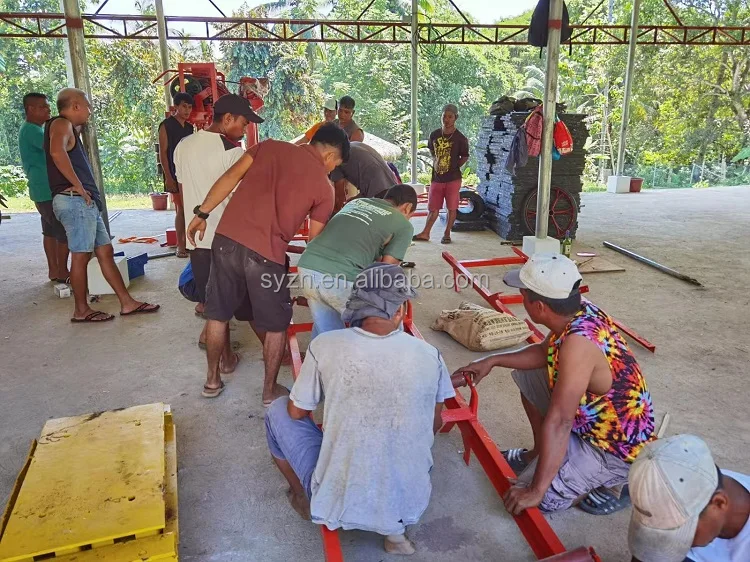
- Machine ships partially assembled with four-lead guide and channel steel frame pre-mounted
- First-cycle parameter setting covers vibration frequency, molding cycle and mould compression calibration
- Operator training covers PLC navigation, fault code reading and mould changeover procedure
- Wear parts list supplied for planning first replenishment order of hydraulic and mould components
What to Share When Requesting a Quotation
Provide the block format your market sells most, the daily volume you need to sustain, and the raw materials available locally including aggregate type and cement grade. Specify your facility’s voltage, frequency and the control display language your operators read. If you already have curing racks, pallets or forklifts on site, share their dimensions so the automatic QTJ4-35 block machine configuration aligns with your existing handling equipment.
Frequently Asked Questions
Q: What control system does the QTJ4-35 use and what language options are available?
A: The QTJ4-35 can be configured with PLC control or relay-based operation depending on the buyer’s automation preference. The PLC display language is confirmed at order stage and tested before shipment. Available languages cover the major operating regions, and the specific language is locked in before the electrical cabinet is closed.
Q: Is pallet feeding and stacking included in the base configuration?
A: The base QTJ4-35 ships as a semi-automatic machine with manual pallet handling. Automatic pallet feeding, stacking and cubing are available as separate stations that can be added at initial order or integrated later. The upgrade path is built into the control architecture.
Q: How is vibration force matched to my local aggregate and mix design?
A: The 30 kN vibration force at 2800 r/min is evaluated against the buyer’s specific raw material profile before production. If the local aggregate is unusually coarse or the mix relies heavily on fly ash, the vibration parameters and mould compression are adjusted to maintain consistent block density across every cycle.
Q: How long does a mould changeover take on the QTJ4-35?
A: The mould change procedure involves releasing the upper and bottom mould compression, lifting the current mould from the four-lead guide frame, and seating the replacement. The exact changeover time depends on operator familiarity and whether the mould lifting tool is included in the line configuration.
Q: Can the QTJ4-35 be upgraded to a fully automatic line later?
A: Yes. The PLC controlled concrete block machine supports integration of automatic stacking, curing rack handling and cubing stations after the initial installation. The control system is specified with expansion capacity so additional modules connect without replacing the core PLC hardware.