Description
Configuration set against the buyer’s actual mix design — every PLC parameter, vibration frequency, and hydraulic pressure setting on the QT10-15 is dialed in after reviewing your local aggregate and target block format, not pulled from a catalogue default.
Technical Specifications
| Parameter | Value |
|---|---|
| Model | QT10-15 |
| Product Type | Automatic Block Making Machine |
| Control System | PLC control cabinet |
| Automation Level | Automatic (PLC controlled) |
| Hydraulic System | Independent integrated hydraulic station |
| Vibration Mode | Vertical station mode resonance |
| Frequency Adjustment | Automatic FM-AM |
| Cycle Time | 15–20s (hollow/solid); 20–25s (paving/interlocking) |
| Output Capacity | 1,800–2,400 pcs/h (based on 400×200×200mm hollow block, 10 pcs/mould) |
| Output Capacity | 2,160–2,880 pcs/h (based on 400×150×200mm hollow block, 12 pcs/mould) |
| Output Capacity | 8,928–11,160 pcs/h (based on 240×115×53mm solid brick, 62 pcs/mould) |
| Output Capacity | 5,184–6,480 pcs/h (based on 200×100×60mm paving block, 27 pcs/mould) |
| Output Capacity | 4,032–5,040 pcs/h (based on 225×112.5×60mm interlocking brick, 24 pcs/mould) |
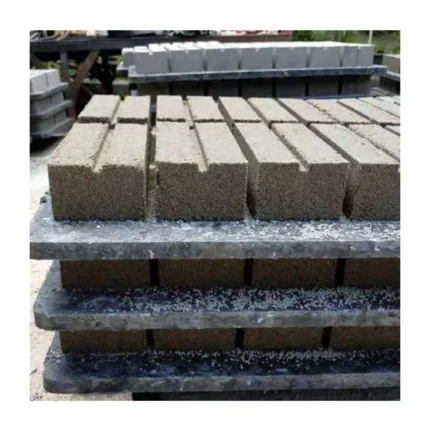
| Mould Format Compatibility | Hollow block, solid brick, paving brick, interlocking brick, multicellular brick |
| Mould Change System | Simple mould replacement for multi-format production |
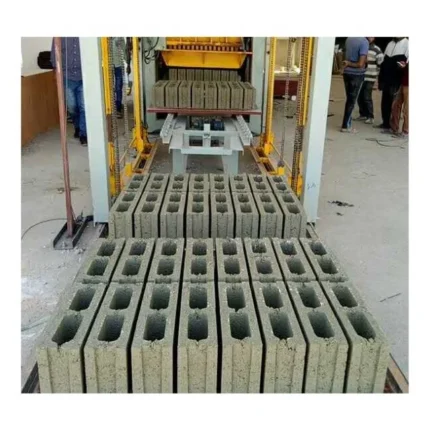
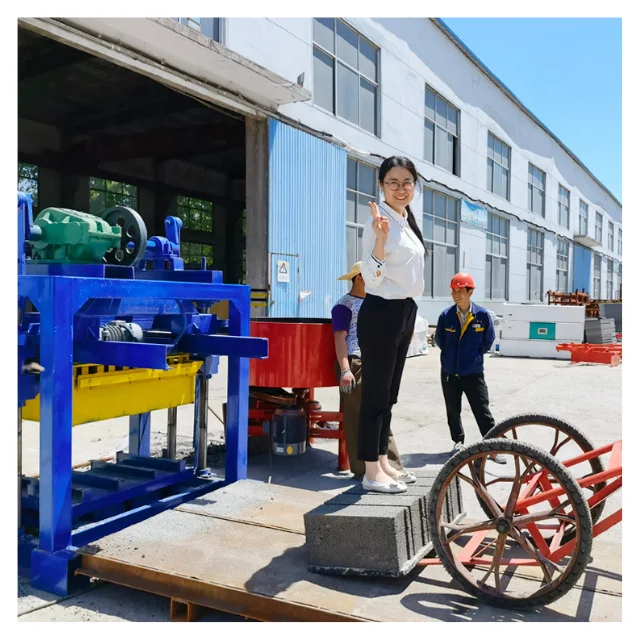
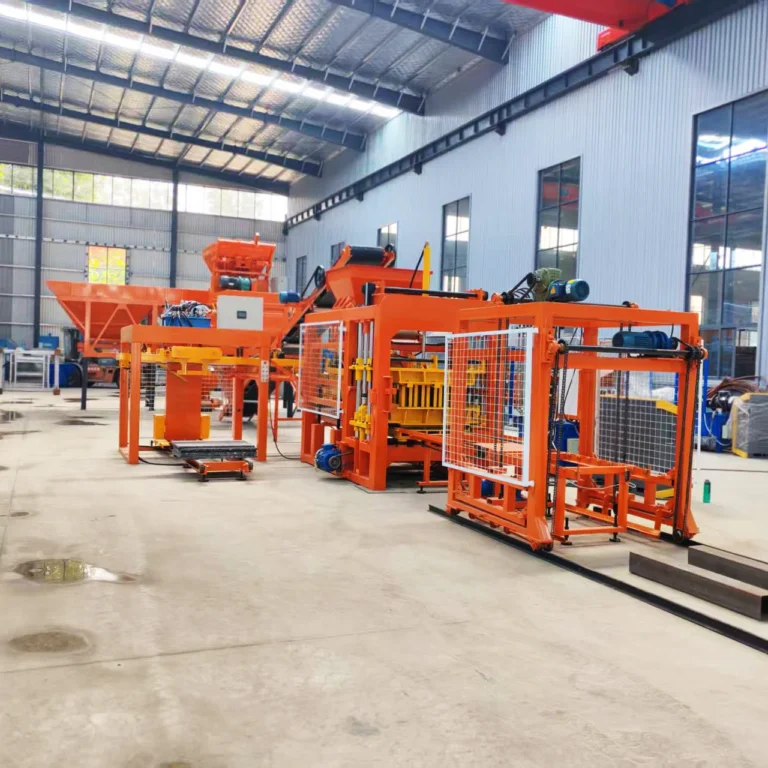
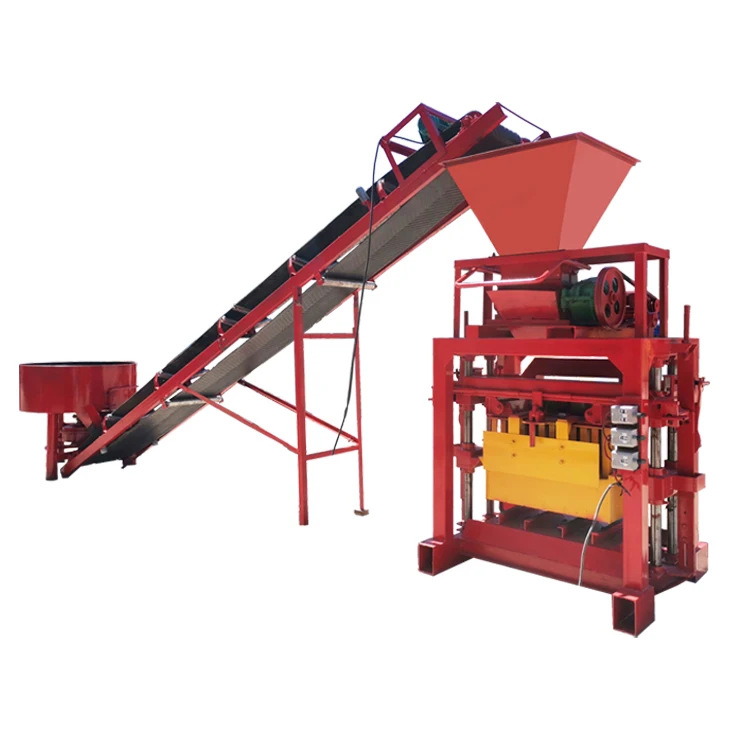
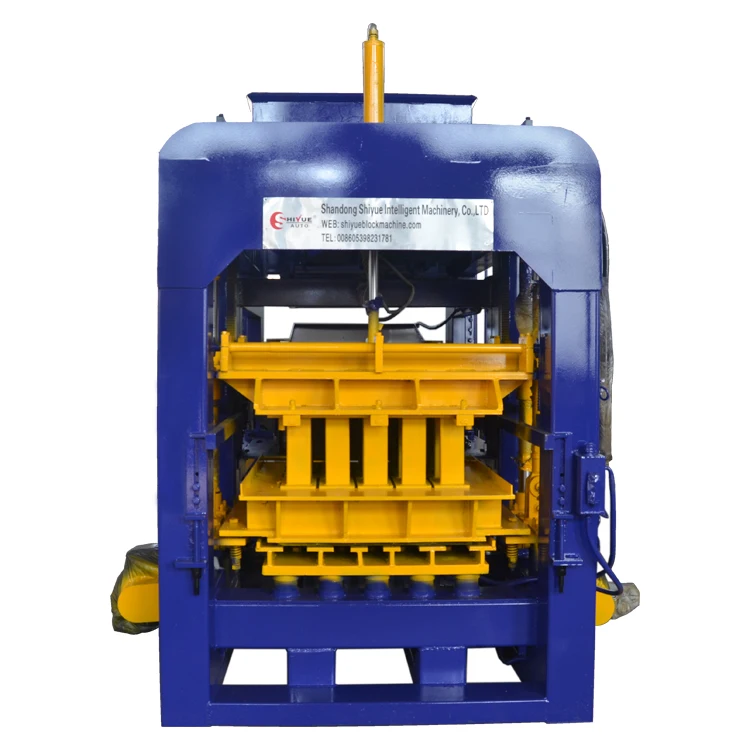
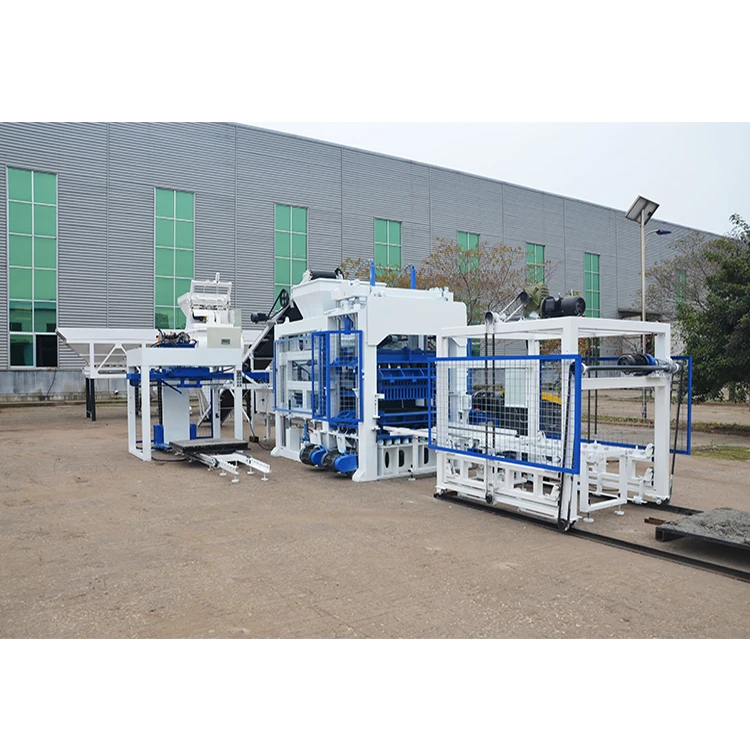
| Component Lineup | Pallet feed machine, block making machine, storage hopper, conveyor, hydraulic unit, PLC control cabinet |
| Warranty | 1 year (excluding spare parts) |
| Rated Power | (basis not stated in source — confirm block format / material / thickness) |
| Voltage & Frequency | (basis not stated in source — confirm block format / material / thickness) |
| Overall Dimensions | (basis not stated in source — confirm block format / material / thickness) |
| Net Weight | (basis not stated in source — confirm block format / material / thickness) |
| Pallet Size | (basis not stated in source — confirm block format / material / thickness) |
| Hydraulic Pressure | (basis not stated in source — confirm block format / material / thickness) |
| Vibration Force | (basis not stated in source — confirm block format / material / thickness) |
| Mould Change Time | (basis not stated in source — confirm block format / material / thickness) |
| Stacking Method | (basis not stated in source — confirm block format / material / thickness) |
| Language Options | (basis not stated in source — confirm block format / material / thickness) |
Application Suitability
| Application | Material or Output |
|---|---|
| Hollow block production | Crushed stone, sand, and cement mixes for building walls |
| Solid brick production | Fine aggregate and cement blends for load-bearing masonry |
| Paving block production | High-density concrete mixes for roads and walkways |
| Interlocking brick production | Permeable concrete formulations for landscaping surfaces |
| Multicellular brick production | Lightweight aggregate and cement for insulated wall systems |
What a Single "Pieces per Hour" Figure Hides From the Buyer
Output only means something when you know which block format and cycle time it assumes.
A headline capacity number looks impressive on a quotation until the machine arrives and starts running your actual hollow block format at a longer cycle. I have seen plant owners in West Africa budget for a certain daily volume based on a generic cycle claim, only to discover their specific mould requires more seconds per press than the quoted figure assumed. The QT10-15 automatic block making machine PLC controlled addresses this by publishing output tied to five distinct formats, each with its own cycle window. You match the number to the block your market actually buys, not the one that makes the brochure look best. [NEED_CITE: common discrepancies between quoted and actual block machine output in export markets]
How the PLC Removes Guesswork from Every Press Cycle
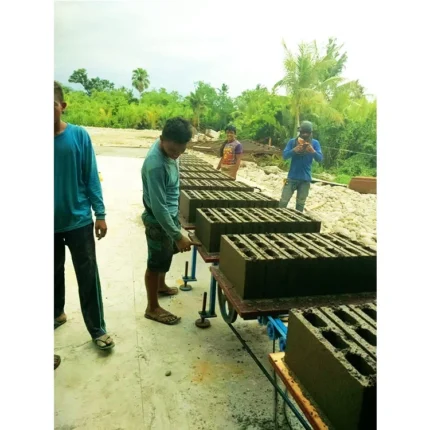
The PLC control cabinet on this automatic block making machine PLC controlled governs pallet feeding, material distribution, vibration duration, hydraulic pressing, and block discharge as one continuous sequence. Operators set the parameters once per mould format, and the system repeats the cycle without manual timing decisions. This matters when you run three different block formats in a single shift — the PLC recalls each program so the transition between hollow blocks in the morning and pavers in the afternoon does not depend on operator memory or handwritten notes.
Automatic Frequency Modulation Across Changing Mix Designs
The vibration system uses automatic FM-AM to adjust frequency based on the resistance it encounters from the concrete mix inside the mould. When your local aggregate shifts — a new sand supplier, a wetter batch after rain, a different cement grade — the vibration adapts rather than pushing a fixed frequency into an inconsistent material. This is how block density stays within tolerance across formats. The independent hydraulic station sits physically separated from the vibration zone, which keeps concrete dust out of the valve bank and extends the service intervals for hydraulic seals and filters. [NEED_CITE: impact of vibration frequency matching on concrete block compressive strength]
Reading the Numbers That Actually Determine Your Daily Output
The cycle time split is the first thing to examine: 15–20 seconds for hollow and solid formats, 20–25 seconds for paving and interlocking. That five-second difference compounds across a shift. For the 400×200×200mm hollow block at 10 pieces per mould, the machine completes between 1,800 and 2,400 pieces per hour depending on where in that cycle window your mix settles. Switch the mould to 240×115×53mm solid bricks at 62 pieces per mould, and the same 15–20 second cycle delivers 8,928 to 11,160 pieces per hour — a completely different production reality from the same press. Paving blocks at 200×100×60mm land at 27 pieces per mould with the longer 20–25 second cycle, yielding 5,184 to 6,480 per hour. These are not marketing ranges; they are arithmetic from mould cavity count multiplied by cycle frequency. The vertical station mode resonance vibration works with the hydraulic pressure to compact the mix — both values must be matched to your aggregate gradation and target block strength, which is why neither is a fixed catalogue number.
When the Wrong Configuration Follows You to the Site
A buyer who skips voltage confirmation before production discovers the problem only when the electrician opens the control panel on installation day. The PLC display language, the motor winding configuration, the hydraulic pump rating — all of these are locked in during manufacturing and cannot be swapped with a local purchase. I remember a project in Ghana where the control cabinet arrived with Chinese-language menus because nobody confirmed the display language during the order phase. The plant manager spent two weeks operating the machine with a translator standing next to him every shift. That kind of delay does not show up in the machine price; it shows up in lost production days and idle curing racks. [NEED_CITE: voltage and frequency standards by export market]
Why Sourcing the Control System Here Reduces Commissioning Risk
The QT10-15 is specified as a matched system: PLC, hydraulic station, vibration unit, and pallet feeder are configured together against your block format and local material, not sourced from separate vendors and bolted together at the last minute. The mould design is confirmed against the dimensions your market sells before the machine enters production, so the first test run uses your actual cavity layout. Automation level is selectable — a buyer can commission the machine with semi-automatic pallet handling now and add automatic stacking later without replacing the press or the PLC. Every capacity calculation shipped with the quotation states which block format was assumed, removing the ambiguity that causes most post-delivery disputes. Installation support includes operator training on the specific PLC program loaded for your format mix, not a generic overview.
Documentation & Verification
- Line layout and capacity calculation stating the exact block format and cycle time assumed for each output figure
- PLC program documentation with parameter ranges for each confirmed mould format
- Voltage and control language confirmation record signed before production begins
- Factory test record documenting actual cycle time and block dimensions on your specified mix
- Hydraulic and electrical schematic matching the as-built machine configuration
- Mould drawing and format list confirming cavity dimensions for every block type ordered
Installation, Commissioning & Support
- Foundation plan scaled to the QT10-15 footprint and vibration isolation requirements
- Dedicated electrical circuit sized to the confirmed rated power and voltage configuration
- PLC program loaded and verified against your confirmed block formats before the machine leaves the factory
- On-site commissioning includes cycle time verification on your local aggregate and cement
- Operator training covers PLC parameter adjustment for each mould format in your production range
- Wear parts list covers hydraulic seals, vibration springs, and mould liners specific to your configuration
What to Include in Your Inquiry
To size the QT10-15 accurately, share your primary block formats with dimensions, the target daily volume for each, and the local aggregate and cement you plan to use. Confirm your site voltage and frequency, the PLC display language your operators need, and whether you have existing pallets and curing racks the machine must integrate with. This information allows the configuration to be locked before production rather than adjusted after arrival.
Frequently Asked Questions
Q: How is output capacity verified per block format, and what cycle time is assumed?
A: Each output figure on this page is calculated from a specific mould cavity count and a stated cycle time range — 15–20 seconds for hollow and solid formats, 20–25 seconds for paving and interlocking. The factory test record documents the actual cycle time achieved on your confirmed mix design before the machine ships, so the capacity number you plan against is grounded in a real production run, not a theoretical maximum.
Q: What PLC brand and display language options are available for the control cabinet?
A: The PLC brand and display language are confirmed during the order phase and documented in the specification sheet before production starts. This avoids the situation where operators receive a control panel in a language they cannot read. The confirmation record becomes part of your documentation package and is referenced during on-site commissioning to verify the loaded program matches your requirements.
Q: How does the automation level affect labour requirement and the upgrade path?
A: The QT10-15 ships with full PLC control over the press cycle, pallet feeding, and material distribution. Buyers can start with manual pallet handling at the discharge end and add automatic stacking and cubing later without replacing the PLC or the hydraulic station. This staged approach lets you match the automation investment to your current shift labour while keeping the upgrade path open as production volume grows.
Q: What voltage and frequency configurations are confirmed before production?
A: Voltage, frequency, and motor winding configuration are confirmed in writing before the machine enters production. This is critical because the PLC cabinet, hydraulic pump motor, and vibration motor are all wound to the confirmed specification and cannot be easily changed on site. The confirmation step eliminates the most common cause of delayed commissioning in export projects.
Q: How does the automatic FM-AM vibration system maintain block consistency across different mix designs?
A: The vibration unit senses resistance from the concrete inside the mould and adjusts frequency accordingly. When your aggregate moisture content or gradation shifts between batches, the system compensates rather than applying a fixed vibration profile. Combined with the independent hydraulic station — isolated from concrete dust — this maintains consistent compaction and block density across hollow, solid, and paving formats throughout the production day.