Description
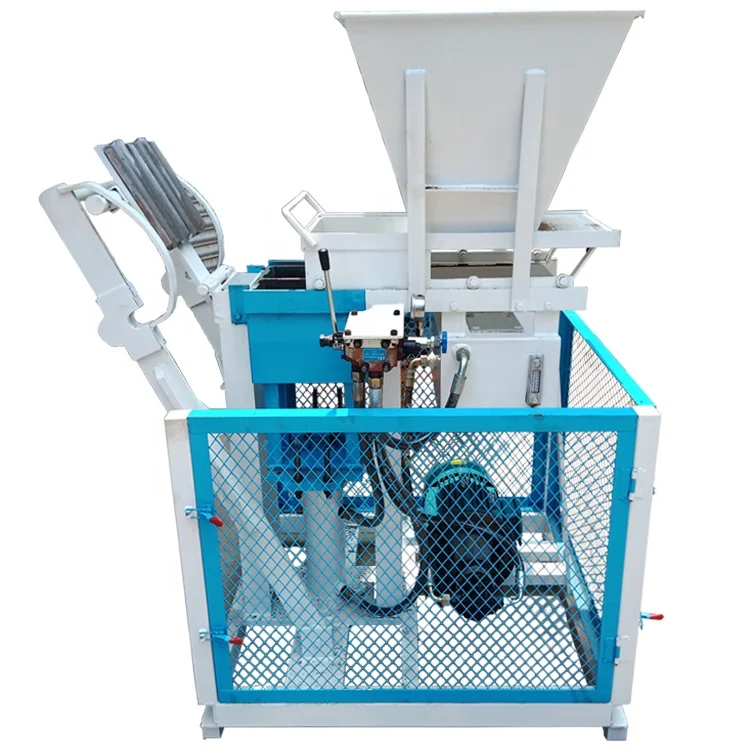
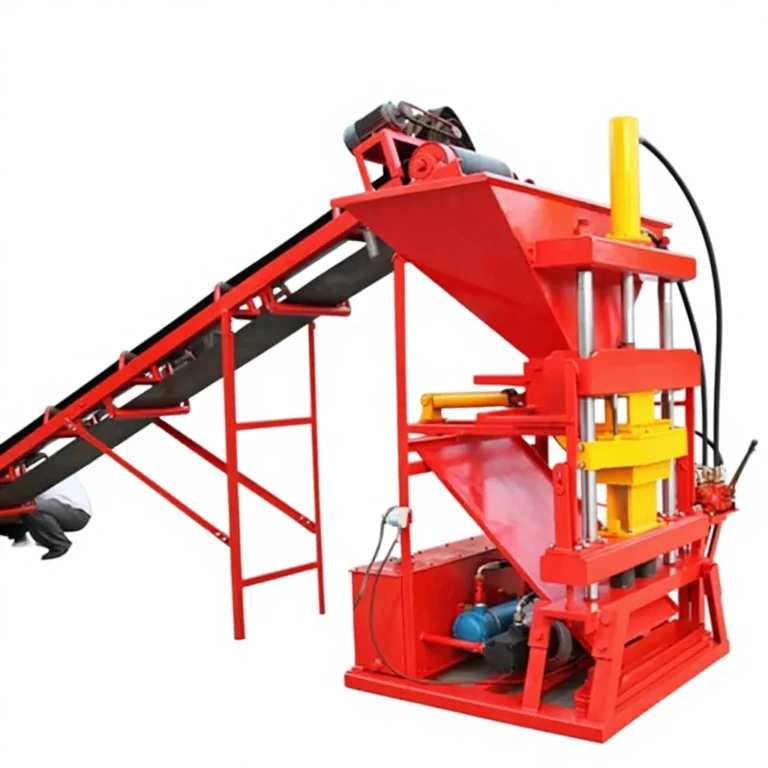
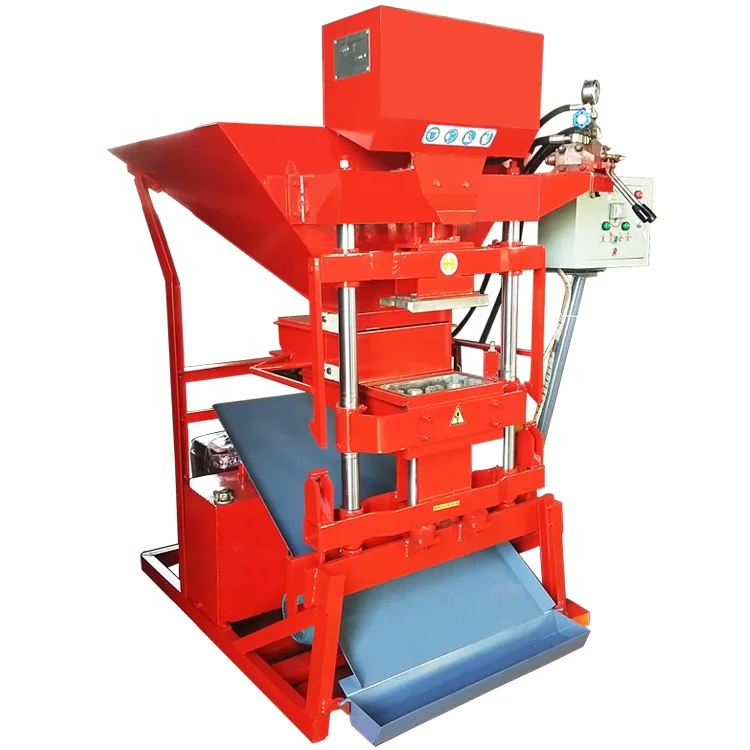
Automation matched to your mix and format — the ECO 2700 hydraulic clay interlocking brick machine is configured as a PLC-controlled press where feeding, pressing, and lifting cycles are set against your actual soil-cement recipe and target brick geometry, not a catalogue default.
Technical Specifications
| Parameter | Value |
|---|---|
| Model | ECO 2700 |
| Product Type | Hydraulic Clay Interlocking Brick Making Machine |
| Rated Power | 7.5 kW electric motor or 12 hp diesel engine (selectable) |
| Voltage & Frequency | Configurable to site supply — confirm before shipment |
| Control System | Automatic PLC-controlled cycle (display language configurable) |
| Overall Dimensions (L×W×H) | 1600 × 1300 × 2330 mm |
| Net Weight | 900 kg |
| Hydraulic Pressure | 16 MPa |
| Cycle Time | 10 s per mould stroke |
| Output Capacity | 2,800 pcs / 8 hours (basis: 300×150×100 mm or 250×125×75 mm interlocking brick, 1 pc per mould) |
| Throughput Rate | 350 pcs / hour (basis: 300×150×100 mm or 250×125×75 mm interlocking brick) |
| Mould Format | Interchangeable moulds; sample sizes 300×150×100 mm and 250×125×75 mm |
| Automation Level | Automatic material feeding, mould pressing, and mould lifting |
| Raw Material Compatibility | Clay, soil, earth, mud, concrete, sand, cement, fly ash |
| Drive Option | Electric motor or diesel engine selectable |
| Water Consumption | ~4 tonnes per day (basis to be confirmed) |
| Workshop Area Required | 150 m² (basis to be confirmed) |
| Operating Crew | 1–4 workers depending on automation level (basis to be confirmed) |
| Warranty | One year (whole machine) |
Application Suitability
| Application | Material or Output |
|---|---|
| Rural housing projects | Soil-cement interlocking bricks produced on site with diesel drive |
| Building material distributors | Clay interlocking formats added to existing concrete product lines |
| Development contractors | Earth blocks produced locally to reduce transport costs |
| First-time brick plant entrepreneurs | Semi-automatic to automatic clay brick production with low initial footprint |
| Humanitarian and low-cost housing | Interlocking mud and fly ash bricks where grid power is unreliable |
What the PLC Screen Language Means for Your First Week of Production
Confirm the PLC display language in writing before the machine enters production — it determines whether your operators run the press or watch it sit idle.
I spent three days on a commissioning site because the automatic clay interlocking brick machine PLC controlled panel shipped with an English-only interface. The local operators could not read a single menu item. Every parameter adjustment required a phone call, and the hydraulic pressure settings could not be verified without translation. That delay was not a mechanical failure — it was a configuration oversight that cost an entire week of output [NEED_CITE: PLC language configuration impact on commissioning timelines in export markets].
When a buyer selects an automatic clay interlocking brick machine PLC controlled system, the assumption is that automation removes guesswork from the cycle. It does, but only if the operator can read what the screen is telling them. Voltage and frequency mismatches compound the problem: a 380V/50Hz machine arriving at a 440V/60Hz site will trip breakers before the first brick is pressed [NEED_CITE: voltage and frequency standards by export market].
Removing Timing Variation from Every Mould Stroke
The ECO 2700 runs a PLC-controlled automatic cycle covering material feeding, mould pressing, and mould lifting. Without automation, an operator manually controls each stage, and cycle consistency depends entirely on human rhythm. The PLC holds each stage to a fixed duration so the 10-second mould stroke repeats identically across shifts. This matters most when producing interlocking bricks where tongue-and-groove geometry demands consistent density from the first brick to the last.
Building an Upgrade Path into the Press
A buyer can specify the ECO 2700 with semi-automatic pallet handling today and add automatic stacking or cubing later. The hydraulic system and PLC architecture are set up to accept additional I/O modules without replacing the main controller. For entrepreneurs starting a first interlocking clay brick plant, this means the initial investment stays within budget while the control platform leaves room for labour reduction as volume grows. The automatic clay interlocking brick machine PLC controlled configuration grows with the plant rather than forcing a full replacement [NEED_CITE: PLC expansion modules for hydraulic brick presses].
Reading the Specs That Actually Shape Your Output
Hydraulic pressure at 16 MPa determines the compression force applied to the clay or soil-cement mix inside the mould cavity. Higher pressure increases brick density and compressive strength, but only if the mix moisture and aggregate grading are matched to that pressure level. A dry clay mix under 16 MPa may crack at the edges, while an overly wet mix will deform when the mould lifts. The 10-second cycle time allows the hydraulic ram to complete a full press-and-hold sequence, giving the interlocking tongue and groove profiles time to set before release.
The 7.5 kW electric motor or 12 hp diesel engine option addresses a practical split in export markets: grid-connected plants use electric drive for lower running costs, while remote housing sites rely on diesel where three-phase power is unavailable. Overall dimensions of 1600 × 1300 × 2330 mm mean the press fits inside a standard 20-foot container for shipment and occupies a compact footprint once bolted to a level concrete pad. The 900 kg net weight keeps the machine stable during hydraulic ram extension without requiring a deep foundation.
When the Wrong Configuration Costs More Than the Machine
Specifying a mould format without confirming the corresponding pallet size leads to a mismatch the buyer discovers only after arrival. If the curing area and forklift are set up for one pallet dimension and the machine ships with another, every pallet must be manually repositioned before stacking [NEED_CITE: pallet size coordination between brick press and curing yard]. Omitting voltage and frequency confirmation from the purchase order means the motor or PLC transformer may not match the local supply, delaying commissioning by weeks while replacement components are sourced. Skipping the mould change procedure documentation turns a planned format switch into an unplanned production halt.
What Separates a Matched System from a Catalogue Order
Every ECO 2700 is configured against the buyer’s actual mix design and local aggregate, not shipped as a catalogue default. Mould design covers the interlocking brick formats the buyer’s market actually sells, including custom drawings when standard sizes do not apply. Machine, mould, pallet, and handling equipment are specified as one matched system from a single source, so cycle times align across stations. Installation support includes operator training on PLC navigation, hydraulic parameter adjustment, and mould changeover procedures. Documentation covers the complete hydraulic and electrical schematic in the buyer’s confirmed language.
Documentation & Verification
- Line layout showing ECO 2700 position relative to mixer, curing racks, and stacking area
- Capacity calculation stating the exact interlocking brick format and mix ratio assumed
- Hydraulic and electrical schematic with PLC I/O map in confirmed display language
- Factory test record on buyer’s specified clay or soil-cement mix before dispatch
- Mould drawing with tongue-and-groove tolerances for each ordered format
- Wear parts list with replacement intervals matched to production volume
Installation, Commissioning & Support
- Level concrete pad sized to 1600 × 1300 mm footprint with anchor bolt provisions
- Three-phase power supply matching confirmed voltage and frequency on a dedicated circuit
- PLC display language and hydraulic pressure parameters verified during on-site commissioning
- Operator training on automatic cycle control, mould change, and daily maintenance routines
- Interchangeable mould carriage adjustment and alignment for each ordered brick format
- Wear parts inventory covering hydraulic seals, mould liners, and feeding mechanism components
Before You Request a Quote
To move from inquiry to a configured ECO 2700 proposal, share your target interlocking brick dimensions, the clay or soil-cement mix ratio available locally, and your required daily output. Confirm your site voltage, frequency, and preferred PLC display language. If grid power is unreliable, specify whether the diesel engine drive is needed. Indicate the automation level you want at startup and whether you plan to add stacking or cubing later.
Frequently Asked Questions
Q: How is output capacity verified for my specific interlocking brick format?
A: The ECO 2700 capacity of 2,800 pieces per 8 hours is based on 300×150×100 mm or 250×125×75 mm bricks at one piece per mould with a 10-second cycle. For your specific format, we calculate realistic throughput by factoring in your brick dimensions, mix density, and mould cavity count, then confirm with a factory test before shipment.
Q: What PLC language and electrical configuration will my machine have?
A: The PLC display language is confirmed in writing during the order process so operators can read all menus and alarms. Voltage and frequency are matched to your site supply. Both are documented on the electrical schematic and verified during commissioning.
Q: Can I start semi-automatic and add automation later?
A: Yes. The ECO 2700 PLC architecture accepts additional I/O modules for automatic stacking and cubing without replacing the main controller. You can begin with manual pallet handling and upgrade as production volume increases.
Q: What spare parts should I order with the machine?
A: We provide a wear parts list covering hydraulic seals, mould liners, and feeding components with replacement intervals based on your target production volume. First-cycle spares are recommended at order to avoid downtime when initial replacements are due.