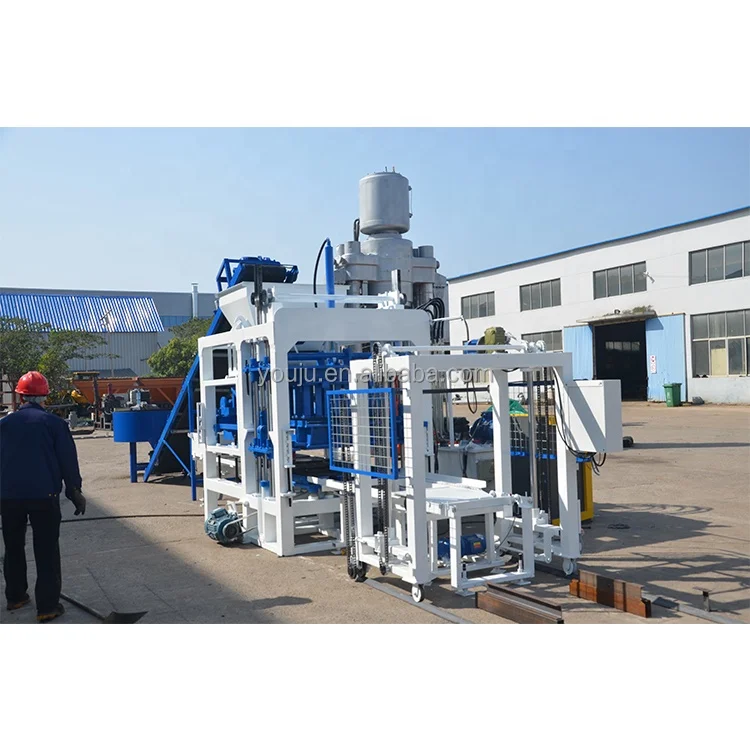
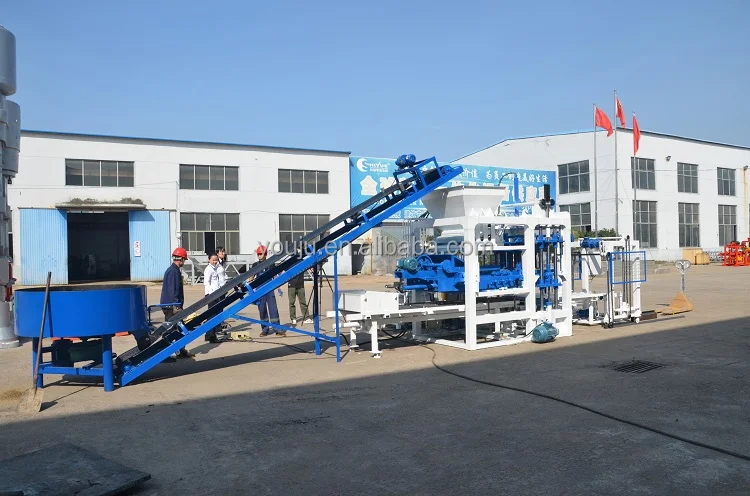
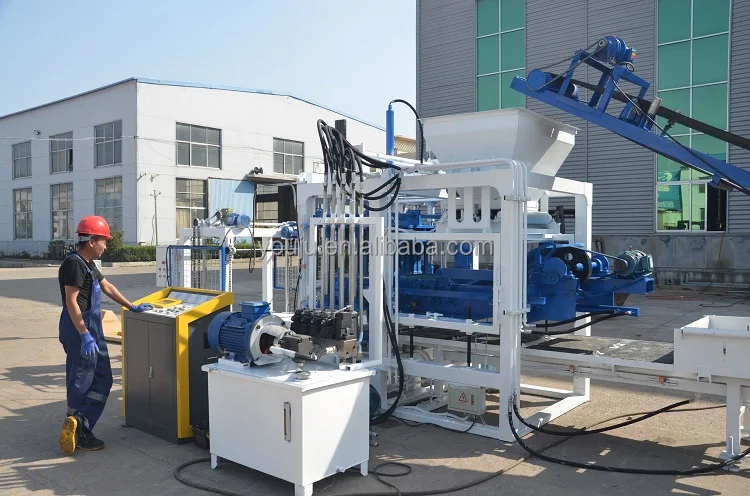
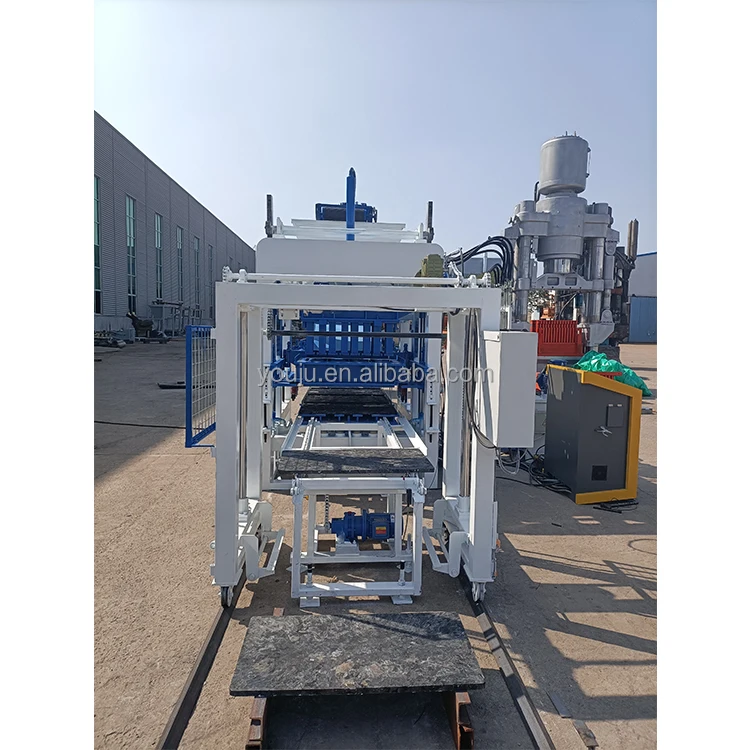
Description
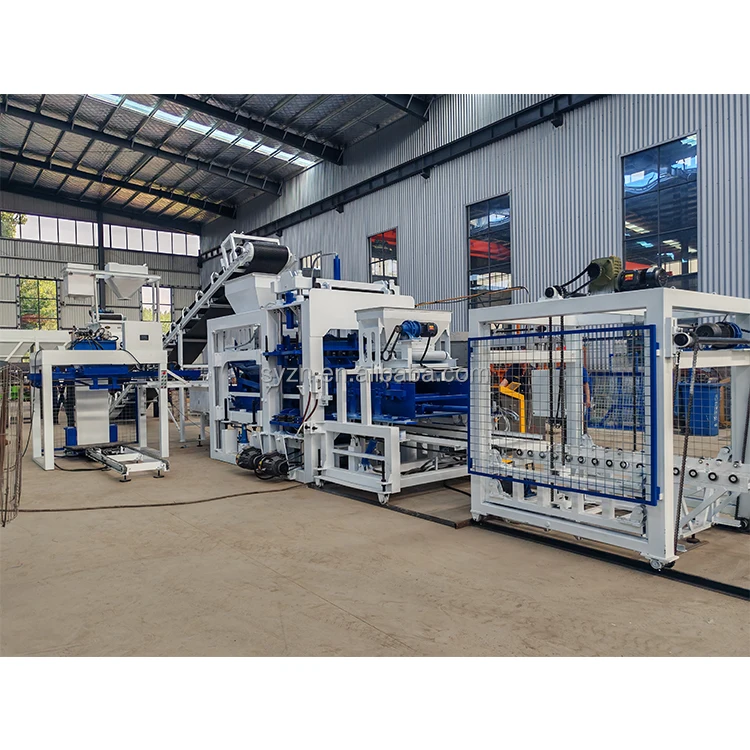
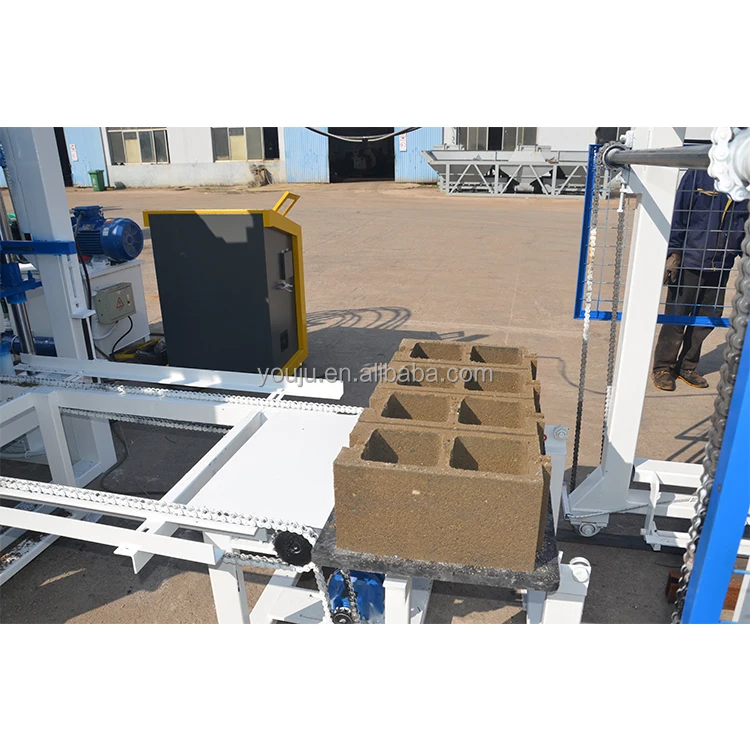
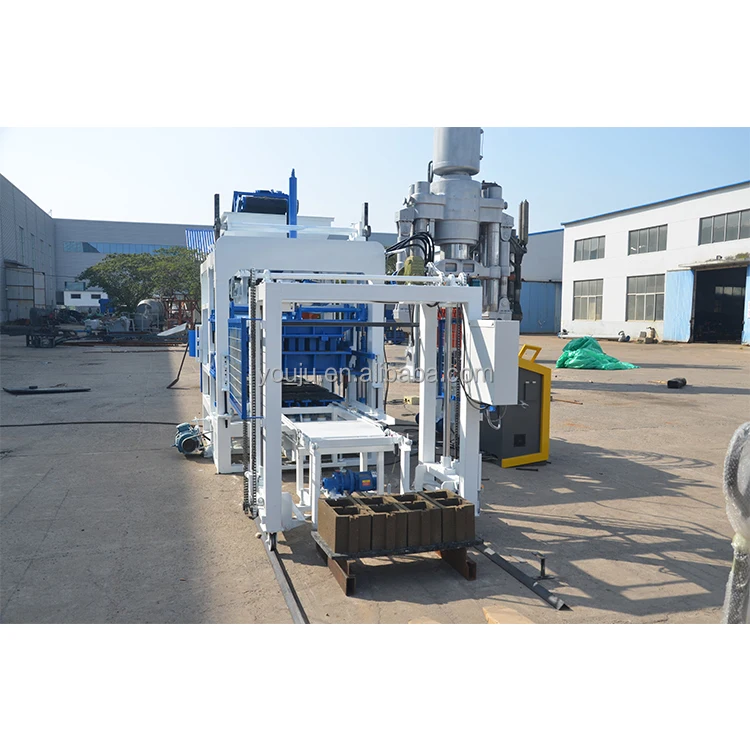
Integrated control logic — The QT4-18’s PLC and frequency converter are specified as one system with the hydraulic pallet feeder, so cycle timing stays consistent from the first block to the last across every shift.
Technical Specifications
| Parameter | Value |
|---|---|
| Model | QT4-18 |
| Product Type | Automatic Concrete Block Making Machine |
| Overall Dimensions | 2500×1750×2200mm |
| Rated Pressure | 16Mpa |
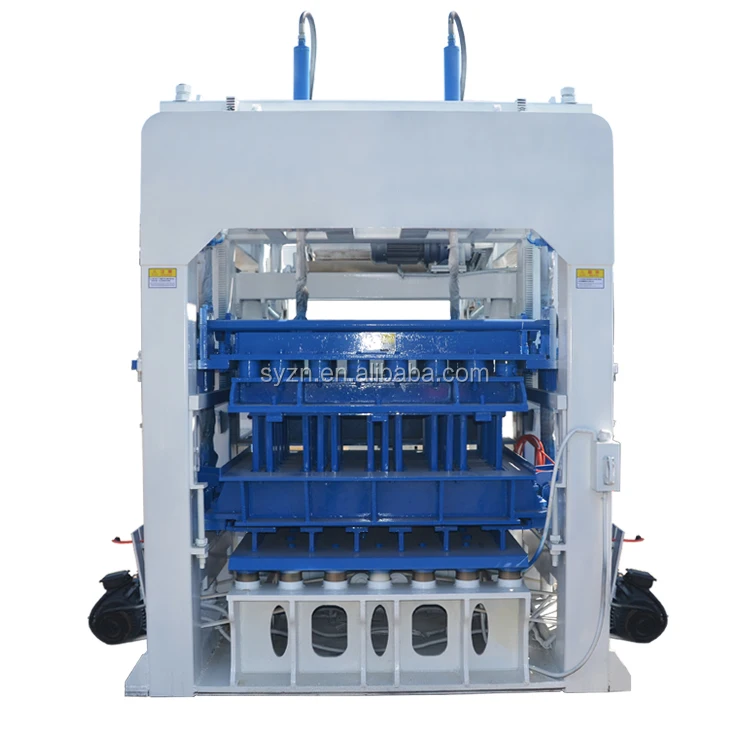
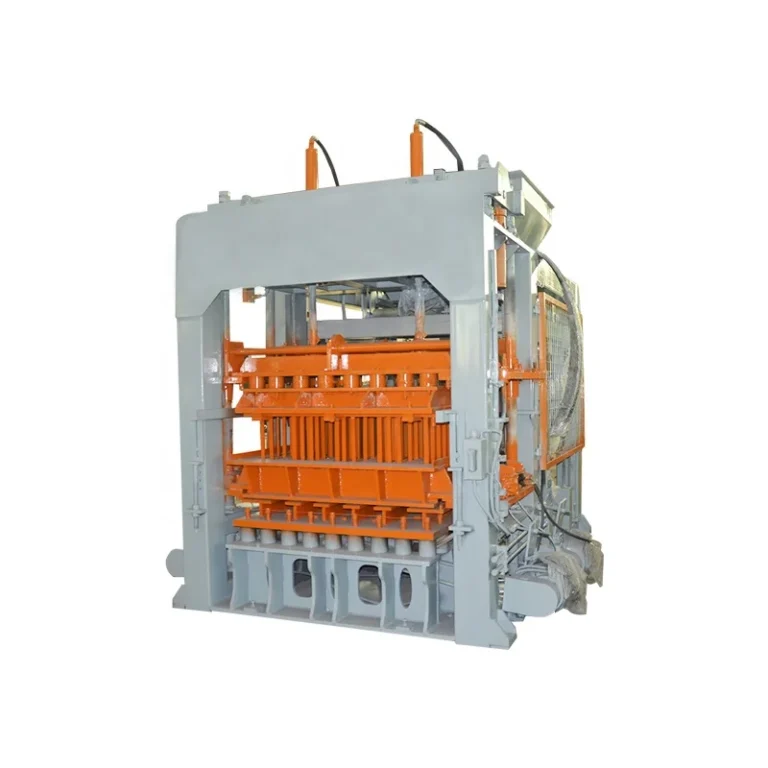
| Vibration Form | Platform Vibration |
| Pallet Size | 950×550mm |
| Molding Cycle | 18-25s |
| Overall Power | 27.5kW |
| Control System | PLC with frequency converter |
| Automation Level | Automatic (hydraulic cylinder pallet feeder, automatic block receiver with conveyor) |
| Electrical Components | Schneider |
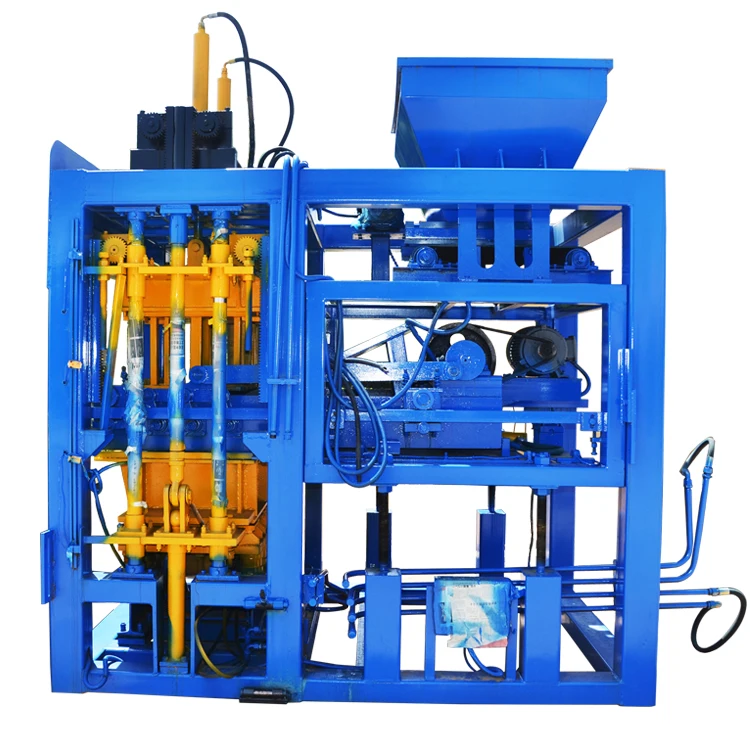
| Mould Lifting Mechanism | Double-sided synchronous gears |
| Material Feeding System | Hopper, feeding box, feeding platform, conveyor with distribution belt |
| Support Equipment Compatibility | JQ500 pan mixer, 8m/6m belt conveyor, stacker, block clamper, cement silo, batching plant |
| Mould Configuration | One free hollow mould included; additional moulds customizable |
| Output Capacity | (basis to be confirmed — dependent on block format and material) |
| Voltage & Frequency | (basis to be confirmed — must match local electrical standards) |
Application Suitability
| Application | Material or Output |
|---|---|
| Hollow block manufacturing | Crushed stone, sand, cement, fly ash |
| Paving block production | Aggregate blends with fine sand and pigment |
| Solid block production | Dense aggregate and cement mixes |
| On-site contractor block production | Locally sourced aggregate and cement |
| Building material distributor stock | Multiple formats via interchangeable moulds |
Why PLC Language and Voltage Must Be Locked Before Crating
An automatic block machine PLC controlled system only removes manual error when the operator can actually read the screen and the voltage matches the plant supply.
I once watched a QT4-18 sit idle for three days on a job site because the PLC interface shipped in Chinese and the local electrician could not navigate the menus to reset a fault code. The frequency converter parameters were also set for a voltage tier that did not match the site transformer. These are not defects in the equipment — they are specification gaps that happen when the control language and electrical configuration are assumed rather than confirmed in writing before the machine leaves the factory floor [NEED_CITE: common commissioning delays caused by unconfirmed PLC language and voltage mismatch in exported machinery].
What the PLC Actually Takes Over
The QT4-18 assigns cycle timing, vibration duration, and hydraulic pressure sequencing to the PLC, which means the operator sets the parameters once and the automatic block machine PLC controlled logic repeats them identically for every moulding stroke. Manual pallet feeding is eliminated — the hydraulic cylinder advances each pallet into position and pushes the finished block onto the receiver conveyor without operator intervention. This removes the two points in the cycle where human timing most often introduces variation: pallet placement delay and inconsistent vibration cutoff.
Synchronous Gears and Mould Stability
The double-sided synchronous gear mechanism on the mould lifting assembly keeps the mould box level through every raise and lower action. When the gears stay synchronized, the mould cavity fills evenly and the block emerges with uniform density across its full height. Asymmetric lifting causes one side of the mould to drag, which wears the liner unevenly and produces blocks with a measurable strength difference between left and right faces — a problem that typically surfaces only after weeks of production [NEED_CITE: mould wear patterns and block density variance in vibration-based forming].
Reading the Numbers That Matter
The 16Mpa rated pressure and platform vibration work together to compact the mix. Pressure alone does not determine block strength — it is the combination of hydraulic pressure forcing the aggregate into the mould cavity while vibration settles fine particles into voids. The 950×550mm pallet size dictates the maximum block footprint per cycle, and that pallet must match the curing racks and forklift tines the buyer already operates. The 27.5kW overall power draw requires a dedicated circuit sized for motor startup surge, not just running amperage. The 18-25s molding cycle range reflects the difference between a simple hollow block and a denser paving block format that demands longer vibration time.
The Cost of Skipping Configuration Verification
When the Schneider electrical components are specified correctly for the destination market, they provide reliable service. But if the frequency converter is calibrated for 50Hz and the plant runs on 60Hz, the vibration motor will overspeed and the platform vibration force will exceed what the mould and frame are rated to handle. Similarly, if the PLC display language is not confirmed, every fault diagnosis becomes a translation exercise that stops production. These are preventable delays, yet they account for a significant share of commissioning problems on exported block machinery [NEED_CITE: frequency mismatch consequences on vibration motors in concrete block machines].
Why This Configuration Approach Works
Block machinery is our single focus, which means the QT4-18 machine, its mould, pallet, and hydraulic handling are specified as one matched system rather than assembled from separate supplier catalogues. We set the configuration against the buyer’s actual mix design and target block format instead of shipping a catalogue default. Mould design and supply covers the formats the buyer’s market actually sells, including custom drawings when standard options do not fit. The automation level is selectable, so a buyer currently running semi-automatic equipment can plan a transition path. Installation and commissioning support includes operator training on the specific PLC interface shipped with the machine.
Documentation & Verification
- Line layout with capacity calculation stating the block format assumed for the QT4-18 cycle time
- PLC display language and voltage confirmation sheet signed off before crating
- Factory test record demonstrating the hydraulic pallet feeder sequence and cycle repeatability
- Mould drawing and format list for the included hollow mould and any custom additions
- Hydraulic and electrical schematic matching the Schneider component configuration as built
Installation, Commissioning & Support
- Dedicated circuit required for the 27.5kW total load with startup surge allowance for vibration motor
- PLC interface language and HMI parameters verified on-site against operator capability during commissioning
- Pallet size 950×550mm confirmed against existing curing racks and forklift tine spacing before installation
- Hydraulic cylinder pallet feeder stroke and timing calibrated to the buyer’s specific mould and block format
- Double-sided synchronous gear alignment checked after transport and before first production run
What to Prepare Before Requesting a Quote
Send the exact block format dimensions you intend to produce daily, the local aggregate type and available cement grade, and your confirmed site voltage and frequency. Specify the PLC display language your operators require and note any existing curing racks or forklifts the pallet size must accommodate. If you are transitioning from semi-automatic equipment, describe your current automation level so the upgrade path can be addressed in the proposal.
Frequently Asked Questions
Q: What does the PLC control on the QT4-18, and what remains an operator decision?
A: The PLC governs cycle timing, vibration duration, hydraulic pressure sequencing, and pallet feeder advance. The operator selects the mould program, monitors fault alerts, and decides when to initiate a mould change. The system does not automatically adjust mix ratios — batching accuracy depends on the upstream batching plant configuration you select.
Q: How do I confirm the PLC display language and voltage before shipment?
A: Language and voltage are confirmed during the proposal stage and documented on a sign-off sheet that you approve before production begins. The factory test record then shows the PLC running in your specified language at your confirmed voltage and frequency. Any change after crating requires reprogramming and retesting.
Q: What is the realistic daily output for my block format?
A: Output depends on the specific block format, mix design, and curing arrangement. The 18-25s molding cycle range reflects different formats — a hollow block cycles faster than a dense paver. A capacity calculation stating the assumed block format and cycle time is included with every quotation so you can evaluate daily throughput against your actual product.
Q: Can the QT4-18 be upgraded with automatic stacking and cubing later?
A: The machine’s automation level is selectable, and the control architecture supports adding automatic stacking and cubing stations after initial installation. The upgrade path depends on available floor space around the block receiver conveyor and the curing rack layout. Discuss future automation plans during the line layout phase so foundation and clearance are planned accordingly.
Q: How does the hydraulic pallet feeder synchronize with the molding cycle?
A: The PLC coordinates the hydraulic cylinder advance with the completion of the vibration and press sequence. The feeder pushes the finished block onto the receiver conveyor and positions the next pallet before the mould box descends. This timing prevents bottlenecks that occur when pallet handling falls behind the press cycle.