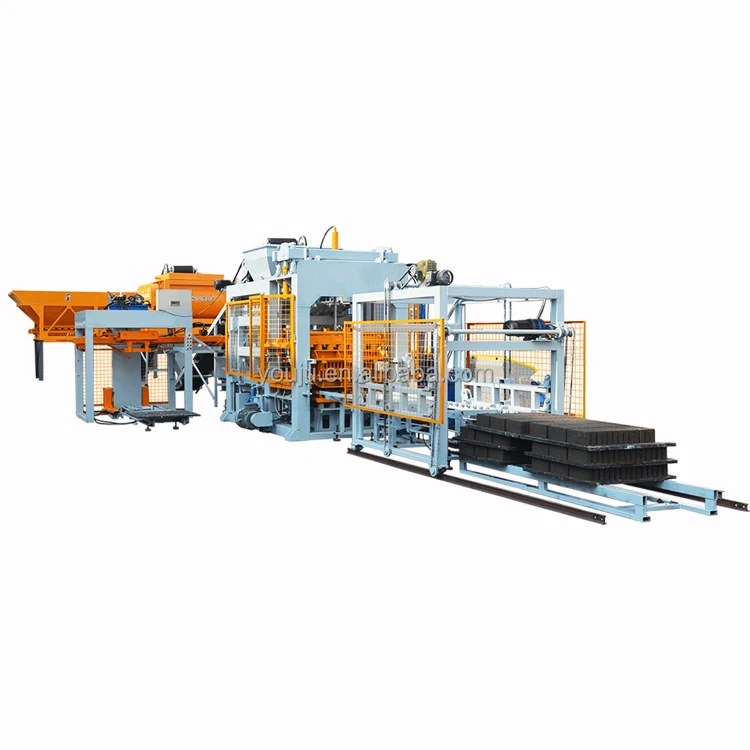
Description
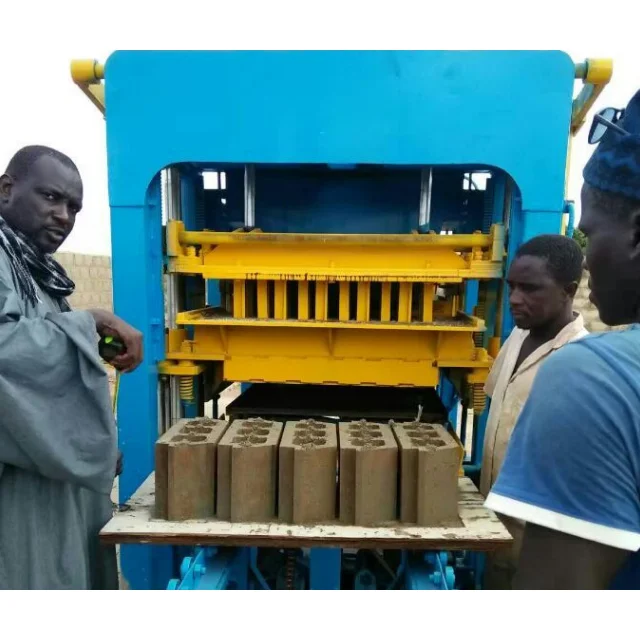
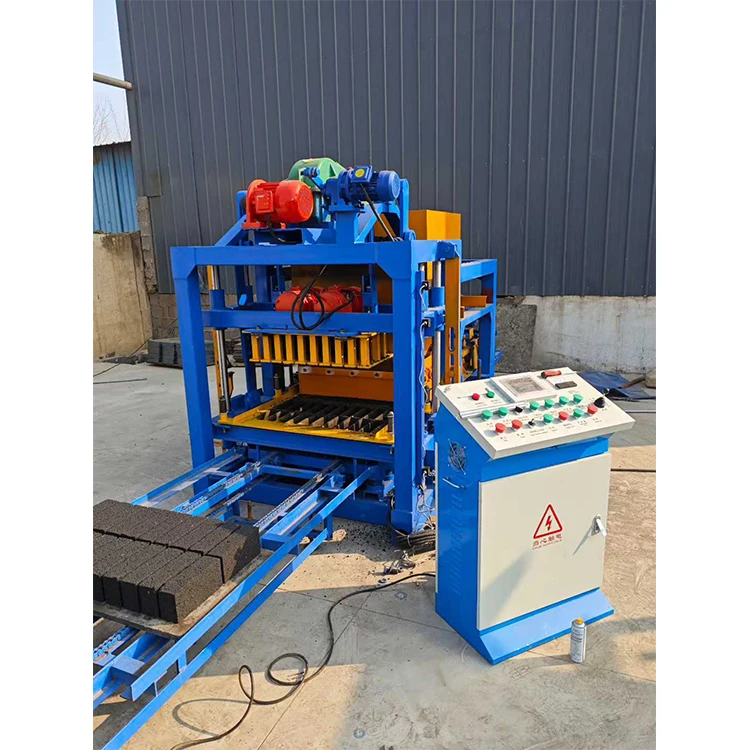
PLC-Driven Consistency — The QT8-15 automatic concrete block making machine PLC controlled locks forming parameters per mould, ensuring every block meets target density regardless of operator shift.
Technical Specifications
| Parameter | Value |
|---|---|
| Model | QT8-15 |
| Product Type | Automatic Concrete Block Making Machine |
| Automation Level | Automatic |
| Cycle Time | 15-20 seconds (basis to be confirmed based on block format and material) |
| Output Capacity (Hollow Block 400×200×200mm) | 1600-1900 pcs/hr (based on 400×200×200mm hollow block, 8 pcs/mould) |
| Output Capacity (Solid Brick 240×115×53mm) | 8000-10000 pcs/hr (based on 240×115×53mm solid brick, 45 pcs/mould) |
| Output Capacity (Paver 200×160×60mm) | 3000-3600 pcs/hr (based on 200×160×60mm paver, 15 pcs/mould) |
| Output Capacity (Interlocking 225×112.5×60mm) | 4000-5000 pcs/hr (based on 225×112.5×60mm interlocking brick, 24 pcs/mould) |
| Hydraulic Pressure Technology | Advanced hydraulic pressure system |
| Vibration System | Latest vibration system |
| Mould Compatibility | Hollow block, solid brick, paver brick, kerbstone (mould change required) |
| Mould Heat Treatment | Yes |
| Warranty | 1 year |
| After-Sales Support | 24-hours on-line technical support |
| Key Features | PLC control, multi-format mould system, hydraulic-vibration forming, heat-treated moulds |
Application Suitability
| Application | Material or Output |
|---|---|
| Hollow block production for building construction | Crushed stone, river sand, cement, and fly ash aggregates |
| Solid brick manufacturing for masonry | Stone dust, quarry fines, and cement blends |
| Paver brick production for landscaping and roadworks | Fine sand, cement, and pigment additives for surface layers |
| Kerbstone manufacturing for infrastructure projects | Coarse aggregate and high-strength cement mixes |
| Multi-format production plants | Quick mould change across hollow block, solid brick, paver, and kerbstone formats |
Why "Cycle Time" Means Nothing Without the Block Format
A 15–20 second cycle only matters when tied to the exact block format and mould cavity count you plan to run.
When I first started commissioning block machines across Southeast Asia, buyers would quote me a cycle time and expect me to calculate daily output from that single number. The reality is far less predictable. A machine cycling every 15 seconds on a thin paver may take 20 seconds or more on a tall hollow block because the hydraulic pressure and vibration profile must hold longer to achieve target density. Without knowing which block format that 15-second figure assumes, a buyer can overestimate daily throughput and under-plan curing space. The QT8-15 automatic concrete block making machine PLC controlled addresses this by storing parameter sets per mould, so the cycle adapts to the format loaded rather than forcing one timing across all products. [NEED_CITE: block density and compressive strength testing standards by region]
Sequencing That Replaces Operator Guesswork
On a manual or semi-automatic press, the operator decides when vibration starts, how long pressure holds, and when the mould lifts. Shift changes bring inconsistencies. The automatic concrete block making machine PLC controlled on the QT8-15 removes that variability by executing a fixed sequence: feed, vibrate, press, hold, demould. Each step duration is saved against the active mould number, so a switch from hollow blocks to pavers recalls the correct timing profile without operator input.
Matching Vibration Force to Local Aggregate
Aggregate hardness varies enormously between regions. Volcanic ash in parts of Indonesia absorbs vibration differently than crushed granite in Vietnam. If the vibration force is not tuned to the actual material, blocks emerge with weak corners or inconsistent weight. The QT8-15 hydraulic-vibration system allows adjustment of both amplitude and duration through the PLC interface, letting the commissioning engineer dial in settings after running test batches with the buyer’s local mix. [NEED_CITE: effect of aggregate type on concrete block compressive strength]
Reading the Specs: What the Numbers Actually Tell You
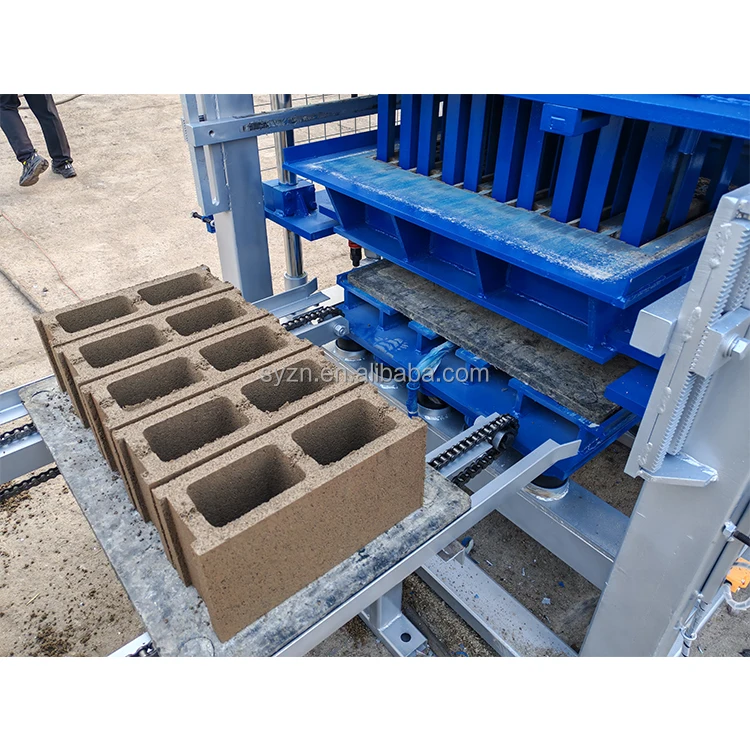
The QT8-15 produces 8 hollow blocks per mould cycle at 400×200×200mm, which at rated cycle time yields the stated hourly figure for that format. Switch to a 45-cavity solid brick mould and the per-cycle count rises, but the thinner product may allow a shorter hold time. The advanced hydraulic pressure system works in tandem with the vibration table: hydraulic force compacts the mix from above while vibration settles fines into voids from below. This dual action is what determines whether a block leaves the press at adequate green strength to survive pallet transfer without cracking. Heat-treated moulds maintain cavity dimensions over extended production runs, preventing the gradual size drift that causes blocks to fall outside masonry tolerance. Pallet size must be confirmed against your existing curing racks and forklift capacity before the machine enters production.
The Cost of Skipping Parameter Confirmation
I have watched plants receive a block machine only to discover the PLC display is in a language the operators cannot read, delaying commissioning while translation is arranged elsewhere. Voltage mismatches are another common issue — a machine wired for 380V/50Hz arriving at a site with 440V/60Hz supply will burn out motors within the first week. These are not manufacturing defects; they are communication failures that happen when confirmation is skipped during the order stage. Every configuration detail on the QT8-15, from control language to frequency rating, should be locked in writing before production begins. [NEED_CITE: voltage and frequency standards by export market]
Why Buyers Source This Machine Here
Block machinery is the single focus of this operation, which means the QT8-15 press, moulds, pallets, and handling equipment are specified as one matched system rather than assembled from unrelated suppliers. Configuration is set against your actual mix design and target block format, not a catalogue default. Mould design covers the formats your market sells, including custom drawings when standard cavities do not match local demand. Automation level is selectable, so a plant can begin with the QT8-15 and add automatic pallet feeding or stacking later as volume grows. Installation support includes operator training at the machine, not just a manual left on the control panel.
Documentation & Verification
- Line layout showing QT8-15 footprint with pallet flow and curing rack positioning
- Capacity calculation stating block format assumed for each output figure
- Hydraulic and electrical schematic for maintenance team reference
- Voltage, frequency, and PLC display language confirmation before production
- Factory test record on buyer’s specified mould format before dispatch
- Mould drawing and format list with cavity dimensions and heat treatment note
Installation, Commissioning & Support
- Foundation plan sized to QT8-15 overall dimensions and vibration load transfer
- Dedicated power circuit matching confirmed voltage and frequency rating
- Machine assembled on-site from shipping configuration with alignment verification
- PLC parameter sets loaded for each ordered mould during commissioning
- Operator training covering mould change procedure, fault codes, and daily checks
- Wear parts list with hydraulic seal and vibration motor specifications
What to Prepare Before You Request a Quote
To size the QT8-15 accurately, provide the block formats your market requires, the local aggregate type and source, your available three-phase voltage and frequency, and the PLC display language your operators need. If you have existing pallets or curing racks, share the dimensions so the pallet feed system can be matched. State your target daily output per format so the capacity calculation reflects actual production rather than a single best-case figure.
Frequently Asked Questions
Q: What PLC brand and control language options are available for the QT8-15?
A: The PLC brand is confirmed during the specification stage based on availability and buyer preference. Control language options include English and other languages as required. The display language must be confirmed in writing before the machine enters production to avoid commissioning delays caused by unreadable interfaces on the shop floor.
Q: How does the automation level affect labour requirements at the press and stacking stations?
A: The QT8-15 automates the forming cycle — feeding, vibration, pressing, and demoulding — which removes the press operator from timing decisions. Labour is still required at the pallet handling and stacking stations unless automatic stacking is added. The upgrade path allows adding automation incrementally as production volume justifies the investment.
Q: What is the mould change procedure and how long does a format switch take in practice?
A: Mould change on the QT8-15 involves releasing the clamping mechanism, lifting out the current mould, positioning the new one, and securing it. The PLC then recalls the parameter set for the new format. Actual change time depends on operator familiarity and whether lifting equipment is positioned nearby. Practice runs during commissioning build this skill.
Q: How are hydraulic pressure and vibration force tuned to match a specific local aggregate?
A: During commissioning, test batches are run using the buyer’s actual raw materials. The engineer adjusts hydraulic pressure and vibration duration through the PLC until block weight and green strength meet target values. These settings are saved as the default for that mould, preventing drift when operators change shifts.