

Description
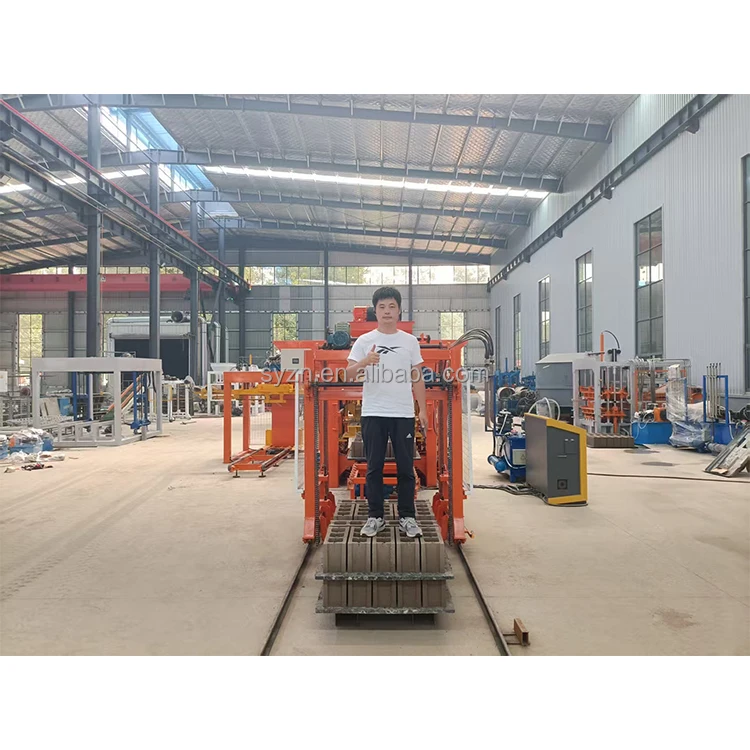
Intelligent control integration — The QT5-15 pairs a PLC touch-screen interface with automatic stacking logic so the operator manages recipes, not pallets.
Technical Specifications
| Parameter | Value |
|---|---|
| Model | QT5-15 |
| Product Type | Automatic Concrete Block Making Machine |
| Overall Dimensions (L×W×H) | 7400 × 1950 × 2800 mm |
| Vibration Form | Platform Vibration |
| Vibration Frequency | 4500–5100 RPM |
| Brick Height Range | 50–200 mm |
| Pallet Size | 1100 × 550 mm |
| Molding Cycle | 15–20 s |
| Rated Power | 30.5 kW |
| Net Weight | 6200 kg |
| Control System | PLC with touch screen |
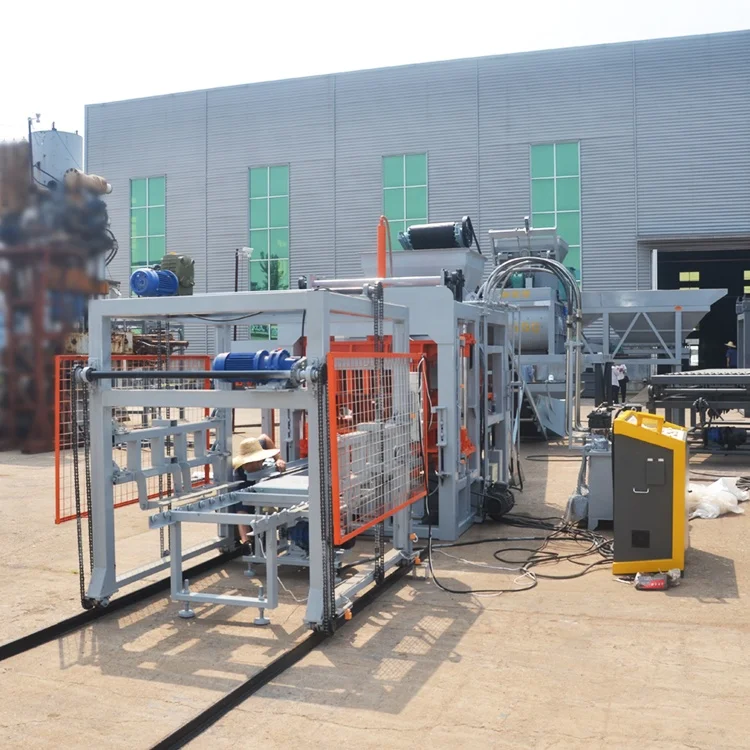
| Automation Level | Full automatic (host machine, stacker, mixer, belt conveyor) |
| Stacking Method | Automatic stacker included |
| Compressive Strength of Blocks | ≥ 15 MPa |
| Output Capacity | 1200 pcs/h based on 400×200×200 mm hollow block, 5 pcs/mould |
| Output Capacity | 1437 pcs/h based on 400×150×200 mm block, 6 pcs/mould |
| Output Capacity | 2880 pcs/h based on 240×115×90 mm block, 16 pcs/mould |
| Output Capacity | 7680 pcs/h based on 240×115×53 mm solid brick, 32 pcs/mould |
| Output Capacity | 2000 pcs/h based on 225×112.5×60 mm interlocking block, 16 pcs/mould |
| Output Capacity | 4800 pcs/h based on 200×100×60 mm paver, 20 pcs/mould |
| Raw Material Compatibility | Fly ash, cinder, coal gangue, river sand, gravel, cement, industrial waste residue |
| Color Products Capability | Yes, with optional color material feeding machine |
| Voltage & Frequency | Configurable to site requirements (confirm before production) |
| Hydraulic Pressure | To be confirmed with supplier |
| Vibration Force | To be confirmed with supplier |
Application Suitability
| Application | Material or Output |
|---|---|
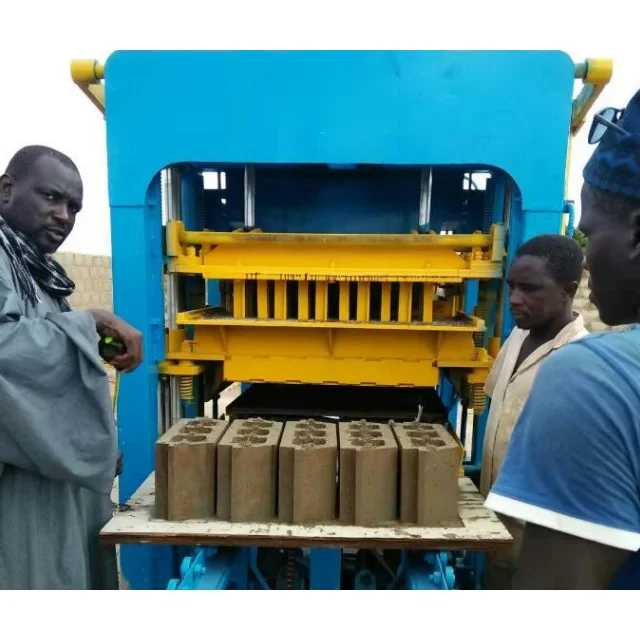
| Hollow block production for building construction | Crushed stone, river sand, cement, fly ash blends |
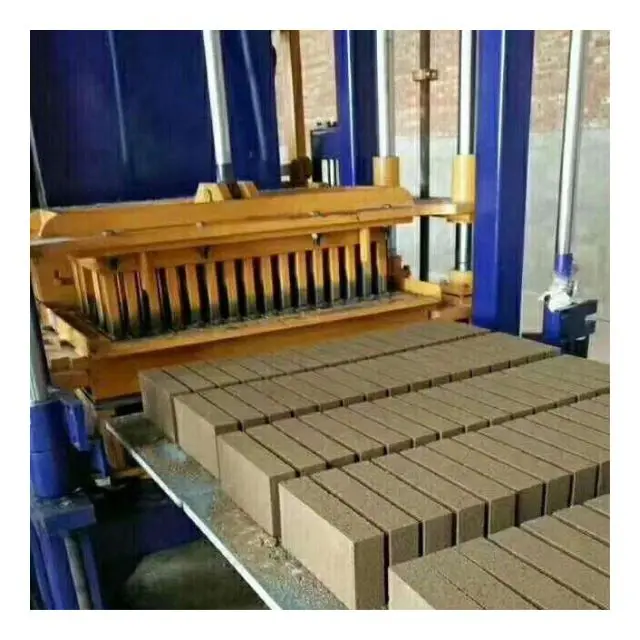
| Porous brick and solid brick manufacturing | Coal gangue, cinder, cement mixtures |
| Road kerb and paving block production | Gravel, sand, cement at higher hydraulic pressure settings |
| Interlocking block and slope protection brick | Industrial waste residue combined with local aggregate |
| Colored concrete product manufacturing | Standard mix with optional color material feeding machine |
What "1200 Pieces per Hour" Actually Means on an Automatic Block Machine PLC Controlled Line
Every output number is tied to a specific mould and block format — no single headline figure.
Capacity claims in this equipment class are often published as one number that assumes a particular hollow block size, leaving the buyer to discover on commissioning day that the paver format they actually sell runs at a fraction of that rate. The QT5-15 rates at 1200 pieces per hour based on a 400×200×200 mm hollow block with five cavities per mould, while the same press produces 4800 pieces per hour on 200×100×60 mm pavers with twenty cavities. When you compare quotations, ask each supplier which block format their headline number assumes — the gap between formats is significant enough to change the entire investment calculation. [NEED_CITE: standard block format dimensions by regional market]
Removing the Operator from the Pallet Loop
The defining task on a semi-automatic line is pallet handling — an operator pulls each loaded pallet off the press table, walks it to the curing rack, and returns with an empty board. On the QT5-15, the automatic stacker takes that cycle over, pulling pallets at a rhythm matched to the 15–20 second molding window. The operator’s role shifts to monitoring the PLC touch screen for fault codes and batch consistency, which is where an automatic block machine PLC controlled system earns its labour allocation.
Stored Recipes and Repeat Batch Consistency
The PLC stores process parameters — vibration duration, hydraulic dwell time, feed volume — per mould format. When you switch from hollow block to interlocking paver, the operator selects the saved recipe rather than re-tuning the press by feel. This matters most on a multi-format plant where the same automatic block machine PLC controlled platform runs three or four products in a single shift, and batch-to-batch density variation has to stay within the tolerance your market demands. [NEED_CITE: compressive strength testing standards for concrete masonry units]
Platform Vibration, Hydraulic Priority, and Block Density
Platform vibration at 4500–5100 RPM delivers energy uniformly across the 1100 × 550 mm pallet area, so blocks at the edge of the mould receive the same compaction as those in the centre. The hydraulic priority circuit ensures the press force is applied before vibration peaks, which locks aggregate particles into position rather than letting them settle after the pressure has dropped. Together, these two parameters determine whether a 400×200×200 mm hollow block reaches the stated ≥ 15 MPa compressive strength or falls short. Pallet size also defines your curing rack geometry — confirm your existing forklift can handle 1100 × 550 mm boards loaded with wet blocks before you commit to this format.
When the PLC Speaks a Language the Operator Cannot Read
I once had a QT5-15 automatic block machine PLC controlled line arrive at an Indonesian site where the touch screen defaulted to English, and the plant’s operators worked entirely in Bahasa. The first commissioning day was lost to translating menu labels with a phone app before we could load the correct multi-language pack. Voltage mismatches cause similar delays — a press wired for 380 V / 50 Hz running on a 440 V / 60 Hz supply will trip protection circuits on start-up and risk damaging the hydraulic pump motor. [NEED_CITE: voltage and frequency standards by export market] These are not engineering defects; they are specification gaps that a pre-production checklist eliminates.
Why the Right Configuration Starts with the Conversation, Not the Catalogue
Block machinery is our single focus, so the QT5-15 is specified as a matched system — press, stacker, mixer, and conveyor — rather than assembled from separate suppliers. Every configuration is set against your actual mix design and local aggregate, not a catalogue default. Mould design covers the formats your market sells, including custom drawings when a standard cavity layout does not match. Automation level is selectable, so you can commission the QT5-15 semi-automatic and add the stacker and feeder upgrades later. Installation includes on-site commissioning and operator training so the team running the line on day one is the same team that was briefed during factory acceptance.
Documentation & Verification
- Factory test record measuring actual cycle time on each mould included in your order
- PLC language and voltage confirmation sheet signed before production release
- Line layout drawing showing stacker, mixer, and conveyor positions relative to the press
- Hydraulic and electrical schematic with pump station and safety logic circuit detail
- Wear parts list matched to the specific mould formats supplied
Installation, Commissioning & Support
- Foundation pad sized to the 7400 × 1950 mm footprint with vibration isolation provisions
- Dedicated electrical circuit rated for the 30.5 kW total draw with correct voltage and frequency
- Press, stacker, and conveyor shipped partially dismantled for container loading and reassembled on site
- First-run cycle timed against the 15–20 s molding window on your chosen block format
- Operator training covers PLC recipe storage, fault diagnosis menus, and mould changeover procedure
- Wear parts inventory aligned to hydraulic seals and vibration platform bearings for the first service interval
What to Share Before We Finalise the Configuration
Send us the block formats your market actually buys, along with target daily output per format and the local aggregate you plan to use. Confirm the site voltage, frequency, and the language your operators need on the PLC touch screen. If you already have curing racks or forklifts, share their dimensions so the pallet size and stacker reach can be set accordingly. [NEED_CITE: CE machinery directive requirements for industrial equipment]
Frequently Asked Questions
Q: How is output capacity verified, and which block format does each figure assume?
A: Every capacity figure we publish is tied to a specific mould cavity count and block dimension. The QT5-15 rates at 1200 pcs/h on a 400×200×200 mm hollow block with five cavities, for example, and 4800 pcs/h on a 200×100×60 mm paver with twenty. We provide a capacity calculation document that lists hourly and daily output for every format included in your order, so you can plan production against real market demand rather than a single aggregate number.
Q: What PLC language options and voltage configurations are available for my site?
A: The PLC touch screen supports multiple display languages, and the correct option must be confirmed before the control panel is assembled — swapping language packs on site is possible but costs a commissioning day. Voltage and frequency are configured to match your supply, typically 380 V or 440 V at 50 Hz or 60 Hz. We require a signed voltage and language confirmation sheet before production begins to prevent mismatches on arrival.
Q: How does the automatic stacker integrate with the press cycle, and can I upgrade later?
A: The stacker is timed to the 15–20 second molding cycle, pulling each loaded pallet from the press table and placing it in the curing rack sequence without operator intervention. If you start with a semi-automatic configuration to reduce initial investment, the stacker and feeder modules can be added later — the QT5-15 PLC already includes the logic routines for full automation, so the upgrade is primarily mechanical and electrical rather than a control system replacement.
Q: What process data can be stored and recalled on the touch screen for different formats?
A: The PLC stores vibration duration, hydraulic dwell time, feed volume, and molding cycle parameters per mould format. When an operator selects a saved recipe, the press adjusts automatically to the correct settings, eliminating manual re-tuning. This is especially important when running multiple block sizes in a single shift, as it keeps compressive strength and dimensional tolerance consistent across batches without relying on operator experience.
Q: How does the fault diagnosis system work during commissioning and beyond?
A: The PLC monitors sensor inputs across the press, stacker, and feeder, displaying fault codes with descriptions on the touch screen when an interlock or component issue is detected. During commissioning, our technician reviews common fault scenarios with your team so they can distinguish a simple sensor blockage from a hydraulic pressure drop. For remote support, we can review logged fault histories to guide troubleshooting before a site visit becomes necessary.