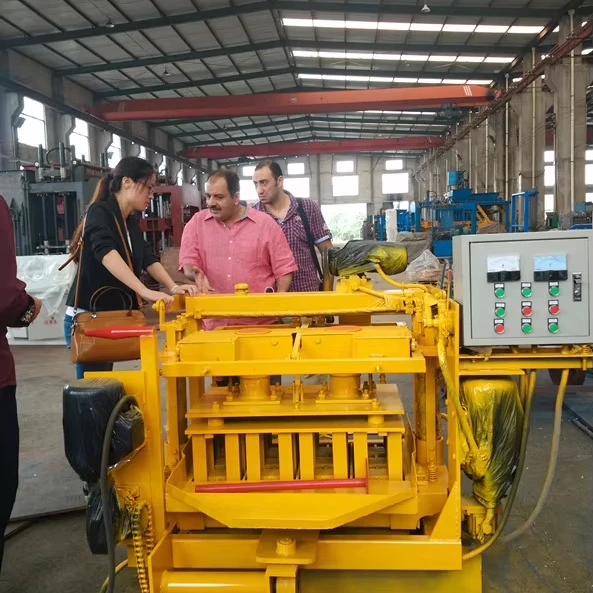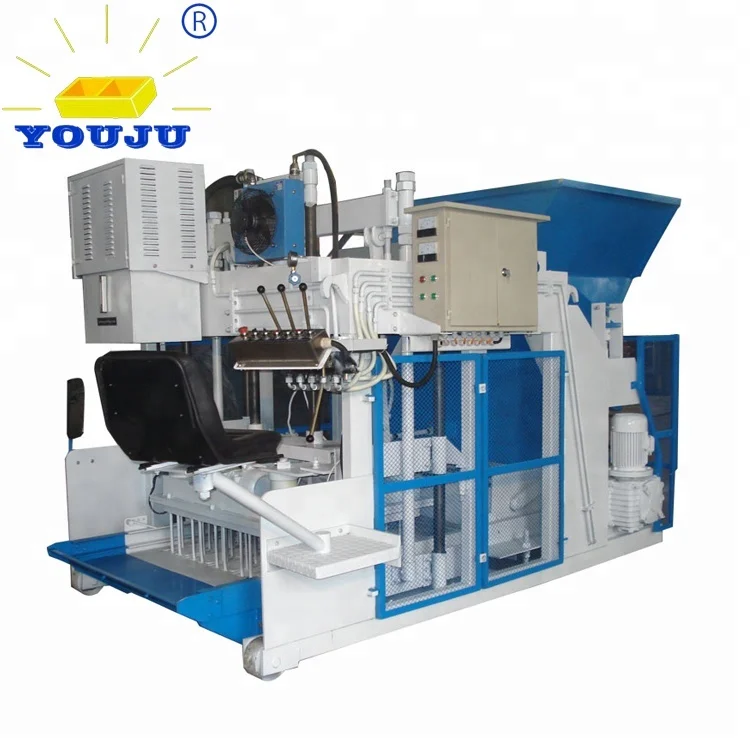
Description
Control language locked before dispatch — Every QMY12-15 panel and display is confirmed for the buyer’s local voltage, frequency, and operator language before the crate leaves the factory, removing the most common on-site commissioning delay.
Technical Specifications
| Parameter | Value |
|---|---|
| Model | QMY12-15 |
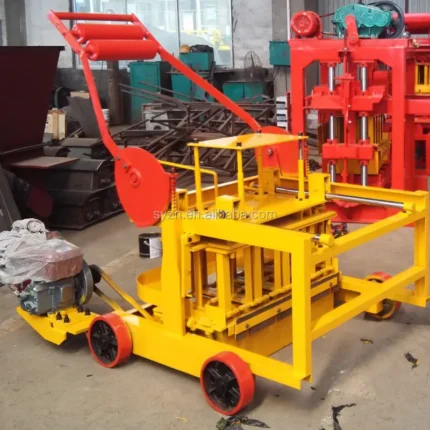
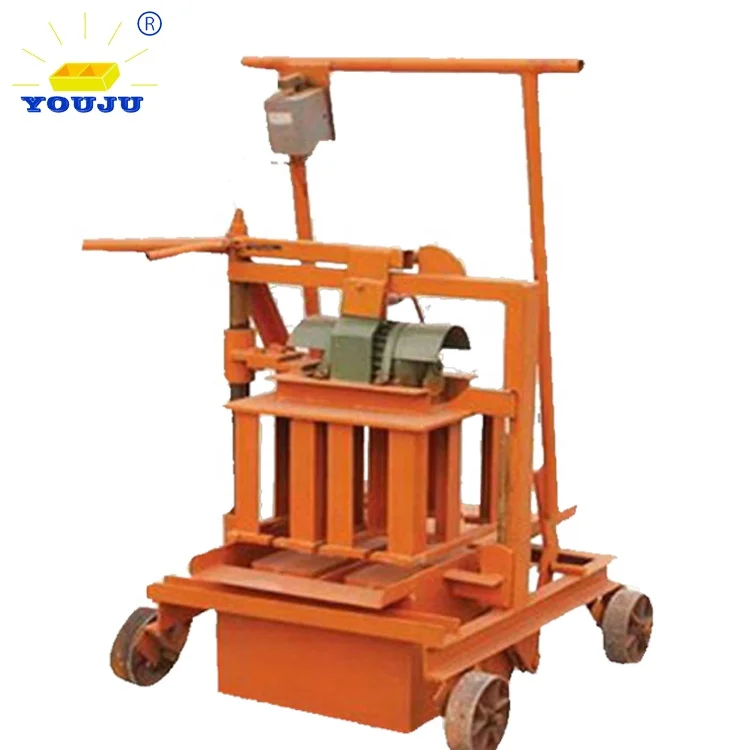
| Product Type | Automatic Mobile Cement Block Making Machine |
| Automation Level | Automatic with engine and gear drive |
| Block Size Range | 4-9 inch hollow block formats |
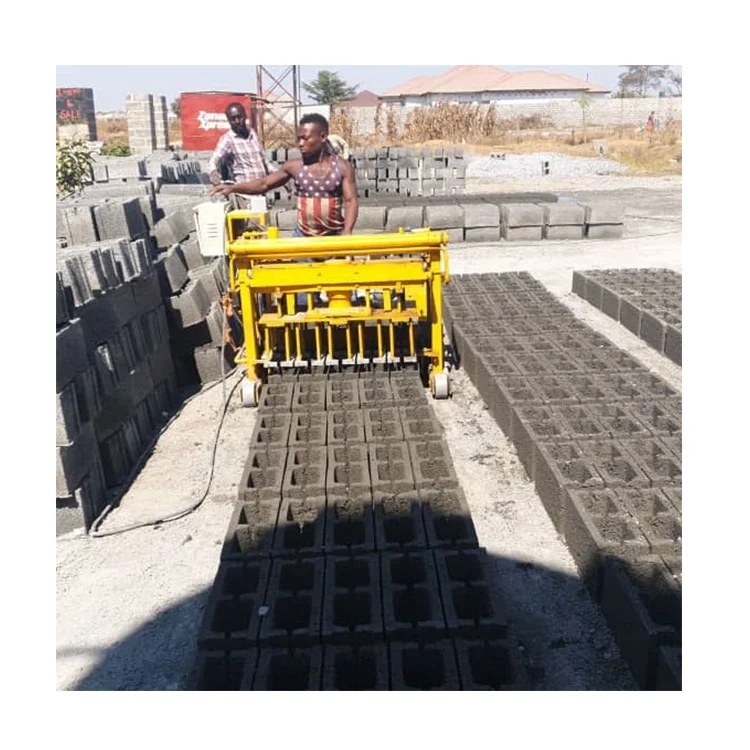
| Assembly State | Mobile, on-site production without fixed plant |
| Control System | PLC controlled (language and voltage configurable) |
| Mould Compatibility | Interchangeable hollow block moulds across the 4-9 inch range |
| Shipping Configuration | Nude loading or seaworthy wood carton, LCL or FCL |
| Output Capacity | (basis to be confirmed against specific block format and mix) |
Application Suitability
| Application | Material or Output |
|---|---|
| On-site hollow block production for building contractors | Cement, crushed stone, sand, and water mixed locally |
| Multi-phase housing development block supply | Consistent hollow block output in 4, 5, 6, 8, and 9 inch sizes |
| Remote project sites without access to a fixed block plant | Mobile deployment with engine drive eliminating grid dependency |
| Contractors replacing manual or egg-laying mobile machines | Upgraded to automatic cycle control for batch consistency |
Why the PLC Language Question Must Be Settled Before the Price
An automatic mobile block making machine PLC controlled in English is useless if your operator only reads Spanish.
I learned this on a Peruvian site where a brand-new mobile press sat idle for two days because the touch panel was locked in English and the local crew could not switch it to manual mode. The PLC was correct; the language was wrong. When sourcing a QMY12-15 for a market where operators speak Portuguese, French, or Arabic, the control language must be documented on the purchase order, not discovered at first power-up. [NEED_CITE: PLC interface language localization in industrial machinery exports]
What Automation Actually Removes from the Operator
On a semi-automatic mobile press, every cycle depends on the operator timing the vibration, mould drop, and travel by feel. The QMY12-15 takes that timing out of human hands. The engine-and-gear drive executes each press cycle at the same interval, which means the density of block number one and block number five hundred are governed by the same mechanical sequence rather than operator fatigue. For a contractor producing hollow blocks across a long build phase, that consistency is what keeps wall courses uniform.
Where Automation Stops on a Mobile Platform
A mobile machine by definition moves to the curing area, so automatic stacking and pallet-return loops are not part of the platform. The QMY12-15 automates the pressing cycle itself — vibration, pressure, and mould release — but blocks still need to be handled after they leave the mould shoe. Buyers upgrading from a fully manual egg-laying machine will notice a meaningful reduction in labour at the press, but should plan for manual or semi-manual curing-side handling. Clarifying this boundary before shipment prevents the disappointment of expecting a fully automatic line from a mobile footprint. [NEED_CITE: scope of automation in mobile versus stationary block plants]
Reading the Specs That Matter on a Mobile Press
The block size range of 4-9 inch covers the hollow formats most commonly specified in residential and light commercial construction across Latin America, West Africa, and Southeast Asia. The engine-and-gear drive means the press does not depend on site grid stability — a real advantage on development sites where temporary power is unreliable. The interchangeable mould system allows a single QMY12-15 to produce multiple hollow formats, but mould change time and the tools required are details that must be confirmed with the supplier so that format switching does not consume an entire shift. The automatic cycle control works in concert with the gear drive to maintain repeatable vibration duration across every block, which directly influences compressive strength consistency when the mix design is held constant.
The Cost of Skipping the Voltage and Frequency Confirmation
Mobile machines often end up on sites with generator power rather than a stable grid connection. If the QMY12-15 is wired for a voltage or frequency that does not match the on-site generator, the PLC may boot but the solenoid valves will behave erratically, producing blocks with inconsistent compaction. Worse, the control board can fail silently and corrupt cycle parameters. Confirming voltage, frequency, and phase before production starts is not paperwork — it is the single step that prevents a machine from arriving as dead capital. [NEED_CITE: voltage and frequency standards by export market]
Why Sourcing Through This Channel
Block machinery is the sole focus here, which means the QMY12-15 is specified as a matched system — press, mould, and drive — rather than assembled from unrelated suppliers. Configuration is set against the buyer’s actual mix design and local aggregate, not pulled from a catalogue default. Mould design covers the hollow formats the buyer’s market actually sells, with custom drawings available. Automation level is selectable, so a buyer running a semi-automatic mobile unit today can understand exactly what the QMY12-15 changes and what remains manual. Installation and commissioning support includes operator training on the PLC, reducing the risk of a language or interface mismatch at first start-up.
Documentation & Verification
- Machine specification sheet confirming PLC type, display language, and voltage/frequency
- Capacity calculation stating the exact hollow block format assumed for the quoted output
- Mould drawing and format list covering every 4-9 inch size included in the order
- Factory test record run on the buyer’s confirmed block format before dispatch
- Voltage and control language confirmation signed before shipment release
- Operation and maintenance manual in the operator’s working language
Installation, Commissioning & Support
- Engine drive eliminates need for a dedicated three-phase circuit on remote sites
- Mould change tools and procedure reviewed during on-site commissioning visit
- PLC language and parameter settings verified with local operators before handover
- Gear drive lubrication schedule documented in the maintenance manual
- Wear parts list provided covering mould shoes, vibration springs, and drive belts
- Operator training covers manual override mode for troubleshooting without PLC access
Before You Send an Inquiry
To size the QMY12-15 correctly, share the hollow block format or formats your project requires, the local aggregate available for your mix, and the on-site power specification — generator rating, voltage, frequency, and phase. Confirm the language your operators read on a touch panel. If you are replacing an existing mobile machine, note its current daily output and the block sizes you run most often so the capacity proposal is grounded in a realistic comparison.
Frequently Asked Questions
Q: How does the QMY12-15 automation level compare to a semi-automatic mobile machine?
A: The QMY12-15 automates the press cycle through its engine-and-gear drive and PLC, so vibration duration and mould release are executed consistently without operator timing. A semi-automatic mobile machine leaves those steps to manual control. The difference is most visible in block density consistency across a long production run, though curing-side handling remains manual on both platforms.
Q: Can the PLC display language be set before the machine ships?
A: Yes. The control language is confirmed during the order process and documented on the specification sheet before production. This prevents the situation where an operator cannot navigate the touch panel on day one. The confirmation covers both the default display language and any alarm message translations required for safe operation.
Q: What hollow block format is the output capacity based on?
A: Output capacity depends on the specific hollow block size, mix design, and cycle parameters selected. A quoted figure should always state the block format it assumes — for example, a 6-inch hollow block on a given mix. Without that stated basis, a capacity number is not comparable between suppliers or meaningful for project planning.
Q: What is the upgrade path if automatic stacking is needed later?
A: The QMY12-15 is a mobile platform, so full automatic stacking and cubing are features of stationary plant configurations. Buyers who later move to a fixed site can transition to a stationary line where pallet feeding, stacking, and curing rack handling are integrated. The PLC familiarity gained on the QMY12-15 carries over to those more automated setups.
Q: How are voltage and frequency confirmed for the target market?
A: Voltage, frequency, and phase are confirmed in writing before production begins, matched to the buyer’s on-site power source — whether grid or generator. The confirmation is recorded on the specification sheet and verified during the factory test, so the control system and drive components are validated against the correct electrical standard before dispatch.