Description
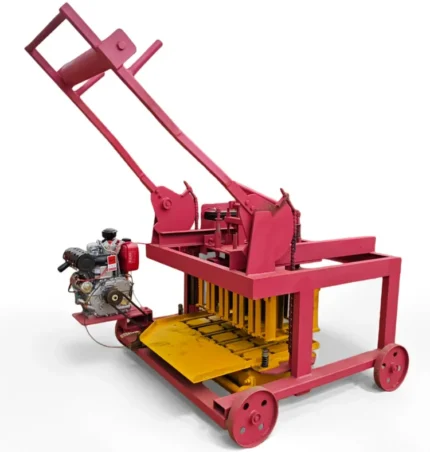
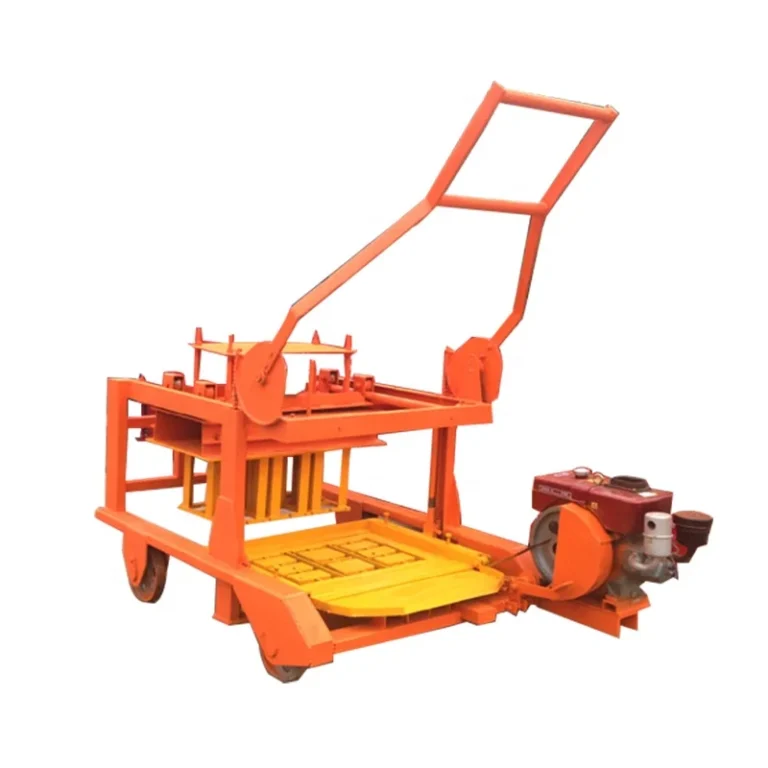
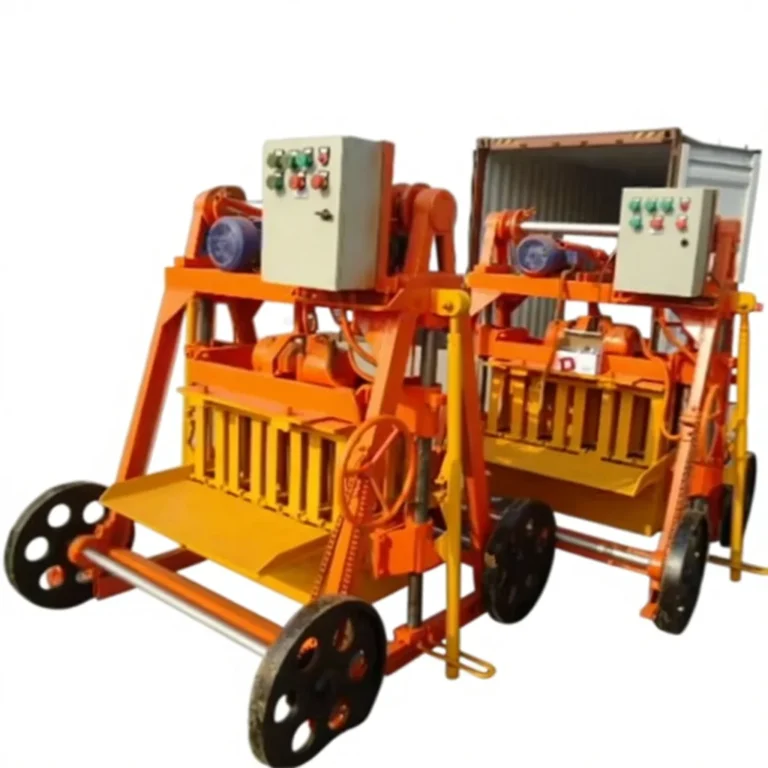
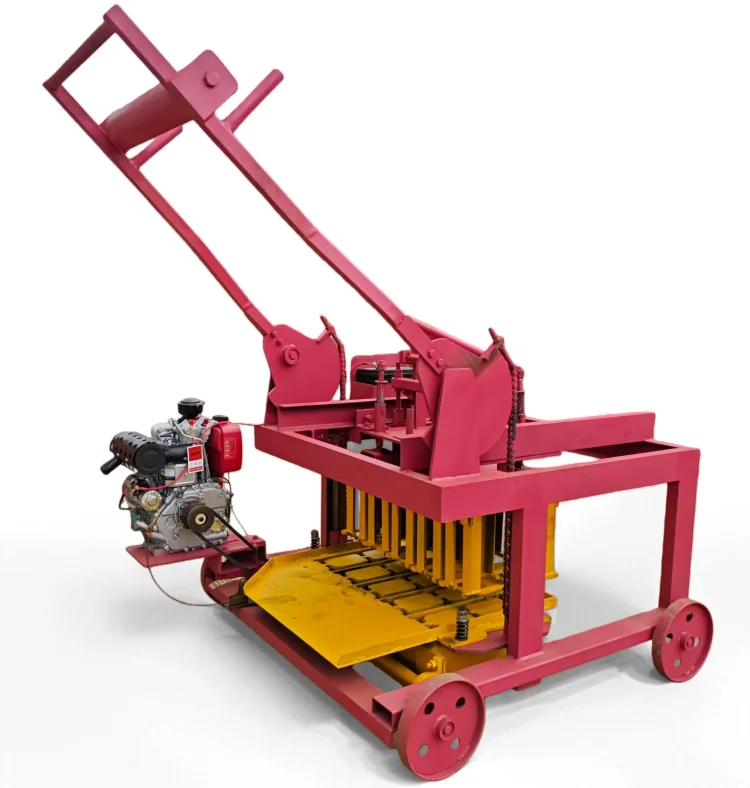
Pallet-Free Mobility — A diesel-driven mobile block making machine configured with PLC control and vibration-pressure molding for consistent output on sites where pallets and grid power are unavailable.
Technical Specifications
| Parameter | Value |
|---|---|
| Model | QMR4-45 |
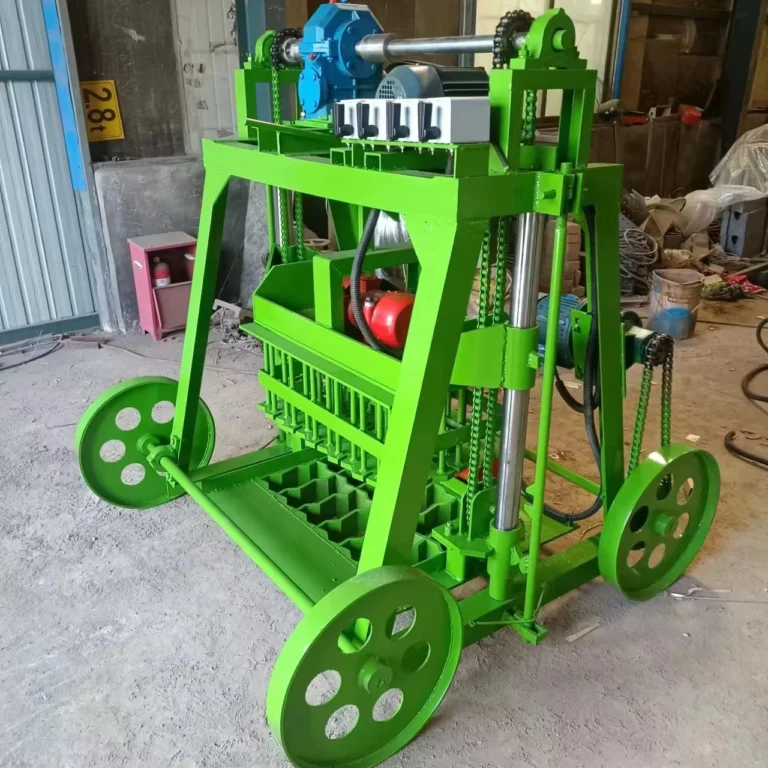
| Product Type | Mobile Block Making Machine |
| Molding Cycle | 45s (basis not stated in source — confirm block format / material / thickness) |
| Power Source | Diesel |
| Power Rating | 8 hp |
| Molding Form | Vibration and Pressure |
| Vibration Force | 60 KN |
| Total Weight | 800 kg |
| Overall Dimensions (L×W×H) | 2420 × 1320 × 1650 mm |
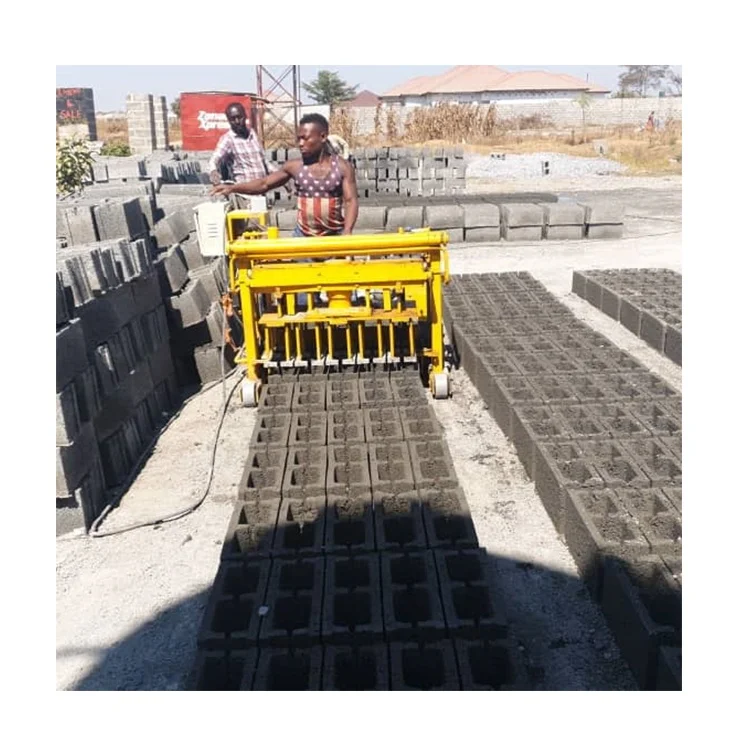
| Pallet Requirement | No pallet required |
| Mobility | Mobile, moveable on site |
| Included Equipment | JZC350 or JQ350 Diesel Concrete Mixer; Trolley |
| Compatible Block Formats | Paver brick, hollow block, concrete block, solid brick, fly ash brick |
| Automation Level | Manual / semi-automatic operation |
| Control System | Available with PLC or manual control (verify against manufacturer catalog) |
| Voltage & Frequency | Configurable for electric accessories (verify against manufacturer catalog) |
Application Suitability
| Application | Material or Output |
|---|---|
| Remote housing project sites | Hollow blocks and solid bricks produced from local river sand and crushed stone |
| Off-grid construction yards | Paver bricks and fly ash bricks with diesel-powered mixing and molding |
| On-site contractor production | Concrete blocks laid directly on the ground without fixed-plant infrastructure |
| Small-scale block yards | Multiple block formats switched via mould changes for local market demand |
What the 45-Second Cycle Time Actually Means for Your Site
The cycle number only matters once your block format, mix moisture, and aggregate grading are confirmed.
I have seen mobile block machines sit idle on Nigerian construction sites because the quoted cycle time assumed a dry, well-graded sand that the contractor could not source locally. When the local river sand carried high moisture, the vibration force was not enough to consolidate the mix, and the blocks crumbled before curing. The automatic mobile block machine must be matched to your real aggregate, not a catalog default. [NEED_CITE: effect of aggregate moisture on vibration molding cycle time]
Removing the Operator from the Control Loop
The PLC controlled mobile block making machine shifts the operator’s role from making real-time decisions to monitoring a process that repeats with batch-to-batch consistency. Vibration duration, pressure application, and molding cycle timing are stored in the controller rather than left to the operator’s judgment. On remote sites where skilled labor is scarce, this reduces the variation between the first block of the morning and the last block before shutdown.
Starting Manual, Adding Automation Later
This QMR4-45 can be configured from manual operation through to automated batching and remote diagnostics. A buyer setting up a first block yard in an area with unreliable electricity can start with manual pallet-free operation and the diesel mixer, then add PLC-controlled batching and automatic stacking as production volume grows. The upgrade path is documented so the initial investment is not stranded. [NEED_CITE: PLC control upgrade paths for mobile block production lines]
Vibration Force, Pressure, and Mix Design Interaction
The 60 KN vibration force works in combination with pressure to compact the concrete mix into the mould. Vibration alone does not produce block strength — it must be matched to the hydraulic pressure setting and the buyer’s specific mix design. A mix with high fines content requires different vibration amplitude than a mix with coarse aggregate, and the PLC controlled mobile block making machine allows these parameters to be stored as recipes for each block format. The 8 hp diesel engine provides the power source where grid electricity is absent, and the included JZC350 or JQ350 mixer ensures the mix reaches the press at the correct consistency. Mould changes allow switching between hollow blocks, solid bricks, pavers, and fly ash bricks, but the changeover time depends on the operator’s familiarity with the system.
The Cost of Skipping the Sample Test
Sending a sample of your local aggregate before the order is confirmed prevents the scenario where the machine arrives configured for a mix you cannot source. When the vibration force and pressure settings are calibrated to a different material, block strength becomes inconsistent and rejection rates climb on site. Buyers who skip this step often discover the problem only after the first production run, when rework costs have already accumulated. [NEED_CITE: block strength variation caused by unverified aggregate samples]
Why Procurement Should Focus on the Line, Not Just the Press
Block machinery is a single focus here, so the machine, mould, and handling equipment are specified as one matched system. The QMR4-45 is configured against your actual mix design and local aggregate, not a standard catalog sheet. Mould design covers the formats your market sells, and custom drawings are supported. Automation level is selectable, and installation support includes operator training on your specific block format.
Documentation & Verification
- Capacity calculation stating the block format and mix assumed for the 45-second cycle
- Mould drawing and format list matching your target paver, hollow, and solid brick products
- Voltage and control language confirmation for all electric accessories and PLC display
- Factory test record on your submitted local aggregate sample before dispatch
- Hydraulic and electrical schematic for the diesel and optional PLC configuration
Installation, Commissioning & Support
- Site leveling required for the 2420 × 1320 mm footprint to ensure consistent ground-laid block curing
- Diesel fuel supply and exhaust ventilation confirmed for the 8 hp engine and included mixer
- Machine delivered on trolley, moved to production position without crane or forklift
- First-run commissioning with operator training on mould change procedure for each block format
- Wear parts list covering hydraulic seals, vibration motor components, and mould liners
Before You Request a Quote
Provide your target block format, the local aggregate type and moisture range, and whether grid electricity is available for any PLC-controlled accessories. Confirm the voltage and frequency standard in your region, the display language required for the control interface, and whether you plan to start with manual operation or add automated batching from the first production run.
Frequently Asked Questions
Q: How do I verify the daily output the 45-second cycle time represents?
A: The 45-second cycle must be confirmed against your specific block format, material, and thickness. Request a capacity calculation that states the exact block dimensions and mix design assumed, so you can compare quoted output against your actual production target rather than a generic catalog figure.
Q: What voltage and PLC display language should I confirm before shipment?
A: Any electric accessories such as the optional PLC panel or batching system must be matched to your site’s voltage, frequency, and the operator’s display language. These are confirmed during the order process and documented before production begins to avoid commissioning delays on arrival.
Q: Can I start with manual operation and add automation later?
A: Yes. The machine supports a documented upgrade path from manual operation to semi-automatic or PLC-controlled batching and remote diagnostics. The initial configuration and future upgrade options are specified together so the base machine is not replaced when automation is added.
Q: How long does a mould change take on site?
A: Mould change time depends on the format being switched and the operator’s familiarity with the system. Request the documented changeover procedure and time for your specific block formats so you can plan production schedules around format flexibility.
Q: Why does my local aggregate need to be tested before the machine is configured?
A: Vibration force and hydraulic pressure must be matched to your aggregate grading and moisture content. A sample test before order confirmation ensures the machine is configured for your actual material, preventing inconsistent block strength and high rejection rates during first production.