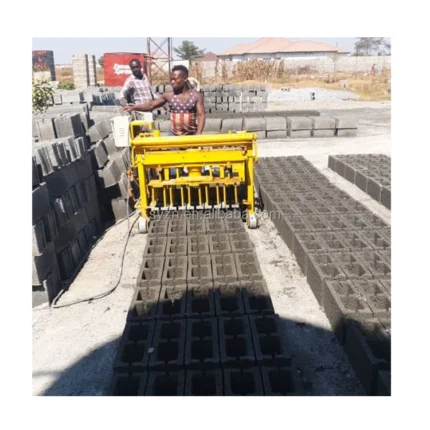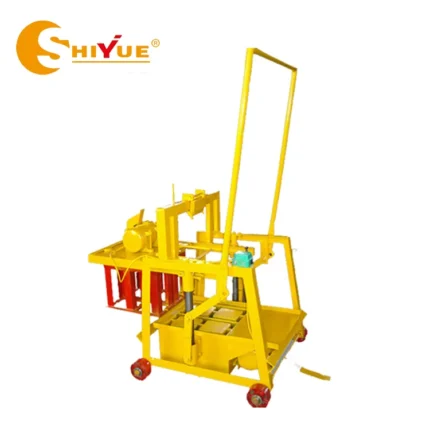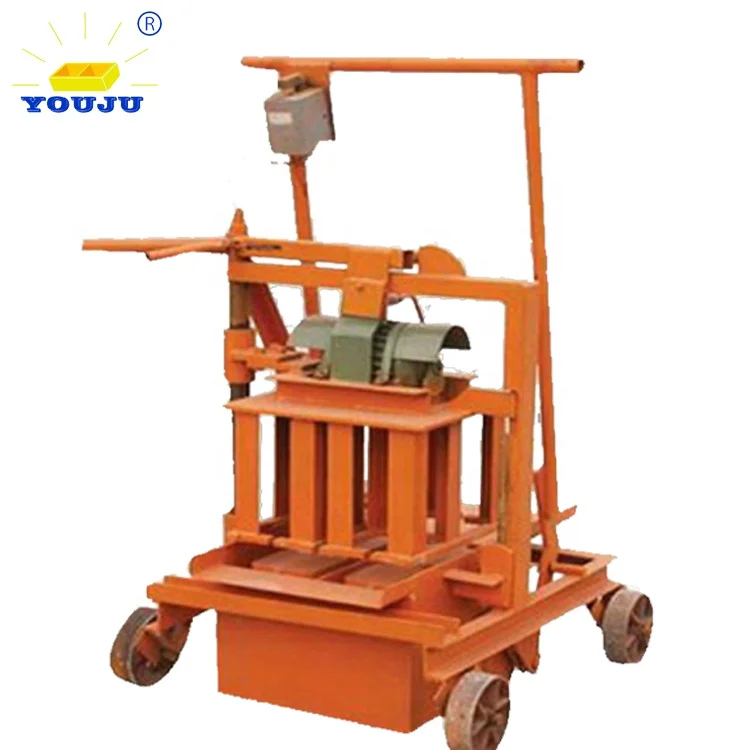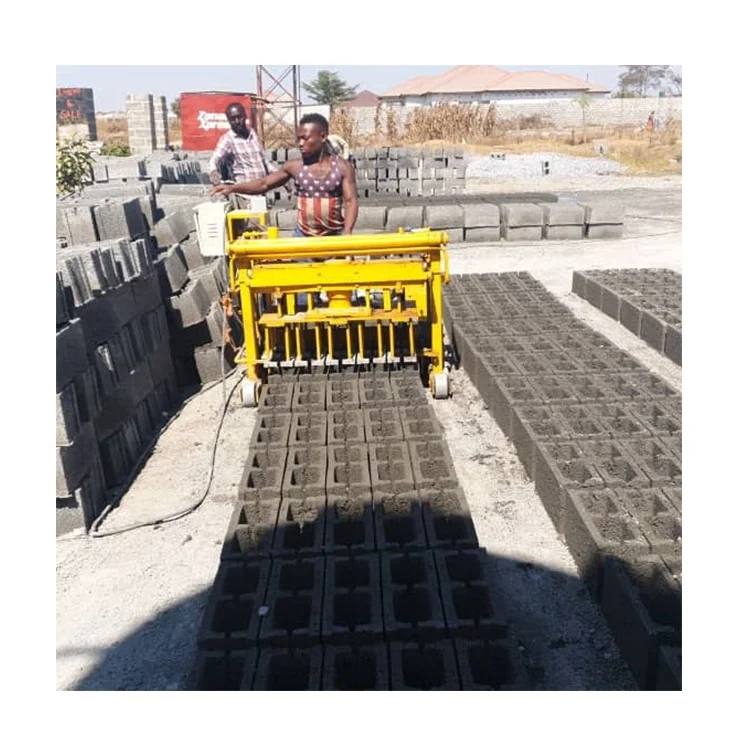
Description
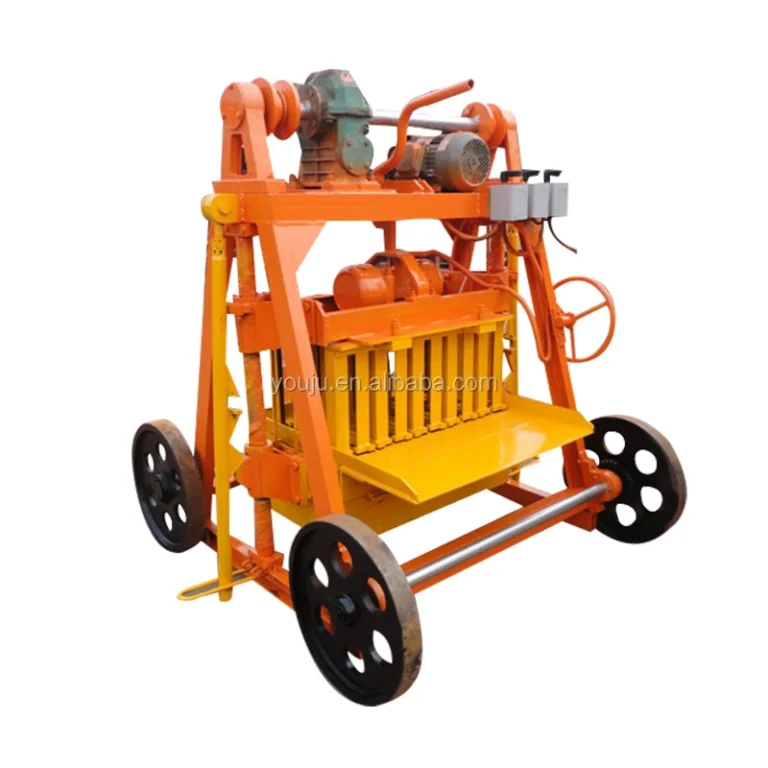
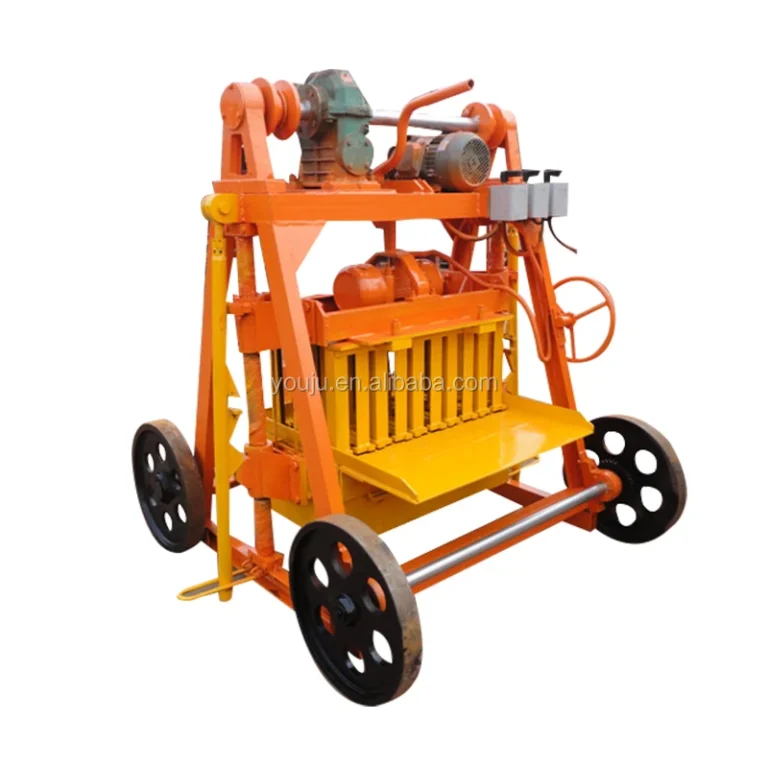
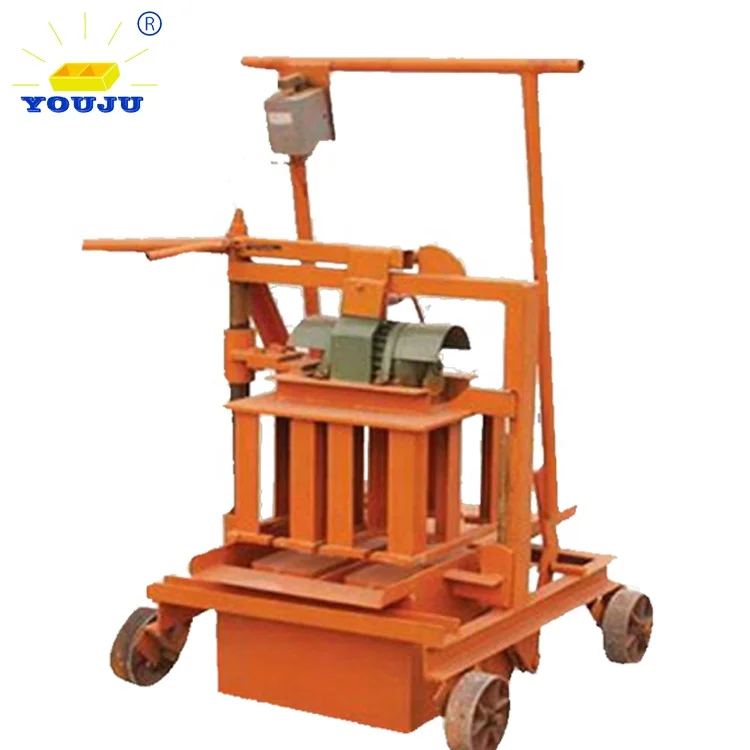
Automation starts with the first cycle you don’t have to think about — the QMJ2-45 mobile block machine is configured as a matched system from mould to stacking method, not assembled from catalogue defaults, so every upgrade step builds on a known baseline.
Technical Specifications
| Parameter | Value |
|---|---|
| Model | QMJ2-45 |
| Product Type | Mobile Block Making Machine |
| Machine Type | Mobile (egg-laying), manual operation |
| Pallet Requirement | No pallets required |
| Labor Requirement | 1–3 workers |
| Mould Interchangeability | Hollow brick formats: 400×200×200mm, 400×150×200mm, 400×100×100mm |
| Cycle Time | 25–30 seconds per mould |
| Output (400×200×200mm hollow block) | 160 pcs/h, 1,280 pcs/8hr (basis: 2 pcs/mould, 25–30s cycle) |
| Output (400×150×200mm hollow block) | 240 pcs/h (basis not stated in source) |
| Output (400×100×200mm hollow block) | 320 pcs/h, 2,560 pcs/8hr (basis: 4 pcs/mould, 25–30s cycle) |
| Power Source | Electric motor or manual hand-operated (basis not stated in source — confirm with supplier) |
| Vibration Force | Not stated in source |
| Hydraulic Pressure | Not applicable (manual, non-hydraulic) |
| Control System | Manual (no PLC) |
| Standards | ISO 9001:2000, CE |
Application Suitability
| Application | Material or Output |
|---|---|
| Small-scale on-site hollow block production | Crushed stone, sand, cement and local aggregate mixes for 400×200×200mm, 400×150×200mm and 400×100×200mm hollow bricks |
| Entrepreneur-level first block plant | Low-investment entry with minimal space, free-moving egg-laying operation without fixed curing racks or pallets |
| Remote or off-grid job sites | Production where fixed power supply or pallet infrastructure is unavailable, manual or motor-assisted operation |
| Contractor producing blocks on own site | On-site hollow block runs matched to local aggregate and project-specific format requirements |
What "Consistency" Actually Means on a Manual Block Press
Block strength varies because the human operator is the control system — automation removes that variable one cycle at a time.
A manual mobile block machine depends entirely on the operator’s rhythm for mould filling, vibration timing and stripping. I have watched the same crew produce hollow blocks that pass a drop test in the morning and crack in half by afternoon, simply because fatigue changed how they handled each cycle. The PLC controlled mobile block machine concept addresses exactly this gap by holding vibration duration, pressure application and cycle sequence constant across every shift. When vibration force and hydraulic pressure are not matched to the buyer’s mix design and local aggregate, the result is a block that looks right on the outside but fails under load. [NEED_CITE: effect of operator technique variation on concrete block compressive strength]
Where the Operator Becomes the Bottleneck
On the QMJ2-45, the 25–30 second cycle time per mould is achievable only when the operator maintains consistent rhythm. A PLC controlled mobile block machine eliminates the need for the worker to count seconds mentally — the controller governs vibration start and stop, and the cycle repeats identically. This matters most when the target block format changes frequently, because each format has a different fill depth and vibration requirement that the operator must remember.
Reading the Capacity Numbers Without Optimism Bias
The capacity figures for this automatic mobile block machine upgrade path must be read with their cycle time basis. At 2 pcs per mould and a 25–30 second cycle, the 400×200×200mm hollow block yields 160 pieces per hour. That figure assumes uninterrupted operation with material ready at the hopper and finished blocks cleared from the laying path. Any pause in material supply or block removal extends the real cycle time beyond the rated window. [NEED_CITE: actual versus rated output discrepancy in mobile block production]
Vibration, Mix Design and the Aggregate You Actually Have
The QMJ2-45 is non-hydraulic and relies on vibration to compact the mix. Vibration force must match the aggregate gradation and moisture content of the buyer’s local material. I have seen red laterite soil in West Africa substitute for standard sand in a mix, only to produce hollow blocks that crumbled under their own weight because the vibration frequency was set for a different material profile. The mould is designed for a specific fill volume, and if the mix is too dry or too wet for the vibration setting, density drops and block strength becomes unpredictable. This is why configuration against the buyer’s actual mix design matters more than the headline cycle time.
The Cost of Skipping the Automation Question
Buyers who purchase a manual mobile machine without planning the upgrade path often face a second capital outlay within two years. The mismatch shows up when daily output targets grow but the labour cost to run three shifts on manual equipment exceeds the cost of PLC-controlled operation. Blocks produced manually also carry a higher rejection rate at the construction site, where consistent dimensions and strength are checked by the receiving contractor. [NEED_CITE: labour cost escalation in manual versus semi-automatic block plants]
Why the System Matters More Than the Press Alone
Block machinery as a single focus means the QMJ2-45 is specified with its mould, mobility and stacking method as one matched set. The mould formats available — 400×200×200mm, 400×150×200mm and 400×100×200mm — are selected against the buyer’s market demand, not a catalogue default. Configuration is set against the buyer’s actual mix design and local aggregate so that vibration and compaction align with the material available on site. The automation level is selectable, meaning a buyer starting with this manual unit can move to PLC-controlled operation on a compatible platform without replacing the entire line. Mould design and supply extend to custom formats the buyer’s market sells. Installation and commissioning include operator training so the crew understands both the manual baseline and what the upgrade changes.
Documentation & Verification
- Line layout showing QMJ2-45 footprint and material flow path for your site conditions
- Capacity calculation per block format with 25–30s cycle time assumption stated
- Mould drawing and format list covering all three hollow brick dimensions
- Voltage and control language confirmation before shipment for PLC-equipped upgrade models
- Factory test record on your local aggregate mix before dispatch
- Operation and maintenance manual with wear parts list for manual and upgraded configurations
Installation, Commissioning & Support
- Level ground preparation with no fixed foundation required for QMJ2-45 egg-laying operation
- Power source confirmation: electric motor voltage and frequency matched to your site supply
- Mould interchangeability verified on-site across all three hollow brick formats during commissioning
- Operator training on 25–30 second cycle rhythm and manual stacking method for 1–3 worker crew
- Wear parts and mould replacement schedule documented from first operating hour
- Daily maintenance checklist covering vibration assembly and mould wear surfaces
Before You Request a Quote
A mobile block machine purchase starts with your target block format, daily output requirement and the aggregate you can source locally. Share your site conditions — available floor area, curing space and whether power supply is stable — so the configuration matches what you will actually run. If you are evaluating this as a step toward PLC-controlled operation, confirm your local voltage, frequency and preferred control display language so the upgrade path is documented from day one.
Frequently Asked Questions
Q: How do I verify real daily output — what block format and cycle time is the capacity figure based on?
A: Every capacity number must be tied to a specific block format and cycle time. The QMJ2-45 rates at 160 pieces per hour for the 400×200×200mm hollow block based on 2 pieces per mould and a 25–30 second cycle. Ask for the calculation sheet that shows this basis, and compare it against your actual shift length and material supply continuity.
Q: What does PLC control remove from the operator, and what does it add in batch-to-batch consistency?
A: PLC control takes over cycle timing, vibration duration and sequence repetition so the operator no longer manages these variables manually. Batch-to-batch consistency improves because every cycle runs identically regardless of shift length or operator fatigue. This reduces block strength variation and dimensional deviation across a production run.
Q: Can I start with this manual mobile machine and upgrade to automatic pallet feeding and stacking later?
A: The QMJ2-45 is pallet-free by design, so the upgrade path focuses on PLC-controlled vibration timing and cycle automation rather than pallet handling. Compatibility with semi-automatic and fully automatic platforms should be confirmed before purchase, with documentation showing which components carry over and which are replaced.
Q: How are voltage, frequency and control display language confirmed before commissioning?
A: These three parameters must be documented before shipment, not after arrival. For PLC-equipped models in the upgrade range, confirm your site voltage, grid frequency and the language your operators read. A written confirmation avoids commissioning delays caused by mismatched electrical supply or an unreadable control interface.
Q: What automation level matches my current labour cost and target output — how do I decide?
A: Start by calculating the labour hours your current manual operation requires to meet daily output, then compare that against the labour reduction a PLC-controlled system offers. If your target output exceeds what 1–3 workers can sustain on a 25–30 second cycle, the upgrade typically pays for itself through reduced crew size and lower block rejection rates.