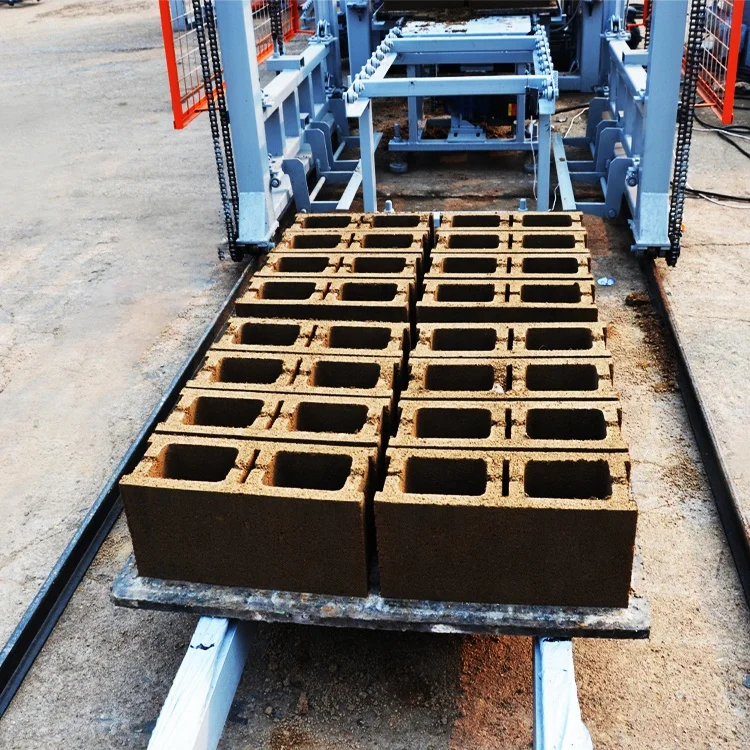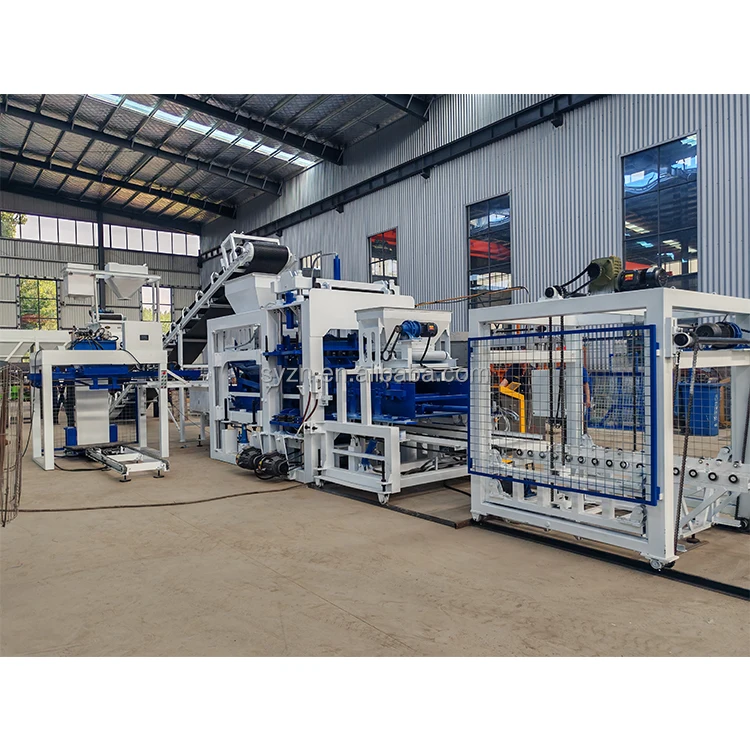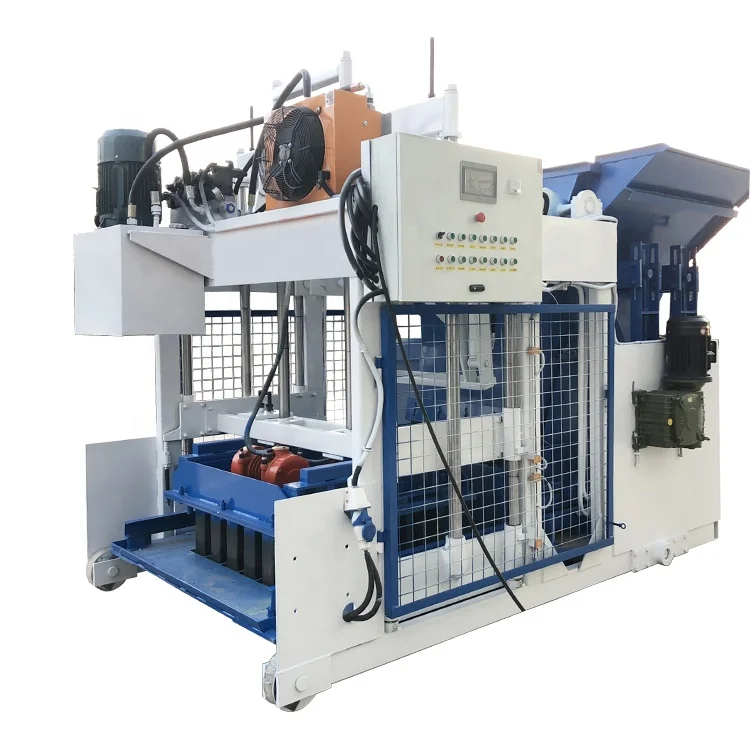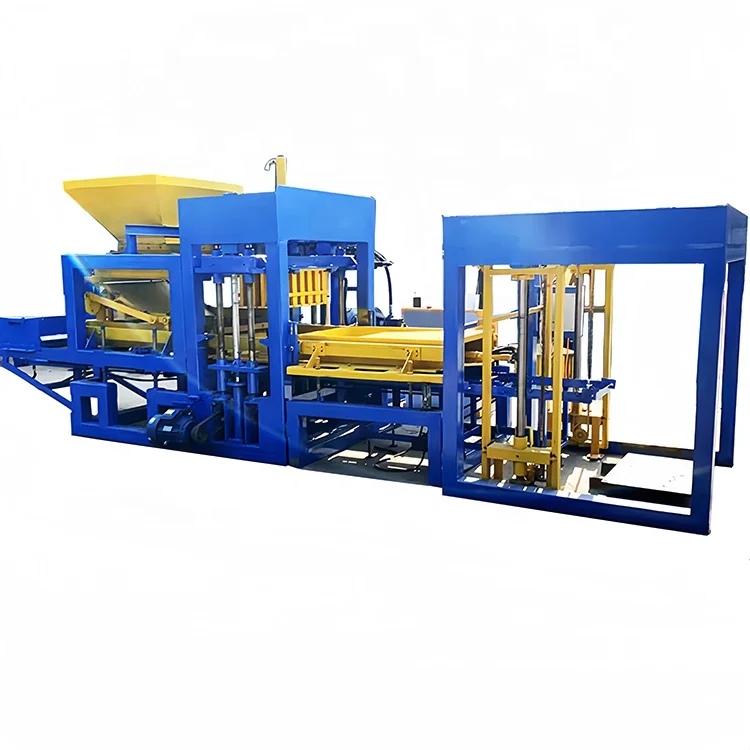
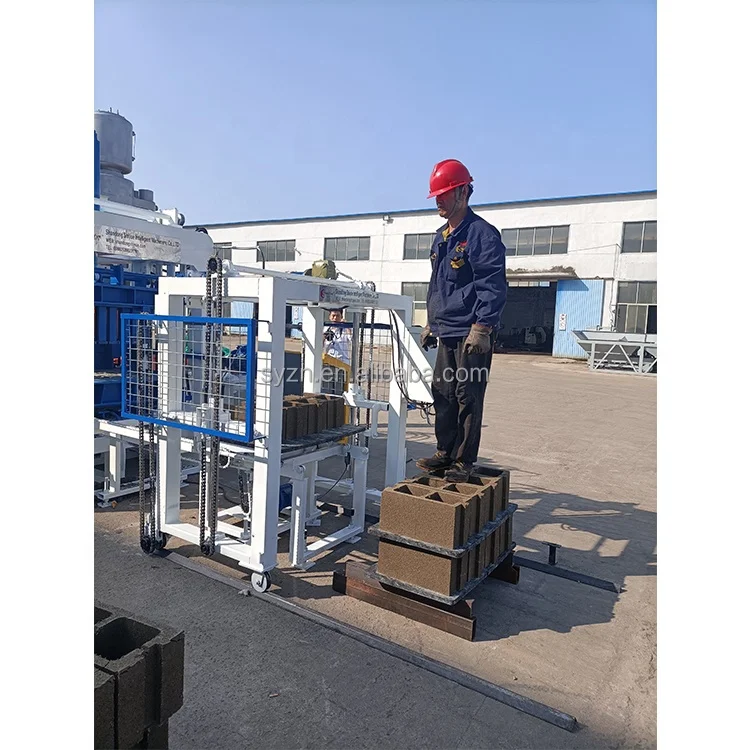
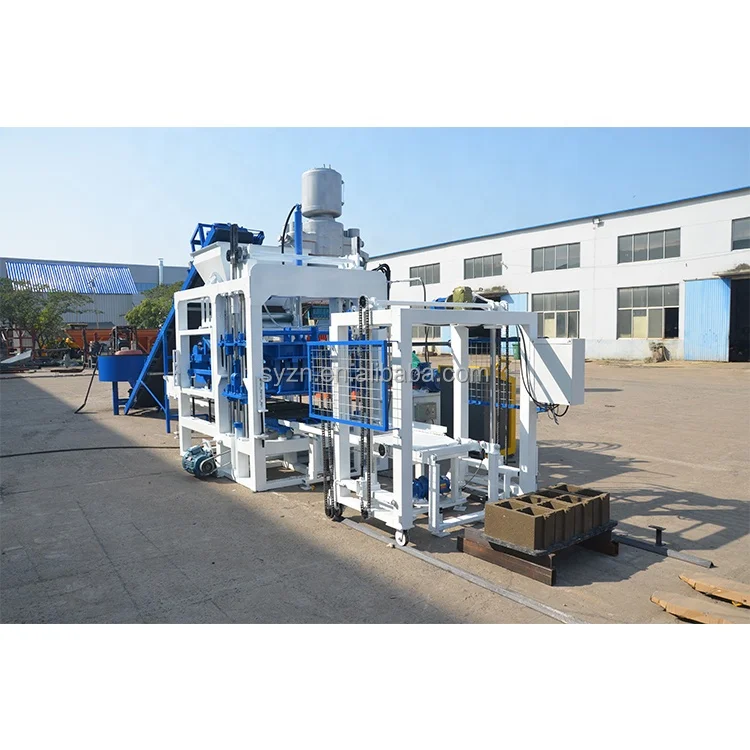
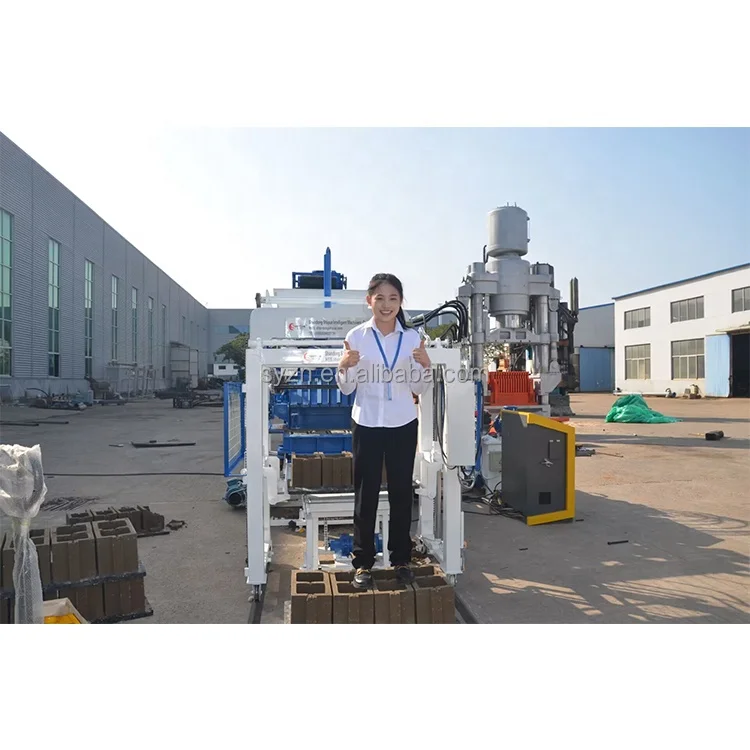
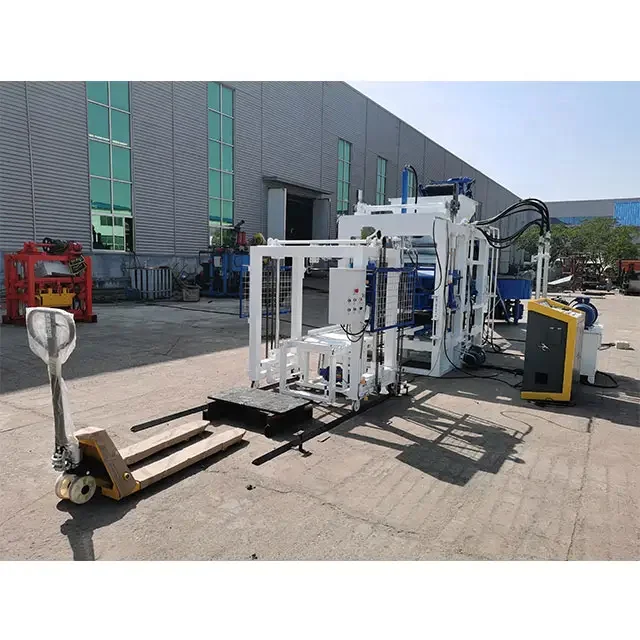
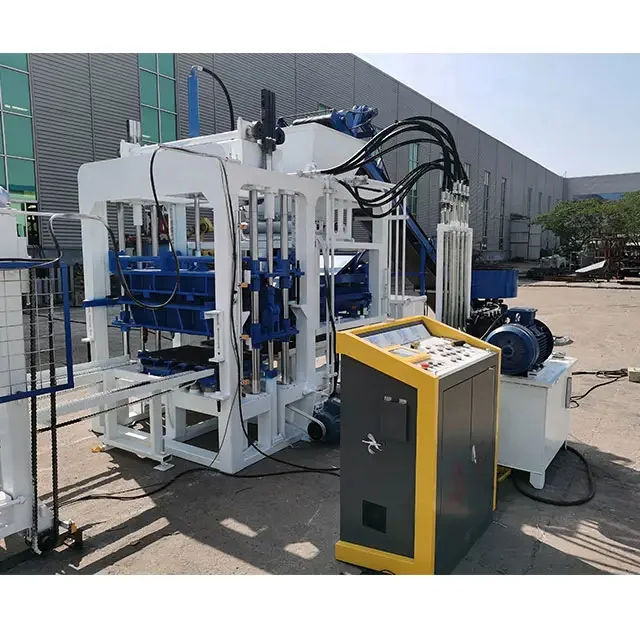
Description
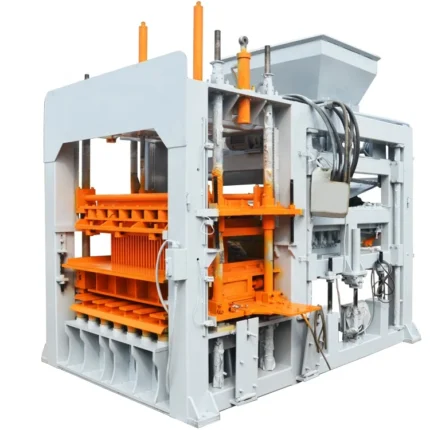
Integrated control logic — The QT4-18 PLC controlled concrete block making machine centralizes molding parameters so vibration, pressure, and cycle timing stay locked across every shift, eliminating batch-to-batch variation that manual operation cannot avoid.
Technical Specifications
| Parameter | Value |
|---|---|
| Model | QT4-18 |
| Product Type | Hydraulic Concrete Block Making Machine |
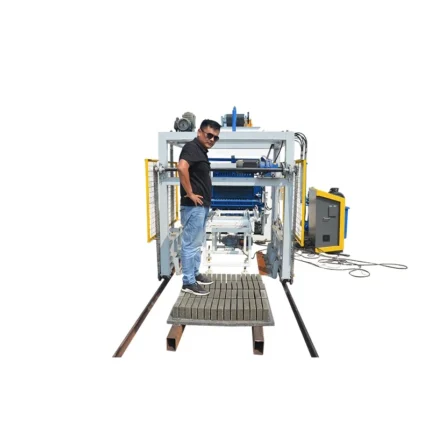
| Overall Dimensions (L×W×H) | 3900×1600×2300 mm |
| Molding Cycle | 15–25 s |
| Vibration Force (Exciting Power) | 40–50 kN |
| Rated Power | 24 kW |
| Mixer Model | JQ350 |
| Pallet Size | 850×550×25 mm |
| Net Weight | 3 T |
| Control System | PLC control system |
| Hydraulic Station | High-pressure hydraulic station included |
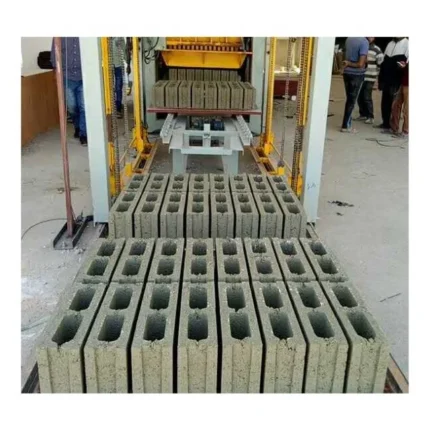
| Included Equipment | Block making machine, hydraulic station, PLC control system, pallet feeder, brick conveyor, block sweeper |
| Free Accessories | Manual hydraulic trolley, spare parts, tools |
| Output Capacity (Hollow block 400×200×200 mm) | 1200–1680 pcs/hr (basis: stated block format) |
| Output Capacity (Hollow block 400×150×200 mm) | 1800–2400 pcs/hr (basis: stated block format) |
| Output Capacity (Solid brick 240×115×53 mm) | 3240 pcs/hr (basis: stated block format) |
| Daily Output (Hollow block 400×200×200 mm) | 9600–13440 pcs/8hr (basis: stated block format) |
| Daily Output (Hollow block 400×150×200 mm) | 14400–19200 pcs/8hr (basis: stated block format) |
| Daily Output (Solid brick 240×115×53 mm) | 16200–19440 pcs/8hr (basis: stated block format) |
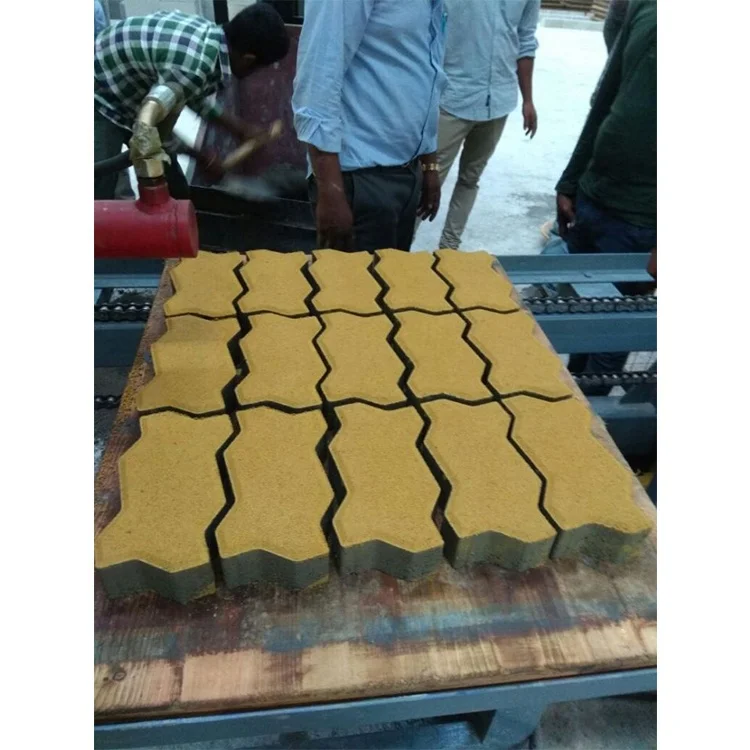
| Applied Products | Paver, solid block, hollow block, curbstone |
| Automation Level | Semi-automatic (PLC controlled, pallet feeder included, manual stacking) |
| Voltage & Frequency | To be confirmed before order |
| PLC Display Language | To be confirmed before order |
Application Suitability
| Application | Material or Output |
|---|---|
| Hollow block production for building walls | Crushed stone, sand, cement, fly ash |
| Solid brick manufacturing | Sand, cement, dust, fly ash blends |
| Paver production for walkways and yards | Crushed stone, sand, cement with fine aggregate |
| Curbstone forming for road edges | Coarse aggregate, cement, sand mixes |
| Small to medium block plant operations | Semi-automatic line with PLC controlled concrete block making machine as the press core |
| On-site production by construction contractors | Local aggregate and cement, portable pallet system |
What Unconfirmed Voltage and PLC Language Cost You After Arrival
Specifying electrical standards and display language before production prevents commissioning delays that no amount of on-site troubleshooting can fix.
I once watched a block machine sit idle for three days at a customer’s yard because the control panel shipped with Chinese text and 380V/50Hz wiring while the site ran on a different supply. The operator could not read a single menu, and the local electrician refused to connect equipment without a confirmed schematic. That machine was mechanically sound — the failure happened entirely on paper, weeks before the container was loaded. [NEED_CITE: voltage and frequency standards by export market]
When you invest in a PLC controlled concrete block making machine, the control interface is the single point where operator and machine meet. If the language is wrong or the voltage does not match the local grid, production does not start until someone resolves both. Every day of idle pallets and idle labor traces back to an unchecked cell in the order form.
Locking Parameters for Repeatable Block Density
The PLC control system on the QT4-18 stores molding parameters — cycle duration, vibration intensity, and hydraulic timing — as saved recipes rather than relying on operator memory. Once you dial in the correct settings for a given mix design and block format, the system reproduces them identically across every shift and every operator. This removes the most common source of strength variation in semi-automatic block production: human inconsistency in timing the press cycle.
A PLC controlled concrete block making machine does not replace good mix design. It preserves it. When your local sand source changes moisture content between seasons, you adjust the recipe once in the controller and the new parameters hold until you change them again.
Planning the Upgrade Path Beyond Semi-Automatic
The QT4-18 ships as a semi-automatic system with a pallet feeder and block sweeper included, which means the press-to-curing workflow already eliminates several manual handling steps. The automation architecture, however, leaves room for growth. As your plant scales, adding automatic stacking and cubing stations does not require replacing the press — it requires extending the control logic and adding downstream modules that communicate with the same PLC platform. [NEED_CITE: PLC control integration standards for block production lines]
This matters for buyers who are sizing their first plant against uncertain demand. You can commission the QT4-18 with manual pallet collection today, then introduce automatic stacking when daily volumes justify the investment, without pulling the existing PLC controlled concrete block making machine off the floor.
How Vibration Force and Hydraulic Pressure Shape Block Quality
The QT4-18 delivers 40–50 kN of vibration force paired with a high-pressure hydraulic station. In block production, vibration compacts the mix into the mould cavity while hydraulic pressure holds the mould halves together and applies top compression. If vibration is strong but pressure is weak, blocks emerge with inconsistent top surfaces. If pressure is high but vibration is insufficient, the mix does not fully fill the mould corners, and you see chipped edges on hollow blocks and pavers alike.
The 15–25 second molding cycle range reflects the variation across block formats — a 400×200×200 mm hollow block requires a different compaction duration than a 240×115×53 mm solid brick. The PLC stores these per-format timings so the operator selects the product and the machine applies the correct cycle without manual timing.
The 850×550×25 mm pallet size is fixed and must align with your curing rack spacing and forklift tine width. Order pallets that match this dimension exactly, because undersized pallets cause blocks to shift during transport to the curing area, and oversized pallets will not feed through the pallet feeder mechanism.
The Hidden Cost of Skipping Electrical Confirmation
When voltage, frequency, and PLC display language are left unspecified at order, the factory builds to default settings. The machine arrives, the electrician opens the panel, and the mismatch becomes visible — sometimes as a blown transformer on first power-up, sometimes as a language barrier that prevents parameter adjustment during commissioning. [NEED_CITE: CE machinery directive requirements for industrial equipment]
These failures do not damage the press mechanically. They damage your production schedule, your customer delivery commitments, and your relationship with the crew standing around a machine they cannot operate. Every hour spent waiting for a remote language update or a step-down transformer is an hour of pallets not moving through the system. The cost compounds because the rest of your line — mixer, conveyor, curing racks — sits ready with nowhere to send product.
Why Source This PLC Controlled Block Machine Here
Block machinery is the single production focus at Shandong Shiyue Intelligent Machinery, which means the press, moulds, pallets, and handling equipment are specified as one matched system rather than assembled from unrelated suppliers. When you order the QT4-18, the pallet feeder and block sweeper arrive calibrated to the same pallet dimension and cycle timing as the press itself.
Configuration is set against your actual mix design and local aggregate, not pulled from a generic catalogue. The mould selection covers hollow block, solid brick, paver, and curbstone formats on the same machine platform, with mould change procedures documented per format. Voltage, frequency, and PLC display language are confirmed in writing before production begins, so the control panel matches your site electrical supply and operator language from day one. The factory test record includes a run on your specified block format before the machine is dismantled for shipment.
Documentation & Verification
- Line layout showing QT4-18 footprint with pallet feeder and conveyor placement
- Capacity calculation sheet stating block format assumed for each output figure
- Hydraulic and electrical schematics matching confirmed voltage and frequency
- PLC parameter documentation with saved recipes for each mould format
- Factory test record on your specified block format before dispatch
- Operation and maintenance manual in confirmed display language
Installation, Commissioning & Support
- Foundation pad must support 3 T net weight across 3900×1600 mm footprint
- Dedicated power circuit required for 24 kW rated load at confirmed voltage
- Machine ships dismantled; reassembly on-site with included tools and manual hydraulic trolley
- First-run parameter setting covers molding cycle, vibration timing, and hydraulic pressure per format
- Operator training covers PLC recipe selection, mould change, and pallet feeder operation
- Spare parts kit and wear parts list included for initial maintenance cycles
What to Include in Your Inquiry
Provide the specific block formats you intend to produce along with your target daily output so we can match the QT4-18 configuration to your product mix. Confirm your local voltage and frequency, the preferred PLC display language, and whether your curing area uses pallet racks sized for 850×550 mm pallets. If you plan to add automatic stacking later, mention your growth timeline so the control architecture can accommodate downstream expansion from the start.
Frequently Asked Questions
Q: How is PLC control configured for different block formats and mix designs?
A: The QT4-18 PLC stores individual recipes for each block format, including molding cycle duration within the 15–25 second range, vibration timing, and hydraulic pressure application. When you switch from hollow blocks to pavers, the operator selects the new recipe and the system applies the correct parameters without manual adjustment. Mix design changes are recorded as updated recipes so previous settings remain available for reference.
Q: What automation upgrades are available after the initial semi-automatic setup?
A: The QT4-18 semi-automatic configuration includes a pallet feeder and block sweeper. As production volume grows, you can add automatic stacking and cubing stations that integrate with the existing PLC platform. The control system supports downstream module communication, so upgrading does not require replacing the press or rewriting the base control logic. The upgrade path depends on your curing area layout and pallet handling equipment.
Q: How do voltage, frequency, and PLC language get confirmed before shipment?
A: These three parameters are confirmed in writing during the order process, before production begins. You provide your local electrical supply specifications and preferred control panel language. The factory builds and tests the machine to those confirmed values, and the electrical schematic shipped with the machine matches the installed components. This prevents commissioning delays caused by mismatched power supply or unreadable interface text.
Q: What is the realistic cycle time per block format, and how does it translate to daily output?
A: Molding cycle ranges from 15 to 25 seconds depending on block format and mix characteristics. For a 400×200×200 mm hollow block, daily output is rated at 9600–13440 pieces per 8-hour shift. For a 240×115×53 mm solid brick, daily output is rated at 16200–19440 pieces per 8-hour shift. Actual throughput depends on pallet handling speed, mixer capacity, and curing area logistics.
Q: How does the pallet feeder integrate with existing curing racks and forklifts?
A: The pallet feeder on the QT4-18 handles 850×550×25 mm pallets, which must match your curing rack dimensions and forklift tine spacing. Before ordering, measure your existing rack width and forklift capacity to confirm compatibility. If your current pallets differ from this size, you will need to source matching pallets or adjust your curing area layout before commissioning.