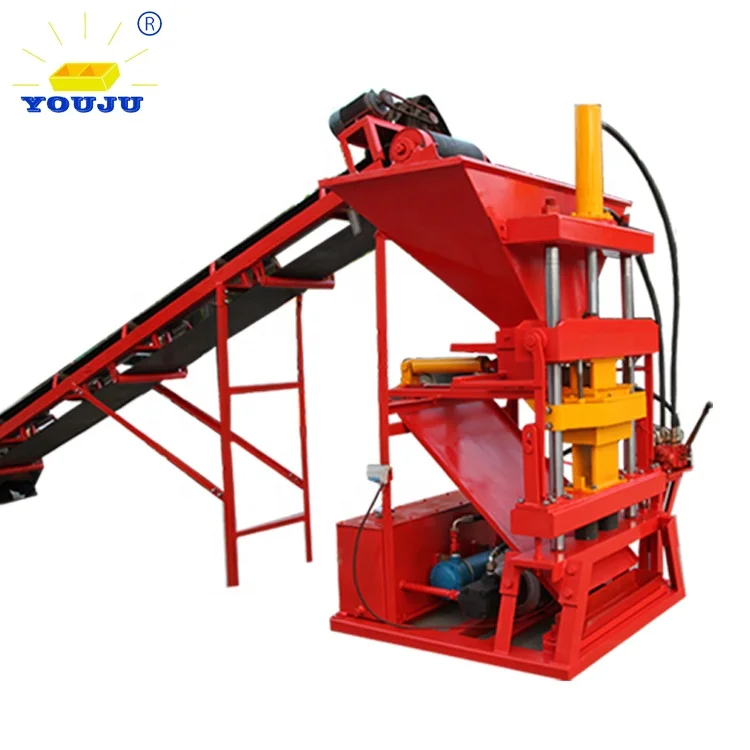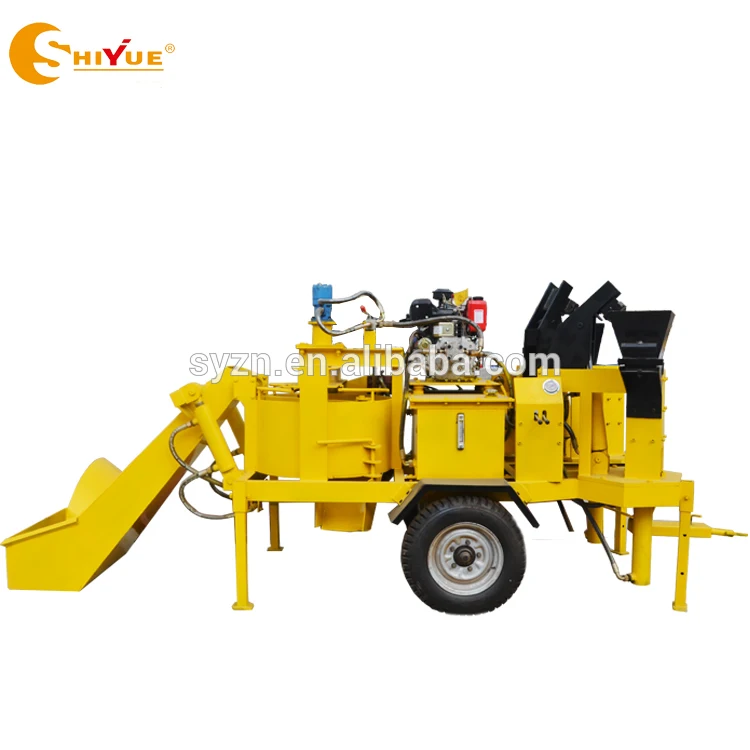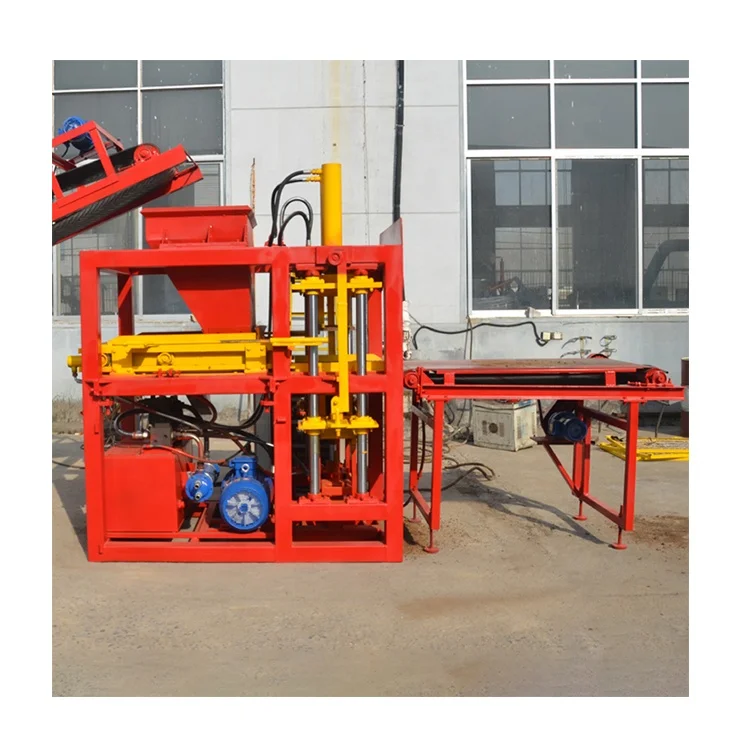
Description
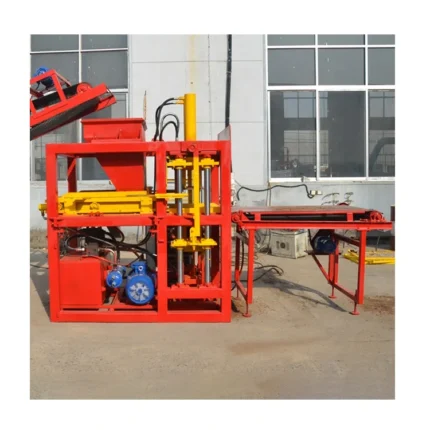
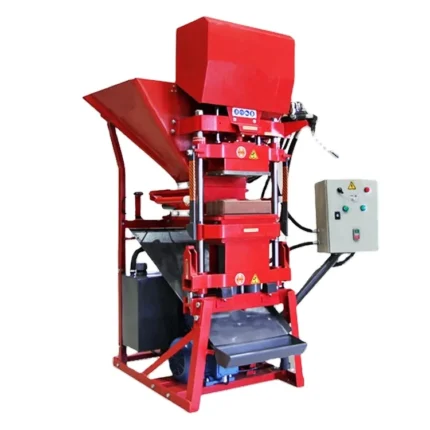
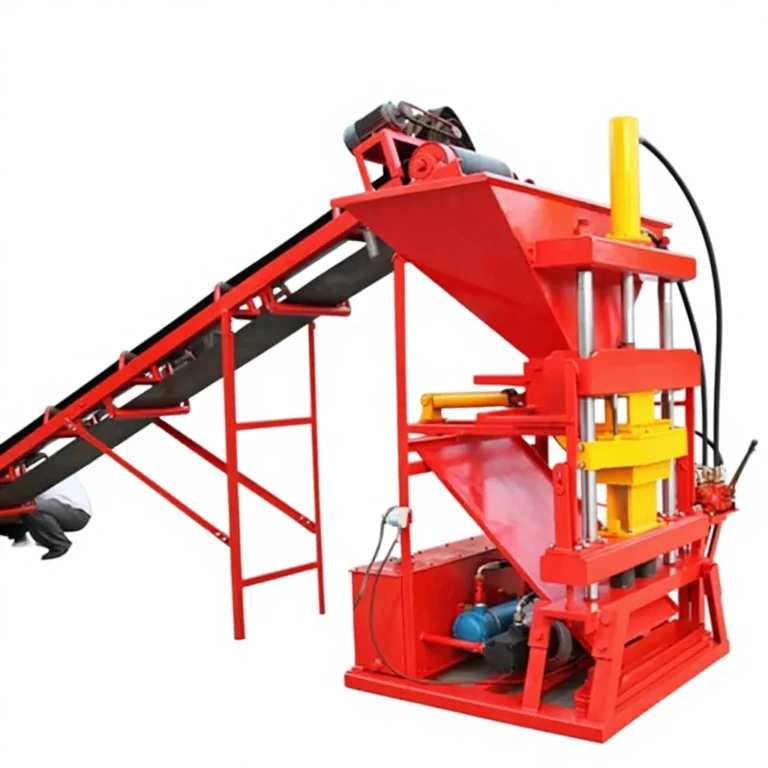
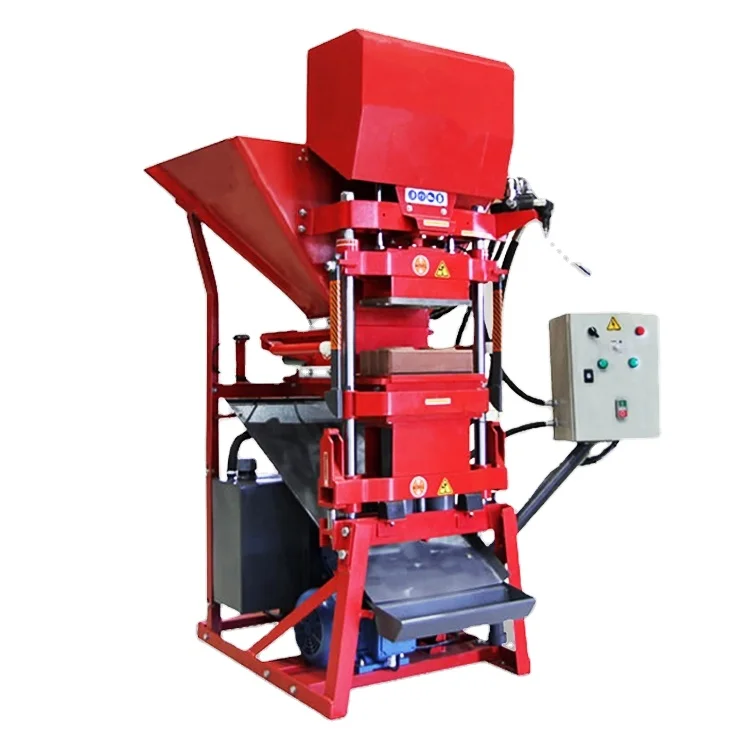
Single Focus System — the LY4-10 automatic clay interlocking brick making machine is specified as one matched unit of press, mould, and control logic rather than assembled from mismatched components, so automation parameters align with the block format you actually produce.
Technical Specifications
| Parameter | Value |
|---|---|
| Model | LY4-10 |
| Product Type | Automatic Clay Interlocking Brick Making Machine |
| Rated Power | 11 kW |
| Hydraulic Pressure | 25-32 MPa |
| Molding Cycle | 7-10 seconds (basis not stated in source — confirm block format / material / thickness) |
| Output per Cycle | 4 pcs at a time (basis not stated in source — confirm block format / mould configuration) |
| Automation Level | Automatic (material feeding, mould pressing, and mould lifting) |
| Net Weight | 1500 kg |
| Overall Dimensions (L×W×H) | 2260 × 1500 × 2380 mm |
| Voltage | Customized to local standard (basis not stated in source — confirm voltage & frequency) |
| Control System | Not stated in source — confirm PLC / relay / manual |
| Warranty | 1 year (excluding wearing parts) |
Application Suitability
| Application | Material or Output |
|---|---|
| Interlocking brick production for load-bearing and non-load-bearing walls | Clay-cement mixes with locally sourced soil and varying sand content |
| Ecological brick manufacturing for housing projects | Stabilized earth blocks using on-site clay blended with a cement binder |
| On-site block production for remote construction sites | Raw clay and cement combinations where logistics favor mobile or plant-based setups |
| Format expansion for existing concrete product lines | Interlocking profile added to a plant already running standard solid or hollow blocks |
What "7 to 10 Seconds per Cycle" Leaves Out About Brick Strength
The cycle time only matters if the hydraulic pressure and vibration are tuned to the clay-cement ratio you actually feed into the hopper.
I once spent two weeks in Nigeria watching a plant owner lose half a truckload of interlocking bricks on the way to the curing area. The machine ran the quoted cycle time, but the local clay had a sand content far above what the standard settings assumed. The bricks looked formed but crumbled under their own weight once stacked. [NEED_CITE: soil composition variability in laterite and sandy clay deposits across West Africa]. When buying an automatic clay interlocking brick making machine, the molding cycle figure is meaningless without confirming it against your specific mix design and target compressive strength.
Which Manual Steps the LY4-10 Removes From the Operator’s Shift
The LY4-10 handles three core actions automatically: material feeding into the mould cavity, hydraulic pressing at the configured pressure, and mould lifting after compaction. This means the operator is no longer manually shoveling mix into the mould box or pulling the lever to release the formed brick. What remains under human control is monitoring the hopper feed rate, clearing jammed material if the clay is too wet, and managing the pallets or curing surface where the finished bricks are placed. The automation reduces variability between one brick and the next, which is where interlocking profiles tend to fail on manual machines — inconsistent pressing depth produces bricks that do not lock together on the wall.
How the Control System Determines Batch-to-Batch Consistency
The control system specification for the LY4-10 is not stated in the source documentation, and this is a detail that must be confirmed before production begins. A PLC-based system allows the pressing time, pressure hold duration, and feed volume to be stored as recipes, so switching between a high-cement mix for load-bearing bricks and a leaner mix for partition walls does not require the operator to guess the settings from memory. [NEED_CITE: PLC recipe management in hydraulic block presses]. If the unit ships with a relay-based or manual control panel instead, each batch change becomes an operator-dependent variable, and the automation advantage narrows to the mechanical feed and lift actions alone. Confirming whether the control system supports recipe storage, and in what display language, should happen at the quotation stage rather than at commissioning.
Reading the Hydraulic Pressure Range Against Your Clay Mix
The 25-32 MPa hydraulic pressure range on the LY4-10 represents the working window the press can apply during compaction. At the lower end of this range, a lean clay-cement mix with higher sand content will not achieve sufficient particle bonding, producing bricks that chip at the interlocking edges during handling. At the upper end, a wetter or more plastic clay may squeeze out of the mould cavity before full compaction, leaving underfilled corners on the interlocking profile. The rated power of 11 kW drives the hydraulic pump that generates this pressure, and the actual pressure applied must be set based on your soil sample testing — not left at a factory default. Mould format and block thickness further shift where in this range the optimal pressure sits, which is why capacity and strength claims should always reference the specific interlocking profile being produced.
The Cost of Skipping Voltage and Control Language Confirmation
Plants that receive a machine configured for a voltage standard different from their local grid face weeks of delay while sourcing a step-down transformer or rewiring the motor. [NEED_CITE: voltage and frequency standards by export market]. The LY4-10 ships with voltage customized to local standard, but if the buyer does not specify their exact supply — including whether the frequency is 50 Hz or 60 Hz — the motor and hydraulic pump may run at the wrong speed, altering the pressing cycle and reducing brick density. A PLC display in a language the operator cannot read means alarm codes go uninterpreted until a fault escalates into a mechanical failure. These are not theoretical delays; they represent real commissioning standstill periods that push back the first saleable brick by weeks.
Why Sourcing From a Single-Focus Block Machinery Supplier Matters
The LY4-10 is specified within a product range where block machines, moulds, pallets, and handling equipment are treated as one system rather than sourced from separate vendors. Configuration is set against the buyer’s actual mix design and target block format, meaning the hydraulic pressure range and molding cycle are validated for the interlocking profile your market demands — not a generic catalogue default. Mould design and supply cover the formats that sell locally, including custom drawings if your interlocking brick profile differs from the standard options. The automation level is selectable, allowing a buyer to begin with the LY4-10’s automatic feeding, pressing, and lifting and later add pallet handling or stacking as production scales. Installation support includes operator training on the specific control system installed, and wear parts availability is confirmed before the first replacement cycle is due.
Documentation & Verification
- Machine specification sheet confirming LY4-10 hydraulic pressure range, cycle time, and automation scope
- Mould drawing and format list matched to your interlocking brick profile dimensions
- Voltage and control language confirmation document signed before production begins
- Factory test record run on your clay-cement mix or a representative sample
- Hydraulic and electrical schematic for your maintenance team’s reference
- Operation and maintenance manual in the operator’s working language
Installation, Commissioning & Support
- Foundation pad leveled to accommodate the 2260 × 1500 mm footprint and 1500 kg operating weight
- Dedicated electrical circuit matching the confirmed voltage and frequency for the 11 kW motor
- Machine arrives as a single unit; hydraulic lines and control wiring connected on-site
- First production run used to set hydraulic pressure within the 25-32 MPa range for your mix
- Operator training covers automatic feed, press, and lift sequences plus mould change procedure
- Wear parts list provided with recommended reorder intervals based on your clay abrasiveness
Before You Request a Quotation
Send your target interlocking brick dimensions, the clay-cement ratio you plan to use, and your local voltage and frequency so the LY4-10 automatic clay interlocking brick making machine is configured before production starts. Confirm the control system type and display language your operators need, and specify whether you will be running a single mould format or planning regular changeovers.
Frequently Asked Questions
Q: What automation level does the LY4-10 provide, and which steps still require an operator?
A: The LY4-10 automates material feeding into the mould, hydraulic pressing, and mould lifting. The operator still manages hopper material level, pallet or curing surface placement of finished bricks, and clearing any feed jams caused by high-moisture clay. Full pallet feeding and stacking automation are separate additions to the line, not included in the base machine scope.
Q: How do I verify the hydraulic pressure setting matches my local clay-cement mix?
A: Submit a soil sample or provide your mix design details before the machine is configured. The 25-32 MPa pressure range on the LY4-10 must be tuned to your specific clay composition and cement ratio. A factory test run using your mix or a close representative confirms the correct pressure setting before the machine ships.
Q: What PLC or control system is installed, and can the display language be set before shipment?
A: The control system type is confirmed during the quotation stage and can be specified as PLC or relay-based depending on your automation requirements. Display language is set before production so operators can read cycle parameters and alarm codes from day one of commissioning.
Q: What is the upgrade path if I start with this machine and later add automation?
A: The LY4-10’s automatic feed, press, and lift functions form a base automation layer. Automatic pallet feeding, stacking, and cubing systems can be added to the line later as production volume justifies the investment. The machine’s control system should be specified with this upgrade path in mind from the initial order.