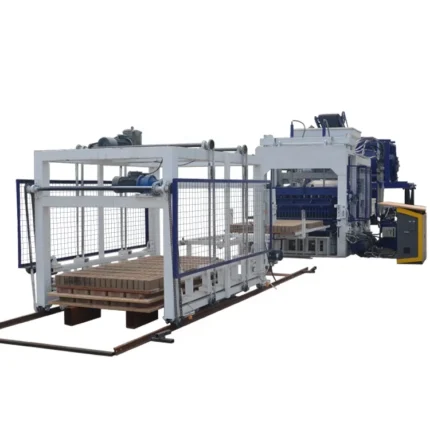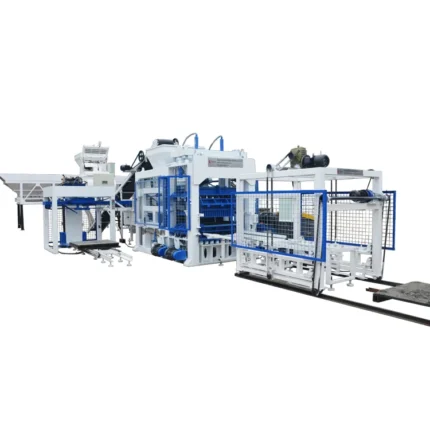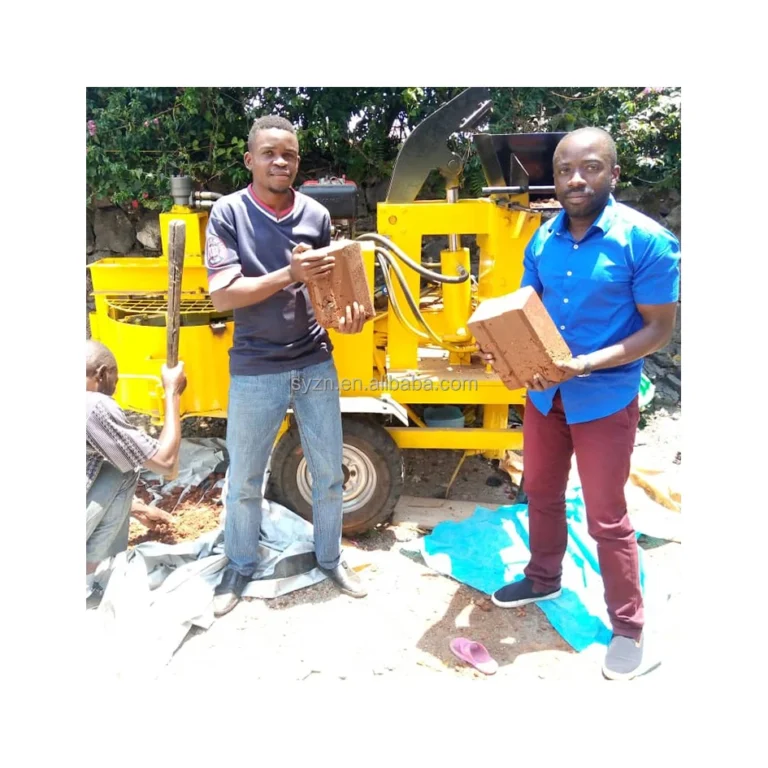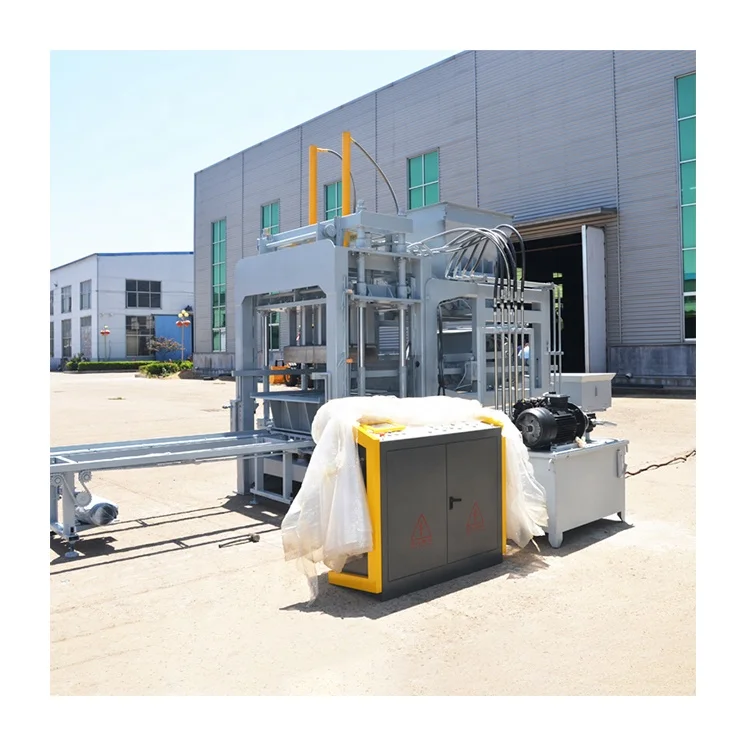



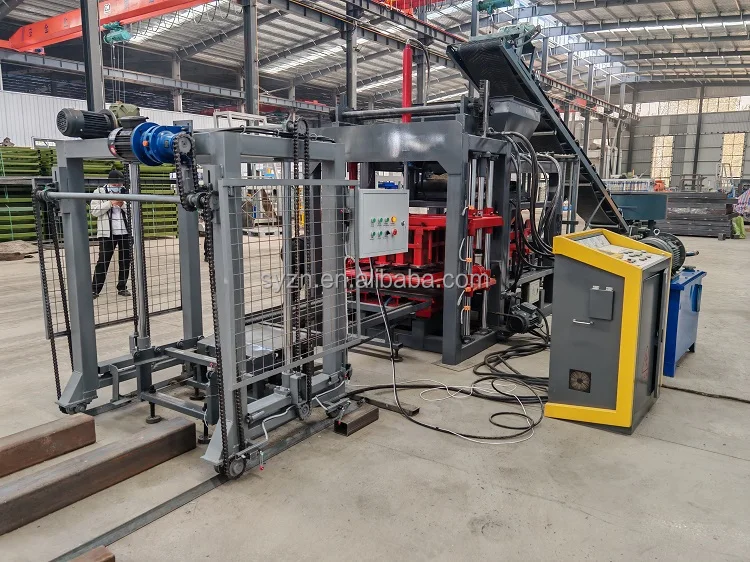

Description
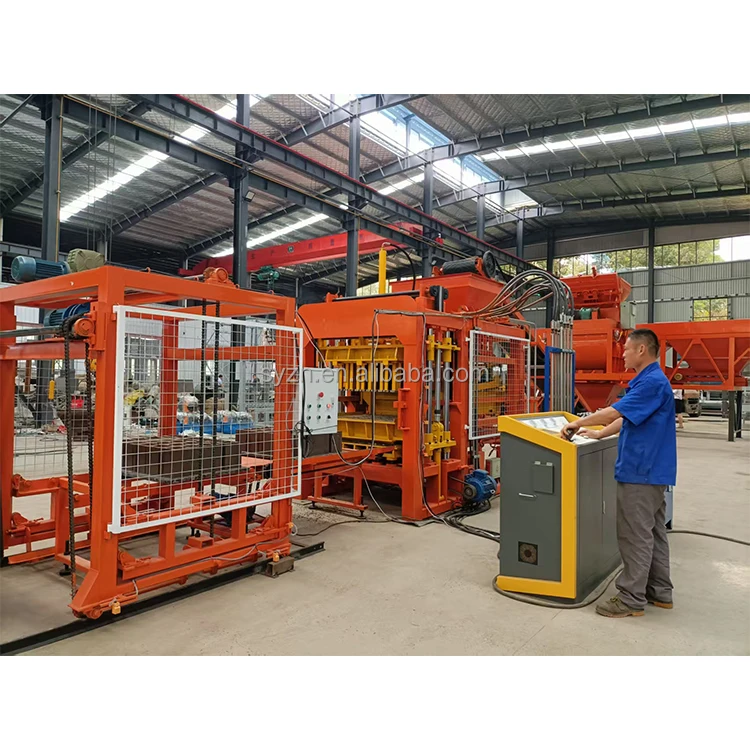
Intelligent Control Configuration — every cycle of the automatic QT4-18 block making machine is governed by PLC logic that ties hydraulic pressure, vibration timing, and mould compression into one repeatable sequence, removing guesswork from the operator’s shift.
Technical Specifications
| Parameter | Value |
|---|---|
| Model | QT4-18 |
| Product Type | Concrete Block Making Machine |
| Overall Dimensions (L×W×H) | 3900 × 1600 × 2300 mm |
| Total Weight | 3 T |
| Rated Power | 24 kW |
| Vibration Force | 40–50 kN |
| Hydraulic Station | Equipped |
| Molding Cycle | 15–25 s |
| Mixer Model | JQ350 |
| Pallet Size | 850 × 550 × 25 mm |
| Automation Level | Semi-automatic, with PLC control options |
| Applied Products | Hollow block, solid brick, paver, curbstone |
| Output — 400×200×200 mm hollow block | 1200–1680 pcs/hr (4 pcs per mould) |
| Output — 400×150×200 mm hollow block | 1800–2400 pcs/hr |
| Output — 240×115×53 mm solid brick | 3240 pcs/hr |
| Raw Materials | Crushed stone, sand, cement, dust, fly ash |
| Standards | CE (where applicable) |
Application Suitability
| Application | Material or Output |
|---|---|
| Hollow block production for load-bearing walls | Crushed stone and cement mixes, 400×200×200 mm and 400×150×200 mm formats |
| Solid brick runs for partition and infill masonry | Sand, fly ash and cement blends, 240×115×53 mm format |
| Interlock paver manufacturing for walkways and yards | Fine aggregate and cement, various mould profiles |
| Curbstone and kerb production for site infrastructure | Heavier aggregate mixes, kerb-specific mould cavities |
| On-site block production for housing projects | Locally sourced crushed stone and sand with Portland cement |
What the PLC Actually Controls — And Why It Matters for Block Density
The automatic QT4-18 block making machine ties vibration onset, hydraulic clamp pressure, and feed-box timing into a single PLC sequence so that every pallet leaves the press at the same density.
I spent my early career in QC watching block machines ship to sites where the vibration duration was set once at the factory and never adjusted for the buyer’s aggregate. A plant in Southeast Asia ran river gravel with a higher fines content than the test mix, and the fixed cycle produced blocks that crumbled at the edges after curing [NEED_CITE: effect of aggregate fines on vibration damping in concrete block presses]. The PLC-controlled concrete block machine approach here lets the operator adjust vibration hold time, pressure ramp-up, and feed-box travel speed independently — then save that recipe by block format so the next shift runs the same parameters without manual dial-in.
From Manual to Semi-Automatic Without Losing Control
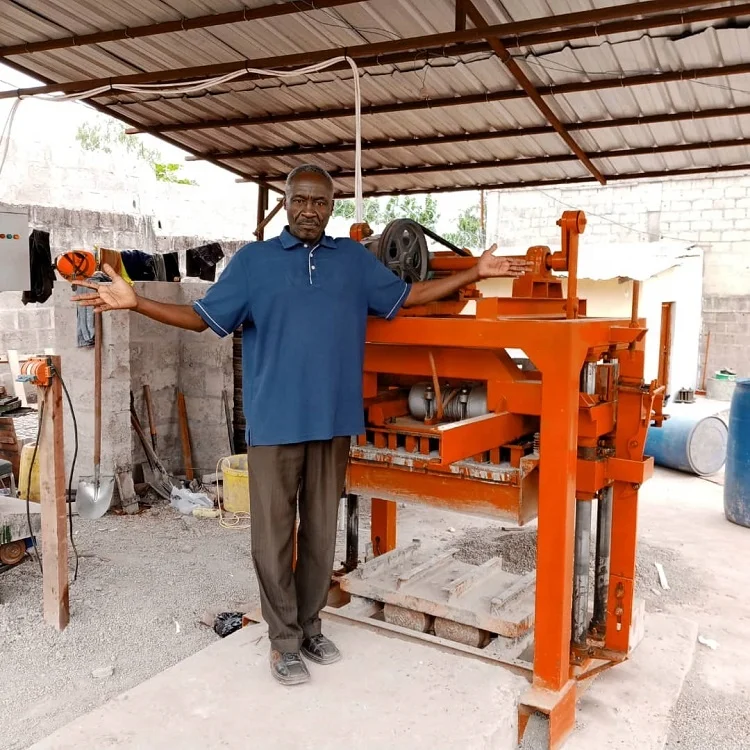
The semi-automatic baseline of the QT4-18 handles the press cycle itself: feed-box advance, mould fill, vibration, compression, demoulding, and pallet discharge all run under PLC control. The operator’s role shifts from timing each action by feel to loading pallets and monitoring the stack area. This is deliberate — many first-time plant owners in my region start with manual pallet handling because curing rack layouts are still being built out, and forcing full automation too early creates bottlenecks downstream that the press has to wait on.
The Upgrade Path That Actually Works On-Site
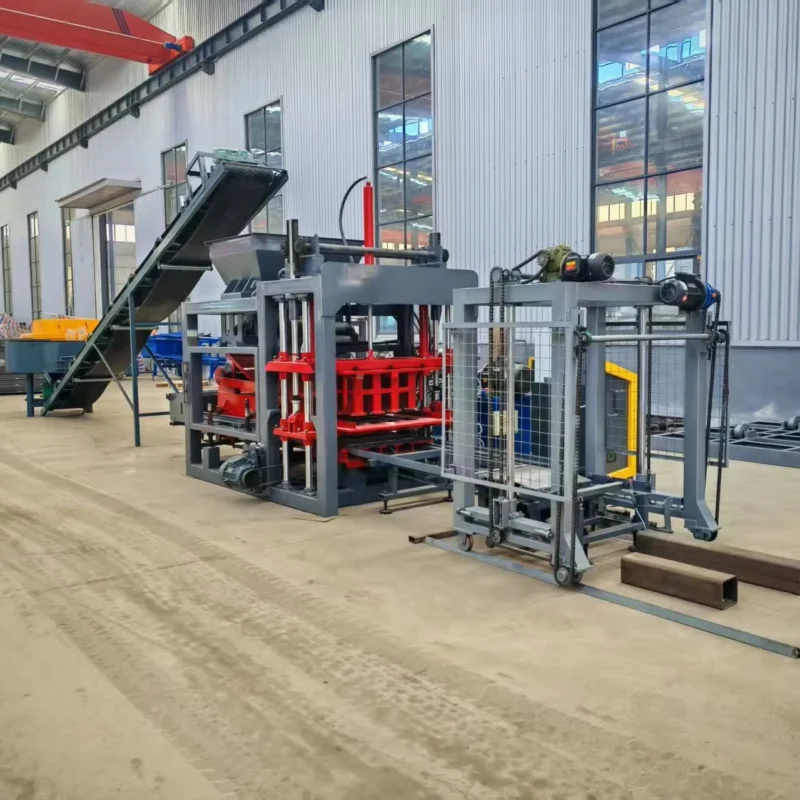
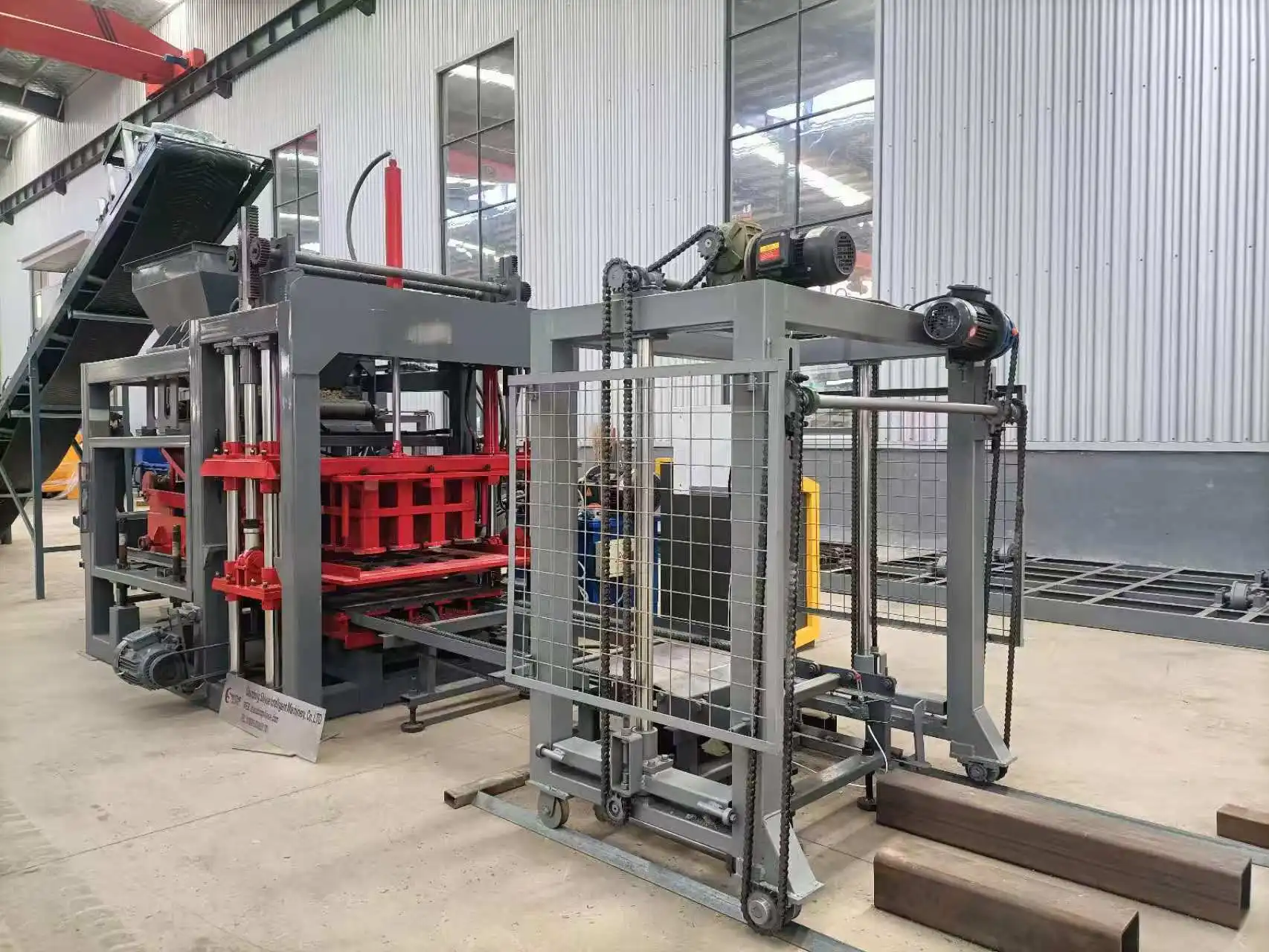
What makes the automatic QT4-18 block making machine relevant to a growing plant is that the PLC architecture accepts additional I/O modules for automatic pallet feeding, stacker integration, and cubing conveyors. I have visited plants where the owner added an automatic pallet return six months after commissioning and simply plugged the new sensors into the existing controller [NEED_CITE: PLC I/O expansion for block line automation upgrades]. The control language on the HMI is configurable before shipment, which avoids the situation where a Bahasa-speaking operator is navigating English menus during a mould change.
Reading the Specs That Determine Real Output
The vibration force rating of 40–50 kN combined with hydraulic station pressure defines how tightly the aggregate particles compact during each cycle. Higher vibration alone does not guarantee stronger blocks — without matching hydraulic compression from the upper mould, the vibration simply rearranges particles without eliminating voids. The 15–25 second molding cycle range reflects this balance: denser mixes with fly ash require longer vibration holds, while clean crushed stone packs faster. The 850 × 550 mm pallet size was selected to align with standard curing rack spacing and common forklift fork widths, so freshly pressed blocks can move to the curing area without manual re-stacking. Output figures are format-dependent: the QT4-18 produces 1200–1680 pieces per hour when running 400×200×200 mm hollow blocks at four per mould, and 3240 pieces per hour on 240×115×53 mm solid bricks — a meaningful difference that buyers must factor into daily planning.
The Hidden Cost of Skipping Voltage and Language Confirmation
One of the most common failures I see during commissioning in Southeast Asian plants is not mechanical — it is a PLC that will not communicate with the local power grid because voltage and frequency were assumed rather than confirmed. A 24 kW rated power draw requires a dedicated circuit with proper breaker sizing, and running the QT4-18 on an unstable supply can trip the PLC into fault protection modes that halt production mid-cycle [NEED_CITE: industrial machinery voltage tolerance and PLC fault behavior]. The cost is not the repair; it is the two weeks of lost output while replacement control boards ship internationally.
Why Sourcing the Press and Line Together Changes the Outcome
Block machinery as a single focus means the QT4-18 is specified alongside its mould, pallet, and handling equipment as one matched system rather than assembled from separate suppliers. Configuration is set against your actual mix design, local aggregate, and target block format — not a catalogue default. Mould design covers the formats your market sells, including custom drawings when standard cavities do not match. Automation level is selectable at order and expandable later, so you start semi-automatic and add pallet feeding or stacking modules as throughput demands grow. Installation includes operator training on the PLC interface, with hydraulic and electrical schematics handed over so your local maintenance team can service the machine independently.
Documentation & Verification
- Machine specification sheet listing vibration force, hydraulic pressure, and cycle time per block format
- Mould drawing package with cavity dimensions and format list for your target products
- Factory test record showing cycle time and block density achieved on your specified mix design
- Voltage, frequency, and PLC display language confirmation document signed off before shipment
- Hydraulic and electrical schematic for on-site troubleshooting and spare parts ordering
- Operation and maintenance manual with wear parts list and mould changeover procedure
Installation, Commissioning & Support
- Foundation pad sized to the 3900 × 1600 mm footprint with anchor bolt positions marked on the layout drawing
- Dedicated 24 kW electrical circuit with voltage and frequency matching the PLC and hydraulic motor ratings
- Machine ships in dismantled modules for container loading and reassembles on-site with lifting points identified
- First-run commissioning includes PLC parameter tuning for your local aggregate and target molding cycle
- Operator training covers PLC navigation, mould change procedure, and daily vibration system inspection
- Wear parts and hydraulic seal list provided with recommended stock levels for the first year of operation
- JQ350 mixer matched to press throughput so feed-box waits do not interrupt the 15–25 second cycle
What to Prepare Before Requesting a Quote
To configure the automatic QT4-18 block making machine correctly for your plant, share your target block formats with dimensions, the daily output you need per format, and the aggregate sources available at your site. Specify your local voltage and frequency, the preferred PLC display language, and whether pallet handling will be manual or if you plan to integrate a stacker. If you already have curing racks, note the shelf spacing and pallet dimensions they accept — this determines whether the standard 850 × 550 mm pallet works or a custom size is needed.
Frequently Asked Questions
Q: How does the PLC control system ensure batch-to-batch consistency in block density?
A: The PLC stores vibration duration, hydraulic pressure ramp, and feed-box speed as a saved recipe for each block format. Once the operator selects the active format, these parameters execute identically every cycle. This removes the variation that comes from manual timing adjustments between shifts, so blocks pressed on Monday match those from Friday in density and dimensional tolerance.
Q: What automation upgrade path is available from the QT4-18 semi-automatic configuration?
A: The PLC controller supports additional I/O modules for automatic pallet feeding, stacking, and cubing. You can add these modules as your curing area and downstream handling grow. The existing controller and wiring harness accept the new sensors and actuators without replacing the main PLC unit, keeping the upgrade cost proportional to what you actually add.
Q: How is the hydraulic pressure and vibration force matched to my local aggregate and mix design?
A: Before shipment, we run a factory test using your specified aggregate type, cement ratio, and target block format. Vibration hold time and hydraulic clamp pressure are adjusted until the test blocks meet the required density. The confirmed settings are documented and loaded into the PLC as the default recipe for that format.
Q: What pallet handling and stacking automation options are available with this machine?
A: The baseline QT4-18 discharges pressed pallets to a conveyor or roller table for manual collection. Automatic pallet return systems and stacker modules can be integrated through the PLC, synchronizing stack height and transfer timing with the press cycle so the operator is not waiting on downstream handling.
Q: How does the mould change system work and what is the typical changeover time?
A: The mould bolts to the vibration table and upper compression head with standardized mounting points. Changeover involves releasing the clamp bolts, lifting the old mould with an overhead hoist, positioning the new one, and re-tightening. The PLC recipe is then switched to the new format. Typical changeover is completed within a single shift break, depending on operator familiarity and hoist availability.