

Description
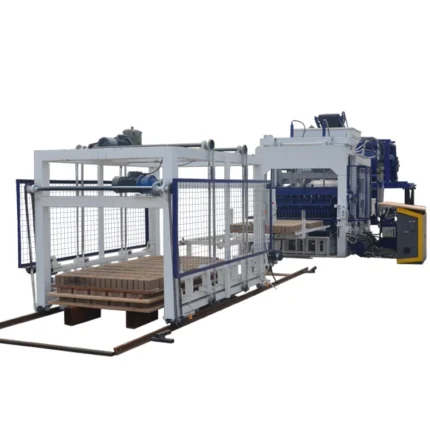
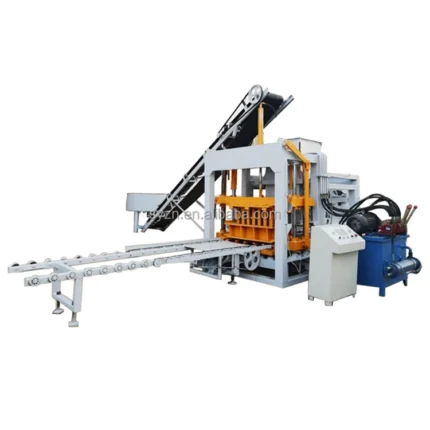
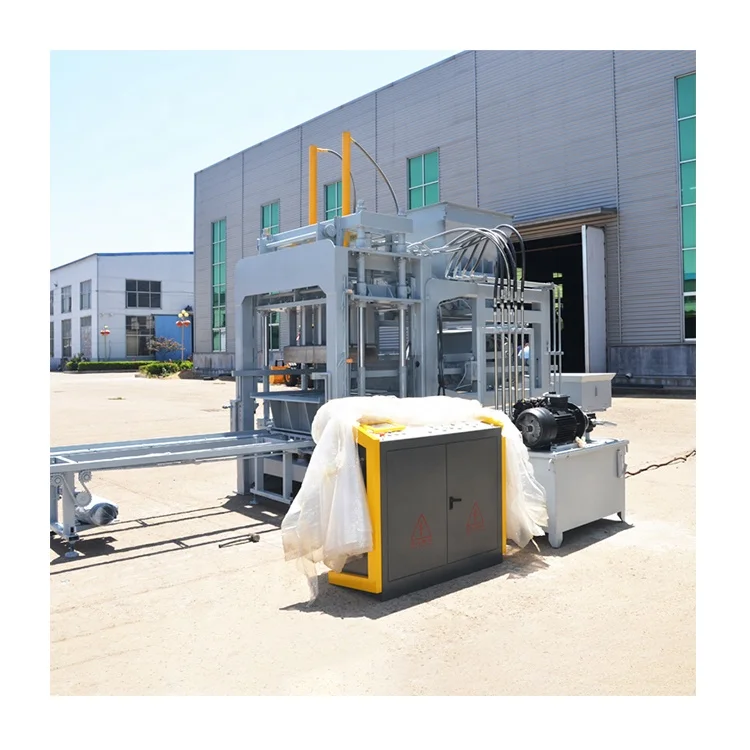
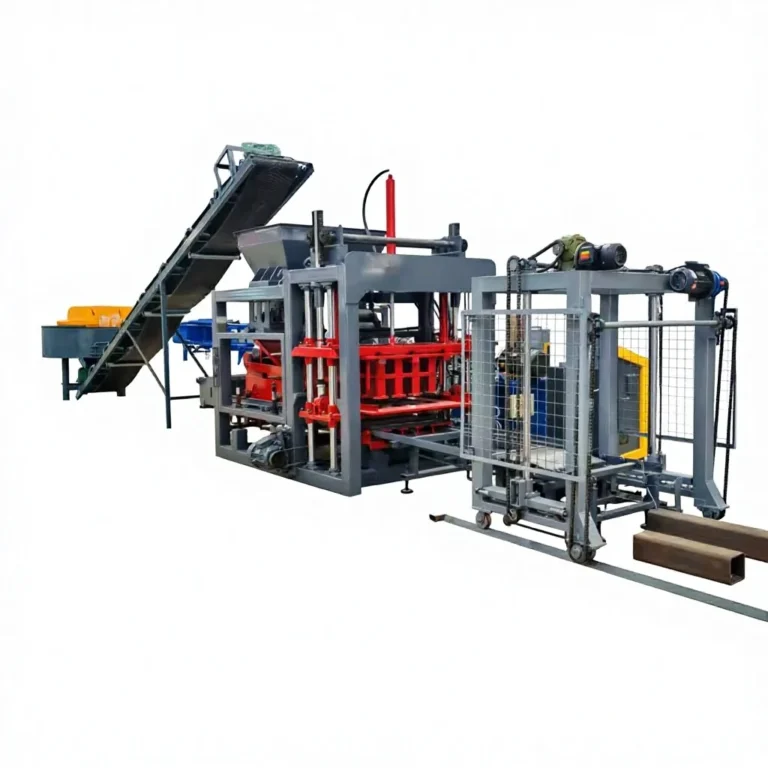
Single-focus machinery alignment — The QT8-15 is specified as a complete press, pallet, and control package rather than a standalone unit, ensuring every automation module speaks the same PLC language from day one.
Technical Specifications
| Parameter | Value |
|---|---|
| Model | QT8-15 |
| Product Type | Hydraulic Paver Block Making Machine |
| Overall Dimensions (L×W×H) | 8300×1860×3000 mm |
| Rated Pressure | 21 MPa |
| Main Vibration Form | Platform Vibration |
| Vibration Frequency | 2800–4500 r/min |
| Vibration Force | 45 kN |
| Pallet Size | 950×900 mm |
| Molding Cycle | 15–20 s (basis to be confirmed per block format and mix) |
| Overall Power | 55.5 kW |
| Total Mass | 8 T |
| Demolding Method | Hydraulic |
| Control System | PLC with configurable display language |
| Voltage & Frequency | Configurable to target market (to be confirmed before production) |
| Automation Level | Selectable from semi-automatic pallet handling to fully automatic stacking and cubing |
| Standards | CE (where applicable per shipment) |
Application Suitability
| Application | Material or Output |
|---|---|
| Hollow block production | Crushed stone, sand, cement, fly ash |
| Solid block production | Gravel, slag, cement blends |
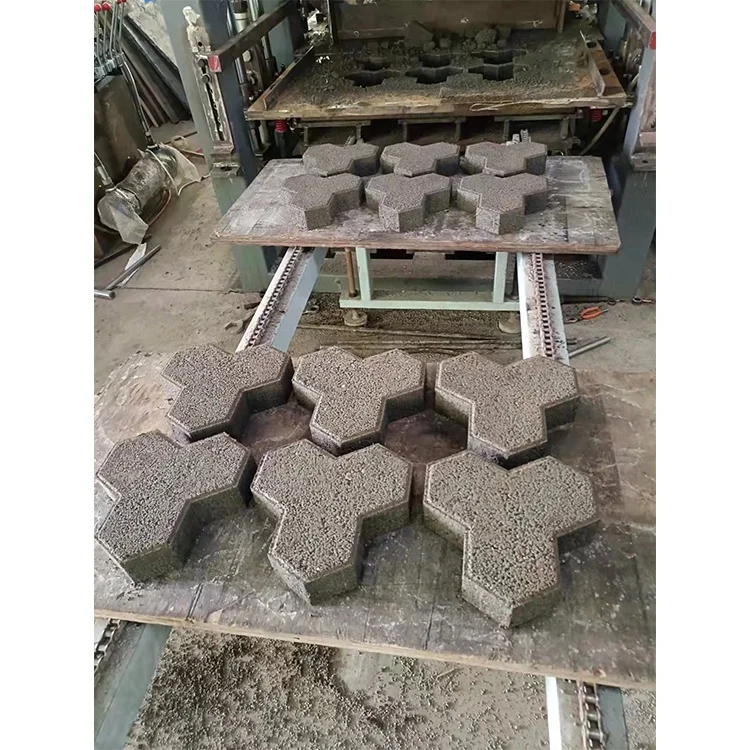
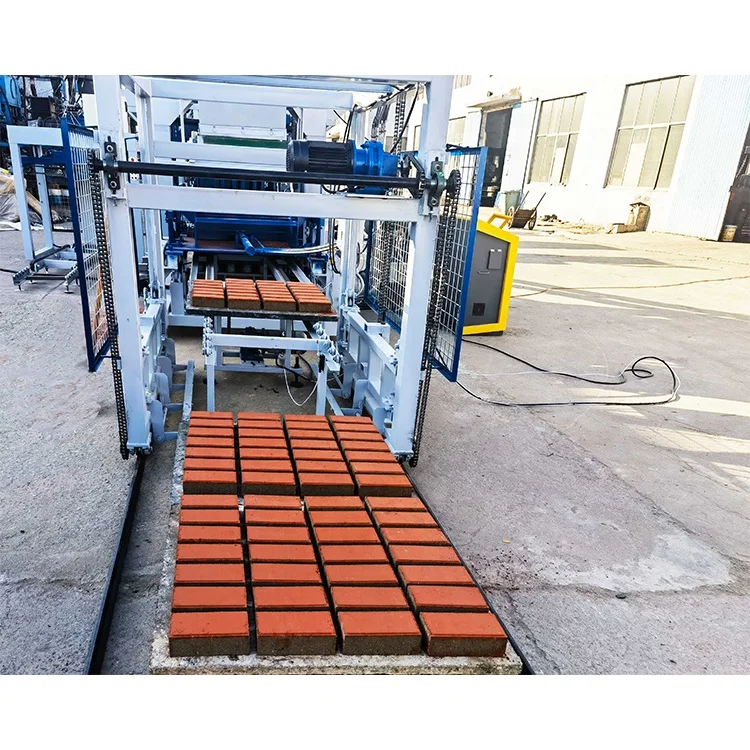
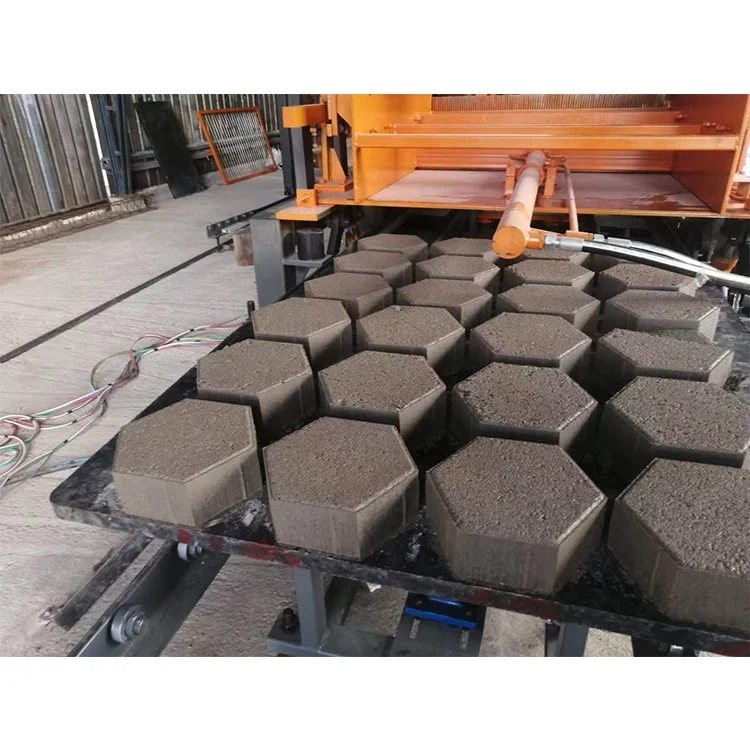
| Paving block and colored paver production | Fine aggregate with pigment additives |
| Interlocking block production | Coarse aggregate with cement binder |
| Kerbstone and curb production | Dense mix designs with higher cement content |
What "15–20 Second Cycle" Actually Means for Your Daily Output
A cycle figure without a named block format and mix design is not a capacity claim — it is a starting point for negotiation.
I have watched buyers sign off on a cycles-per-hour number, then discover at commissioning that the figure assumed a small solid block while their market actually sells 200 mm hollow blocks. The automatic QT8-15 block machine delivers its molding cycle against a specific pallet load, vibration dwell, and hydraulic hold time. Change the format, change the mix, and that cycle shifts. [NEED_CITE: block format impact on cycle time in hydraulic presses]
When we quote this machine, the capacity document states the assumed block format, wall thickness, and raw material profile. Without that, the PLC-controlled paver block machine is just a press sitting on a foundation, and your daily output is a guess.
How the PLC Removes Operator Guesswork from Every Cycle
On a manual or relay-controlled press, the operator decides when to feed, when to vibrate, and when to demold. Shift changes, fatigue, and simple inconsistency creep into every batch. The automatic QT8-15 block machine places those decisions inside the PLC, where feed duration, vibration frequency ramp, hydraulic hold pressure, and demold speed are stored as named recipes. Switch from pavers to hollow blocks by loading a recipe, not by retraining the crew mid-shift.
What Configurable Automation Actually Covers
Automation is not a single switch — it is a stack of modules. The PLC-controlled paver block machine can be configured with manual pallet feeding and hand stacking at the entry level, then expanded to automatic pallet circulation, robotic stacking, and cubing as the plant grows. Each module communicates through the same PLC backbone, so adding a stacker later does not require ripping out the control cabinet. This upgrade path matters for buyers who want to start production quickly and add labour-reducing automation as volume justifies the investment. [NEED_CITE: PLC modularity in block production lines]
Reading the Specs That Determine Block Density
The 21 MPa rated pressure and 45 kN vibration force work together — pressure alone compresses the mix, but vibration liquefies it so the pressure can drive particles into a dense matrix. If vibration frequency stays fixed at one end of the 2800–4500 r/min range, certain aggregate gradations will not consolidate properly, leaving weak zones in the block. The adjustable range lets the commissioning engineer match the frequency to the buyer’s actual crushed stone and sand profile. The 950×900 mm pallet size then determines how many blocks fit per cycle, and that pallet must match the curing rack spacing and forklift tine width already on site. The 55.5 kW overall power draw requires a dedicated circuit with correct voltage and frequency — a detail that must be confirmed in writing before the control cabinet is wired.
When the Wrong Voltage Reaches the Control Cabinet
Years ago I commissioned a paver block machine in the Middle East where the site supply was 415V but the machine was wired for 380V. The control cabinet transformer failed within the first hour, and the site waited three weeks for a replacement while curing racks sat empty. Voltage, frequency, and PLC display language are now written into the contract before the automatic QT8-15 block machine enters production. Getting this wrong does not just delay commissioning — it burns components and erodes buyer confidence before the first block is sold. [NEED_CITE: voltage mismatch consequences in exported industrial machinery]
Why Sourcing the Press and the Line from One Supplier Matters
The QT8-15 is specified alongside its pallet handling, stacking, and curing equipment so that cycle times match across every station — the press is never left waiting for a pallet, and the stacker is never starved of output. Machine, mould, and pallet are treated as one matched system rather than assembled from separate purchase orders. Configuration is set against the buyer’s actual mix design and local aggregate, not a catalogue default. The PLC display language, voltage, and frequency are confirmed in writing before wiring begins. Moulds are available for every format the buyer’s market sells, with custom drawings accommodated, and the automation level can start at semi-automatic and expand to fully automatic stacking as the plant scales.
Documentation & Verification
- Line layout with capacity calculation stated per block format and mix profile
- Hydraulic and electrical schematic matching the delivered QT8-15 configuration
- Voltage, frequency, and PLC display language confirmation sheet signed before production
- Factory test record demonstrating cycle time against the buyer’s specified format
- Mould drawing and format list covering all contracted block types
- Operation and maintenance manual with wear parts and mould replacement schedule
Installation, Commissioning & Support
- Foundation plan sized to the 8300×1860 mm footprint with anchor bolt layout for the 8 T mass
- Dedicated power circuit matching confirmed voltage and the 55.5 kW total draw
- PLC parameter set loaded and verified against contracted block formats at first run
- Vibration frequency tuned across the 2800–4500 r/min range to match on-site aggregate
- Operator training on recipe selection, mould change procedure, and daily greasing points
- Wear parts list covering hydraulic seals, vibration motor brushes, and mould liners
What We Need to Configure Your Machine Correctly
Tell us the block formats your market actually buys, the daily volume you need per format, and the raw materials available locally — including aggregate gradation and cement type. Share your site voltage, frequency, and preferred PLC display language so the automatic QT8-15 block machine arrives wired for your electrician, not ours. If you already have curing racks or forklifts on site, send the pallet dimensions they accept so we match the 950×900 mm pallet specification to your existing handling equipment.
Frequently Asked Questions
Q: How is daily output calculated for the QT8-15 across different block formats?
A: Output is calculated per block format, not as a single hourly figure. The capacity document names the assumed format, wall thickness, mix design, and curing method. A 200 mm hollow block cycles differently than a 60 mm paver on the same 950×900 mm pallet, and the quotation reflects each format separately.
Q: What voltage and PLC language will be confirmed before the machine ships?
A: Voltage, frequency, and PLC display language are confirmed in writing before production begins. This ensures the control cabinet is wired correctly for your site supply and the operator interface reads in a language your crew understands, avoiding commissioning delays.
Q: Can the automation level be expanded after initial installation?
A: Yes. The PLC-controlled paver block machine can start with semi-automatic pallet handling and manual stacking, then add automatic pallet feeding, stacking, and cubing modules later. Each module connects through the same PLC backbone without replacing the existing control system.
Q: How does vibration frequency interact with local aggregate to affect block strength?
A: Different aggregate sizes and shapes respond to different vibration frequencies within the 2800–4500 r/min range. During commissioning, the frequency is tuned against your actual crushed stone and sand to achieve consistent compaction, which directly determines block density and compressive strength.