


Description
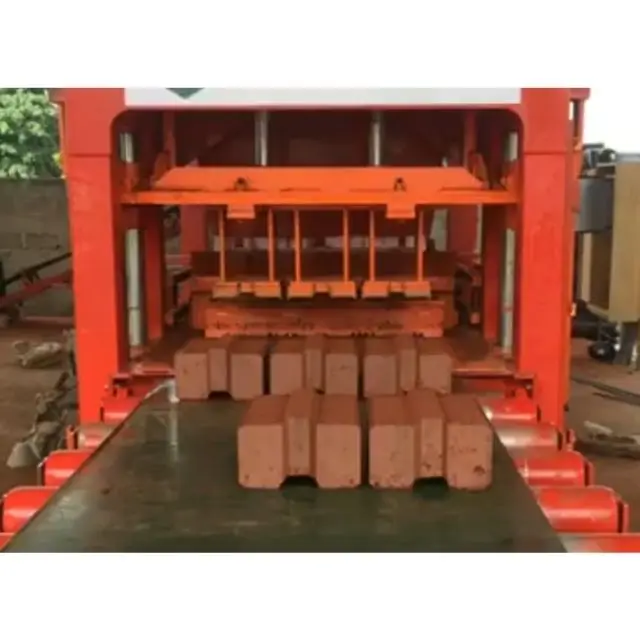
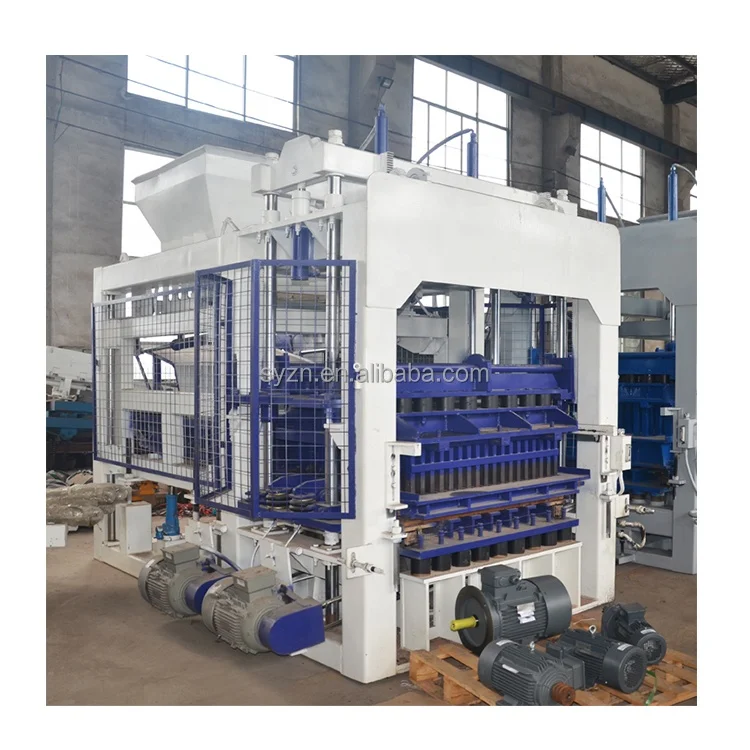
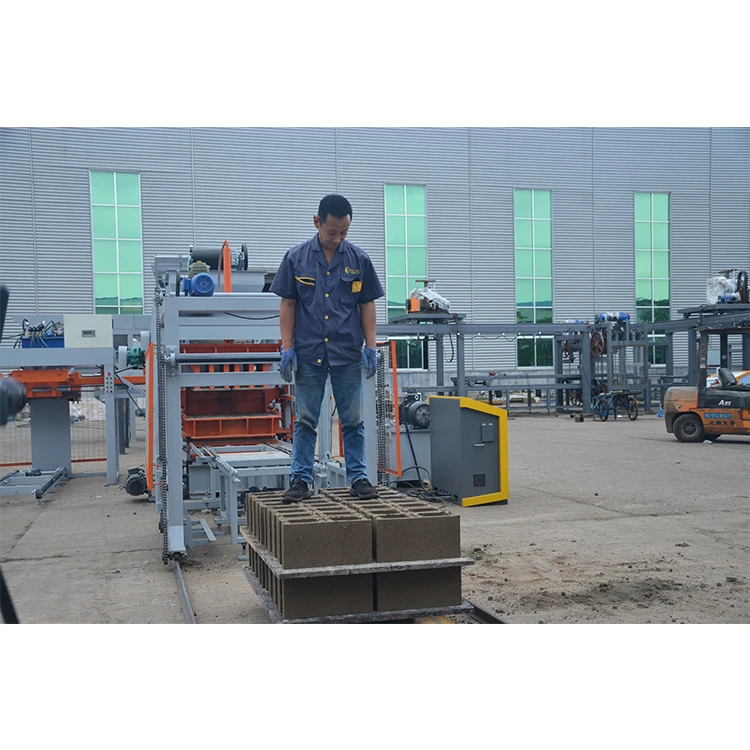
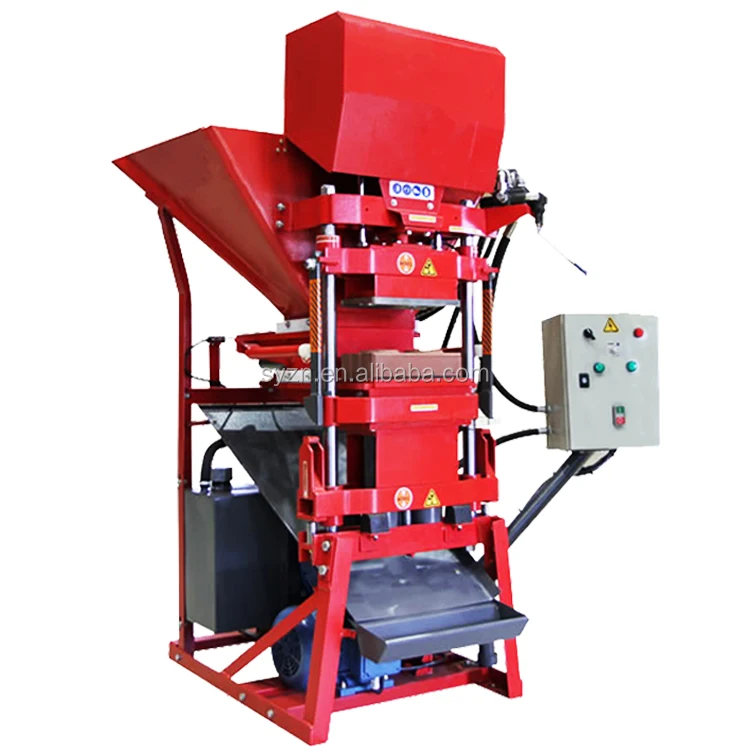
Single Focus on Block Machinery — The Eco master 7000 is specified as one matched system, with PLC logic, hydraulic pressure, and pallet-free mould operation verified together before dispatch rather than assembled from separate suppliers.
Technical Specifications
| Parameter | Value |
|---|---|
| Model | Eco master 7000 |
| Product Type | Automatic Interlocking Brick Machine |
| Overall Dimensions (L×W×H) | 1660 × 1400 × 2380 mm |
| Total Mass | 1300 kg |
| Rated Power | 7.5 kW (Electric) / 12 HP (Diesel option) |
| Hydraulic Pressure | 16 – 21 MPa |
| Cycle Time | 10 – 15 seconds |
| Control System | PLC (configurable language and HMI) |
| Voltage & Frequency | 380V, 3-phase, 50Hz (customizable to local grid) |
| Automation Level | Semi-automatic or Automatic (configurable) |
| Pallet Requirement | No pallets required |
| Power Source | Electric motor or Diesel engine |
| Motor Brand Option | Chinese Siemens Brand (source value — verify against manufacturer catalog) |
Application Suitability
| Application | Material or Output |
|---|---|
| Interlocking brick production on construction sites | Clay 80–90%, Cement 6–8%, Water 3% |
| Compressed earth block production for housing projects | Full Clay 97%, Water 3% |
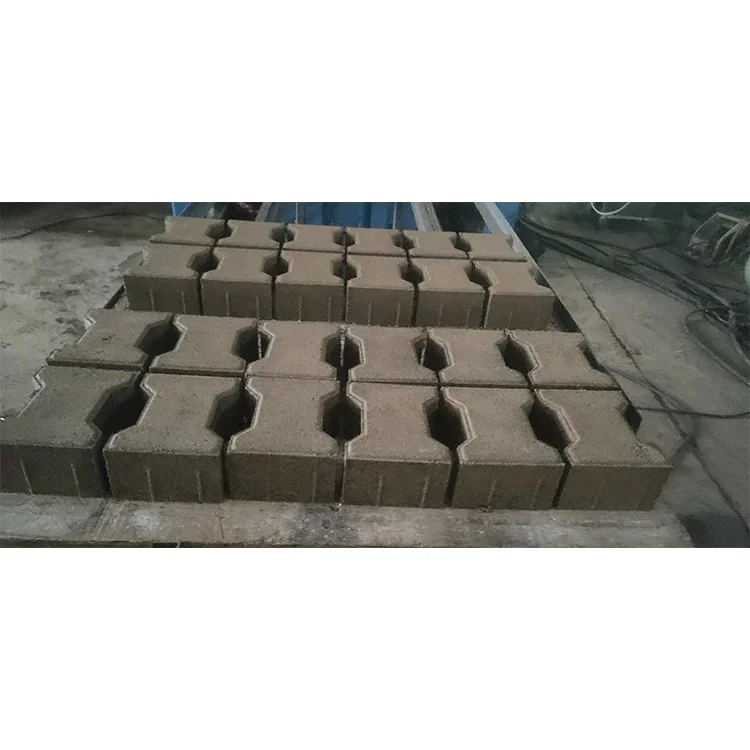
| Paver production for pathways and light-duty surfaces | Cement and clay-based mix designs |
Why the Voltage Question Must Come Before the Price
An automatic interlocking brick machine PLC controlled system will not start if the frequency and voltage do not match the local grid, regardless of how well the press itself is built.
I once saw a complete automatic line shipped to South America sit idle for weeks because the control cabinet was wired for a different voltage standard than the site supply. The PLC never powered on, and the entire commissioning schedule collapsed while transformers were sourced locally. [NEED_CITE: voltage and frequency standards by export market]. The Eco master 7000 ships with voltage and frequency confirmed in writing before production begins, and the PLC display language is locked to the operator’s preference so that troubleshooting on day one does not require a translator.
How PLC Sequencing Removes Operator Guesswork
The PLC in the Eco master 7000 manages the press cycle from mould closure through hydraulic compaction to brick ejection, holding each phase to a programmed duration. On a manual or relay-controlled press, cycle consistency depends on the operator’s timing, which drifts across a long shift. With the automatic interlocking brick machine PLC controlled sequence, every brick receives the same dwell time under pressure, reducing density variation across the production run.
The Automation Upgrade Path
A buyer can commission the Eco master 7000 in semi-automatic mode, where the operator triggers each cycle, and later add automatic pallet feeding or stacking modules as volume grows. This means the initial capital outlay stays lower while the PLC architecture is already in place to accept additional I/O modules. The control cabinet is sized with spare channels so that upgrading does not require replacing the entire PLC unit. [NEED_CITE: PLC module expansion standards for block machinery].
Reading the Hydraulic Pressure and Cycle Time Together
The 16–21 MPa hydraulic pressure range and the 10–15 second cycle time are not independent figures. Higher pressure settings require slightly longer dwell to allow the clay-cement mix to fully consolidate before the mould opens. If the mix contains a high clay fraction (up to 97% in the full-clay recipe), the hydraulic system must hold pressure long enough to expel trapped air, or the brick will delaminate during curing. The PLC allows the operator to store different pressure-and-time profiles for each mix design, so switching from a cement-heavy interlock formula to a pure earth block does not mean recalculating settings from scratch. The no-pallet design further shortens the handling loop, because bricks are ejected directly onto the curing surface without waiting for a pallet return conveyor.
What Happens When the Control Language Is Wrong
A PLC displaying fault codes in a language the local maintenance team cannot read turns a minor sensor fault into a multi-day stoppage. The operator sees an alarm, cannot interpret it, and shuts the line down while waiting for a translator or a factory visit. [NEED_CITE: PLC display language confirmation in machinery export contracts]. Confirming the HMI language during the order stage costs nothing; correcting it after the control cabinet is wired means reprogramming and sometimes replacing the display module entirely.
Why Procurement Should Start with the Grid, Not the Catalogue
The Eco master 7000 is configurable, but configuration only works when the buyer provides accurate site data early. The default 380V/3-phase/50Hz specification matches many markets, yet regions running 440V/60Hz or 220V/60Hz require different contactors, motor windings, and transformer ratios inside the cabinet. Supplying a single-line diagram of the site electrical supply lets the factory match every component before assembly, avoiding the cost and delay of field modifications.
Documentation & Verification
- Line layout showing the Eco master 7000 footprint with clearance for mould change access
- PLC I/O list and ladder logic printout in the confirmed display language
- Hydraulic schematic with pressure test points marked for field troubleshooting
- Voltage and frequency confirmation sheet signed before cabinet wiring begins
- Factory test record running the buyer’s specified block format and mix ratio
Installation, Commissioning & Support
- Foundation pad sized to the 1660 × 1400 mm footprint with anchor bolt template
- Dedicated 3-phase circuit rated above the 7.5 kW motor draw to prevent voltage sag during press cycles
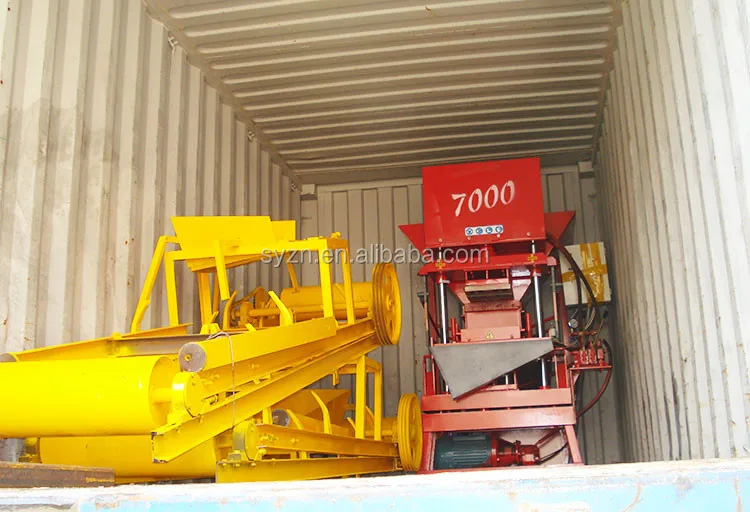
- Machine shipped nude-packed; reassembly limited to hydraulic lines and PLC cabinet connection
- First-run commissioning includes PLC parameter tuning for the buyer’s local clay-cement mix
- Operator training covers mould change procedure and PLC fault code interpretation
- Wear parts list identifies hydraulic seals and mould liners excluded from the 1-year warranty
Before You Request a Quote
To size the Eco master 7000 correctly, share the block format you intend to produce (dimensions and interlock profile), your local clay or soil test results, and the daily output target in that specific format. Include the site voltage, frequency, and the PLC display language your operators require so that the control cabinet is built to match.
Frequently Asked Questions
Q: How is the 5760 pcs/day capacity calculated, and which block format does it assume?
A: The 5760 pcs/day figure is derived from 2 pieces per mould at 720 pieces per hour over an 8-hour shift, assuming either 300×150×100mm or 250×125×60mm interlocking format. Output for other block sizes or thicker paver profiles will differ because cycle time and pieces per mould change with the mould cavity layout. Always request a capacity statement tied to your exact block drawing.
Q: Can the PLC interface language be set to my local language before delivery?
A: Yes. The PLC display language is confirmed during the order stage and programmed before the cabinet leaves the factory. This avoids commissioning delays where operators cannot read fault codes or parameter menus. Specify the preferred language when submitting your inquiry so the correct HMI firmware is loaded during assembly.
Q: What voltage and frequency customization is available for my country’s grid?
A: The default configuration is 380V, 3-phase, 50Hz, but motor windings, contactors, and transformers can be specified for other standards such as 440V/60Hz or 220V/60Hz. Provide your site’s single-line electrical diagram so the factory matches every component. Verbal confirmation is not sufficient; voltage and frequency must be documented in the technical agreement.
Q: How does the automation upgrade path work from semi-automatic to full automatic?
A: The PLC cabinet is supplied with spare I/O channels, so adding automatic feed or stacking modules later does not require replacing the controller. Semi-automatic mode relies on operator-triggered cycles, while full automatic adds sensor-driven sequencing. The upgrade is performed by adding hardware modules and updating the PLC program to include the new stations.
Q: Which hydraulic and electrical parts are covered under the 1-year warranty?
A: The warranty covers the main hydraulic pump, PLC unit, and electric motor against manufacturing defects. Consumable items such as hydraulic seals, mould liners, and relay contacts are excluded. A wear parts list is supplied with the machine so you can stock the correct replacements before the first scheduled maintenance interval.