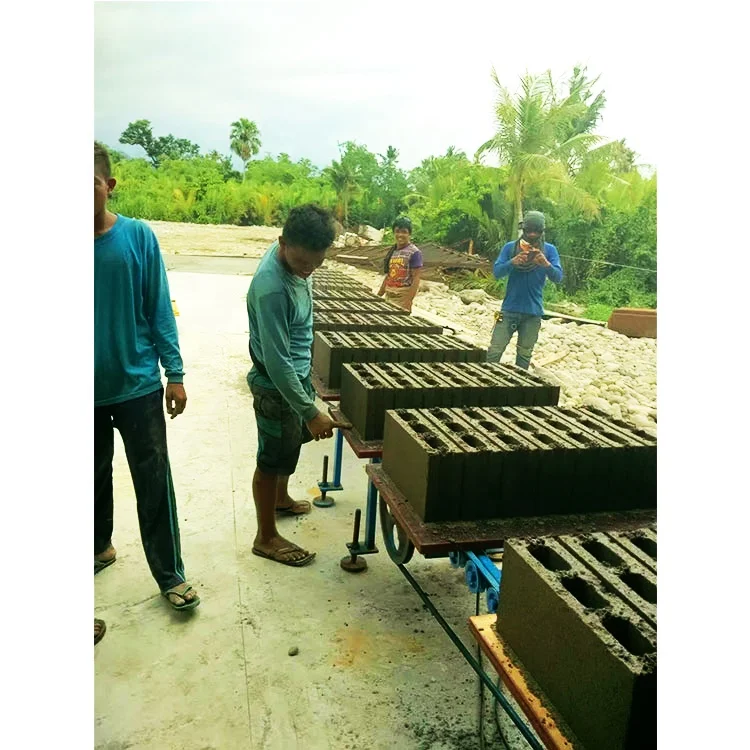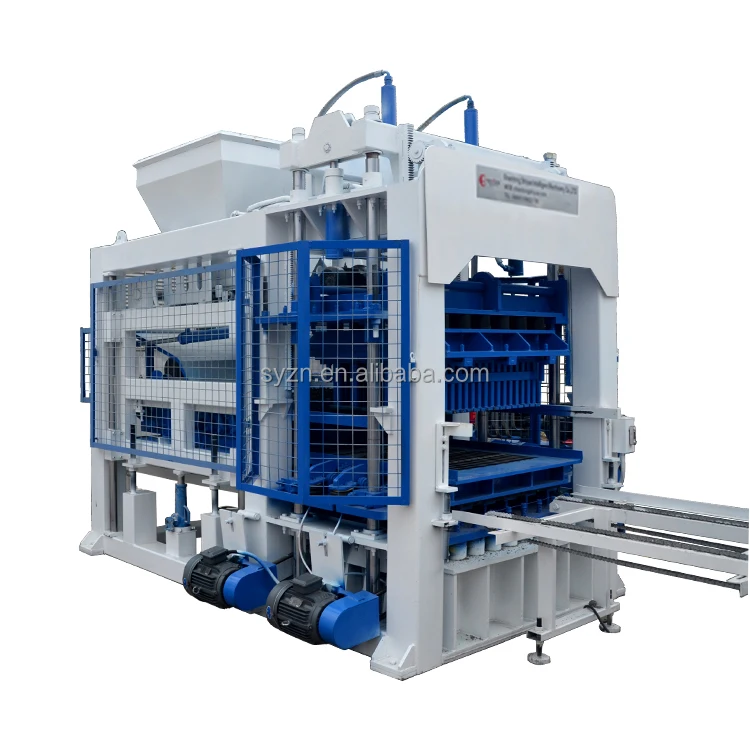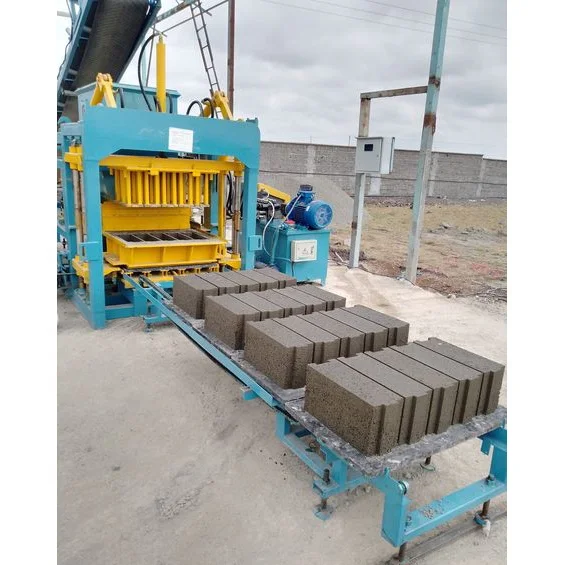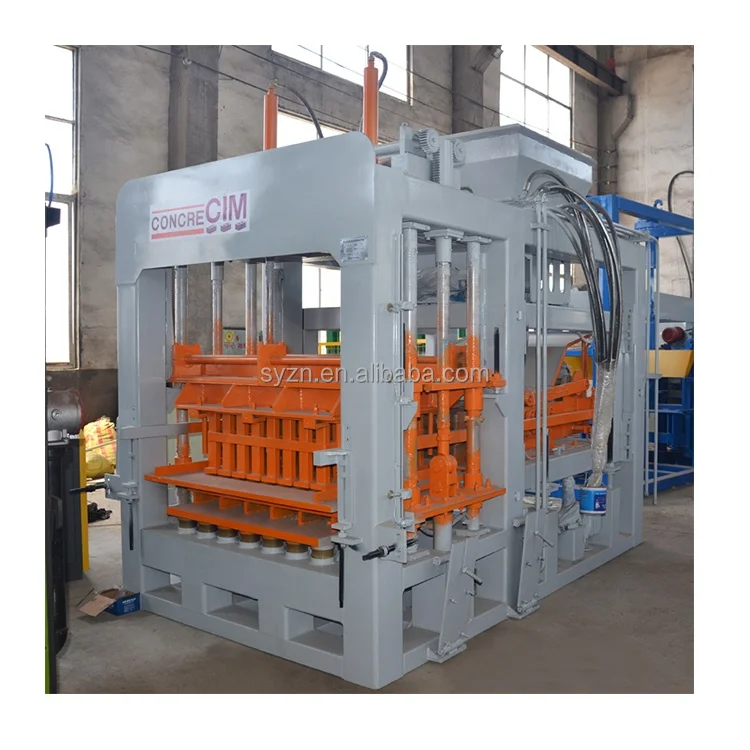
Description
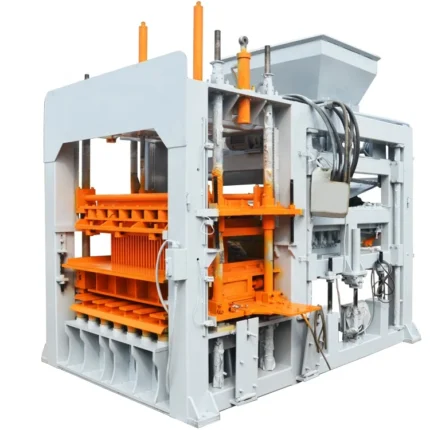
Precision Automation Integration — The QT10-15 pairs PLC-controlled cycle governance with an independent hydraulic station and vertical resonance vibration, ensuring every block format exits the press at repeatable density without manual pallet handling.
Technical Specifications
| Parameter | Value |
|---|---|
| Model | QT10-15 |
| Product Type | Automatic Hydraulic Block Making Machine |
| Control System | PLC control cabinet |
| Hydraulic System | Independent integrated hydraulic station |
| Vibration Mode | Vertical station mode resonance, automatic FM-AM |
| Automation Level | Automatic (PLC controlled with pallet feed, stacking integration) |
| Mould Change System | Simple replacement for multi-format production |
| Mould Formats | Hollow block, multicellular brick, paving brick, standard brick, interlocking brick |
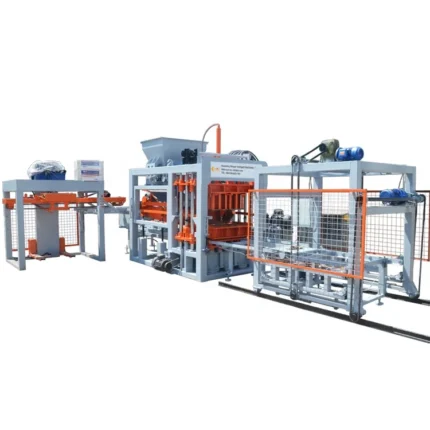
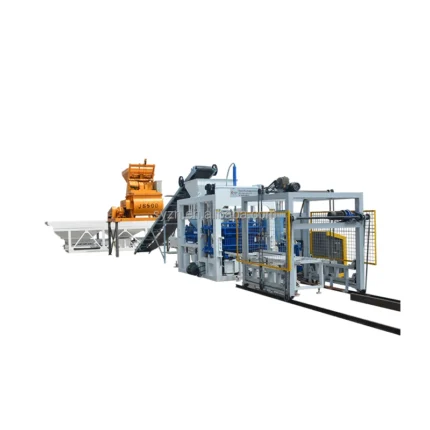
| Components Included | Pallet feed machine, block making machine, storage hopper, conveyor, hydraulic unit, PLC control cabinet |
| Output Capacity (400×200×200mm hollow block) | 1,800–2,400 pcs/hour, 14,400–19,200 pcs/8hr (basis: 10 pcs/mould, 15–20s cycle) |
| Output Capacity (400×150×200mm hollow block) | 2,160–2,880 pcs/hour, 17,280–23,040 pcs/8hr (basis: 12 pcs/mould, 15–20s cycle) |
| Output Capacity (240×115×53mm solid brick) | 8,928–11,160 pcs/hour, 71,424–89,280 pcs/8hr (basis: 62 pcs/mould, 15–20s cycle) |
| Output Capacity (200×100×60mm paving block) | 5,184–6,480 pcs/hour, 41,472–51,840 pcs/8hr (basis: 27 pcs/mould, 20–25s cycle) |
| Output Capacity (225×112.5×60mm interlocking brick) | 4,032–5,040 pcs/hour, 32,256–40,320 pcs/8hr (basis: 24 pcs/mould, 20–25s cycle) |
| Hydraulic Pressure | source value not stated — confirm with manufacturer |
| Vibration Force | source value not stated — confirm with manufacturer |
| Pallet Size | source value not stated — confirm with manufacturer |
| Rated Power | source value not stated — confirm with manufacturer |
| Voltage & Frequency | source value not stated — confirm with manufacturer |
| Overall Dimensions | source value not stated — confirm with manufacturer |
| Net Weight | source value not stated — confirm with manufacturer |
| Warranty | 1 year for whole machine (excluding spare parts) |
| Standards | CE (mentioned in company documentation scope, verify per unit) |
Application Suitability
| Application | Material or Output |
|---|---|
| Hollow block production | Crushed stone, cement, sand, fly ash aggregates for 400×200×200mm and 400×150×200mm cavity blocks |
| Solid standard brick production | Cement and fine aggregate blends for 240×115×53mm construction bricks |
| Paving block production | High-density concrete mixes for 200×100×60mm pedestrian and light-traffic pavers |
| Interlocking brick production | Cement-stabilized soil and aggregate for 225×112.5×60mm dry-stack interlocking units |
| Multicellular brick production | Lightweight and standard concrete mixes for multi-hole structural brick formats |
Why "Pieces per Hour" Means Nothing Without the Mould Assumption
Buyers regularly see a single headline output figure quoted for an automatic PLC controlled QT10-15 block making machine, only to discover on site that the number assumed a small solid brick format while their daily production target is hollow blocks. The only honest capacity statement ties a piece count to a specific block dimension, mould cavity count, and cycle time range. I have watched plant owners lose weeks recalculating shift plans because the quotation never stated which format the hourly number referred to. When the press cycles at 15–20 seconds per mould, ten cavities of hollow block and sixty-two cavities of solid brick produce vastly different daily totals [NEED_CITE: block format cycle time assumptions in capacity quotations]. Every capacity figure on this page carries its mould and cycle basis beside it.
PLC Governance Across the Full Press Cycle
The PLC control cabinet governs every stage from pallet indexing through vibration dwell to block ejection, holding compaction parameters constant across a full shift. This removes the operator judgement variable that causes density drift between morning and afternoon batches. When you run the automatic PLC controlled QT10-15 block making machine, the cycle logic enforces the same hydraulic pressure hold and vibration duration on every stroke, which is the foundation of batch-to-batch dimensional consistency.
Independent Hydraulic Station Isolated from Vibration and Dust
The integrated hydraulic station sits apart from the main vibration frame, shielding valves and seals from continuous shock loading and concrete dust ingress. In earlier designs where hydraulics shared the vibrating chassis, seal failure rates climbed noticeably within the first months. Isolation extends service intervals and keeps pressure response stable regardless of which mould format is loaded, supporting the batch consistency that the PLC cycle demands.
Reading the Specification Table Against Your Actual Product Mix
Vibration force and hydraulic pressure must be matched to your local aggregate grading and cement content, not left at a catalogue default [NEED_CITE: aggregate grading influence on block compaction parameters]. The vertical station mode resonance with automatic FM-AM adjusts frequency and amplitude to suit the mix loaded in the hopper, but the baseline settings still require confirmation against your target block strength. Pallet size determines how many blocks cure per rack position and whether your existing forklift can handle the loaded pallet — a mismatch here creates a bottleneck downstream that the press itself cannot solve. The mould change system uses simple replacement hardware, but the actual downtime per format switch depends on whether your crew has the matching pallets and curing racks ready for the next run. Voltage and frequency must be confirmed against your site supply before the PLC cabinet is wired at the factory, because reprogramming an HMI after arrival adds commissioning delay that no amount of automation can compress.
The Cost of Skipping the Automation Line Audit
When the quotation covers only the press and omits pallet feeding, stacking, and curing rack handling, your output piles up at the machine exit requiring manual collection. I have seen plants where the automatic PLC controlled QT10-15 block making machine cycled at full speed while two workers scrambled to pull pallets clear, effectively capping throughput well below the rated capacity [NEED_CITE: bottleneck effect of manual pallet handling on automatic block lines]. Automation delivers its promised labour reduction only when the entire line from raw material feed to stacking is specified as one system. Choosing pallet material without reference to your curing environment — open yard, steam chamber, or covered rack — leads to premature pallet warping that jams the feed mechanism.
Why Procurement Through This Channel Holds Up
Block machinery is the single manufacturing focus here, so the press, mould, pallet, and handling equipment are specified as one matched set rather than assembled from separate suppliers. Configuration starts from your actual mix design and local aggregate, not a catalogue default, which means the vibration and hydraulic parameters are set before production begins. Mould design covers the formats your market sells, including custom drawings when a standard cavity layout does not fit your product range. The automation level is selectable — a buyer can commission the QT10-15 in semi-automatic mode and add full stacking and cubing later as volume justifies the investment. Installation support includes operator training so your crew understands PLC parameter adjustment, not just button operation.
Documentation & Verification
- Line layout with capacity calculation stated per block format and mould cavity count
- PLC program backup and HMI language confirmation record before dispatch
- Hydraulic and electrical schematic matching the as-built QT10-15 configuration
- Factory test record on your specified mould format with cycle time logged
- Mould drawing and format list covering every cavity in the delivery scope
Installation, Commissioning & Support
- Foundation pad leveled to QT10-15 overall dimensions with anchor bolt template provided before arrival
- Dedicated electrical circuit sized to the rated power with voltage and frequency confirmed at order stage
- PLC cabinet powered up and HMI language verified during on-site commissioning before production runs begin
- Operator training covers PLC parameter adjustment for each mould format loaded on the press
- Mould and hydraulic wear parts list supplied with reorder intervals based on the formats you produce
Before You Send the Inquiry
Share the block formats you sell today and the ones you plan to add within the next two years, along with your target daily output per format. Specify the voltage, frequency, and PLC display language required at your site so the control cabinet is wired and programmed before shipment. If your plant already runs pallets and curing racks from a previous line, send the pallet dimensions and forklift capacity so the handling system is specified to match.
Frequently Asked Questions
Q: How is real daily output verified per block format on the QT10-15?
A: Each capacity figure is calculated from a stated mould cavity count and cycle time range — for example, ten cavities of 400×200×200mm hollow block at 15–20 seconds per cycle. We document the assumption in the quotation so you can cross-check against your shift length and target format, rather than relying on a single unqualified headline number.
Q: What PLC language options are available, and is the HMI configured before shipment?
A: The PLC display language is confirmed during the order stage and programmed at the factory so the operator sees their working language on day one. We record the confirmed language in the commissioning documentation to prevent the situation where a default setting delays production start-up by weeks.
Q: Can the automation level scale from semi-automatic to full stacking later?
A: Yes. The QT10-15 can be commissioned with semi-automatic pallet handling and upgraded to automatic stacking and cubing as your volume grows. The PLC architecture supports adding these stations without replacing the main control cabinet, keeping the upgrade path within the existing system.
Q: What is the mould change procedure and expected downtime per format switch?
A: The QT10-15 uses a simple replacement mould system where the cavity set is unbolted and swapped on the vibration table. Actual downtime depends on whether the matching pallets and curing racks for the next format are staged and ready, which is why we specify handling equipment alongside the mould list.
Q: Which voltage and frequency configurations are supported for export?
A: Voltage and frequency are confirmed against your site supply specification before the electrical cabinet is assembled. This covers standard industrial three-phase configurations and is documented in the pre-dispatch verification record so there is no mismatch when the machine is powered up on arrival.