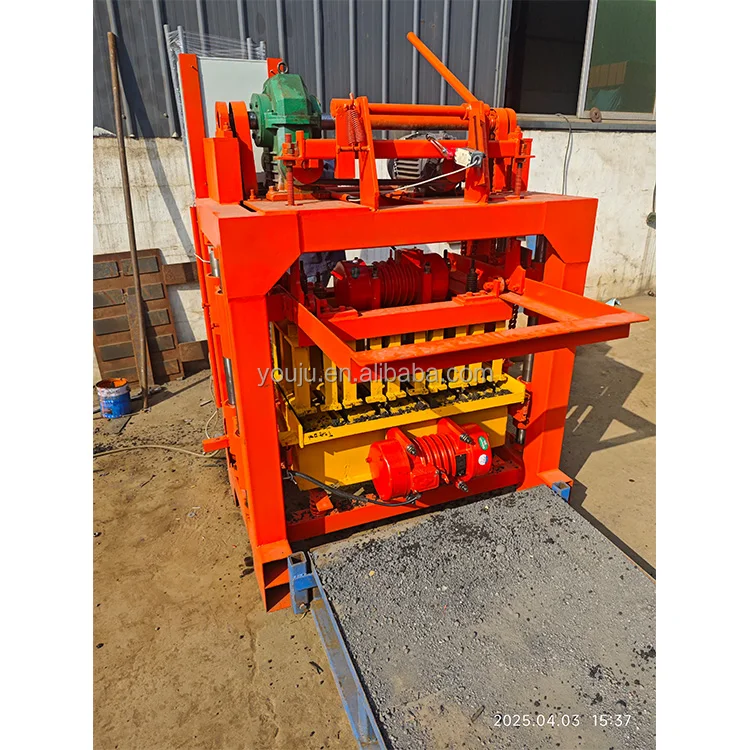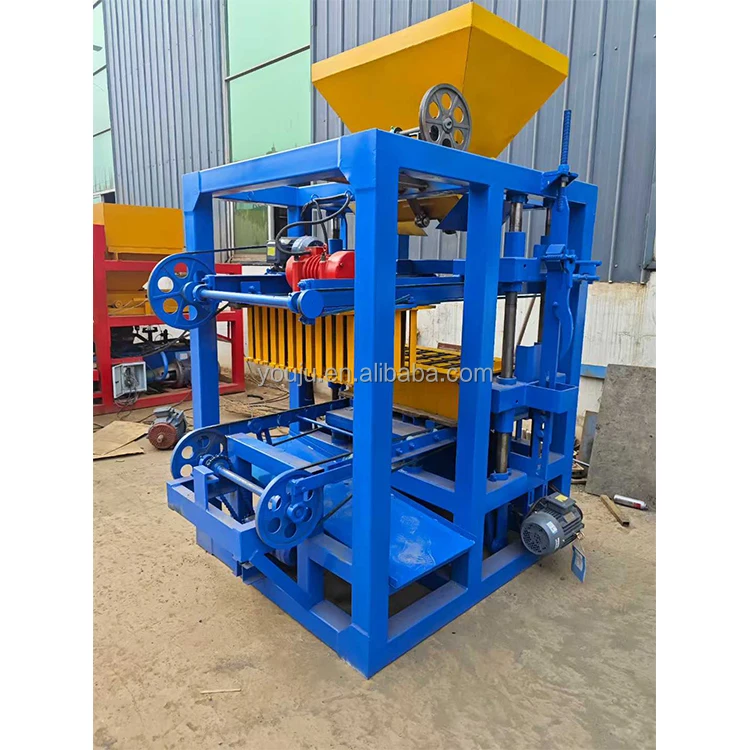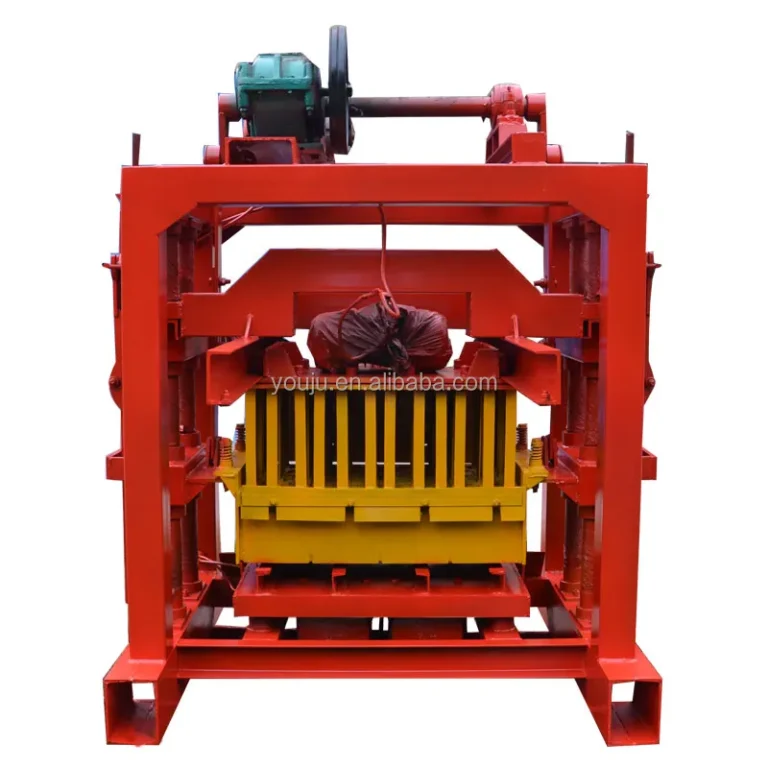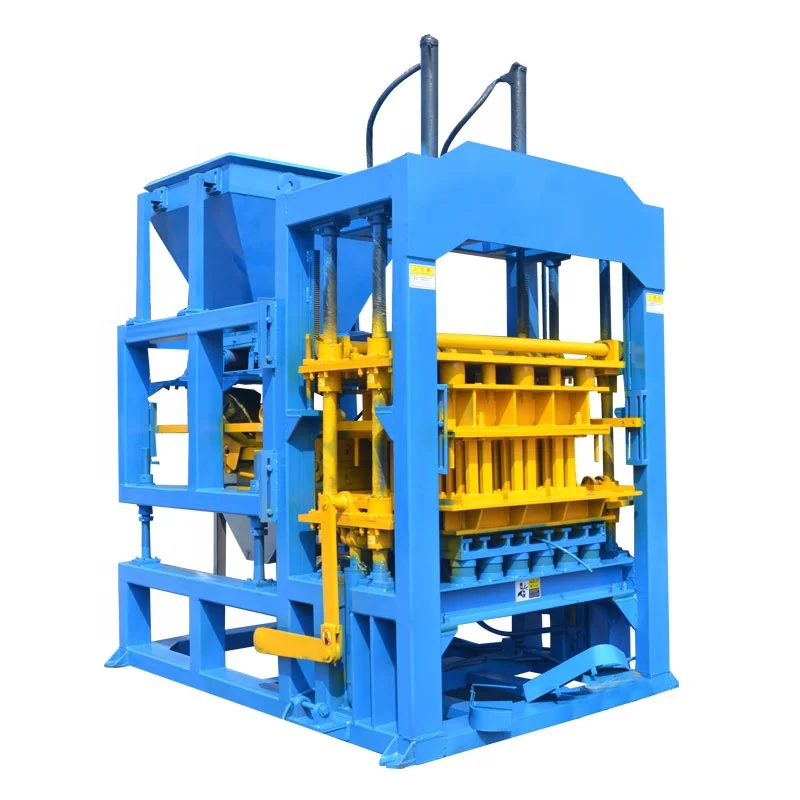
Description
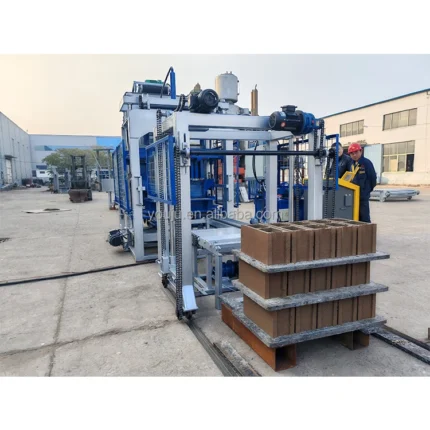
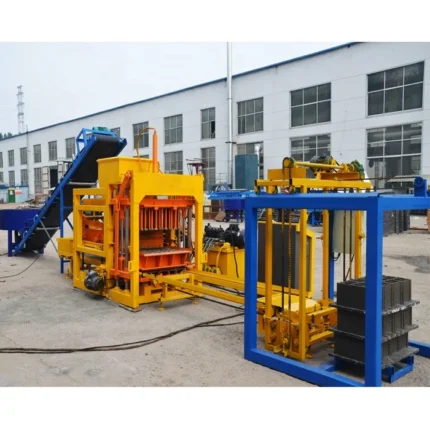
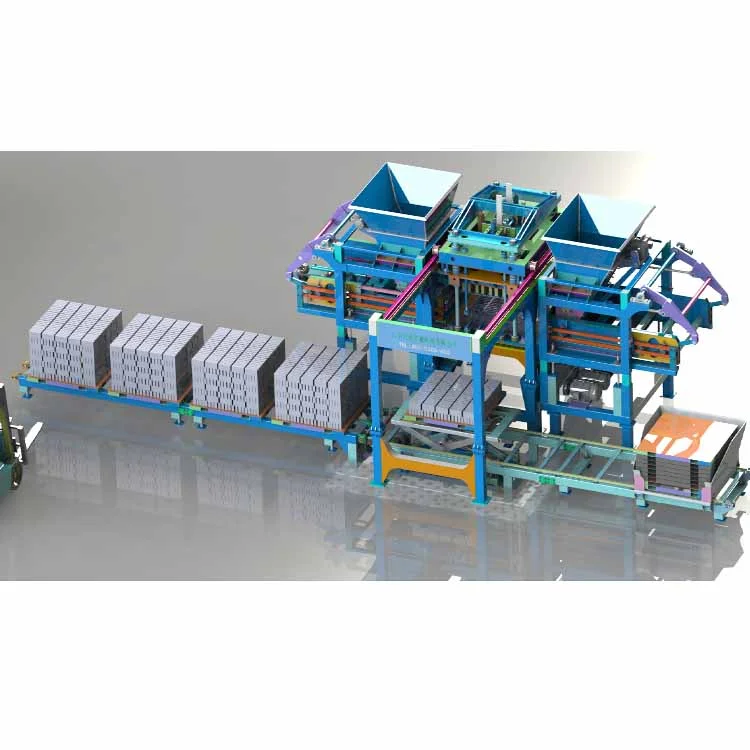
Integrated system matching — automation level, PLC language, and pallet handling specified together so the QT5-15 runs as one coordinated line, not a press waiting on manual stations.
Technical Specifications
| Parameter | Value |
|---|---|
| Model | QT5-15 |
| Product Type | Automatic Hydraulic Block Making Machine |
| Control System | PLC with fault diagnosis and long-distance controlling capability |
| Vibration System | Synchronization vibration, adjustable frequency (low for feeding, high for compaction) |
| Material Feeding | Dedicated storage and distribution system for feeding accuracy |
| Cycle Time | 15-20s (400×200×200mm / 400×150×200mm hollow block, 240×115×53mm solid brick); 20-25s (200×100×60mm rectangular brick, 225×112.5×60mm zigzag brick) |
| Output Capacity | 900-1200 pcs/h (basis: 400×200×200mm hollow block, 5 pcs/mould); 1080-1440 pcs/h (basis: 400×150×200mm hollow block, 6 pcs/mould); 5760-7680 pcs/h (basis: 240×115×53mm solid brick, 32 pcs/mould); 3600-4500 pcs/h (basis: 200×100×60mm rectangular brick, 25 pcs/mould); 2304-2880 pcs/h (basis: 225×112.5×60mm zigzag brick, 16 pcs/mould) |
| Daily Output (8hr) | 7200-9600 pcs (400×200×200mm hollow); 8640-11520 pcs (400×150×200mm hollow); 46080-61440 pcs (solid brick); 28800-36000 pcs (rectangular brick); 18432-23040 pcs (zigzag brick) |
| Mould Formats | Hollow block (400×200×200mm, 400×150×200mm), Solid brick (240×115×53mm), Rectangular paving brick (200×100×60mm), Zigzag paving brick (225×112.5×60mm) |
| Automation Level | Automatic, PLC-controlled with remote diagnostics capability |
| Hydraulic Pressure | (source value not stated — confirm with manufacturer) |
| Vibration Force | (source value not stated — confirm with manufacturer) |
| Pallet Size | (source value not stated — confirm with manufacturer) |
| Rated Power | (source value not stated — confirm with manufacturer) |
| Voltage & Frequency | (source value not stated — confirm with manufacturer) |
Application Suitability
| Application | Material or Output |
|---|---|
| Masonry hollow block production | Crushed stone, sand, cement, and fly ash blends for load-bearing and partition walls |
| Solid brick manufacturing | Dense aggregate and cement mixes for structural and infill masonry |
| Rectangular paving brick production | Fine aggregate and cement for roads, walkways, and parking areas |
| Zigzag paving brick production | Interlocking format for heavy-traffic landscaped surfaces and driveways |
Why Language and Voltage Must Be Locked Before the automatic QT5-15 block making machine PLC controlled Leaves the Factory
Every commissioning delay I have traced back to one root cause: the control panel spoke a language the operator could not read.
Buyers often focus on pressing force and cycle speed, then discover on arrival that the PLC display defaults to a language their crew cannot navigate. Troubleshooting stalls, parameter adjustments become guesswork, and what should be a straightforward start-up stretches into days of phone calls across time zones. Voltage mismatches compound the problem — a motor wired for the wrong frequency burns out within the first production run [NEED_CITE: voltage and frequency standards by export market]. Confirming these two details during the order stage costs nothing; correcting them on site costs time and credibility.
What Automation Actually Removes from the Operator
On the QT5-15, the PLC governs the full pressing sequence — material feed volume, vibration duration, compaction pressure, and pallet advance. The operator monitors the cycle through the touch screen rather than manually timing each stage. This matters most when a plant runs multiple block formats in one shift: the control recalls the parameter set for each mould, so a changeover does not rely on an individual operator’s memory.
Where Remote Diagnostics Shortens Downtime
The built-in fault diagnosis system logs sensor states and hydraulic pressure readings in real time. When an alarm triggers, the error code points the technician directly to the affected station — feeder, vibrator, or stacker — instead of forcing a line-wide shutdown. Long-distance controlling capability allows off-site engineers to review logs and guide local crews through resets, reducing the window between fault detection and production resumption [NEED_CITE: PLC remote diagnostics protocols in industrial block lines].
Reading the Specifications That Determine Block Strength
Hydraulic pressure and vibration force together set the compaction density of every block that leaves the press. Low-frequency vibration during the feeding phase settles material evenly across the mould cavity, while high-frequency compaction drives the aggregate into a dense matrix. If either value is undersized for a buyer’s local aggregate — for instance, a coarse crushed basalt that demands higher force than river gravel — the resulting blocks may pass the visual check but fail a compressive strength test. Pallet size is the third specification that often goes unexamined: it must align with the curing rack spacing and forklift tine width already in use at the plant, otherwise wet blocks are double-handled before they set.
The Cost of Skipping the Line-Level View
A press that cycles every 15 seconds still waits whenever the pallet feeder, material hopper, or stacker cannot keep pace. Plants that purchased the automatic QT5-15 block making machine PLC controlled as a standalone unit, without specifying the upstream and downstream stations, frequently find their real output capped not by the press but by a bottleneck one station away [NEED_CITE: block production line cycle synchronization]. The remedy — retrofitting an automatic stacker or widening the pallet magazine — costs more after installation than including it in the original line layout.
Why Buyers Source This Configuration Here
Block machinery is our single product focus, so the QT5-15 is specified as part of a matched line: press, mould, pallet, and handling equipment are sized together rather than assembled from separate suppliers. We set the vibration and pressure parameters against the buyer’s actual mix design and target block format, not a catalogue default. Every mould is designed for the formats the buyer’s market sells, with custom drawings available. The automation level is selectable, allowing a plant to begin with semi-automatic pallet handling and add full stacking later. Installation support includes on-site commissioning and operator training so the crew can run every format independently.
Documentation & Verification
- Line layout showing capacity calculation stated per block format and cycle time
- Machine specification sheet covering hydraulic pressure and vibration force ratings
- Mould drawing package with format list and cavity count for each block type
- PLC parameter sheet confirming display language and voltage configuration
- Factory test record produced on buyer’s target block format before dispatch
- Operation and maintenance manual with mould change procedure and wear parts list
Installation, Commissioning & Support
- Foundation plan matched to QT5-15 overall dimensions and vibration isolation requirements
- Dedicated electrical circuit sized to the machine’s rated power with correct voltage and frequency
- Pallet magazine and stacker aligned to curing rack height and forklift specification
- First-run parameter tuning for local aggregate mix and target block strength
- Operator training covering PLC fault diagnosis menus and mould changeover sequence
- Wear parts list with reorder intervals for hydraulic seals and vibration springs
What to Share with Your Inquiry
To match the QT5-15 to your production target, send the block formats you intend to sell, the daily output you need per format, and your local raw material source. Include your site voltage and frequency, the PLC display language your operators require, and details of any existing curing racks or forklifts so the pallet specification aligns from day one.
Frequently Asked Questions
Q: How is capacity verified per block format on the QT5-15?
A: Each output figure is tied to a specific block dimension, mould cavity count, and cycle time range. For example, 400×200×200mm hollow blocks run 5 per mould at 15-20 seconds, yielding 900-1200 pieces per hour. We provide a line layout that states the assumed format for every capacity number so you can cross-check against your actual product mix before committing.
Q: What PLC language and voltage options can be configured?
A: The PLC display language is set during production to match the operator team. Voltage and frequency are confirmed against the buyer’s local grid standard before the electrical cabinet is wired. We verify both items in writing at the order stage so the control panel is ready for use the moment the automatic QT5-15 block making machine PLC controlled powers up on site.
Q: How does adjustable-frequency vibration adapt to different aggregates?
A: Low-frequency vibration is used during material feeding to distribute the mix evenly across the mould cavity. High-frequency vibration then compacts the material under hydraulic pressure. The frequency split can be adjusted to suit coarse crushed stone, fine sand, or lightweight aggregate blends, maintaining block density across different local raw material sources.
Q: What is the mould change procedure on the QT5-15?
A: The mould is secured with quick-release fasteners, and the PLC stores the parameter set for each format. A trained operator switches the mould and recalls the matching cycle profile from the touch screen. Changeover time depends on the operator’s familiarity and the lifting equipment available at the plant; we cover the full procedure during on-site training.
Q: Can the automation level be expanded after initial installation?
A: Yes. The QT5-15 platform supports a staged automation path. A buyer can start with semi-automatic pallet handling and manual stacking, then add automatic pallet feeding, stacking, and cubing modules later. The PLC architecture accommodates these additions without replacing the core control unit.