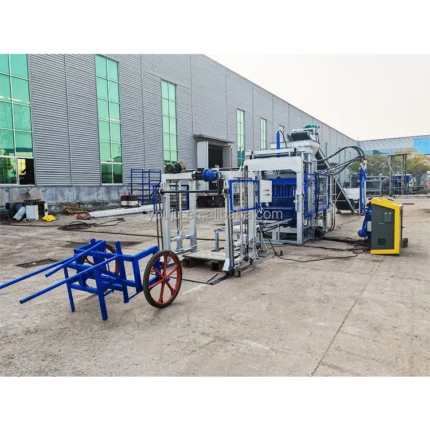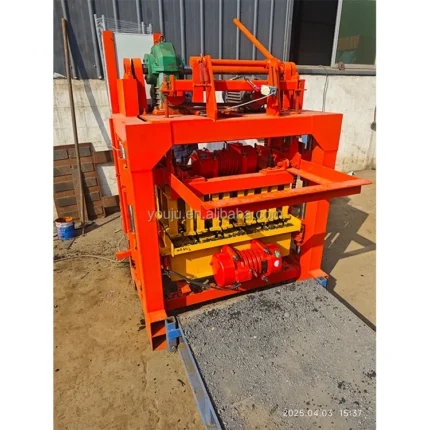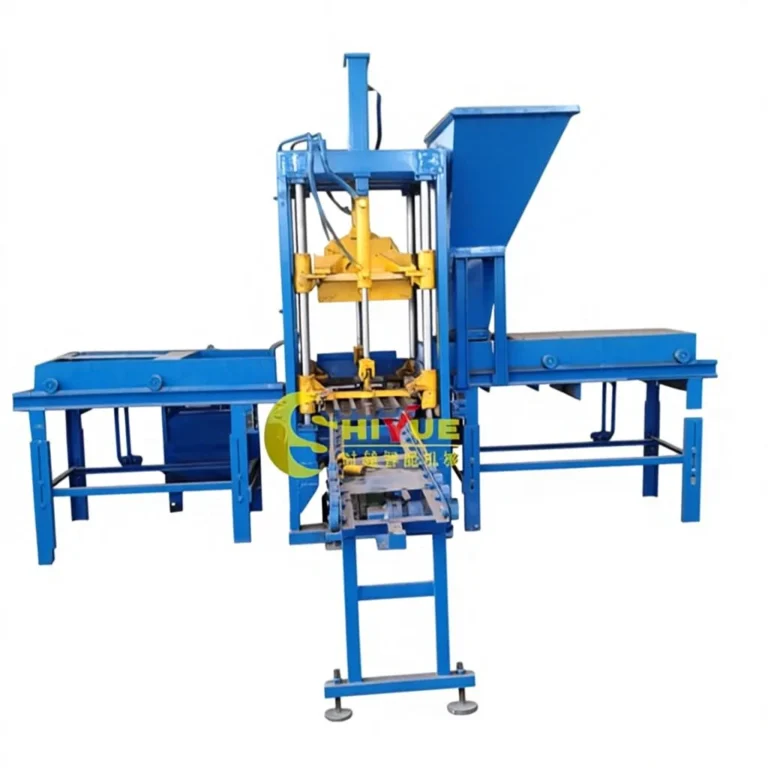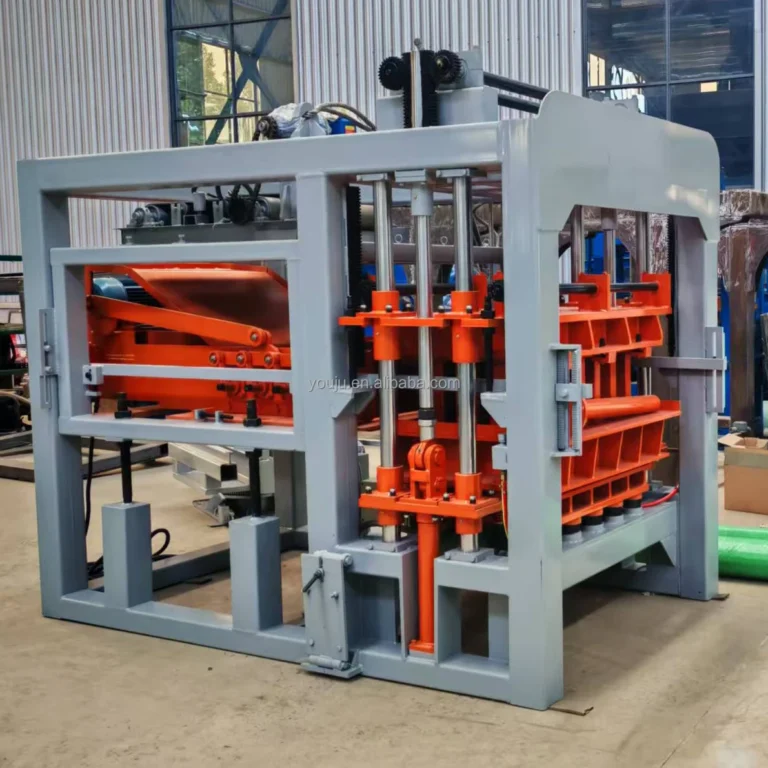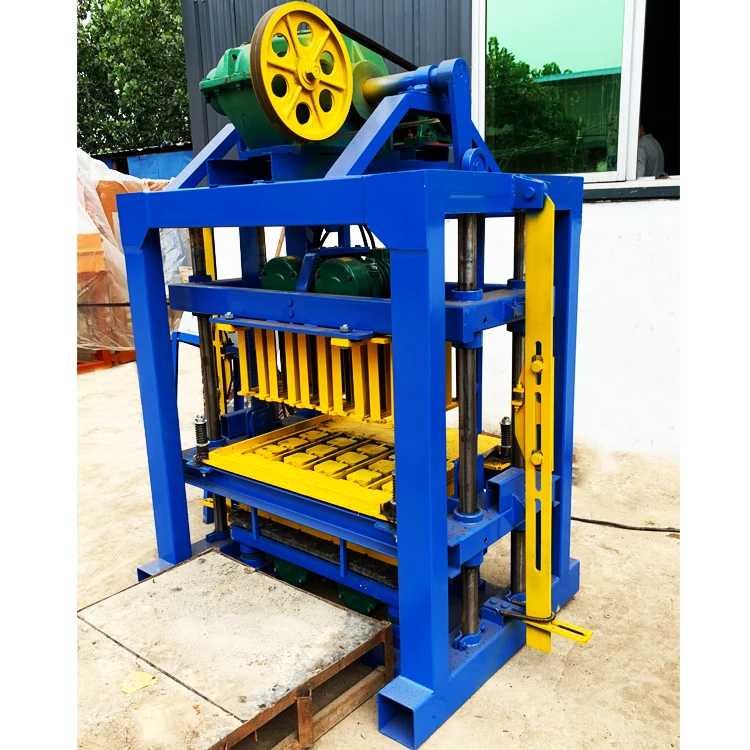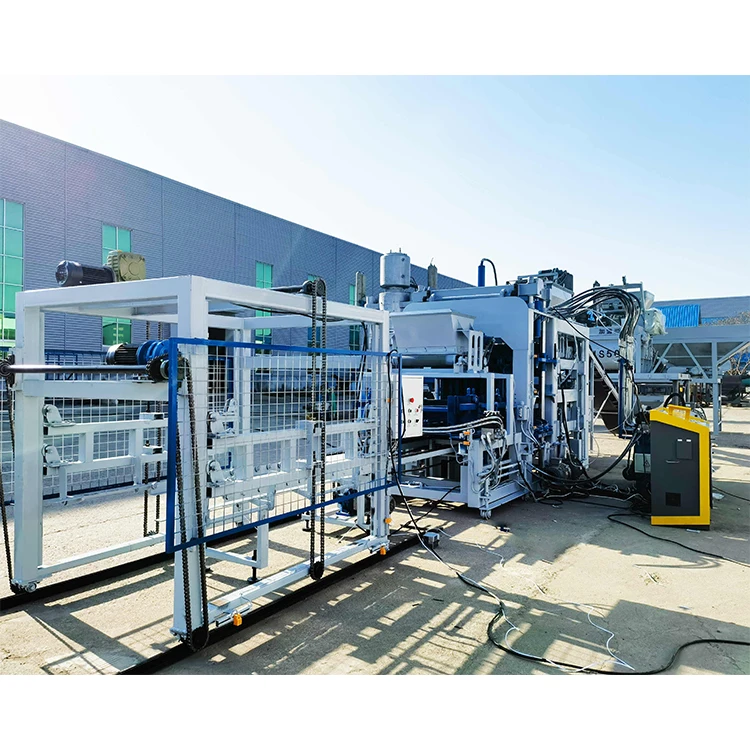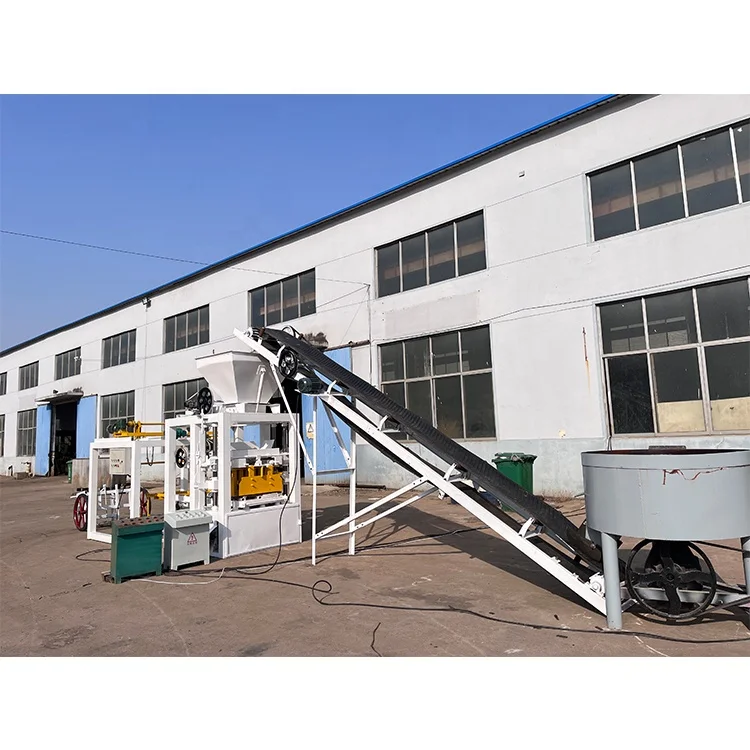
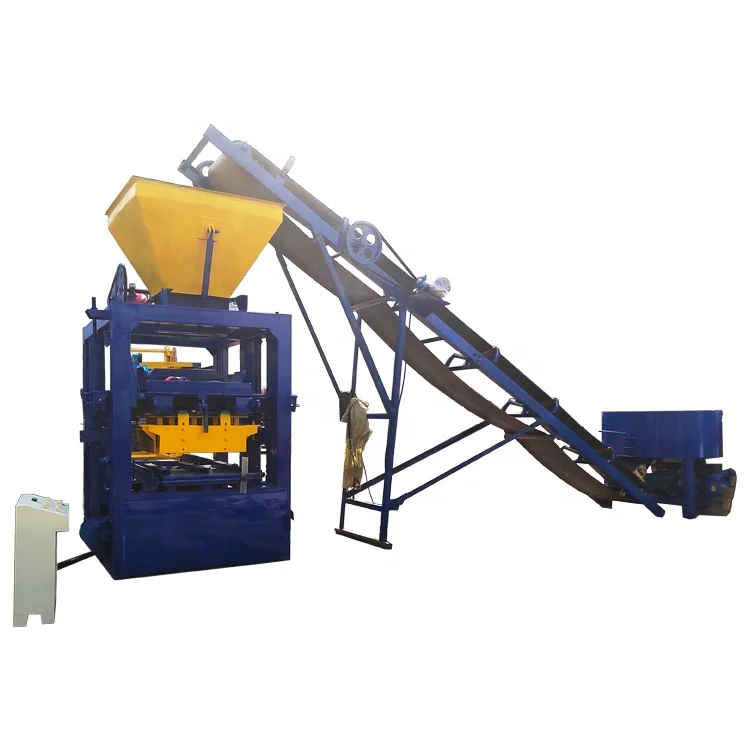

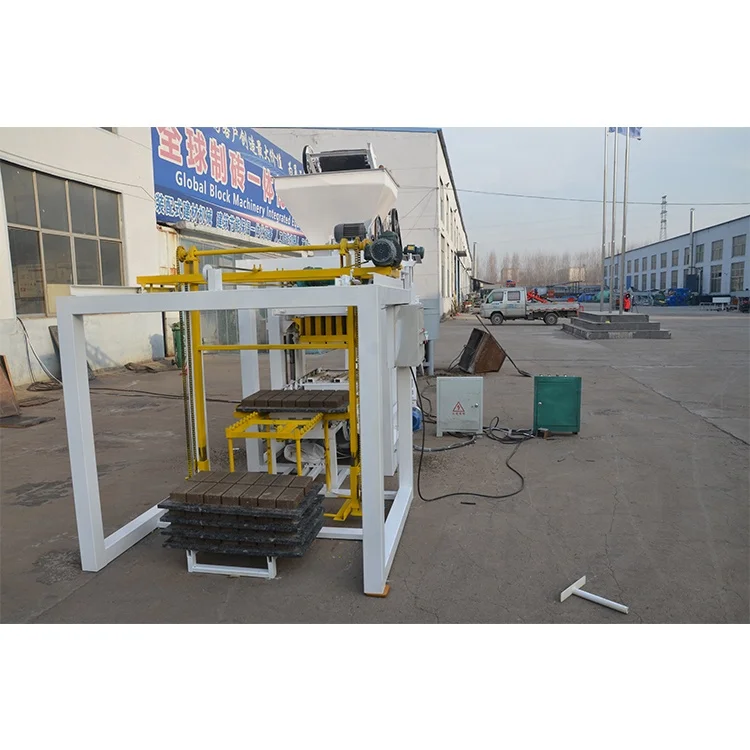

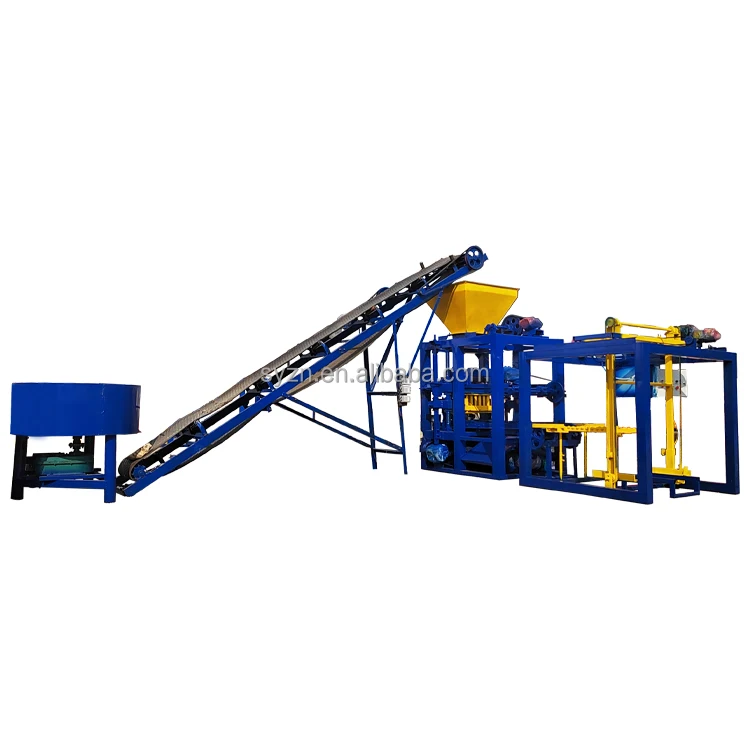
Description
Upgradable automation platform — The automatic QTJ4-24 block machine PLC controlled configuration lets plant owners start with semi-automatic mechanical pressing and add intelligent pallet handling as production volume justifies the investment.
Technical Specifications
| Parameter | Value |
|---|---|
| Model | QTJ4-24 |
| Product Type | Stationary Block Making Machine |
| Molding Method | Mechanical (pressure + vibration) |
| Overall Dimensions (L×W×H) | 3600×1700×2560mm |
| Pallet Size | 850×450mm |
| Molding Cycle | 24-26s (basis to be confirmed by block format) |
| Overall Power | 11.95kW |
| Vibration Force | 45kN |
| Vibrator Configuration | 2×3kW lower vibrators + 2×1.5kW upper vibrators |
| Total Mass | 2T |
| Material Feeding | Full-automatic spiral material distribution |
| Mold Lifting Reducer | 350-type |
| Raw Materials | Cement, sand, stone |
| Control System | Available with PLC, relay, or manual control (basis to be confirmed) |
| Voltage & Frequency | Configurable to buyer’s site requirements (basis to be confirmed) |
| Automation Level | Semi-automatic (mechanical press with automatic feeding) |
| Key Features | Dual-level vibration, automatic spiral feeding, mechanical mold lifting |
Application Suitability
| Application | Material or Output |
|---|---|
| Hollow concrete block production | Cement, crushed stone, sand |
| Solid block production | Cement, sand, aggregate |
| Interlocking brick production | Cement, fine aggregate |
| Paving brick production | Cement, coarse sand, stone dust |
| Small to medium block plants | Workshop-level manufacturing |
| On-site construction blocks | Project-based local manufacturing |
Why "24 Seconds Per Cycle" Misleads Most Buyers
The 24-26s cycle time on the QTJ4-24 is measured under specific mold and material conditions, not as a universal constant.
I have watched operators in Nairobi struggle to read English PLC menus, losing entire shifts to what should have been simple parameter changes. The automatic QTJ4-24 block machine PLC controlled interface must match the operator’s working language before production begins, not after the container arrives [NEED_CITE: PLC display language requirements for export machinery]. Quoted cycle times typically assume a standard hollow block format with optimal mix consistency, and switching to dense paving blocks or thin interlocking bricks extends that cycle noticeably.
Dual-Level Vibration Consistency
The 2×3kW lower vibrators combined with 2×1.5kW upper vibrators deliver 45kN of compaction force across the pallet surface. This configuration addresses the density gradient problem common in taller hollow blocks, where lower sections naturally compact more than upper sections under single-source vibration. The automatic QTJ4-24 block machine PLC controlled system can adjust vibration duration by mold format, maintaining consistent block density whether producing 200mm hollow blocks or thinner paving formats.
Automatic Spiral Feeding Precision
Full-automatic spiral material distribution eliminates the feed inconsistency that causes batch-to-batch strength variation. Manual feeding methods leave voids in some mold sections and overfill in others, producing blocks with different densities from the same cycle. The spiral system delivers uniform material across the mold cavity, and when paired with the automatic QTJ4-24 block machine PLC controlled batching, this feeding consistency translates directly into repeatable block strength.
Specification Impact on Daily Output
The 850×450mm pallet size determines how many blocks fit per cycle, which varies significantly by format. A standard 400×200×200mm hollow block fits four per pallet, while smaller interlocking bricks may fit twelve or more. The 45kN vibration force must be matched to the buyer’s local aggregate particle size and cement ratio—too little force leaves blocks under-compacted, while excessive force on fine sand mixes can cause surface cracking [NEED_CITE: vibration force calibration for local aggregate types]. The 11.95kW overall power requirement must be verified against site voltage and frequency, as undersized transformers cause motor burnout during startup surges.
The Cost of Skipping Language and Voltage Confirmation
Machines arriving with English-only interfaces in regions where operators work in Swahili or Bengali create immediate commissioning delays. I have seen two-day setbacks turn into week-long struggles because the translation work was improvised rather than built into the PLC configuration during factory testing. Voltage mismatches between 380V/50Hz factory settings and local 415V/60Hz supplies damage motors and control boards before the first production run begins [NEED_CITE: voltage and frequency standards by export market].
Why Buyers Choose This Configuration Path
Starting with the semi-automatic mechanical press and automatic feeding system keeps initial investment manageable while preserving the upgrade path. The automatic QTJ4-24 block machine PLC controlled configuration can be added later, incorporating pallet feeding, automatic stacking, and cubing stations without replacing the core press. Factory testing against the buyer’s specific block format and mix design ensures the vibration force and cycle time deliver the promised output. Custom mold design accommodates formats the local market actually purchases, not just catalogue standards. Installation support includes operator training in the buyer’s working language, covering both the mechanical press operation and any PLC-controlled stations added to the line.
Documentation & Verification
- Factory test record showing cycle time and block strength for your specific mold format
- PLC display language and voltage confirmation documented before production begins
- Mold drawing and format list matched to your local block market requirements
- Pallet size specification checked against your existing curing area and forklift capacity
- Vibration force calibration report based on your local aggregate and cement mix design
Installation, Commissioning & Support
- Foundation requirements for 3600×1700mm footprint with vibration isolation specifications
- Electrical supply verification for 11.95kW total power with dedicated circuit requirements
- Machine assembly from shipping configuration with mold and pallet system integration
- First-run parameter setup for your block format with operator training in local language
- Vibration system tuning against your specific aggregate particle size and mix ratio
- Wear parts list and reorder schedule for vibrators, spiral feeder, and mold components
Before Requesting a Quotation
Provide your target block formats with exact dimensions, as cycle time and daily output vary significantly between hollow blocks, solid blocks, and paving bricks. Confirm your site voltage and frequency to avoid motor and control system incompatibility upon arrival. Specify the control language your operators will use, and describe your existing curing area dimensions and material handling equipment to ensure the 850×450mm pallet system integrates with your workflow.
Frequently Asked Questions
Q: How does the 24-26s cycle time change when switching from hollow blocks to paving bricks?
A: The base cycle time assumes a standard hollow block format with optimal mix consistency. Paving bricks typically require extended vibration duration to achieve higher surface density, and thin interlocking formats may need reduced time to prevent surface damage. The exact cycle time for each mold format should be confirmed during factory testing with your specific mix design.
Q: What automation level ships standard, and which stations can be added later?
A: The QTJ4-24 ships as a semi-automatic mechanical press with automatic spiral feeding. Pallet feeding, automatic stacking, and cubing stations can be integrated later through the PLC control system without replacing the core press. This upgrade path allows production volume growth to justify automation investment incrementally.
Q: How do I confirm voltage, frequency, and PLC language match my site before production?
A: Provide your site electrical specifications and preferred operator language during the inquiry stage. These parameters are documented in the quotation and confirmed again before production begins. Factory testing uses your specified voltage and displays your chosen language, preventing commissioning delays upon container arrival.
Q: What block formats fit the 850×450mm pallet, and how does this affect output?
A: The pallet accommodates multiple formats including standard hollow blocks, solid blocks, interlocking bricks, and paving bricks. The number of blocks per cycle varies by format size, directly impacting daily output calculations. Your quotation should state capacity per specific format rather than a single headline number.
Q: How is vibration force matched to local aggregate for consistent block strength?
A: The 45kN vibration force from the dual-level system must be calibrated to your aggregate particle size and cement ratio during factory testing. Oversized aggregate requires different vibration duration than fine sand, and this calibration ensures batch-to-batch strength consistency rather than relying on a fixed factory default.