

Description
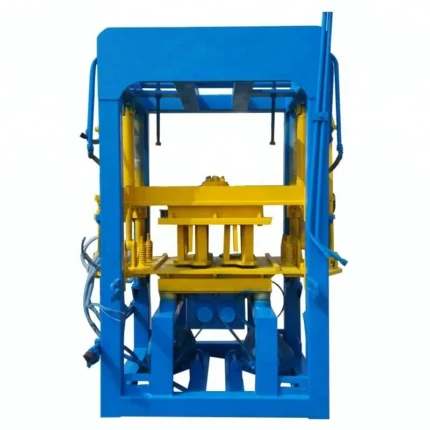
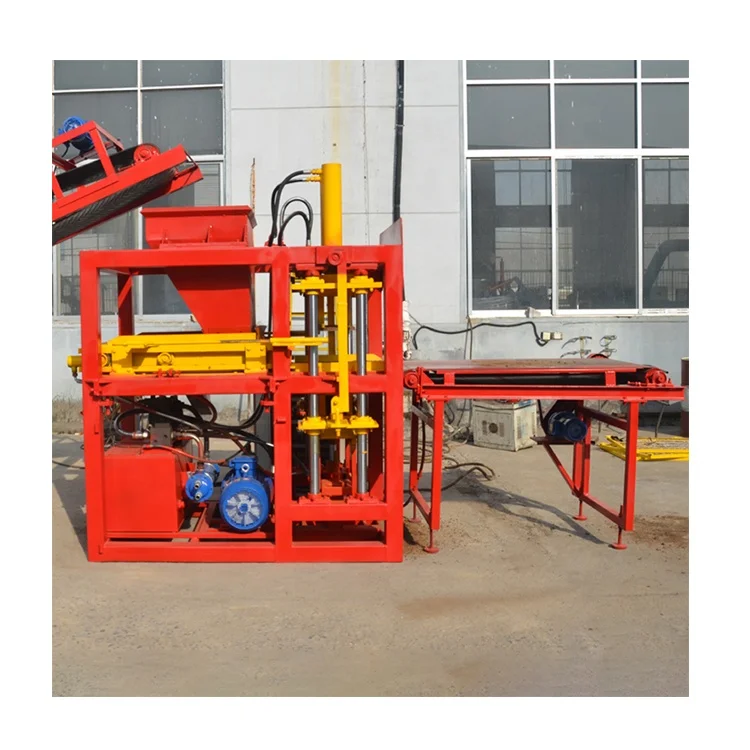
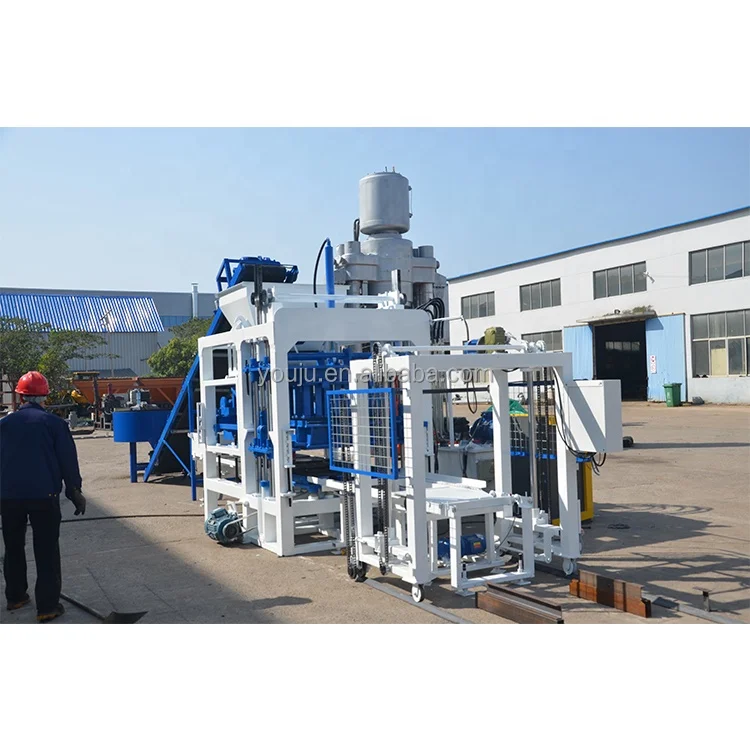
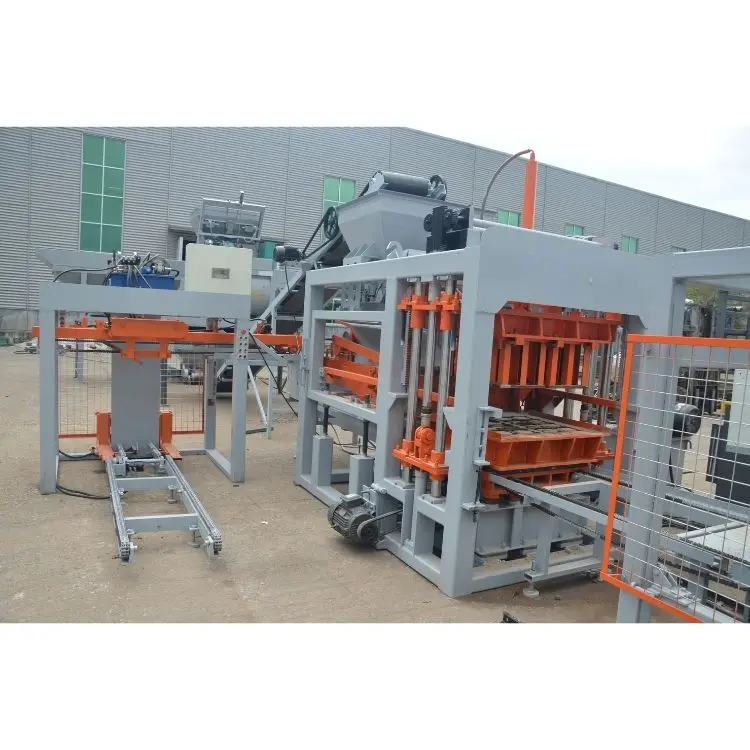
Single-focus automation architecture — the QT5-15 hydraulic block machine integrates PLC logic, hydraulic pressure and vibration into one control loop, so the semi-automatic tier handles cycle-to-cycle decisions without relying on operator memory.
Technical Specifications
| Parameter | Value |
|---|---|
| Product Type | Hydraulic Concrete Block Making Machine |
| Model | QT5-15 |
| Overall Dimensions (L×W×H) | 7400 × 1950 × 2800 mm |
| Rated Pressure | 21 MPa |
| Main Vibration Form | Platform Vibration |
| Vibration Frequency | 2800–4500 r/min |
| Vibration Force | 40 KN |
| Pallet Size | 1100 × 550 mm |
| Molding Cycle | 15–20 s |
| Demolding Method | Hydraulic |
| Total Mass | 6 T |
| Factory Area | 600 m² |
| Control System | PLC intelligent control with HMI, logic control, production program, malfunction diagnosis, remote control function |
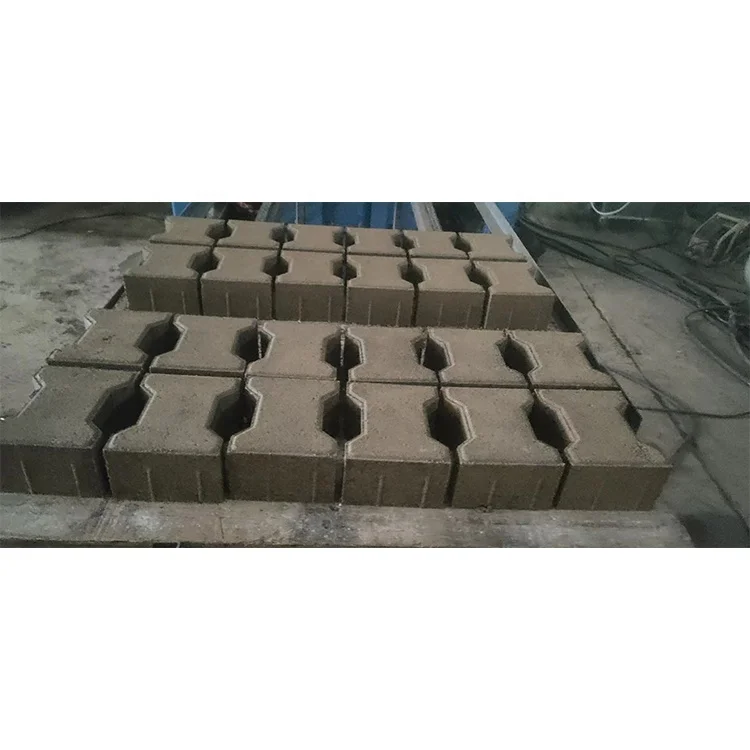
| Applied Products | Concrete hollow/solid blocks, pavers, interlocking blocks, curbstone, colored pavers |
| Raw Materials | Crushed stone, sand, cement, dust, fly ash, gravel, slag |
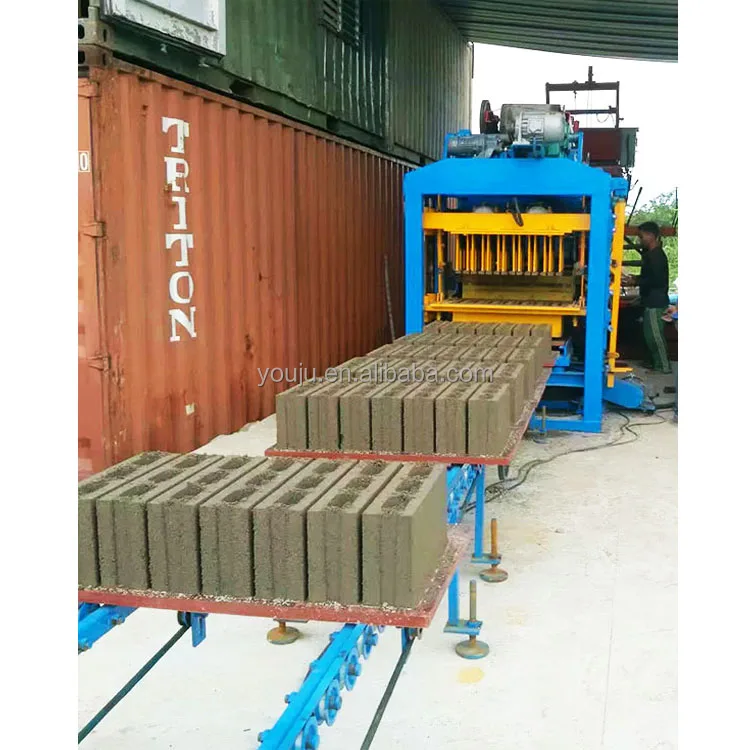
| Output (Hollow brick 400×200×200mm) | 5 pcs/mold, 7200–9600 pcs/day (basis: 15–20s cycle) |
| Output (Porous brick 240×115×90mm) | 16 pcs/mold, 23040–28800 pcs/day (basis: 16–20s cycle) |
| Output (Standard brick 240×115×53mm) | 32 pcs/mold, 61440–70892 pcs/day (basis: 13–15s cycle) |
| Voltage & Frequency | (source value — verify against manufacturer catalog) |
| Automation Level | Semi-automatic with PLC control (source value — verify against manufacturer catalog) |
| Standards | CE declaration where applicable (source value — verify against manufacturer catalog) |
Application Suitability
| Application | Material or Output |
|---|---|
| Hollow block production | Crushed stone, sand, cement, fly ash mix for load-bearing walls |
| Paver and interlocking brick production | Colored concrete aggregates for driveways, walkways and plazas |
| Solid block manufacturing | Gravel and slag-based mix for partition and foundation walls |
| Curbstone forming | High-density concrete for roadside and drainage channel profiles |
| On-site project production | Local aggregate and cement for housing and development projects |
| Small plant start-up | Semi-automatic operation for entrepreneurs entering block production |
What "15–20 Seconds per Cycle" Leaves Out About Your Output
Cycle time is only as reliable as the PLC program, pallet synchronization and hydraulic demolding sequence running behind it.
Many quotations quote cycles per hour without stating which block format that figure assumes, so the real daily output of the automatic QT5-15 block making machine falls far short of expectation once the operator switches to a smaller, slower-demolding format. A PLC-controlled block machine addresses this by locking each format into its own production program, including vibration duration, hydraulic hold time and pallet feed delay, so the operator selects a recipe rather than guessing the sequence. The malfunction diagnosis system further prevents silent losses by triggering warning signals when a sensor drifts or a hydraulic valve sticks, rather than letting the machine run out of tolerance for an entire shift [NEED_CITE: PLC fault diagnosis in block making lines].
The Control Layer That Replaces Operator Memory
In a semi-automatic tier, the PLC removes the operator from cycle-to-cycle decisions that would otherwise be made manually — vibration duration, pressure hold, pallet indexing. The automatic QT5-15 block making machine stores each block format as a separate production program with its own parameter set, so switching from a 400×200×200mm hollow block to a 240×115×53mm standard brick does not require the operator to re-dial timers from memory. This is the practical difference between a machine that runs consistently across shifts and one that depends on whoever happens to be at the panel.
Remote Diagnostics Before the Technician Boards a Plane
The remote control function and long-distance controlling system allow the manufacturer to interrogate the PLC from a different time zone before dispatching a service engineer. I once spent two days remotely reconfiguring a PLC display language because the default Chinese HMI had been shipped to a site where the operator read only Arabic numerals and English — the automatic QT5-15 block making machine avoids that delay only when voltage, frequency and PLC display language are confirmed before production, not after arrival. The malfunction diagnosis system narrows the fault to a specific sensor or valve circuit, which means the remote session resolves what would otherwise require a flight [NEED_CITE: remote diagnostics capability in PLC block machines].
Hydraulic Pressure, Vibration Force and What They Decide Together
The rated pressure of 21 MPa and vibration force of 40 KN at 2800–4500 r/min are not independent specifications — they jointly determine whether the concrete mix compacts to the target density or fractures at the edges during demolding. Platform vibration distributes energy across the 1100×550mm pallet, and the hydraulic demolding method lifts the mold box without dragging the green block sideways. If the vibration frequency is set too high for a dry mix with coarse crushed stone, the block surface will craze; too low, and the porous brick at 16 pcs/mold will not reach its stated density within the 16–20 s cycle. Matching these parameters to the buyer’s actual aggregate gradation is a configuration decision, not a catalog default.
Pallet Sizing, Mould Change and the Line That Waits
A 1100×550mm pallet must match the curing rack spacing and the forklift tine width already on site, or the entire output handling chain breaks at the press exit. Mould change time is the second hidden cost — if a format swap takes most of a shift, the flexibility the buyer paid for with multiple moulds cancels out before the second format runs. The PLC production program stores each mould’s parameters so that a changeover is a recipe selection, but the physical mould alignment and hydraulic clamp sequence still require a documented procedure, not an assumption [NEED_CITE: mould change procedures for multi-format block plants].
What Mismatched Voltage and Language Cost on Day One
A machine wired for 380V/50Hz arriving at a 440V/60Hz site does not simply run faster — the hydraulic pump motor and vibration motor draw incorrect current, and the PLC power supply may fail before the first block is pressed. Voltage, frequency and PLC display language are the three confirmations that must happen before the production order is released, because correcting them after the automatic QT5-15 block making machine arrives means rewiring, replacing motor starters and reloading HMI files on a factory floor that was expecting output that morning.
Why Source This PLC Controlled Block Machine Here
Block machinery is our single focus, so the QT5-15 is specified as one matched system — machine, mould, pallet and handling — rather than assembled from separate suppliers whose cycle times do not align. Configuration is set against the buyer’s actual mix design and local aggregate, not a catalogue default that assumes a sand-to-cement ratio unavailable at the project site. Mould design covers the formats the buyer’s market sells, including custom drawings for interlocking profiles or curbstone shapes not in the standard list. The automation level is selectable, so a buyer can start with the semi-automatic tier and move toward fully automatic stacking and cubing without replacing the press. Installation includes operator training on the specific PLC program set shipped with the machine.
Documentation & Verification
- Line layout and capacity calculation stating block format and cycle time assumption for each product
- Machine specification sheet with confirmed voltage, frequency and PLC display language
- Mould drawing and format list including any custom profiles to buyer drawings
- Hydraulic and electrical schematic for local maintenance reference
- Factory test record run on the buyer’s stated block format before dispatch
Installation, Commissioning & Support
- 600 m² factory area requirement with leveled slab capable of supporting 6 T static mass plus dynamic vibration load
- Dedicated three-phase circuit matching confirmed voltage and frequency before machine energization
- Machine shipped in dismantled state with reassembly sequence documented in operation manual
- First-day commissioning includes PLC language verification, hydraulic pressure set to 21 MPa and test cycle on buyer’s mould
- Operator training covers production program selection, mould change procedure and malfunction diagnosis response
What to Include in Your Inquiry
To size the automatic QT5-15 block making machine accurately, provide the target block format with dimensions, the daily output requirement stated per format, the local aggregate type and available cement, the site voltage and frequency, and the preferred PLC display language. If you have existing pallets, curing racks or a forklift already on site, include the pallet dimensions and rack spacing so the pallet feed and handling configuration can be matched before the quotation stage.
Frequently Asked Questions
Q: How is daily output capacity verified for each block format?
A: Output is stated per format with the moulding cycle and block size explicitly noted — for example, the hollow brick at 400×200×200mm yields 7200–9600 pcs/day based on a 15–20 s cycle, while standard brick at 240×115×53mm yields 61440–70892 pcs/day on a 13–15 s cycle. A single catalogue figure without format context is not a reliable planning number.
Q: Can the PLC control system be configured in my operator’s language?
A: The PLC intelligent control with HMI supports configurable display language, but this must be confirmed before production. I once had a unit arrive with Chinese-only HMI to a Middle Eastern site, and remote language reconfiguration took two days before the operator could run the machine. Language, voltage and frequency are confirmed at the order stage now to prevent this.
Q: What is the upgrade path from semi-automatic to full automation?
A: The semi-automatic QT5-15 can move toward fully automatic stacking and cubing by adding pallet return conveyors, automatic stackers and cubing stations that synchronize with the press cycle. The PLC production program remains the central control, so the upgrade extends the line rather than replacing the press or rewriting the logic from scratch.
Q: How are vibration force and hydraulic pressure matched to local raw materials?
A: The 40 KN vibration force at 2800–4500 r/min and 21 MPa hydraulic pressure are tuned against the buyer’s specific aggregate gradation and cement ratio. A mix with coarse crushed stone requires different vibration duration than one with fine fly ash, and this is set during commissioning, not assumed from a default parameter table.