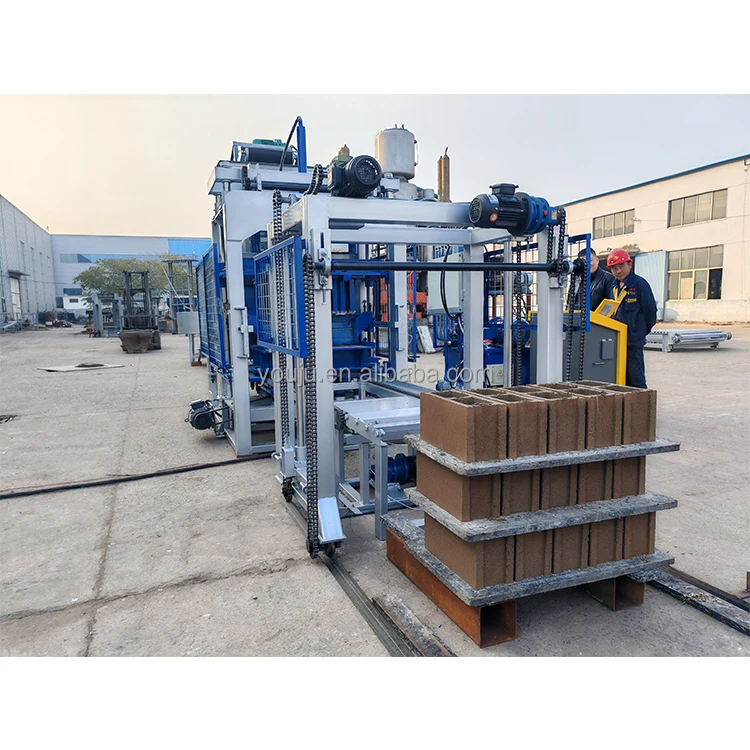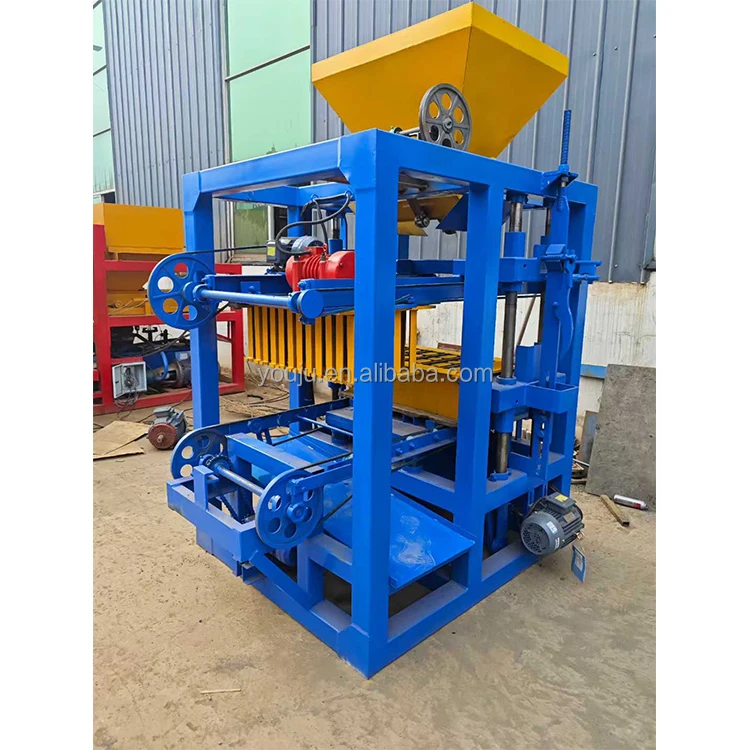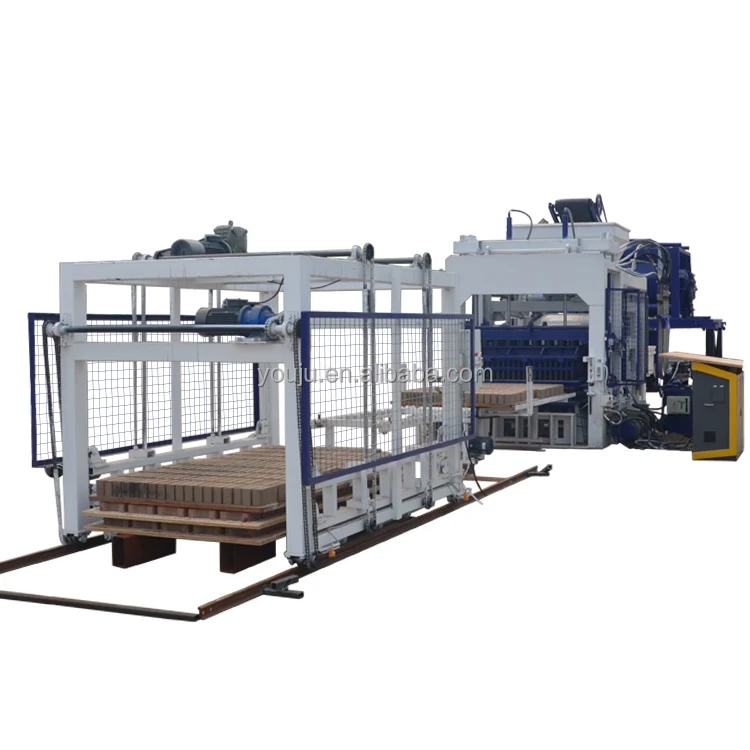


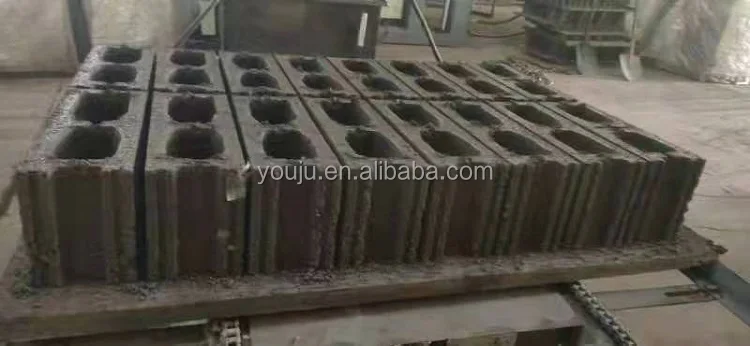


Description
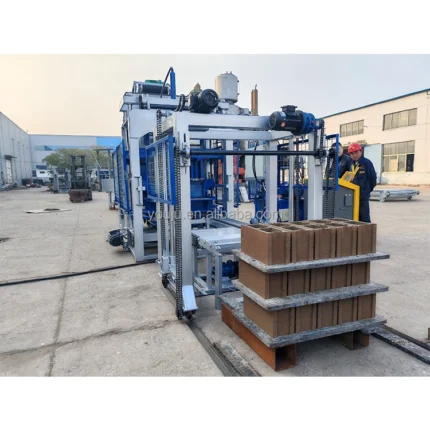
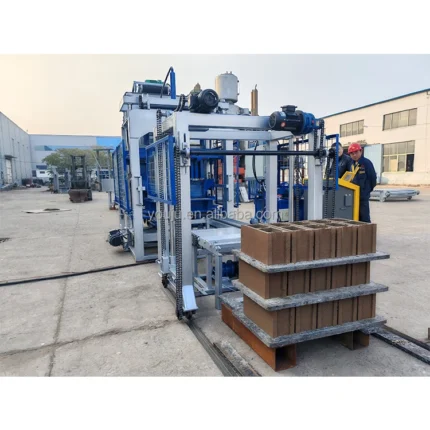
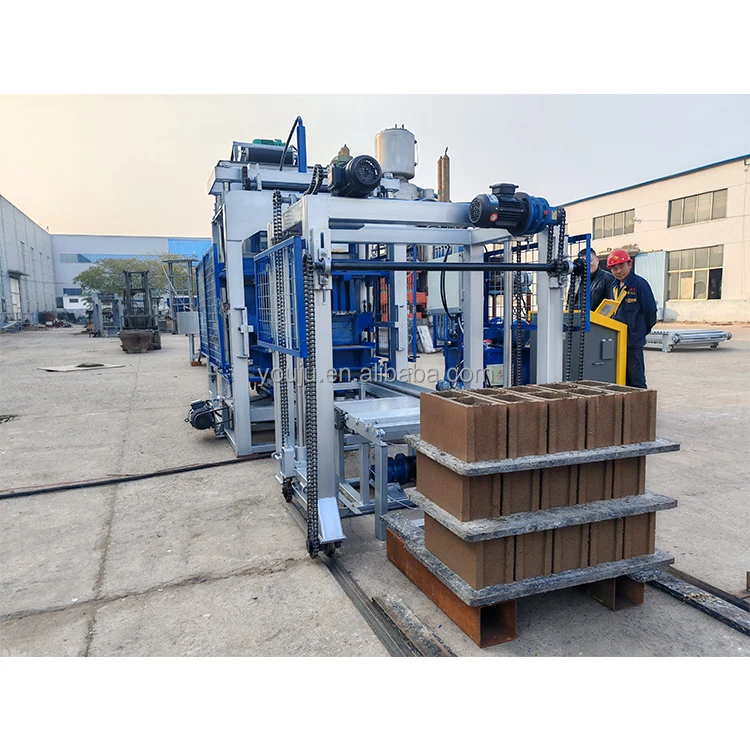
Single-focus block machinery expertise — every station from raw material feeding through cubing is specified as one matched system rather than assembled from separate suppliers, ensuring the press is never left waiting for upstream or downstream equipment.
Technical Specifications
| Parameter | Value |
|---|---|
| Model | QT12-15 |
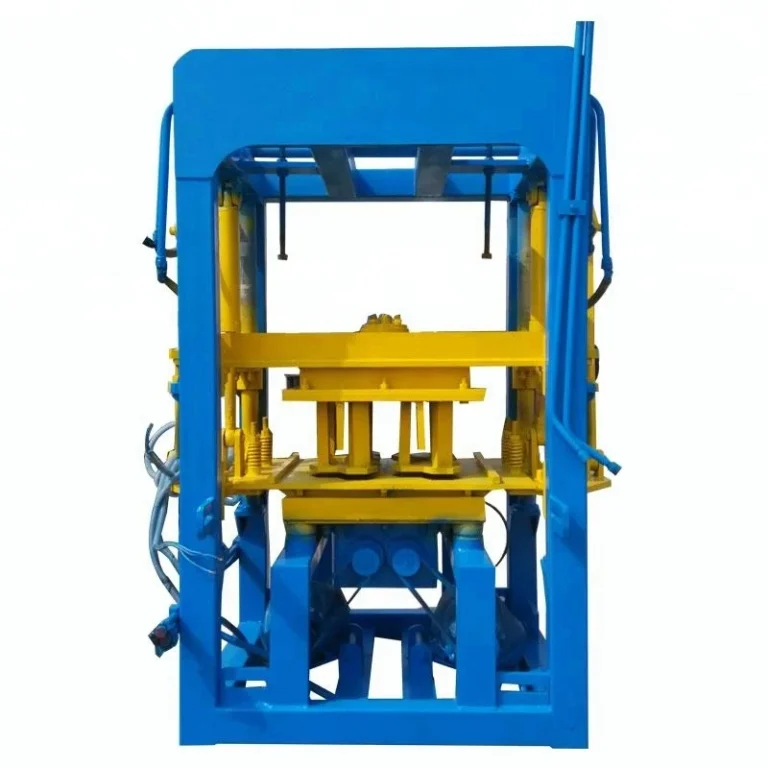
| Product Type | Stationary Automatic Concrete Block Making Machine |
| Overall Dimensions (L×W×H) | 7500×2500×3020 mm |
| Total Mass | 12 T |
| Pallet Size | 1220×900 mm |
| Vibration Frequency | 0-60 Hz |
| Main Vibration Form | Platform Vibration |
| Vibration Force | 100 kN |
| Moulding Mode | Automatic loading, vibration moulding |
| Molding Cycle | 15-20 s |
| Demolding Method | Hydraulic |
| Overall Power | 53 kW (to be confirmed with manufacturer) |
| Control System | PLC aptitude control with human-machine interface dialogue system |
| Automation Level | Fully automatic |
| Feeding System | Semi-closed screen reticular rotational feeding unit |
| Hydraulic System | Computer-control flow pressure |
| General Water Consumption | 12 T/Day |
| Factory Area | 1200 m² |
| Applied Products | Concrete blocks, hollow/solid blocks, pavers, interlocking blocks, curbstone, colored pavers |
| Raw Materials | Crushed stone, sand, cement, dust, fly ash, gravel, slag |
| Productivity – Hollow Bricks (400×200×200 mm) | 12 pcs/mould, 20-25 s cycle, 1728-2160 pcs/h |
| Productivity – Porous Bricks (240×115×90 mm) | 27 pcs/mould, 15-20 s cycle, 4860-6480 pcs/h |
| Productivity – Standard Bricks (240×115×53 mm) | 62 pcs/mould, 15-17 s cycle, 12700-14400 pcs/h |
Application Suitability
| Application | Material or Output |
|---|---|
| High-volume hollow block production | Crushed stone, sand, cement, fly ash blends for 400×200×200 mm structural blocks |
| Standard solid brick manufacturing | Local aggregate and cement mixes for 240×115×53 mm bricks |
| Paving block and curbstone lines | Colored concrete and slag aggregates for interlocking pavers and kerbstones |
| Housing project on-site block plants | Site-sourced gravel and sand for hollow and porous brick formats |
| Concrete product manufacturers expanding format range | Multiple mould changes across block, paver, and interlocking formats on one press |
What "Fully Automatic" Actually Means for Your Line
An automatic concrete block making machine PLC controlled from feed to stack only delivers consistency when every station keeps pace with the press cycle.
Buyers often focus on the press itself — vibration force, cycle time, mould count — while the real bottleneck hides upstream or downstream. A mixer that cannot discharge fast enough, a pallet feeder that jams on warped boards, or a stacker that cannot keep up during standard brick runs turns a high-capacity press into an expensive intermittent machine. I have watched plants where the QT12-15 sat idle between cycles because the curing rack handler was still retrieving the previous batch. The automation level printed on the quotation means very little if the surrounding stations were never specified as one system [NEED_CITE: synchronized station timing in automatic block lines].
How PLC Control Removes Operator Variables
The PLC aptitude control system on the QT12-15 manages cycle timing, vibration frequency sweeps, and hydraulic pressure sequencing through a human-machine interface dialogue system. When an operator changes from hollow block to paver production, the PLC recalls the stored recipe — vibration duration, pressure ramp, feed gate timing — rather than relying on manual dial adjustments. This means batch-to-batch consistency depends on the stored parameters, not on who is running the shift.
Where Station Synchronization Breaks Down
A 15-20 second molding cycle at the press demands that the pallet feeder delivers a fresh board, the feeding unit charges the mould cavity, and the wet stacker removes the finished product — all within that window. If any station lags, the press waits. This automatic concrete block making machine PLC controlled architecture coordinates start and stop signals across stations, but the mechanical capacity of each station must still be sized to the fastest cycle the press can run. Undersizing the mixer or choosing a pallet return conveyor with insufficient speed is a common cause of actual output falling below the rated figure [NEED_CITE: typical causes of output shortfall in synchronized block plants].
Reading the Capacity Table Honestly
The QT12-15 productivity figures assume specific block formats and cycle ranges: 12 hollow bricks per mould at 20-25 seconds, 27 porous bricks at 15-20 seconds, and 62 standard bricks at 15-17 seconds. These numbers shift when local aggregate requires longer vibration to achieve target density, or when a mix with high clay content demands slower feed gate speeds to prevent cavity overflow. A realistic capacity calculation must state the exact block format, the mix design tested, and the pallet material in use — not just quote the fastest cycle from the table.
The Cost of Mismatched Pallets and Curing Racks
When pallet size is chosen without checking the curing rack spacing and forklift tine width already on site, the result is pallets that do not stack properly on the racks or require manual repositioning before the forklift can move them. The QT12-15 runs a 1220×900 mm pallet, which is a common dimension but not universal. If your existing curing area was built for a different size, every pallet leaving the stacker becomes a manual handling problem — defeating the purpose of investing in full automation [NEED_CITE: pallet size compatibility with curing rack and forklift systems].
Why Configuration Starts With Your Material Sample
I once spent three days on site re-tuning hydraulic pressure and vibration frequency because the buyer’s local stone dust had a much higher clay content than the default mix the machine was configured for. Blocks were cracking during demolding and strength targets were not being met. Since then, I request a raw material sample before any configuration is finalized. The QT12-15 offers vibration frequency adjustment from 0-60 Hz and computer-controlled hydraulic flow pressure, which gives a wide tuning range — but those parameters only deliver results when they are set against the actual aggregate and cement blend the plant will run daily.
What Sets This Procurement Path Apart
Block machinery is our single focus, so the QT12-15 is specified alongside its moulds, pallets, feeding system, and handling equipment as one integrated line rather than a press sold in isolation. Configuration is set against your actual mix design and target block format, not pulled from a catalogue default. Mould design covers the formats your market sells, including custom drawings when standard options do not match. The automation level is selectable — a buyer can begin with semi-automatic pallet handling and add automatic stacking and cubing later. Installation support includes commissioning and operator training on the specific PLC interface language your team will use.
Documentation & Verification
- Line layout drawing showing station spacing and pallet flow path for the QT12-15 configuration
- Capacity calculation stating the exact block format, cycle time, and mix design assumed
- Voltage, frequency, and PLC display language confirmation sheet signed before production
- Hydraulic and electrical schematic matching the as-built QT12-15 configuration
- Factory test record using buyer-specified mould and pallet dimensions
- Mould drawing and format list with realistic cycle times per block type
Installation, Commissioning & Support
- Foundation plan sized for the QT12-15 overall dimensions of 7500×2500×3020 mm and 12 T operating mass
- Dedicated power circuit sized for the confirmed overall kW rating and local voltage
- On-site assembly and leveling of press frame, pallet feeder, and stacking stations
- PLC parameter setup and trial runs across each ordered mould format before handover
- Operator training on the HMI dialogue system including recipe storage and fault diagnostics
- Wear parts list covering hydraulic seals, vibration springs, and feed gate liners
Before You Request a Quote
To size this automatic concrete block making machine PLC controlled system to your plant, we need to know the block formats your market demands and the daily volume target for each. Share your local aggregate type, cement grade, and any existing pallet or curing rack dimensions so the line can be configured around what you already have. Confirm your site voltage, frequency, and preferred PLC display language early — these details determine whether commissioning starts on day one or waits for an electrical rework.
Frequently Asked Questions
Q: How do I verify the capacity numbers before committing to an order?
A: Ask the supplier to provide a written capacity calculation that names the exact block format, mould cavity count, and cycle time used to derive the hourly figure. For the QT12-15, hollow brick output at 1728-2160 pcs/h assumes 400×200×200 mm blocks at 20-25 second cycles. If your mix requires longer vibration for strength, the real figure will be lower — request a test run with your material sample.
Q: What PLC languages and remote diagnostics are available on this machine?
A: The human-machine interface dialogue system can be configured in the buyer’s preferred language before shipment, confirmed on a signed voltage and control sheet. Remote diagnostics capability depends on the specific PLC module selected. Clarify whether you need remote access for fault troubleshooting or if on-site HMI troubleshooting is sufficient for your maintenance team.
Q: How do I choose between full automation and a semi-automatic start?
A: Full automation on the QT12-15 removes manual intervention from pallet feeding through stacking and cubing. If your labor cost is low and you want to reduce initial investment, a semi-automatic start with manual pallet handling is possible, with stacking and cubing automation added later. The upgrade path depends on whether the base frame was specified with mounting points for future stations.
Q: How does press cycle time affect upstream mixer and downstream stacker sizing?
A: The QT12-15 molding cycle ranges from 15 to 25 seconds depending on block format. The mixer must discharge a full batch within that window, and the stacker must clear the finished pallet before the next one arrives. If any station is undersized, the press idles between cycles and actual output drops below the rated table figures.
Q: What happens if my local aggregate differs from the default mix configuration?
A: The QT12-15 vibration frequency range of 0-60 Hz and computer-controlled hydraulic pressure offer a wide tuning envelope, but parameters must be matched to your specific material. Provide a raw material sample and target block strength before configuration so the vibration force and pressure settings are calibrated to your actual mix rather than a generic default.