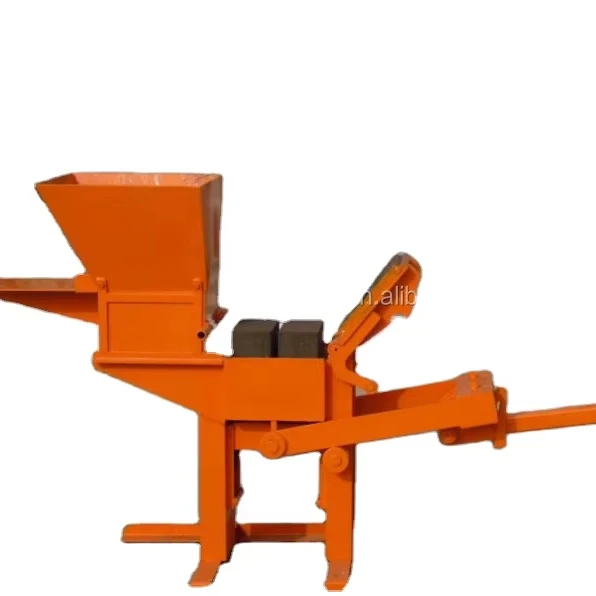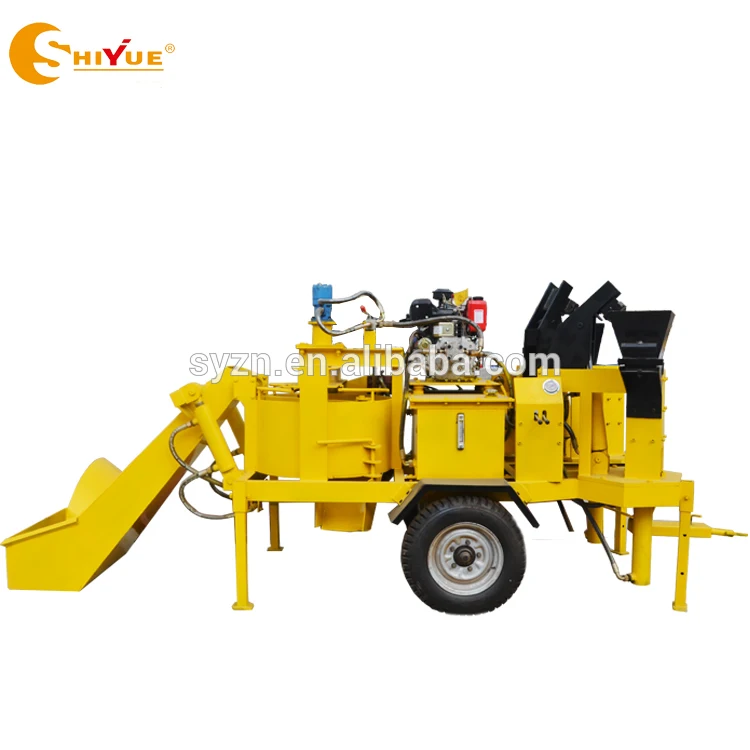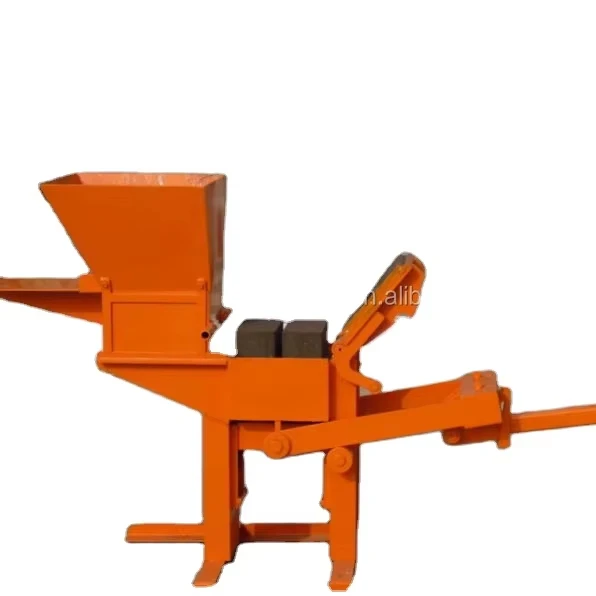
Description
Mould and Control Matching — every LY2-40 configuration we ship is set against the buyer’s soil-cement ratio and target interlocking profile, so the PLC upgrade path starts from a verified manual baseline rather than a catalogue guess.
Technical Specifications
| Parameter | Value |
|---|---|
| Model | LY2-40 |
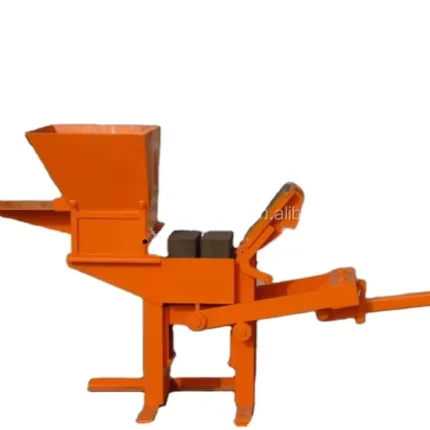
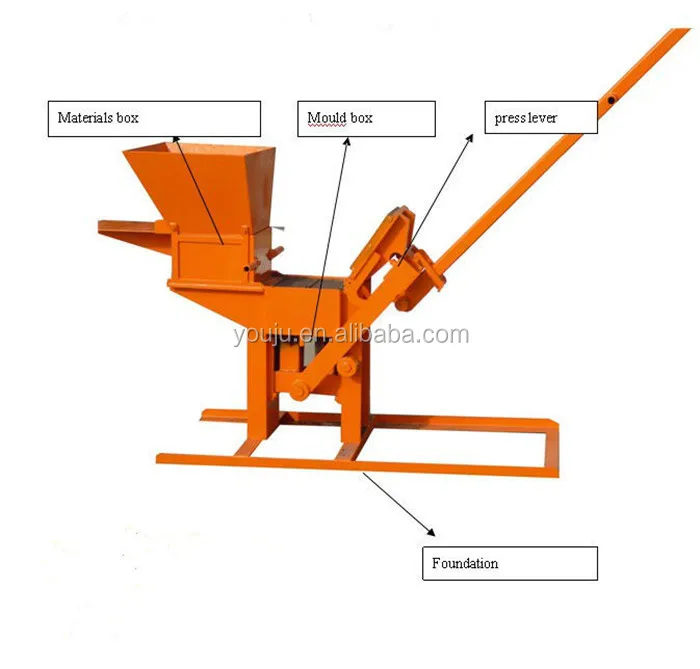
| Product Type | Manual Clay Interlocking Brick Making Machine |
| Total Power | No Power, Completely Manual |
| Lifting System | Manual |
| Mobility | Steel wheels |
| Overall Dimensions | 1600 × 700 × 1200 mm |
| Molding Cycle | 30–40 s (basis not stated in source — confirm block format / material / thickness) |
| Output Capacity | 400–1000 pcs/day (basis not stated in source — confirm block format / material / thickness) |
| Mould System | Changeable for various block formats |
| Basic Equipment | JFA-1 Mixer or JQ350 Mixer |
| Mixing Option | Automatized mix (Eco Mix Force line mixer) or manual mixing |
| Automation Level | Fully manual, no electrical power required |
| Warranty | 1 Year |
Application Suitability
| Application | Material or Output |
|---|---|
| Off-grid construction sites | Soil-cement mix interlocking bricks without grid power |
| Rural housing projects | Clay and stabilised soil interlocking blocks |
| Mobile on-site contractor production | Interlocking bricks relocated across project footprint |
| Small-scale block yards | Various interlocking brick formats on changeable moulds |
What the Cycle Time Figure Actually Means for Your Output
A 30–40 second molding cycle only translates to real daily volume once the interlocking brick format, soil-cement ratio, and operator rhythm are locked in.
I once watched a site supervisor in Oman spend an entire shift chasing inconsistent brick density because the manual press cycle had been quoted against a standard hollow block, not the interlocking profile his crew was actually forming. The LY2-40’s molding cycle of 30–40 s carries that same caveat: the number shifts depending on brick thickness and whether the operator is working alone or with a pallet runner. When buyers evaluate this automatic PLC controlled manual clay brick making machine for their line, the first step is confirming the exact interlocking format so capacity is calculated against reality, not a brochure default [NEED_CITE: block format assumptions in cycle time quotations].
Where Manual Meets the PLC Upgrade Path
The LY2-40 sits at the zero-power end of the automation spectrum, and that is precisely what makes it a useful baseline. Buyers who plan to scale toward PLC-controlled batching and stacking benefit from starting with a press whose manual cycle exposes every variable — mix consistency, compression stroke, pallet timing — before sensors and logic controllers mask them.
Control Language: The Detail That Stalls Commissioning
On a recent project in the Gulf, a fully automatic clay brick line sat idle for three days because the PLC interface defaulted to English while the operators read only Arabic. That gap cost the contractor an entire production window. Any ancillary equipment paired with the LY2-40 — mixer, conveyor, or future stacking module — must carry a confirmed control language before it leaves the factory. I now write display language into the technical sign-off sheet for every shipment, and the buyer signs it back before dispatch [NEED_CITE: PLC language and HMI localisation requirements for industrial machinery].
Compression, Mix Design, and Brick Density
The LY2-40 delivers compression entirely through manual leverage, which means brick density depends on the operator’s stroke force and the soil-cement ratio in the hopper. A higher cement content improves interlocking brick strength but also raises material cost, so the mix design must be validated against the buyer’s local clay properties and target compressive strength before committing to a production run. The changeable mould system accommodates various interlocking profiles, but each format carries its own compaction geometry — a thinner interlocking tile compresses differently from a load-bearing interlocking block. Mould changeover time directly affects how many formats a single press can produce in a day, and that figure varies with the specific profiles involved.
The Cost of Skipping Format Validation
Buyers who order a manual press based on a single capacity number often discover that switching to their market’s best-selling interlocking profile adds seconds to every cycle. That gap compounds across a shift, and the daily shortfall only becomes visible after the first week of production. Worse, if the soil-cement mix was never tested against the target format, the bricks may crack during curing — a defect that traces back to the mix, not the machine [NEED_CITE: soil-cement ratio testing for interlocking brick compressive strength].
Why Buyers Source This Line Here
Block machinery is the single focus of this operation, which means the LY2-40 is specified alongside its mixer, pallet, and any future automation module as one matched system. Configuration is set against the buyer’s actual soil type and local aggregate, not pulled from a generic table. Mould design covers the interlocking profiles the buyer’s market sells, with custom drawings available when standard formats do not match. The automation level is selectable — a buyer can commission the LY2-40 as a standalone manual press and later integrate PLC-controlled batching and automatic stacking without replacing the core unit. Installation support includes operator training, and the mould and wear parts list is documented so first replacements are available when needed.
Documentation & Verification
- Line layout with capacity calculation stating the interlocking brick format assumed
- Mould drawing and format list confirming supplied interlocking profiles
- Mixer specification sheet matching the selected JFA-1 or JQ350 unit
- Voltage and control language confirmation for any powered ancillary equipment
- Factory test record on the buyer’s soil-cement mix before dispatch
- Operation and maintenance manual with wear parts schedule
Installation, Commissioning & Support
- Level ground required; 1600 × 700 mm footprint with clearance for mould change access
- No electrical connection needed for the press itself; mixer circuit to match local voltage
- Steel-wheel mobility allows repositioning across site without a forklift
- First-day commissioning includes mould fit check and compression stroke adjustment
- Operator training covers mix loading rhythm and mould changeover procedure
- Wear parts list supplied with first recommended replacement intervals
Preparing Your Inquiry
To size the LY2-40 correctly for your line, share the interlocking brick profile you intend to produce, the local clay type and available cement ratio, and the daily volume you need from a single press. If you plan to integrate powered ancillary equipment, confirm your site voltage, frequency, and preferred control language so those items are locked before production begins.
Frequently Asked Questions
Q: How is the daily output of the LY2-40 verified, and what format does the cycle time assume?
A: The stated 30–40 s cycle and 400–1000 pcs/day range carry a basis-not-stated flag because output depends entirely on the interlocking brick format, mix design, and operator crew size. We verify daily capacity by running a timed test against the buyer’s specific profile and soil-cement ratio before confirming a line layout figure.
Q: What automation upgrade path exists from the manual LY2-40 to PLC-controlled production?
A: The LY2-40 can be paired with PLC-controlled batching and automatic pallet feeding as a first upgrade step, adding consistency to the mix and reducing manual pallet handling. Further stages include automatic stacking and curing rack handling, each integrated while the manual press remains the forming station.
Q: How does soil type and cement ratio affect interlocking brick strength on a manual press?
A: On a fully manual press, brick density comes from operator stroke force and mix cohesion. A sandy clay with low cement content may not compact enough for load-bearing use, while a rich mix raises cost. We test the buyer’s local soil against the target compressive strength before finalising the mould configuration.
Q: What mould change system is available, and how long does a format changeover take?
A: The LY2-40 uses a bolt-secured mould frame that accepts various interlocking profiles. Changeover time depends on the complexity of the profile and whether the operator has a dedicated mould rack; we document the procedure and estimated time for each supplied mould during commissioning training.