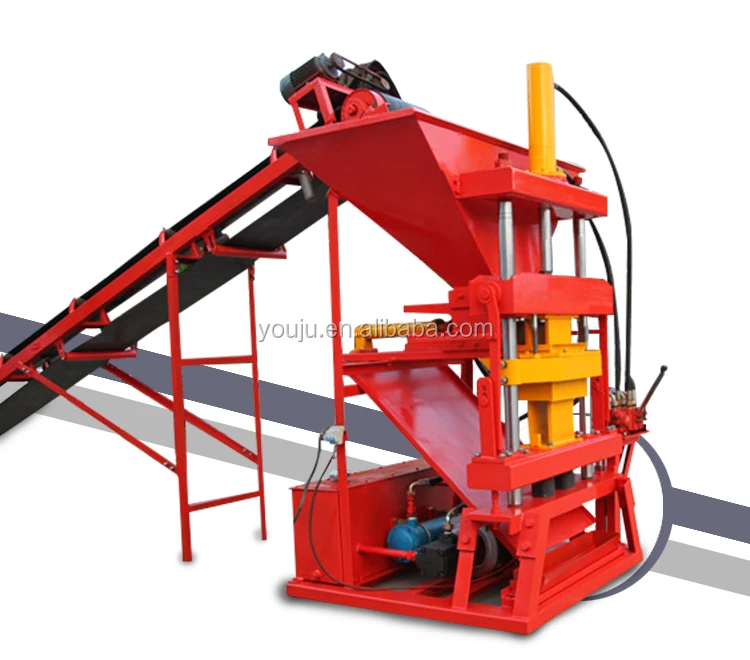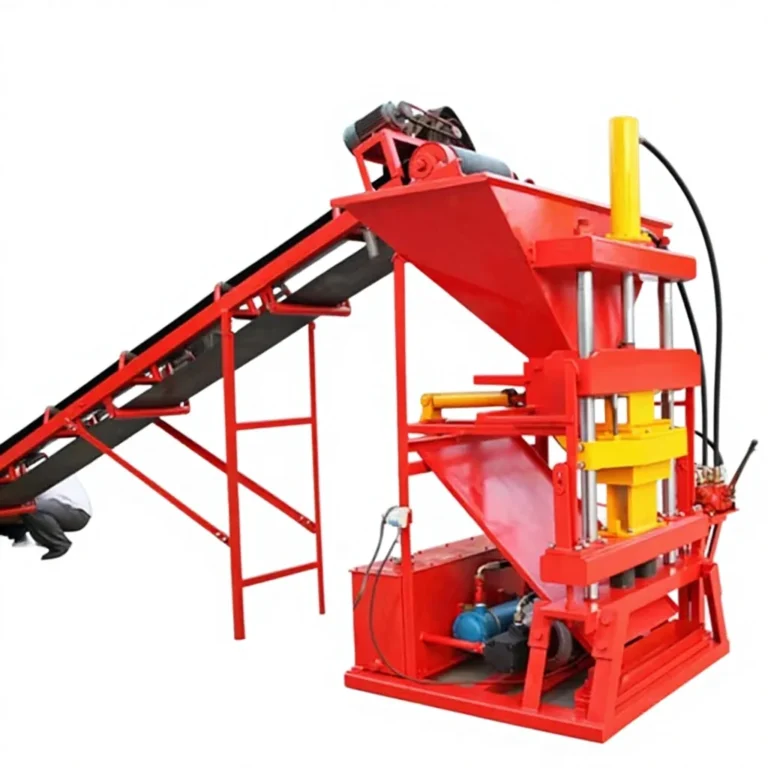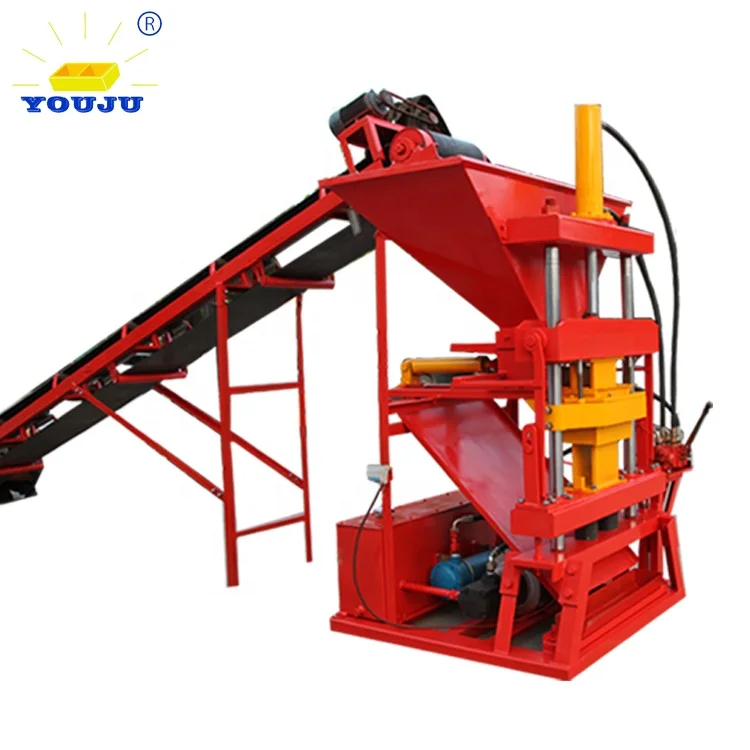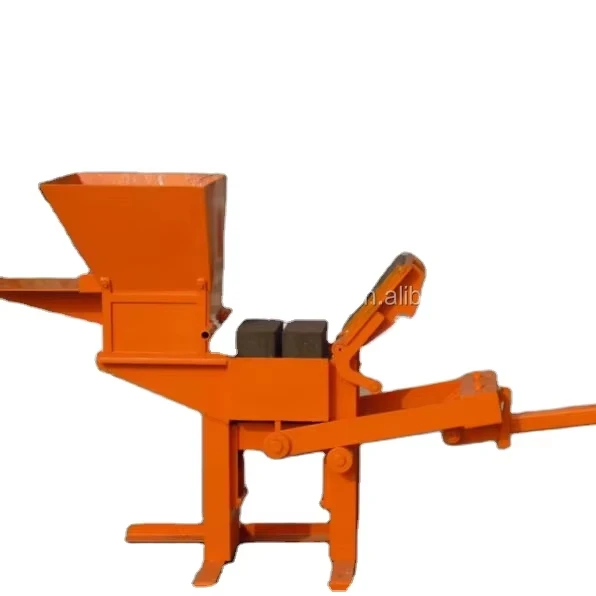
Description
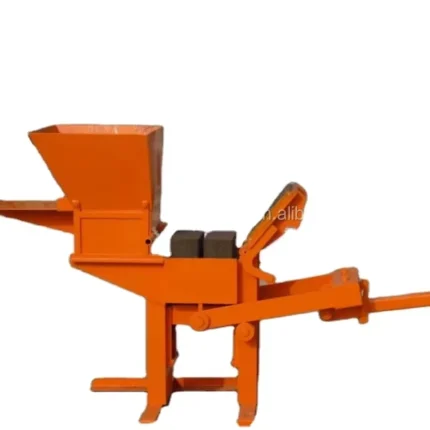
Matched Molding Parameters — The LY2-40 is configured against the buyer’s actual soil sample and target interlocking brick format, not a catalogue default, ensuring cycle time and block strength reflect real site conditions rather than idealized test runs.
Technical Specifications
| Parameter | Value |
|---|---|
| Model | LY2-40 |
| Product Type | Manual Clay Interlocking Brick Machine |
| Overall Dimensions | 1600 x 700 x 1200 mm |
| Net Weight | 200-240 kg |
| Total Power | No Power, Completely Manual |
| Molding Cycle | 30-40s |
| Output Capacity | 400-1000 pcs/day (basis not stated in source — confirm block format / material / thickness) |
| Compatible Mixer Options | JFA-1 Mixer or JQ350 Mixer |
| Automation Level | Completely Manual |
| Mobility | Mobile devices using steel wheels |
| Warranty | 1 Year |
Application Suitability
| Application | Material or Output |
|---|---|
| Interlocking clay brick production | Laterite, red clay, and sandy loam blended with stabilizer |
| Eco-friendly earth block making | On-site soil mixed with cement or lime binder |
| Remote construction projects | Off-grid sites with no electricity supply |
| Community housing initiatives | Low-investment entry for local block production |
| Small-scale manual brick yards | Dry-stack interlocking formats for single-storey builds |
Why Block Strength Varies Even When the Machine Looks Right
The machine does not make the block — the match between machine pressure, soil plasticity, and stabilizer ratio does.
A buyer in West Africa once specified a manual press for laterite interlocking bricks based on cycle time alone. The local red soil had a clay fraction far above the standard test sample, so each brick stuck to the mould walls and required nearly double the expected ejection effort. Workers fatigued before midday and daily output dropped to a fraction of the quoted figure [NEED_CITE: soil plasticity index and demolding force correlation]. A PLC controlled manual clay interlocking brick machine avoids this by letting the operator lock in consistent timing and pressure rhythm, but a fully manual unit like the LY2-40 depends entirely on verifying the mould release behaviour with the buyer’s actual soil before the order is finalized.
Operator Rhythm Replaces Electrical Timing
Without a motor or PLC, the LY2-40 relies on the operator developing a steady physical rhythm through the lever cycle. The 30-40 second molding window gives a trained worker a repeatable cadence: fill, compress, eject, reposition. This is where the manual clay interlocking brick machine either succeeds or fails on a real job site — an inconsistent stroke produces density variation brick to brick, which shows up as uneven curing and weak points in the wall course.
Soil Sample Testing Before Configuration
I ask every buyer sourcing the LY2-40 for a shipped soil sample before we finalize the mould clearance and recommend a stabilizer ratio. Pressing a few bricks on the shop floor with the buyer’s exact laterite or red clay tells us whether the standard mould release angle will work or whether the cavity walls need a polish or taper adjustment. Skipping this step is the single most common reason manual presses underperform after arrival [NEED_CITE: effect of mould surface finish on clay release force].
Reading the Molding Cycle Against Your Soil
The 30-40 second spec assumes a material that flows into the cavity cleanly and releases without dragging. High-plasticity clays slow the fill stage and extend demolding; sandy blends fill fast but may require a longer compression hold to achieve interlock lug definition. Understanding where your soil sits on this spectrum determines whether the LY2-40’s manual cycle stays inside the quoted window or drifts beyond it, which directly affects what a realistic shift output looks like.
What Happens When the Mixer Is an Afterthought
Choosing the LY2-40 without specifying the upstream mixer is a frequent gap. The JFA-1 and JQ350 differ in batch size and mixing action, and pairing the wrong one means the soil-stabilizer blend arrives at the press either under-mixed or in batches too large to use before the clay begins to stiffen [NEED_CITE: open pot life of cement-stabilized clay mixes]. A worker waiting for the next batch while the press sits idle erases whatever cycle time advantage the manual press offered.
Why Sourcing Here Changes the Outcome
Block machinery is our single focus, so the LY2-40 is specified alongside its mould, mixer, and pallet as one matched system rather than assembled from separate suppliers. We set the configuration against your actual soil sample and target interlocking brick format, not a catalogue default. Mould design and supply cover the formats your market sells, including custom drawings if your local builders specify a non-standard lug pattern. The automation level is selectable — buyers who start with the LY2-40 can move to a semi-automatic or PLC-controlled line when volume justifies the investment. Installation support includes operator training on cycle rhythm and soil-mix adjustment so the first week of production is not spent troubleshooting density issues.
Documentation & Verification
- Factory test record measured with your soil sample and target brick format
- Mould drawing and interlocking lug profile for your approval before machining
- Mixer batch size matched to press cycle so material flow stays continuous
- Operation manual covering soil moisture window and stabilizer ratio guidance
- Packing photographs with dismantling layout for container loading reference
Installation, Commissioning & Support
- Level compacted ground sufficient given the 200-240 kg net weight and steel wheel base
- No power circuit required for the press itself; mixer needs separate single-phase or three-phase supply
- Machine ships fully assembled; wheels allow repositioning across the production yard
- First-run brick pressing supervised with soil moisture and cycle rhythm calibration
- Operator training on lever stroke consistency and mould release technique
- Mould wear parts list with reorder lead times included at dispatch
What We Need to Size Your Line Correctly
Send us a soil sample from your site along with the interlocking brick format your local market specifies — dimensions, lug pattern, and target wall thickness. Confirm whether grid electricity is available for the mixer, and at what voltage and frequency, so the JFA-1 or JQ350 is wound correctly before shipment. If you have an existing curing area, share its dimensions and the pallet or rack system you plan to use so the brick output format aligns with your handling setup.
Frequently Asked Questions
Q: How is realistic daily output calculated and what block format does it assume?
A: The 400-1000 pcs/day range listed for the LY2-40 is a general reference and does not state which brick size, soil type, or shift length it assumes. We calculate a site-specific figure by pressing sample bricks with your soil, measuring the actual cycle time including fill and demolding, and multiplying by your planned working hours minus mixer reload intervals.
Q: What mixer configuration matches my local soil and cement availability?
A: The JFA-1 suits smaller batches where soil and stabilizer must be turned over quickly before stiffening begins; the JQ350 handles larger batches for crews keeping two presses supplied. We match the choice to your soil’s open working time and the number of LY2-40 units on the line so material never waits at the press.
Q: How do I verify block strength meets my construction standard without powered compression?
A: We produce sample bricks from your soil during the factory test and measure compressive strength after a standard curing period. If results fall below your local building code requirement, we adjust the stabilizer ratio or mould compression travel and retest before the machine ships [NEED_CITE: dry-stack interlocking brick compressive strength standards].
Q: What automation upgrade path exists when production volume justifies investment?
A: Buyers who outgrow the LY2-40’s manual cycle can move to a semi-automatic press with powered vibration and hydraulic compression while keeping the same interlocking brick format and mould profile. The mixer and material handling equipment already in place typically carry over, reducing the incremental investment needed for the next tier.
Q: How is mould change performed and what formats are available for interlocking bricks?
A: The LY2-40 mould is a single-format cavity bolted to the press frame, so changing to a different interlocking profile involves unbolting the current mould, fitting the replacement, and verifying lug alignment with a test cycle. We supply moulds for the standard two-lug and four-lug interlocking patterns and can machine custom profiles from buyer drawings.