Description
Single-Focus Engineering — machine, mould, and handling specified as one matched system so the press is never waiting on an unsupported upstream or downstream station.
Technical Specifications
| Parameter | Value |
|---|---|
| Model | LY2-40 |
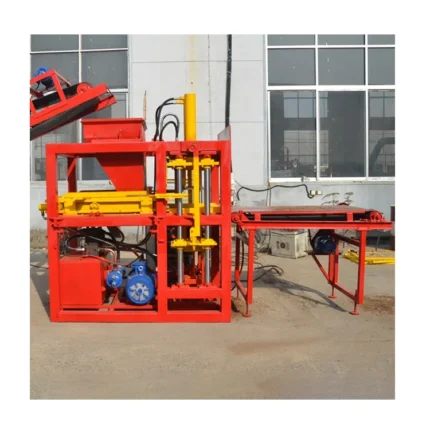
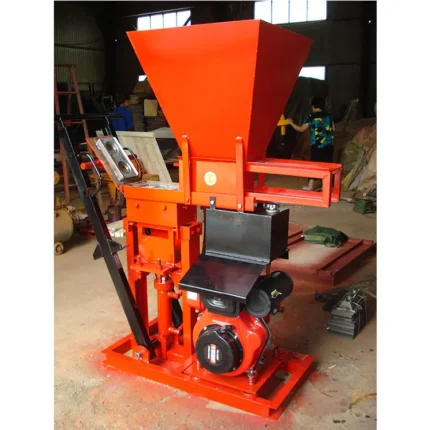
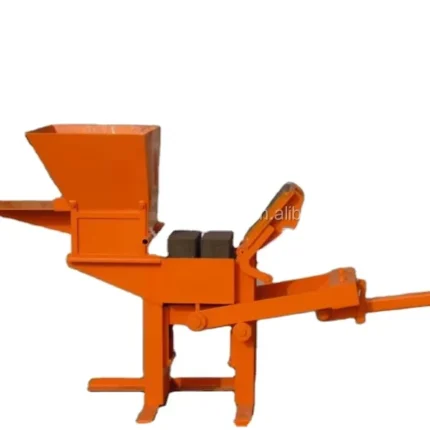
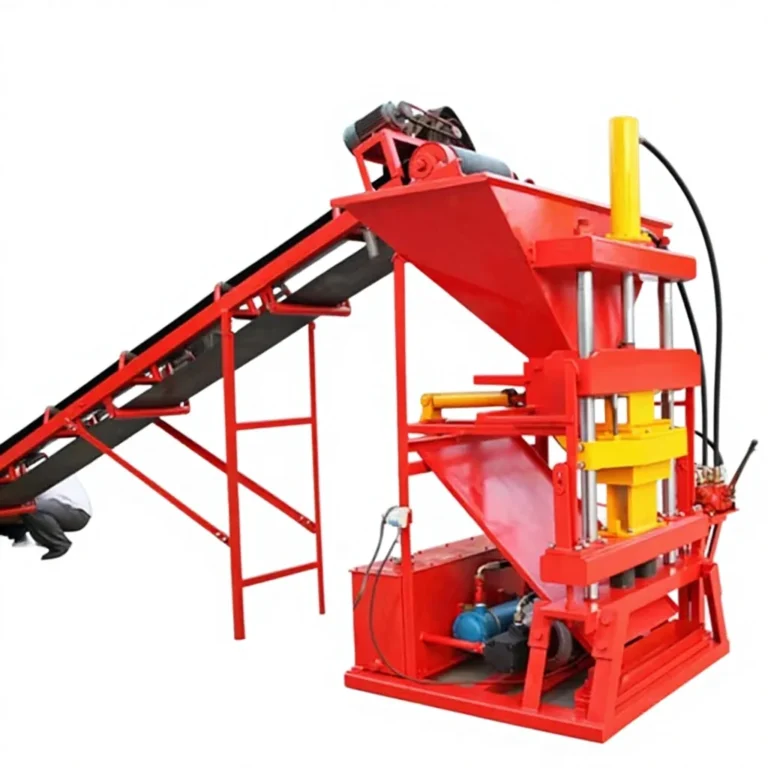
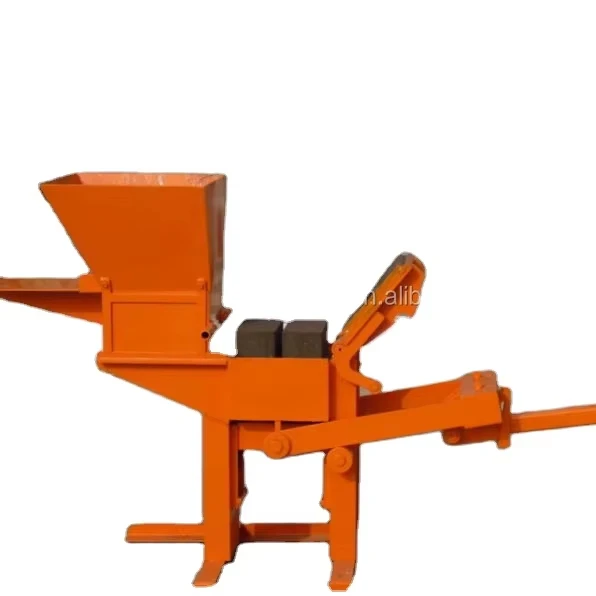
| Product Type | Manual Clay Interlocking Brick Making Machine |
| Overall Dimensions (L×W×H) | 1600 × 700 × 1200 mm |
| Net Weight | 200–240 kg |
| Total Power | No power required, completely manual operation |
| Lifting System | Manual |
| Molding Cycle | 30–40 s (basis not stated in source — confirm block format, material, thickness) |
| Output Capacity | 400–1000 pcs/day (basis not stated in source — confirm block format, material, thickness) |
| Mobility | Steel wheels for on-site repositioning |
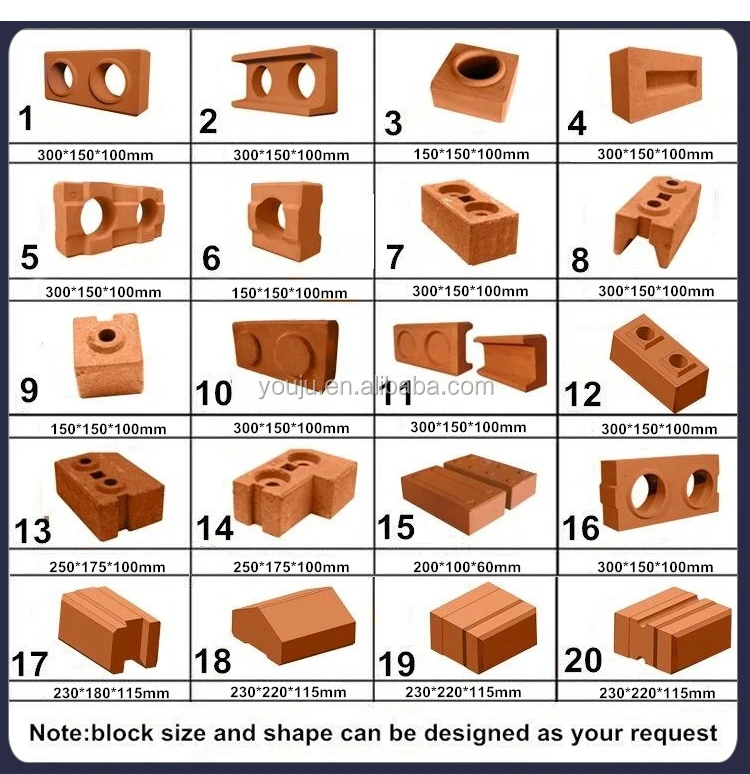
| Mould System | Changeable moulds for various interlocking block formats |
| Basic Equipment Included | JFA-1 Mixer or JQ350 Mixer |
| Control System | None (fully manual) |
| Voltage & Frequency | N/A (no electrical drive) |
| Automation Level | Manual |
| Warranty | 1 Year |
Application Suitability
| Application | Material or Output |
|---|---|
| Off-grid interlocking brick production | Soil-cement mix, local clay with sand or laterite |
| Remote housing and development projects | On-site clay interlocking brick manufacturing without grid power |
| Small-scale rural block enterprises | Low-capital entry into interlocking brick making with manual labor |
| Eco-brick production for sustainable building | Stabilized soil with partial cement binder |
| Phased plant expansion starting from manual output | Hand-pressed bricks as baseline before adding batching and stacking automation |
Why "Fully Manual" Should Not Mean "Dead End"
Many buyers purchase a hand-operated press for a remote project and later discover there is no viable way to add batching, pallet feeding, or stacking automation when volume grows — the machine was designed as an island, not as a starting point in a line. The LY2-40 is positioned at the entry of an upgrade path that extends from manual pressing through semi-automatic and into PLC-controlled block production. [NEED_CITE: phased automation adoption in small-scale block plants]
On sites I have visited across the Middle East and North Africa, project timelines shift fast. A contractor arrives with a manual press for a 200-unit housing development, hits the ground running with local labor, and six months later the developer doubles the scope. If the original machine cannot interface with a mixer upgrade or accept an automated pallet feeder, the entire press becomes scrap metal on the next job. The relevant question at the inquiry stage is not only what the machine produces today but what it can become tomorrow. An automatic manual clay interlocking brick making machine with PLC control upgrade path should never be a contradiction in terms — it should describe a deliberate system architecture.
From Hand Press to Intelligent Line — The Upgrade Logic
The LY2-40 operates without electrical power, which makes it deployable on sites where grid connection is months away or simply unavailable. The steel-wheel base lets a two-person crew reposition the press across the production yard as the curing area expands. Mould changes are handled mechanically, so format switching does not require electrical tools or PLC reprogramming.
When production volume justifies the next step, the same interlocking brick formats can transfer to a semi-automatic press with pallet feeding and a JQ350 mixer already in use. The operator who learned the manual cycle on the LY2-40 understands the material behavior, the demolding rhythm, and the curing sequence — knowledge that carries directly into a more automated environment. This continuity is what makes an automatic manual clay interlocking brick making machine with PLC control upgrade path operationally realistic rather than a brochure promise.
PLC Control as a Destination, Not a Starting Point
Introducing PLC control too early on a remote site creates a different set of problems: voltage fluctuation damages control boards, operators unfamiliar with touchscreen interfaces bypass safety interlocks, and a single sensor failure halts the entire line until a replacement arrives by air freight. Starting with the LY2-40 allows the project team to validate the local clay-soil mix, confirm interlocking brick strength, and train operators on material handling before adding electronic control layers. [NEED_CITE: PLC reliability challenges in off-grid industrial installations]
The upgrade path introduces batching accuracy and automatic stacking only after the foundation — mix design, mould selection, pallet logistics, and curing discipline — is proven under manual conditions. Each automation stage removes a specific manual task and replaces it with measurable consistency, rather than digitizing a process that was never stable to begin with.
Reading the Specifications for Production Reality
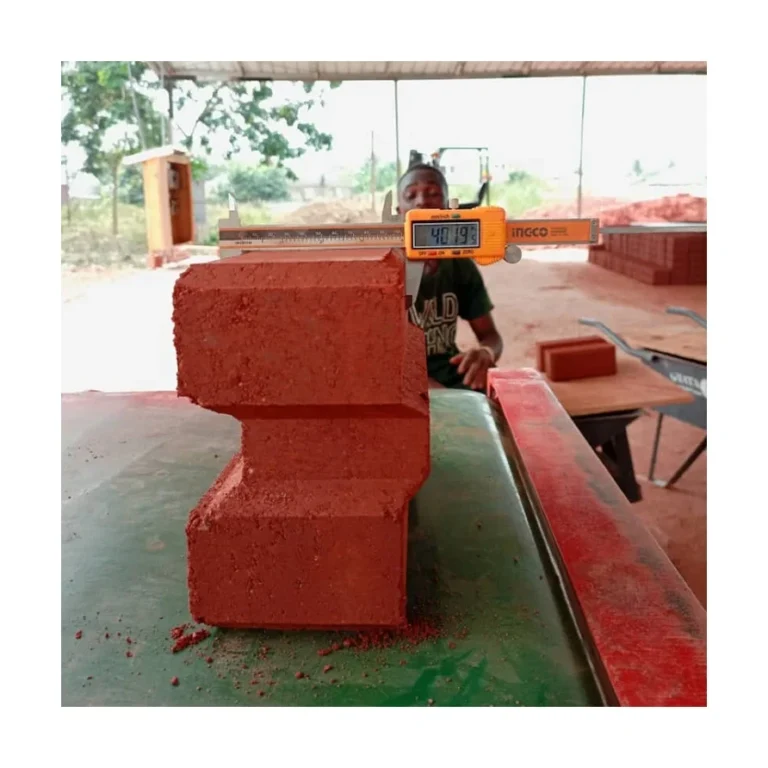
The 30–40 second molding cycle is a baseline figure that shifts depending on the interlocking brick profile, the clay-to-sand ratio in the local soil, and the operator’s rhythm with the manual lever. A thicker interlocking block with deeper shear keys requires more compaction effort per stroke, extending the cycle. The 200–240 kg net weight keeps the press stable during compaction without anchoring to a concrete pad, but it also means vibration-assisted densification is not available — block strength depends entirely on the manual force applied and the mix design.
The included JFA-1 or JQ350 mixer handles soil-cement blending, but the mix method remains manual or semi-automated depending on whether an external line mixer is added later. Changeable moulds allow the operator to switch between interlocking profiles, yet the mould change time itself is not published — a practical concern when a single production day must cover more than one brick format. The absence of any electrical system means there is no voltage or frequency to confirm, eliminating one common commissioning delay but also removing any diagnostic feedback the operator might rely on in a more automated setup.
The Cost of Skipping the Upgrade Conversation
I once saw a contractor order a manual press for a remote site, run it successfully for eight months, then receive a contract extension that required triple the daily output. The press manufacturer had no semi-automatic model in the same product family, and the contractor ended up running three separate manual presses with three separate crews — tripling labor, tripling curing space, and tripling the pallet handling bottleneck. The original press was not wrong for the initial scope; it was wrong for the scope that followed because no one had discussed what came next. [NEED_CITE: scaling challenges in manual block production operations]
When a buyer evaluates an automatic manual clay interlocking brick making machine with PLC control upgrade path, the conversation must cover pallet size compatibility across the upgrade stages, mixer capacity matching, and whether the curing rack system can absorb higher output without redesign. Missing any of these links turns a phased upgrade into a parallel purchase of entirely new equipment.
Why Source This Press Through Shiyue
Block machinery is our single focus, which means the LY2-40 is not an isolated product pulled from a catalog — it is the manual entry point in a system where moulds, pallets, mixers, and handling equipment are specified to work together across every automation tier.
Configuration is set against the buyer’s actual clay-soil mix and target interlocking brick format, not a generic soil-cement default, because local aggregate behavior determines whether the manual press produces saleable blocks or cracked rejects. Mould design covers the interlocking profiles the buyer’s market actually demands, and custom mould drawings are available when standard profiles do not match local building codes.
Automation level is selectable and sequential, so a buyer can begin with the LY2-40 and move to semi-automatic or PLC-controlled production when volume justifies the investment, without replacing the foundational knowledge or the tooling already in use. Installation support and operator training carry forward through each upgrade stage, ensuring that the team who mastered the manual press is prepared for the next level.
Documentation & Verification
- Line layout and capacity calculation stating the interlocking brick format assumed for daily output
- Mould drawing and format list showing available interlocking profiles and custom options
- Operation and maintenance manual covering lever maintenance and upgrade compatibility
- Factory test record on your soil-cement mix before dispatch
- Voltage and control language confirmation for future automation upgrade stages
Installation, Commissioning & Support
- Level compacted ground required; no concrete foundation needed given the 200–240 kg net weight and steel-wheel base
- No electrical connection required for the LY2-40 press itself; JFA-1 or JQ350 mixer may need a dedicated circuit
- Machine ships assembled; steel wheels allow immediate repositioning on arrival at the production yard
- First-day commissioning includes mix ratio validation using your local clay sample and target interlocking profile
- Operator training covers manual compaction rhythm, mould change procedure, and demolding technique
- Wear parts list provided for lever pivots, mould liners, and mixer blades with recommended replacement intervals
What to Include in Your Inquiry
To configure the LY2-40 and map a realistic upgrade path, share your target interlocking brick profile and dimensions, the daily output you need at startup and at projected scale, and the results of a local clay-soil analysis or a shipped soil sample. Include your available curing area dimensions and whether you plan to add pallet feeding or stacking automation in a later phase.
Frequently Asked Questions
Q: How do I verify what daily output the LY2-40 can actually deliver?
A: The quoted 400–1000 pcs/day range depends entirely on the interlocking brick format, the soil-cement mix, and the operator’s sustained rhythm over a working shift. We provide a capacity calculation that states the exact block profile and cycle assumption behind the figure, so you can compare it against your project schedule rather than guessing from a brochure range.
Q: What does the upgrade path from this manual press look like in practice?
A: The next stage typically introduces a semi-automatic press with pallet feeding and the same mould formats you validated on the LY2-40. Beyond that, batching accuracy and automatic stacking are added under PLC control. Each stage is planned at the inquiry stage so pallet sizes, mixer capacity, and curing rack layout remain compatible.
Q: How do you match the machine to my local clay and soil conditions?
A: We request a soil sample or laboratory analysis before confirming the mix design. The clay-to-sand ratio and cement percentage directly affect compaction behavior in a manual press, and a mix that works in one region may produce cracked bricks in another. The configuration is set against your actual material, not a generic default.
Q: Can I get custom interlocking brick profiles beyond the standard mould range?
A: Custom mould design is available to buyer drawings or local building code requirements. We supply mould drawings and a format list before production so you can confirm the interlocking profile, dimensional tolerances, and shear key geometry match what your market specifies.