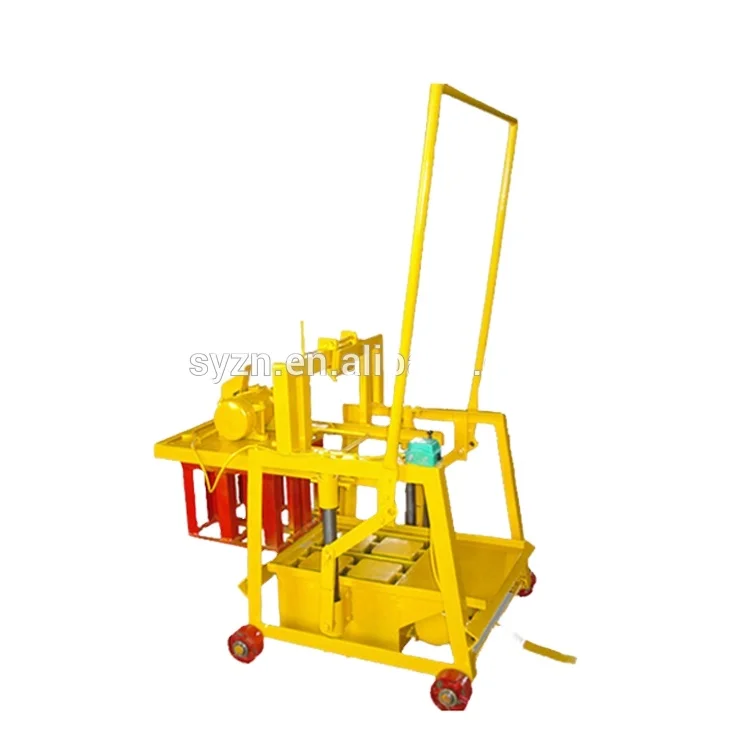


Description
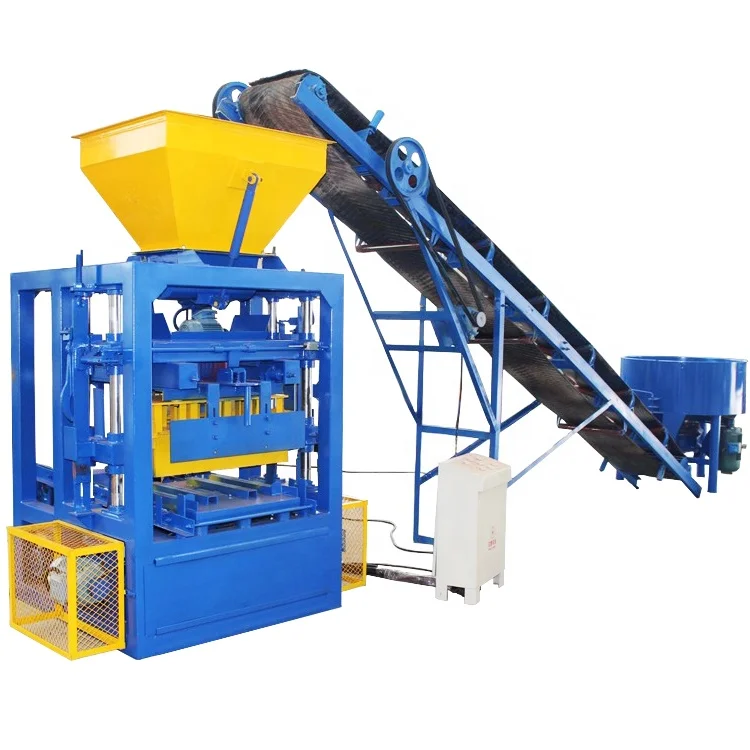
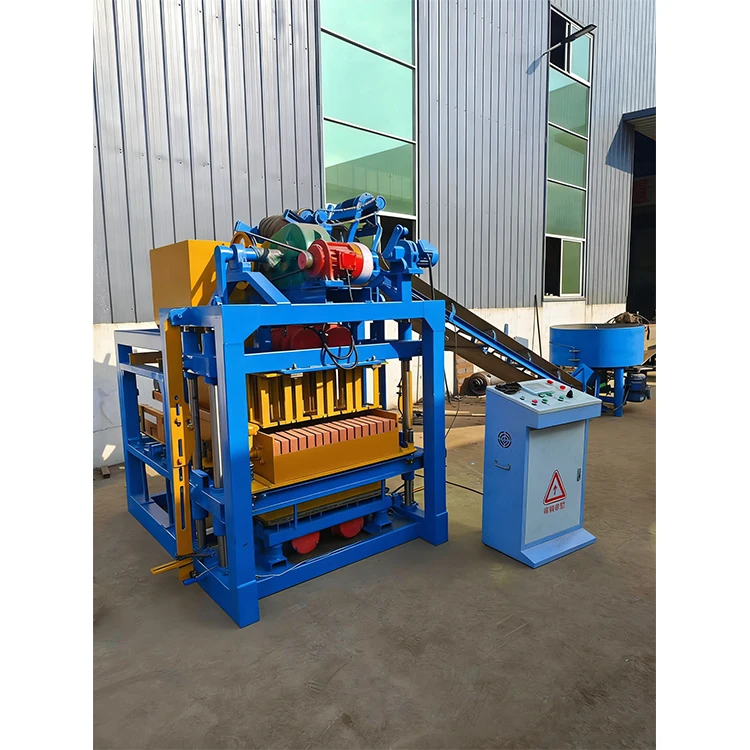
Automation-Ready Foundation — the QMY2-45 mobile block machine delivers consistent mold vibration compaction at 45-second cycles, with voltage and control language confirmed to your site before dispatch.
Technical Specifications
| Parameter | Value |
|---|---|
| Model | QMY2-45 |
| Product Type | Mobile Egg-Laying Block Machine |
| Overall Dimensions (L×W×H) | 1000 × 800 × 1300 mm |
| Net Weight | 215 kg |
| Rated Power | 1.5 kW |
| Voltage & Frequency | Configurable to buyer’s local grid |
| Control System | Manual operation (upgradeable to PLC-controlled automation) |
| Vibration Type | Mold vibration |
| Mould Format | 400 × 200 × 200 mm hollow block, 2 pcs per mould |
| Cycle Time | 45 s per mould |
| Output Capacity | 1000 pcs/day based on 400×200×200 mm hollow block, 2 pcs/mould, 45 s cycle |
| Automation Level | Manual egg-laying (upgrade path to semi-automatic and fully automatic stacking available) |
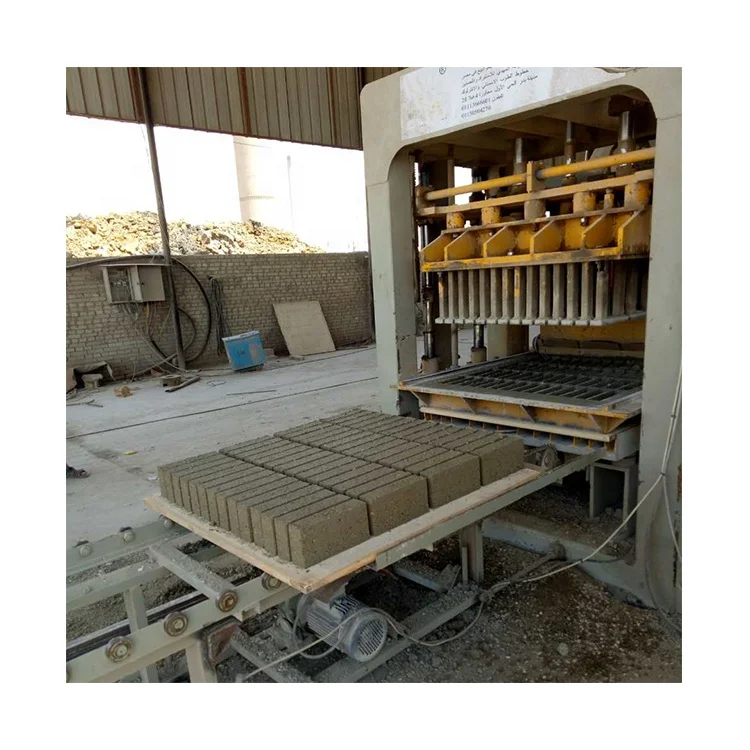
| Pallet Requirement | Not applicable — blocks laid directly on ground |
| Basic Equipment Included | JQ350 Mixer |
| Assembly State | Single compact unit, no fixed plant required |
| Warranty | 1 year excluding wearing parts |
Application Suitability
| Application | Material or Output |
|---|---|
| On-site hollow block production for contractors | Crushed stone, sand, cement mixes laid directly on prepared ground |
| Small workshop block manufacturing | Local aggregate and cement blends for 400×200×200 mm hollow blocks |
| Remote project-site block making | Mobile deployment where fixed plant infrastructure is unavailable |
| Entry-level block production for entrepreneurs | Standard concrete mixes producing 2 hollow blocks per 45-second mould cycle |
What "1000 Blocks per Day" Actually Means on a Manual Machine
Real daily output depends entirely on operator pace, mix consistency, and how long the crew can sustain the 45-second mould cycle without fatigue.
When I ran factory acceptance tests on mobile egg-laying machines, the rated capacity assumed a fresh operator working uninterrupted. By mid-shift, vibration timing drifted, blocks came out with inconsistent density, and stacking by hand created bottlenecks the press never caused. Buyers who treat the QMY2-45 as a baseline for PLC-controlled block machine upgrade planning avoid this trap. [NEED_CITE: operator fatigue impact on manual block production consistency]
The Automation Upgrade Path from Manual Egg-Laying
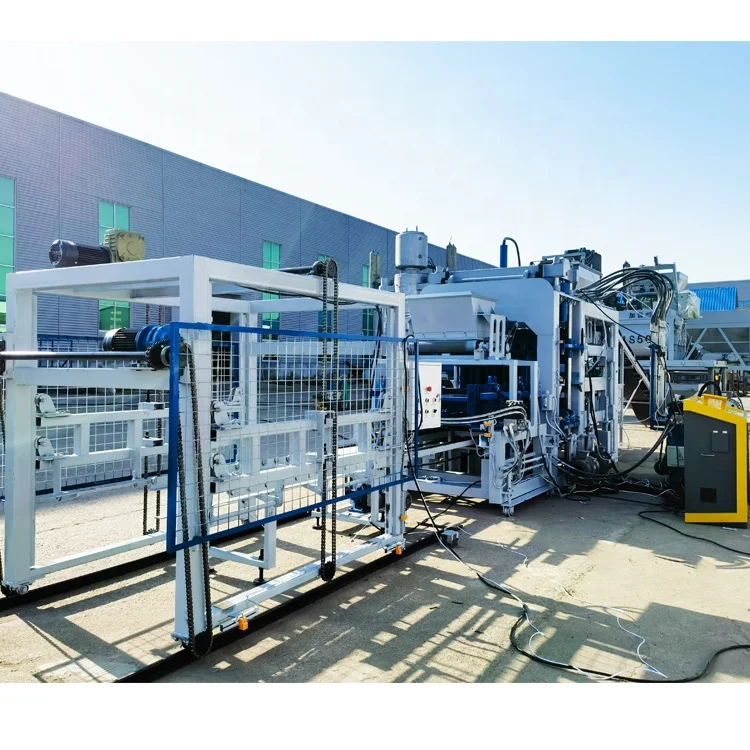
Starting with manual mold vibration and hand stacking keeps initial investment low, but the QMY2-45 platform supports progression to PLC-controlled block machine configurations. Automatic pallet feeding, stacking, and cubing stations integrate without replacing the press. This means a plant owner can begin with mobile ground-laid production and later add fixed-line automation as demand grows.
Removing Operator Dependency from Block Strength
Block strength consistency requires matched vibration force and regulated cycle timing. On manual machines, both depend on the operator’s rhythm. A PLC-controlled block machine upgrade standardizes these parameters, so batch-to-batch strength stays within structural compliance tolerances regardless of shift changes or crew experience level. [NEED_CITE: vibration force and cycle time correlation with block compressive strength]
Mold Vibration and Cycle Time Under PLC Regulation
The 45-second cycle and mold vibration type define what this machine can compact. Under manual control, vibration duration varies with operator judgment. When upgraded to PLC-controlled block machine automation, the system enforces exact vibration windows matched to your local aggregate gradation and cement ratio. The 1.5 kW rated power provides sufficient energy transfer for standard hollow block densities, but voltage stability matters — fluctuations cause inconsistent compaction that no control system can correct after the fact.
The Hidden Cost of Unconfirmed Voltage and Language
I watched a cement plant in Riyadh lose two full production days because their mobile machine’s control display showed only English while operators read Arabic exclusively. The auto-stacking routine couldn’t initialize. With the QMY2-45, voltage and frequency must match your site’s grid specification before shipment, and any future PLC upgrade requires display language confirmation tied to your crew’s capability. [NEED_CITE: voltage and frequency standards by export market]
Why Buyers Choose This Configuration Path
Block machinery as a single focus means the QMY2-45 arrives with matched mixer and mould, not assembled from separate suppliers. Configuration is set against your actual mix design and local aggregate, not a catalogue default. Mould design covers the formats your market sells, with custom drawings available. Automation level remains selectable — start manual, upgrade when throughput demands it. Installation support includes operator training on both current manual operation and future PLC-controlled block machine integration points.
Documentation & Verification
- Factory test record showing 45-second cycle timing with your specific hollow block format
- Machine specification sheet confirming voltage and frequency matched to your local grid
- Mould drawing and format list for 400×200×200 mm hollow block production
- Automation upgrade path document detailing which stations integrate with the QMY2-45 press
- Operation and maintenance manual covering mold vibration system and JQ350 mixer
- Wear parts list with replacement intervals for vibration components and mould surfaces
Installation, Commissioning & Support
- Single compact unit requires level ground preparation, no fixed foundation or plant structure
- 1.5 kW rated power demands stable voltage supply with dedicated circuit protection
- JQ350 mixer arrives pre-assembled; QMY2-45 requires no on-site mechanical assembly
- Voltage and control language verified during factory test before container loading
- Operator training covers mold change procedure and manual stacking workflow
- Wear parts inventory includes vibration system components and mould wear surfaces
- Daily maintenance checklist addresses mold vibration bearings and mixer drive components
What to Include in Your Inquiry
Provide your target block format and daily output requirement, local raw material source and aggregate gradation, site voltage and frequency specification, operator language preference for any future PLC-controlled block machine upgrade, and whether your operation will remain mobile or transition to fixed-line automation. This information drives configuration decisions that prevent commissioning delays.
Frequently Asked Questions
Q: How do I verify real daily output from the QMY2-45 versus a PLC-controlled line?
A: The QMY2-45 produces 1000 pieces per day based on 400×200×200 mm hollow blocks at 45-second cycles. Real output depends on operator pace and shift length. PLC-controlled block machine configurations enforce cycle timing automatically, removing human variability. Request capacity calculations stated per your specific block format, not generic cycles-per-hour figures.
Q: What does automation remove from the operator, and what does it add?
A: Manual operation requires the operator to control vibration duration, mould movement, and stacking pace. PLC-controlled block machine automation standardizes vibration windows and cycle timing, adding batch-to-batch consistency. The operator supervises rather than executes, reducing fatigue-driven errors that affect block strength and daily throughput.
Q: What must I confirm about voltage and control language before shipment?
A: Your site voltage and frequency must match the QMY2-45 motor specification exactly. Any future PLC-controlled block machine upgrade requires display language confirmation matching your operators’ capability. I have seen machines sit idle for days because language barriers prevented initialization. Confirm both parameters in writing before production begins.
Q: What stays and what changes when upgrading from manual egg-laying to automatic stacking?
A: The QMY2-45 press and mold vibration system remain unchanged. What changes is the material handling: automatic pallet feeding replaces ground-laid production, and stacking stations replace hand cubing. The upgrade path is documented so you know which stations integrate without replacing the core press unit.
Q: How do I match vibration force and cycle time to my local aggregate for consistent strength?
A: The 45-second cycle and mold vibration type work with standard concrete mixes, but local aggregate gradation affects compaction requirements. Factory testing with your actual mix design verifies that vibration force and cycle timing produce target block strength. This baseline becomes critical when upgrading to PLC-controlled block machine automation that enforces these parameters consistently.