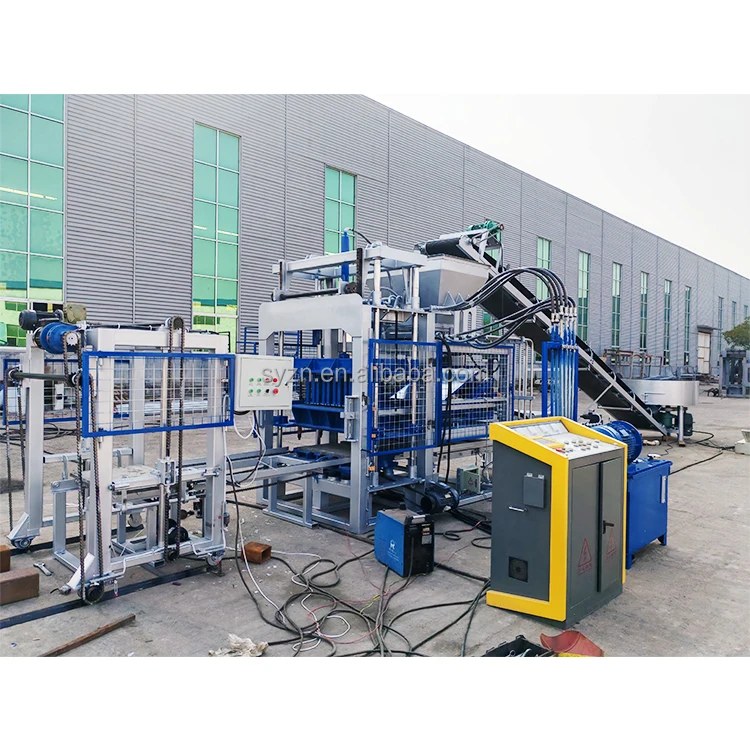
Description
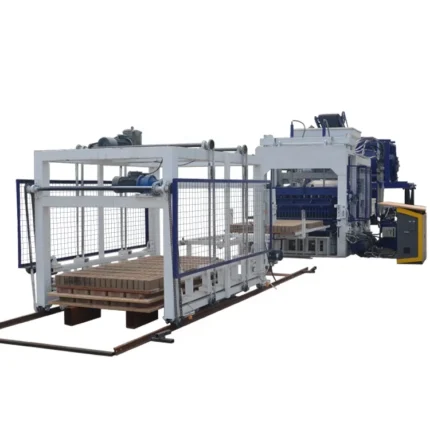
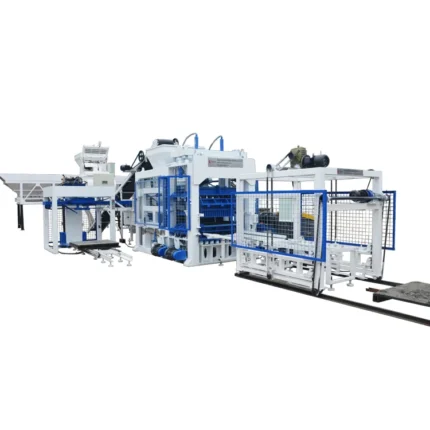
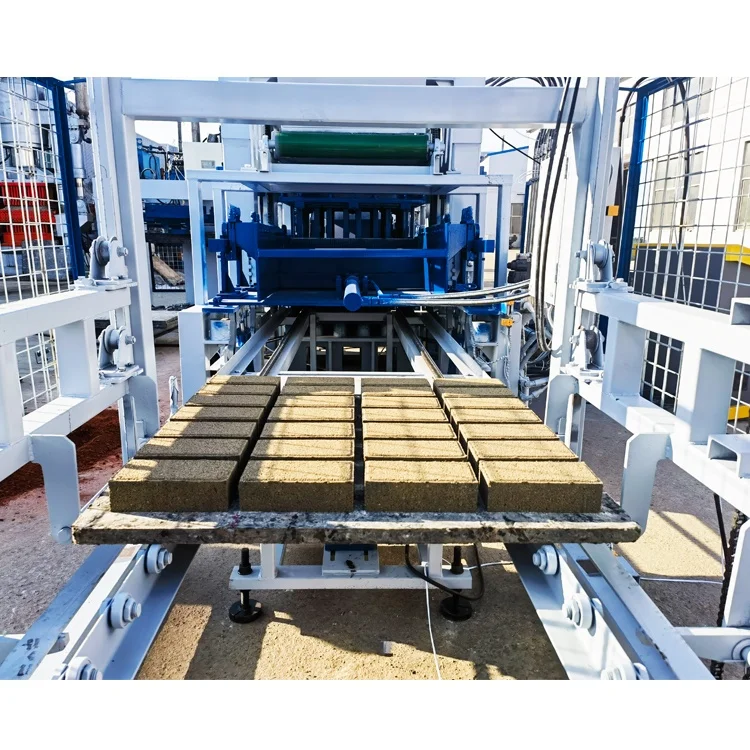
PLC recipe storage — the QT4-15 lets you save molding parameters per block format so the operator recalls them at changeover instead of re-tuning pressure, vibration, and cycle timing from scratch.
Technical Specifications
| Parameter | Value |
|---|---|
| Model | QT4-15 |
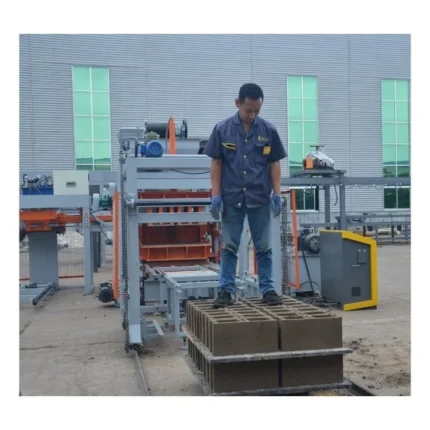
| Product Type | Automatic Concrete Block Making Machine |
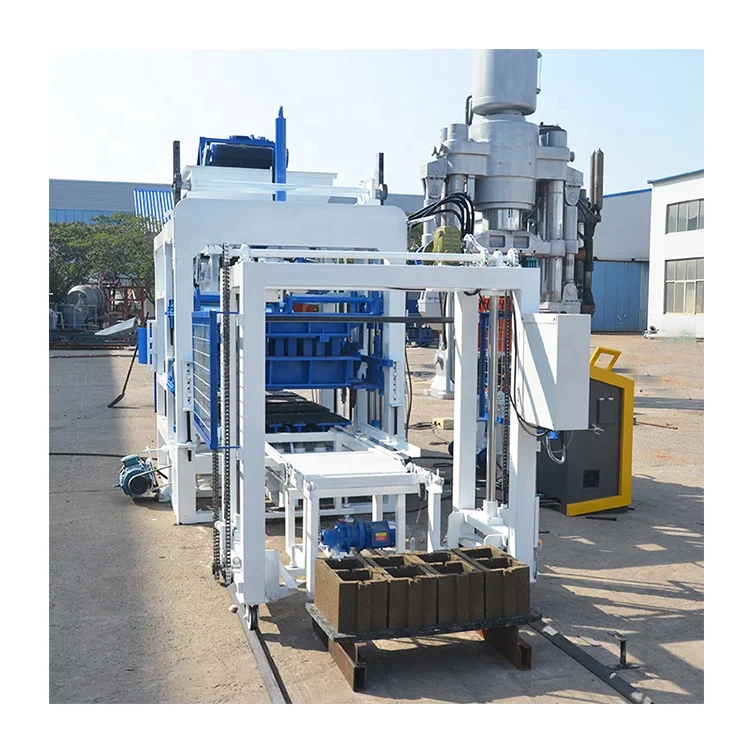
| Overall Dimensions (L×W×H) | 4100×1600×2600 mm |
| Rated Pressure | 16–21 MPa |
| Main Vibration Form | Platform Vibration |
| Vibration Frequency | 4200 r/min |
| Vibration Force | 55 kN |
| Pallet Size | 880×550 mm |
| Molding Cycle | 25–30 s (basis not stated in source) |
| Overall Power | 18.45 kW |
| Total Mass | 4 T |
| Demolding Method | Hydraulic |
| Factory Area Required | 300 m² |
| Control System | PLC |
| Automation Level | Fully automatic |
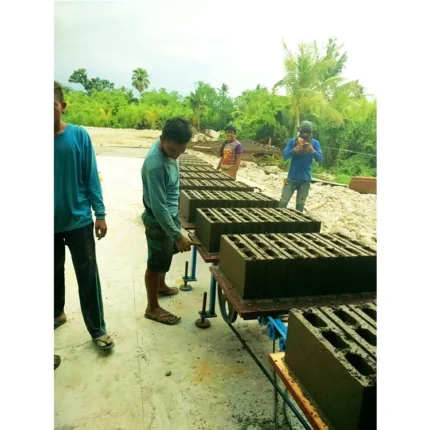
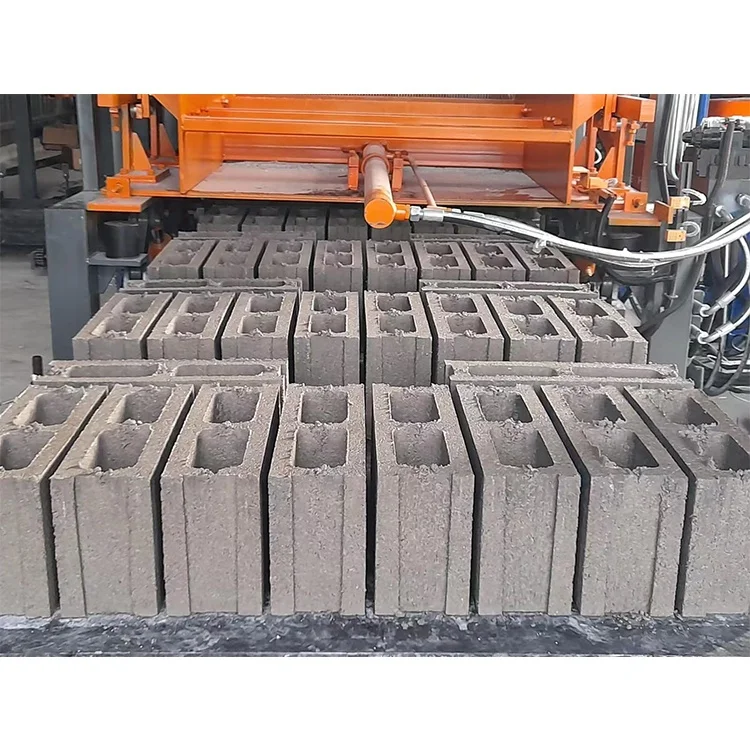
| Applied Products | Concrete hollow blocks, solid blocks, pavers, interlocking blocks, curbstone, colored pavers |
| Raw Materials | Crushed stone, sand, cement, dust, fly ash, gravel, slag |
| Warranty | 1 year (excluding spare parts) |
Application Suitability
| Application | Material or Output |
|---|---|
| Hollow block production for wall construction | Crushed stone, sand, cement, fly ash |
| Solid block production for load-bearing structures | Gravel, sand, cement, slag |
| Paver and colored paver production for landscaping | Fine aggregate, cement, pigment |
| Interlocking block production for retaining walls | Crushed stone, dust, cement |
| Curbstone production for road and pavement edges | Coarse aggregate, sand, cement |
What the PLC Must Confirm Before the Machine Leaves the Factory
Voltage, frequency, and HMI language must be locked in before production — not discovered on site.
I spent two days standing next to a QT4-15 that wouldn’t run because the PLC display shipped in Chinese and the local operator couldn’t read a single menu. The press was fine; the control interface was a brick until we pushed an English firmware file over a patchy connection. That kind of delay has nothing to do with the machine itself and everything to do with a checklist that should have been signed off before the crate was nailed shut [NEED_CITE: common commissioning delays caused by unconfirmed PLC language and voltage]. An automatic concrete block making machine PLC controlled is only as automatic as the operator’s ability to read its screen and match its power supply to the local grid.
How PLC Governance Tightens Cycle Consistency
The QT4-15 runs its molding sequence through a PLC that governs pallet feed timing, vibration duration, hydraulic pressure application, and demolding in a fixed order. Each step has a setpoint the operator can adjust, but once tuned the controller repeats it cycle after cycle without the drift that comes from manual valve operation. This is where an automatic concrete block making machine PLC controlled earns its designation — the press does not rely on a skilled operator remembering to hold a button for three extra seconds when the mix looks dry.
Recipe Storage and the Reality of Format Changeover
When the buyer needs to switch from hollow blocks to pavers, the PLC stores the vibration time, pressure ramp, and cycle delay as a named recipe. The operator selects the format, the controller loads the parameters, and the mould change becomes a mechanical swap rather than a re-tuning session. Without recipe storage, every format change is a trial-and-error exercise that consumes pallets, raw material, and most of a shift before the output meets the strength and dimensional tolerance the buyer committed to [NEED_CITE: PLC recipe management in block production lines].
Reading the Specs That Actually Shape Output
The rated pressure of 16–21 MPa and vibration force of 55 kN work together: pressure compresses the mix into the mould cavity while platform vibration at 4200 r/min settles the aggregate into voids. If the local sand is fine and well-graded, lower vibration amplitude with higher pressure produces a dense block; if the aggregate is coarse and angular, higher vibration amplitude is needed to achieve the same compaction. The 880×550 mm pallet size dictates how many block cavities fit per cycle and must align with the curing rack spacing and forklift tine width the plant already uses. The 4 T total mass provides the static weight that keeps the platform vibration from lifting the frame off the foundation during high-amplitude cycles, which is why a concrete pad with anchor bolts is non-negotiable. The 18.45 kW overall power draw determines the dedicated circuit and breaker rating the electrical contractor needs to install before the machine arrives.
The Cost of Skipping the Automation Audit
Buyers who order a fully automatic press but receive a line where pallets are still fed by hand and blocks are stacked manually off the end of the conveyor find that the cycle time the PLC achieves is irrelevant — the bottleneck has simply moved to the next station. The quotation must state explicitly whether pallet feeding, automatic stacking, and cubing are included or left as manual operations. When these are omitted, the plant runs at a fraction of the press capacity and the automation investment delivers no throughput gain [NEED_CITE: line balancing between press cycle and downstream handling in block plants].
Why Sourcing the QT4-15 Through a Single-Focus Supplier
Block machinery is the only product category here, so the machine, mould, pallet, and handling equipment are specified as a matched system rather than assembled from separate vendors. The configuration is set against the buyer’s actual mix design and local aggregate, not a catalogue default that assumes materials the buyer cannot source. Mould design covers the formats the buyer’s market actually sells, with custom drawings accepted for non-standard profiles. The automation level is selectable — a buyer can start semi-automatic and add stacking and cubing later with a documented upgrade path rather than replacing the entire press. Factory testing runs the PLC through the exact block format and recipe the buyer will produce, and the test record ships with the machine.
Documentation & Verification
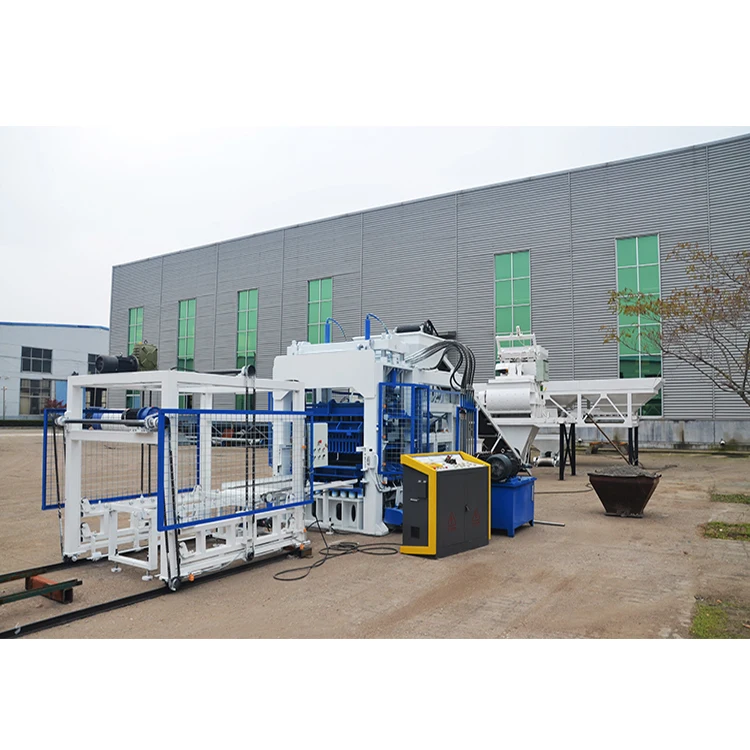
- Line layout showing pallet flow from feed through press to stacking and curing rack entry
- PLC I/O list confirming sensor and valve addresses for integration with existing batching
- Mould drawing and format list matching the block profiles in the buyer’s market
- Factory test record on the buyer’s specified block format before dispatch
- Hydraulic and electrical schematic with component part numbers for local sourcing
- Voltage, frequency, and HMI language confirmation signed off before production
Installation, Commissioning & Support
- 300 m² factory area with level concrete pad and anchor bolt layout matching the 4100×1600 mm footprint
- Dedicated circuit sized for the 18.45 kW total draw at confirmed voltage and frequency
- PLC display language and HMI labels verified against the operator’s working language before dispatch
- First-run commissioning covers recipe setup for the buyer’s primary block format and mix design
- Operator training on recipe recall, mould change procedure, and daily vibration platform inspection
- Wear parts list with hydraulic seal and vibration motor bearing part numbers for local reorder
What to Prepare Before Requesting a Quotation
Share the primary block format, target daily output, and the aggregate and cement available locally so the mould and mix can be matched before the machine is configured. Confirm the plant voltage, frequency, and the language the operator reads so the PLC and HMI are set correctly before production. State whether existing pallets, curing racks, and forklifts are already on site so the 880×550 mm pallet size and downstream handling can be verified against them.
Frequently Asked Questions
Q: What does "fully automatic" include on the QT4-15 — pallet feeding, stacking, and cubing, or only the press cycle?
A: The designation covers the PLC-governed press cycle, hydraulic demolding, and pallet feed timing. Stacking and cubing are configurable additions. Confirm in the quotation whether downstream handling is included or left as manual operations, because the press cycle speed means little if blocks pile up at the conveyor end waiting for hand stacking.
Q: How is the PLC display language and HMI interface confirmed before shipment?
A: Language is specified during the order confirmation stage and loaded into the HMI before factory testing. The test record shows the interface in the confirmed language. Changing the language after arrival requires a firmware update and can stall commissioning by days if connectivity at the site is limited.
Q: What is the molding cycle per block format, and which format was assumed in the quoted capacity?
A: The 25–30 s molding cycle is a general range. Actual cycle time depends on block format, wall thickness, and mix design. Request a capacity calculation that states the specific block format assumed — a single cycles-per-hour figure without that context does not translate to a reliable daily output number.
Q: How is vibration force and hydraulic pressure matched to my local aggregate and mix design?
A: The PLC stores recipes that adjust vibration duration and pressure ramp to suit the aggregate gradation and cement content. Coarse angular aggregate typically needs higher vibration amplitude; fine well-graded sand responds to higher pressure with shorter vibration. The factory test runs the buyer’s actual mix to confirm the recipe before dispatch.
Q: What is the upgrade path if I start with a semi-automatic configuration and add automation later?
A: The QT4-15 platform supports adding automatic pallet feeding, stacking, and cubing as separate modules. The PLC hardware and I/O capacity are sized to accommodate these additions without replacing the controller. The upgrade path and wiring provisions should be documented at initial order so the future expansion connects cleanly.