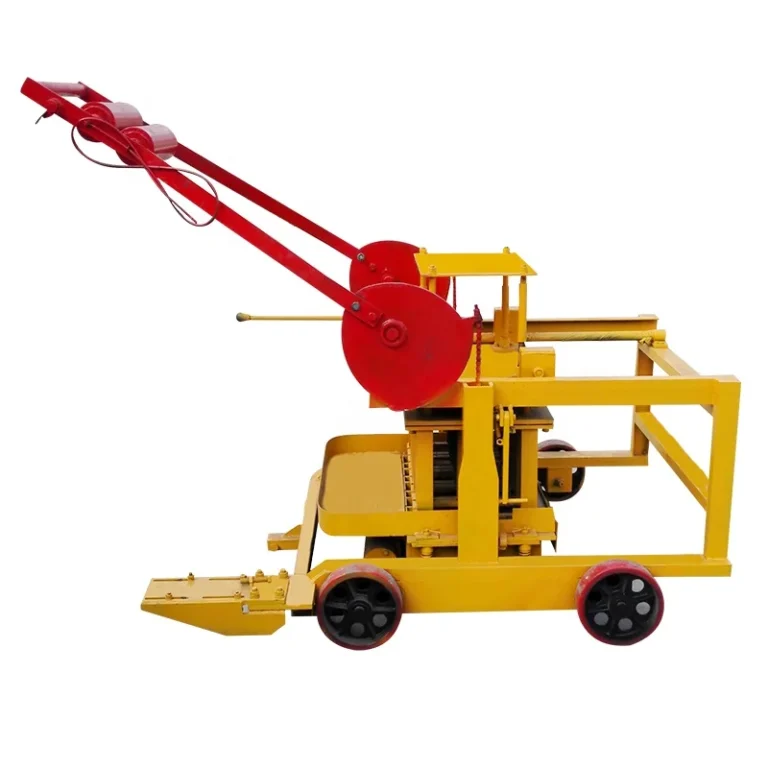
Description
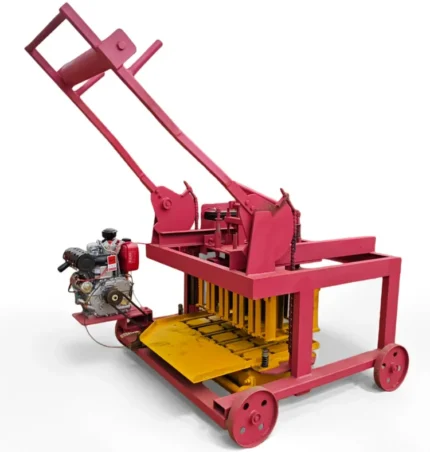
Upgrade-ready automation — the QMJ4-45 egg layer is specified against your local aggregate and target block format, not a catalogue default, with a clear path from manual to PLC-controlled mobile block machine operation.
Technical Specifications
| Parameter | Value |
|---|---|
| Model | QMJ4-45 |
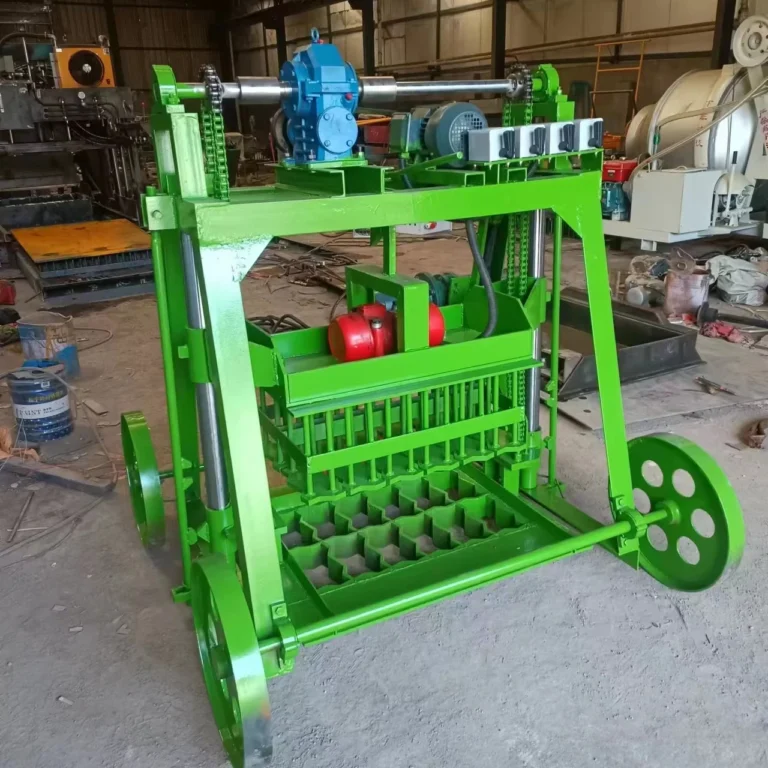
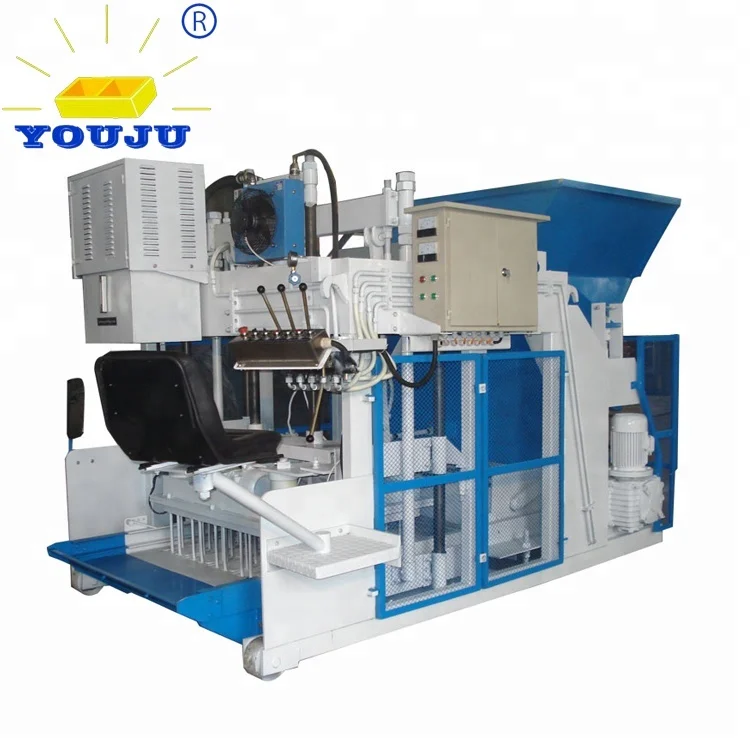
| Product Type | Mobile Egg Layer Block Making Machine |
| Molding Cycle | 30–45 s |
| Output (400×200×200 mm hollow block) | 4 pcs/mould, 320 pcs/h, 2,600 pcs/8 hr |
| Output (400×150×200 mm hollow block) | 5 pcs/mould, 400 pcs/h, 3,200 pcs/8 hr |
| Output (400×100×200 mm hollow block) | 7 pcs/mould, 560 pcs/h, 4,480 pcs/8 hr |
| Vibration System | Twice vibrations of molding core |
| Control System | Manual operation (PLC upgrade available) |
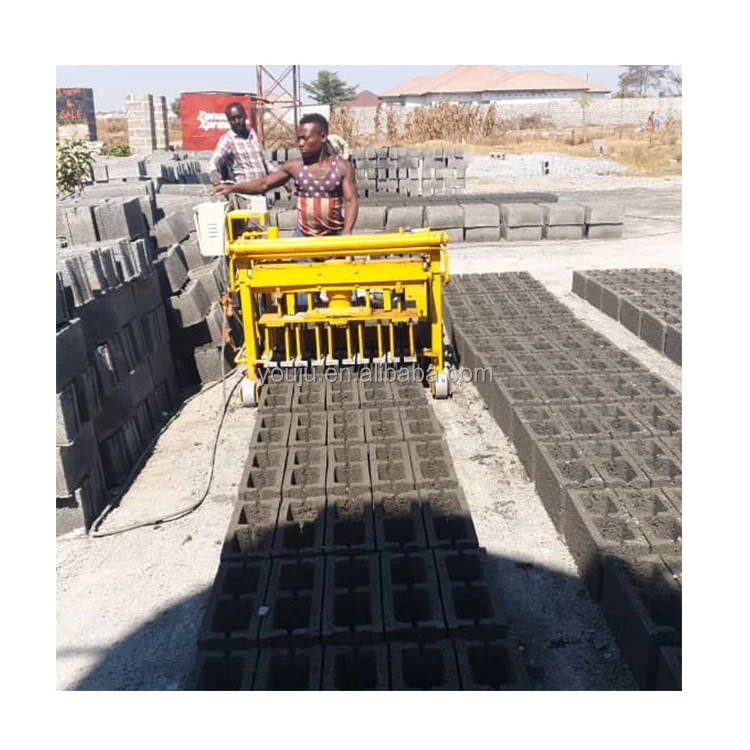
| Pallet Requirement | None — egg-laying on ground |
| Certification | ISO 9001:2000, CE |
Application Suitability
| Application | Material or Output |
|---|---|
| On-site construction block production | Crushed stone, river sand, cement — no fixed plant required |
| Small-scale hollow block manufacturing | 400×200×200 mm and 400×150×200 mm hollow formats |
| First block plant for entrepreneurs | Low-investment entry with semi-automatic upgrade path |
| Housing and development project supply | Local production of solid and interlocking formats to reduce haulage |
| Porous and paving block runs | Custom mould swaps on the same chassis |
What "Cycle Time" Leaves Out When Sizing an Automatic Mobile Egg Layer Block Machine
A 30-second cycle on paper means nothing until you confirm which block format, mix design, and operator rhythm that number assumes.
I once watched a contractor base an entire project schedule on a headline cycle time, only to find the actual rhythm stretched well beyond the quoted figure once the local sand — high in clay content — demanded longer vibration to reach target density. The daily output dropped sharply, and the crew was forced into overtime just to meet delivery commitments. That gap between brochure capacity and jobsite reality is where most first-time buyers get caught [NEED_CITE: block machine cycle time assumptions by format]. With the QMJ4-45, every output figure above is tied to a specific block dimension, so you can match the number to the format your market actually buys rather than planning around a best-case abstraction.
Vibration Logic Behind Block Density
The twice-vibration molding core on this automatic mobile egg layer block machine fires the core and the mold box in sequence rather than simultaneously. This staged approach compacts the lower section first, then settles the upper face, which matters when your aggregate includes fines that resist uniform packing. On sites where river sand carries noticeable clay, the second vibration pass helps close surface voids that a single pulse would leave open. The result is a block that holds its edge during the curing walk, reducing breakage before the product ever reaches the stacking area.
The Automation Ladder From Manual to PLC
The QMJ4-45 ships with manual controls, but the frame and hydraulic circuit are designed to accept a PLC-controlled mobile block machine retrofit without structural modification [NEED_CITE: PLC retrofit compatibility on egg layer frames]. A buyer starting with a single operator feeding the hopper and walking the machine can later add automatic pallet-free stacking and batching accuracy modules as daily volume grows. This staged approach prevents over-investing on day one while keeping the door open for consistent, batch-to-batch output once the operation justifies the additional control layer.
Reading the Specs That Actually Move the Needle
The 30–45 second molding cycle range reflects the spread between a lightweight solid block and a tall hollow format requiring deeper vibration penetration. Molding core vibration frequency and amplitude must be matched to the buyer’s specific mix — a point often overlooked when machines are ordered from catalogue defaults. The egg-laying design eliminates pallet cost entirely, which shifts the curing logistics: instead of managing a pallet return loop, the operator simply advances the machine along a prepared ground bed. Overall dimensions and net weight remain unconfirmed in the source data, so site access and transport planning should verify those figures before committing to a foundation layout. Motor power, voltage, and frequency also require confirmation to ensure the electrical supply at the jobsite matches the machine’s demand without costly transformer additions.
The Hidden Cost of Skipping Configuration Checks
Ordering an egg layer without confirming local voltage and frequency can stall commissioning for weeks while a step-down transformer is sourced locally [NEED_CITE: voltage mismatch delays in exported machinery]. Equally, specifying a mould for a block format your market does not actually sell ties up capital in tooling that sits idle, while the mould change time — not stated in the source — determines whether a format switch takes minutes or consumes a full shift. When the vibration system is not tuned to the aggregate on hand, blocks leave the machine with inconsistent density, creating a rejection rate that erodes the thin margins of small-scale production. These are not theoretical risks; they are the exact failure points I have seen repeat across dozens of first-time installations.
Why Source This Machine Through a Single-System Approach
The QMJ4-45 is specified as part of a matched system — machine, mould, and ground-bed layout considered together — rather than assembled from unrelated suppliers who each optimize only their own component. Configuration starts with your actual mix design and target block format, not a generic catalogue entry. Moulds are designed for the formats your regional market sells, with custom drawings available when standard tooling does not match. The automation level is selectable, so you can begin with manual operation and layer in PLC control as volume justifies the investment. Installation support includes operator training on your specific aggregate, ensuring the twice-vibration settings are dialed in before the first production day ends.
Documentation & Verification
- Line layout showing ground-bed length and curing area matched to daily output
- Capacity calculation sheet stating the exact block format behind each output figure
- Mould drawing and format list confirming which block sizes are included
- Voltage, frequency, and control language confirmation before dispatch
- Factory test record run on your specified mix design
- Operation and maintenance manual with wear parts and mould replacement list
Installation, Commissioning & Support
- Ground-bed preparation with level tolerance suited to egg-laying without pallets
- Electrical supply verification for motor kW, voltage, and frequency before first start
- Mould mounting and vibration tuning on your local aggregate during commissioning
- Operator training covering cycle rhythm, hopper loading, and machine advancement
- Wear parts list identifying high-wear vibration components and reorder intervals
- Scheduled maintenance checkpoints for hydraulic lines and molding core alignment
What to Share Before Requesting a Quote
To configure the QMJ4-45 accurately, provide the block formats your market sells most, your daily volume target, and the source of your aggregate — whether crushed stone, river sand, or a blend. Confirm the voltage and frequency at your site, along with the preferred control language for any future PLC addition. If you already operate a curing yard or forklift, note those dimensions so the ground-bed layout integrates without conflict.
Frequently Asked Questions
Q: Which block format does each output figure assume?
A: Every capacity number on this page is tied to a specific block dimension — 400×200×200 mm, 400×150×200 mm, or 400×100×200 mm hollow block. The cycle time and mould cavity count differ by format, so daily planning must use the figure that matches your actual product, not a single headline number.
Q: What electrical details need confirming before the machine ships?
A: Motor power, voltage, frequency, and any future PLC display language must be locked in before production. A mismatch on site delays commissioning while transformers or replacement panels are sourced. We confirm these parameters during the quotation stage so the machine arrives ready to connect.
Q: How does the upgrade path from manual to semi-automatic work?
A: The QMJ4-45 frame accepts a PLC-controlled mobile block machine retrofit without structural changes. You can start with manual hopper feeding and machine walking, then add batching accuracy and semi-automatic stacking modules later as your daily volume grows and justifies the control investment.
Q: What determines actual mould change time on this egg layer?
A: Mould change time depends on the fastening system and operator familiarity. On a manual egg layer, the process involves unbolting the current mould, aligning the new one, and re-tuning vibration settings for the new format. We provide the mould drawing and changeover procedure so crews can plan format switches without losing a full shift.
Q: How does twice-vibration interact with local aggregate quality?
A: The staged core-and-box vibration sequence compacts the lower block section first, then settles the upper face. When local sand carries clay or fines, the second pass closes voids that a single pulse would leave open, producing more consistent density and reducing breakage during the curing walk.