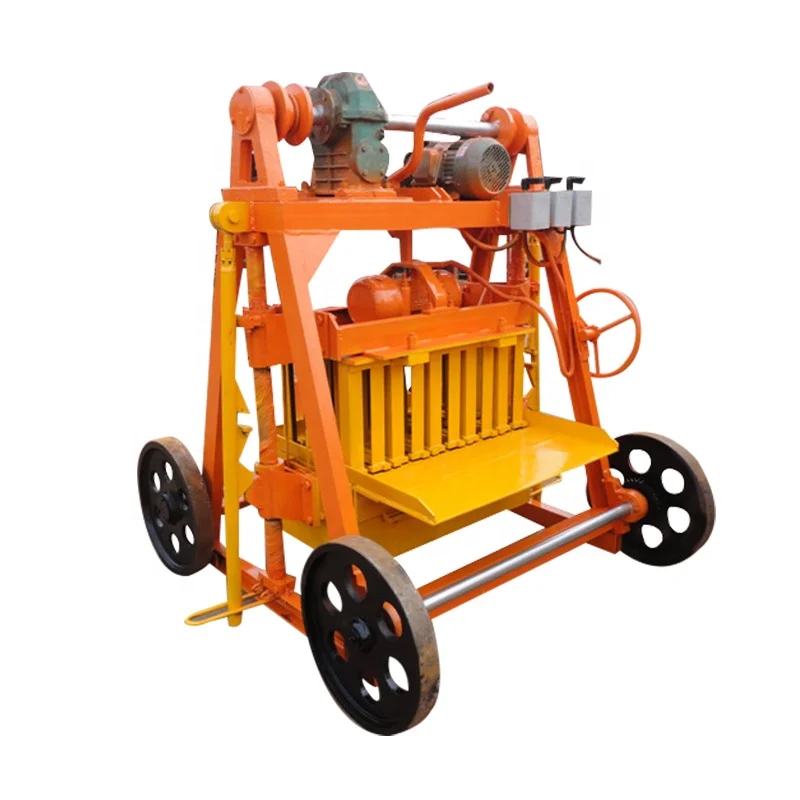
Description
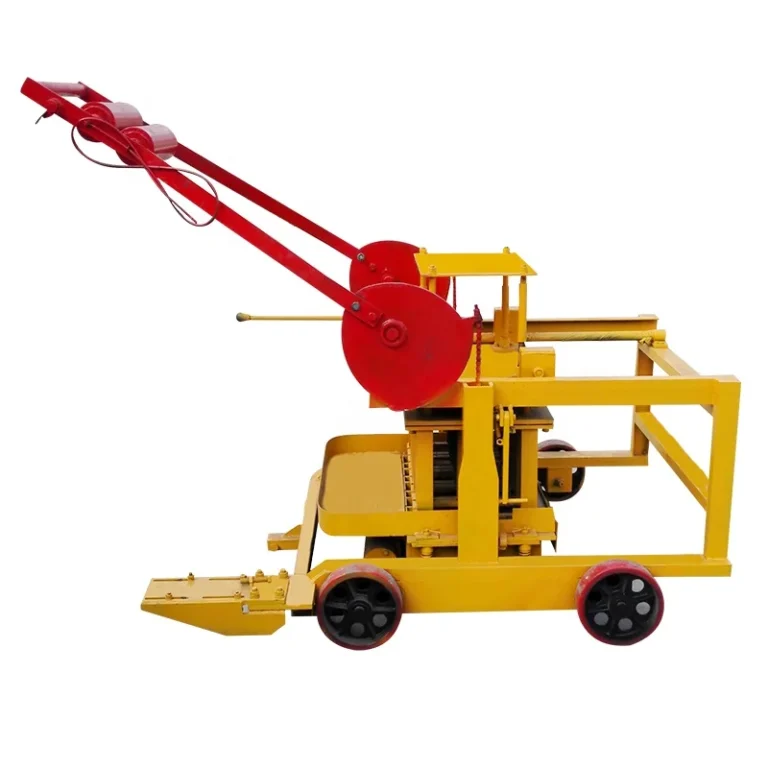
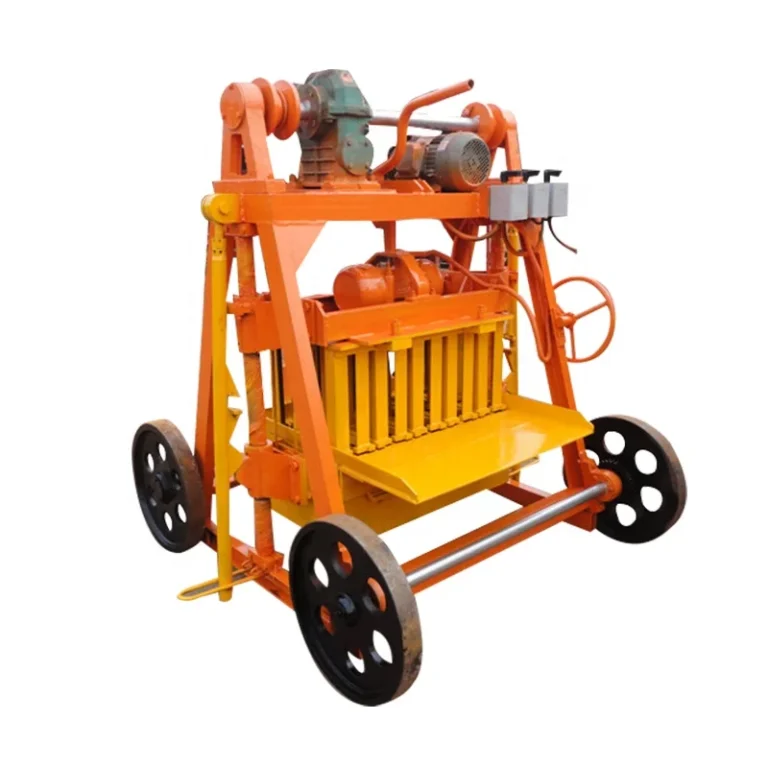
Matched System Configuration — the QMJ4-45 manual mobile egg-laying machine is specified here with its vibration core, engine power, and block format as one coordinated baseline, so every future automation add-on connects to a known starting point.
Technical Specifications
| Parameter | Value |
|---|---|
| Model | QMJ4-45 |
| Product Type | Mobile Egg Laying Block Making Machine |
| Forming Method | Mould vibration, twice-vibration core |
| Vibration Frequency | 2400 r/m |
| Molding Cycle | 45 s |
| Molding Capacity | 4 pcs/mould (basis: 400×200×200mm hollow block) |
| Productivity (400×200×200mm, 4 pcs/mould) | 3000 pcs/day (8 hours) |
| Productivity (400×150×200mm, 5 pcs/mould) | 3500 pcs/day (8 hours) |
| Productivity (400×120×200mm, 6 pcs/mould) | 4500 pcs/day (8 hours) |
| General Output Range | 2600-4000 pcs/day (basis not stated in source — confirm block format and mix) |
| Demold Method | Manual |
| Turning Method | Manual |
| Total Power | 6 kW |
| Power Source | Diesel / Petrol engine |
| Automation Level | Manual operation |
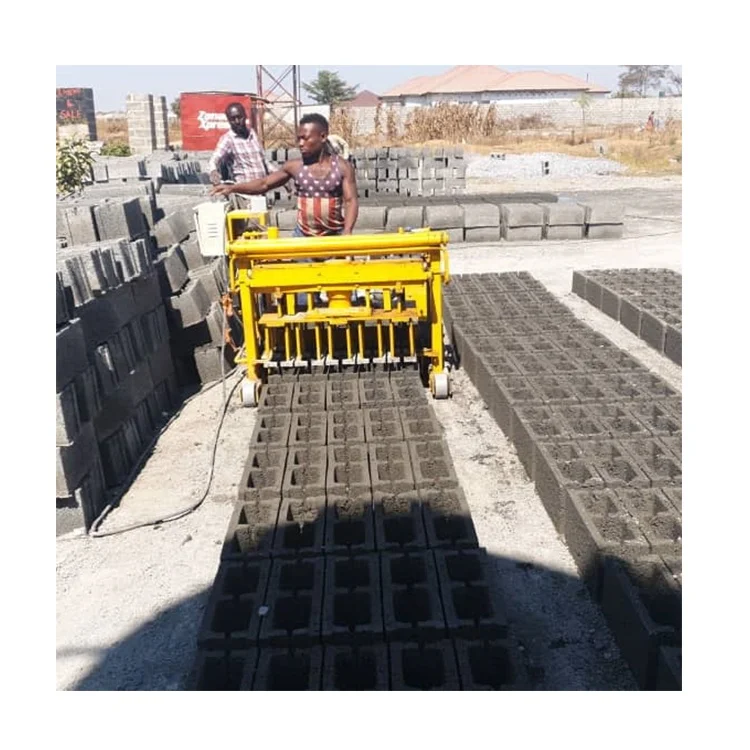
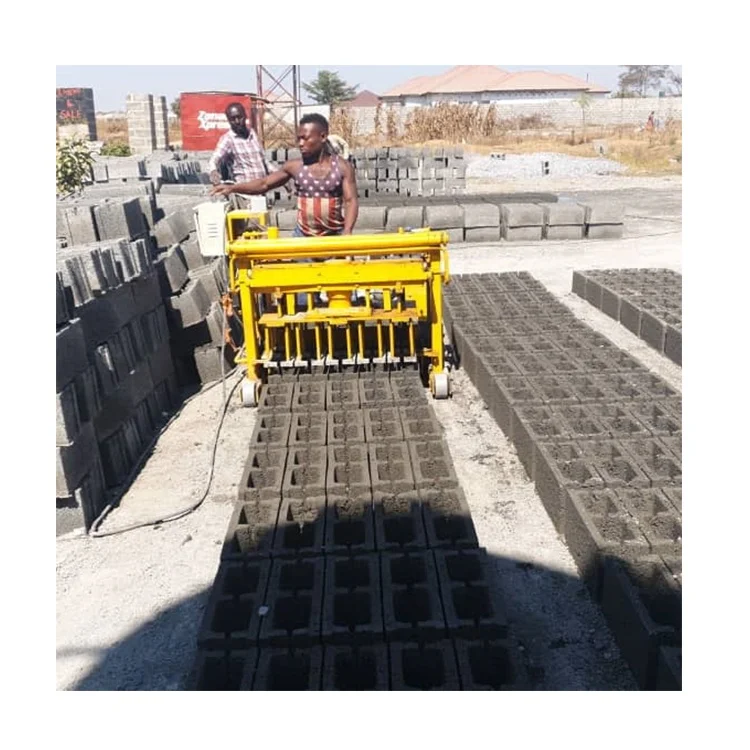
| Pallet Requirement | Not required (egg laying type) |
| Warranty | One year |
Application Suitability
| Application | Material or Output |
|---|---|
| On-site hollow block production for building contractors | Crushed stone, river sand, and cement mixes |
| Small-scale block making without a fixed plant | Fly ash blends and local aggregate |
| Housing project block supply at remote locations | Diesel-powered operation off-grid |
| Entrepreneur-led first block plant | Standard hollow blocks for local sale |
Why Voltage and Frequency Should Be Locked Before the Order Ships
Confirming your site voltage, frequency, and future control language before dispatch avoids a month-long transformer delay once the machine arrives.
I spent years in Southeast Asia commissioning equipment and saw a buyer lose an entire month because a machine arrived configured for the wrong grid standard. The local supply was 220V/60Hz, but the unit shipped on a default industrial setting that would not start without a step-up transformer. Sourcing that transformer locally pushed the project timeline past the contractor’s penalty deadline. When you start with a manual unit like this one and later plan an automatic mobile block machine PLC controlled upgrade path, the electrical baseline must be right from day one [NEED_CITE: voltage and frequency standards by export market]. The QMJ4-45 currently runs on a diesel or petrol engine at 6 kW total power, which sidesteps grid issues during the initial phase, but any future electric motor or PLC conversion will require those parameters documented up front.
What Manual Operation Reveals About Your Process
Running the QMJ4-45 in full manual mode forces you to understand every variable in block production before an automatic mobile block machine PLC controlled system takes those decisions away. The operator controls the feed timing, vibration duration, and demoulding rhythm, which means block density and strength vary directly with human consistency. This transparency is valuable for a first-time plant owner because it exposes whether your local aggregate and mix design can produce the compressive strength your market demands before you invest in batching automation.
Where the Bottleneck Appears First
The 45-second molding cycle holds steady, but manual demoulding and turning introduce fatigue-related slowdowns across an eight-hour shift. Early in the day, an operator might sustain the rated cycle; by hour six, the rhythm drifts, and daily output drops below the calculated figure. This is the exact point where an automatic mobile block machine PLC controlled upgrade begins to justify its cost — not because the press itself is slow, but because human consistency cannot match the repeatability a PLC delivers across every shift [NEED_CITE: operator fatigue impact on manual block production consistency].
Vibration Core, Engine Power, and Block Density Explained
The twice-vibration molding core at 2400 r/m compacts the concrete mix from two directions within the mould cavity, producing higher block density than single-vibration designs common in older egg-laying machines. The 6 kW diesel or petrol engine delivers this vibration force without requiring a stable electrical grid, which matters on remote construction sites where generators are the only power source. The 400×200×200mm hollow block format at 4 pcs per mould yields 3000 pieces over eight hours, while the 400×120×200mm format at 6 pcs per mould reaches 4500 pieces in the same period — a reminder that capacity is format-dependent, not a fixed number. The egg-laying design eliminates pallet consumption entirely, meaning you do not need to budget for pallet sizing, curing rack systems, or forklift capacity to handle loaded pallets through the curing zone.
The Hidden Cost of Skipping Format Verification
Buyers who compare daily output numbers across suppliers without checking which block format those numbers assume often discover their real production falls well short of project requirements. A quoted range might reference the smallest block in the mould set while your contract calls for the largest hollow format. Mould availability for your specific market dimensions — including custom drawings when standard formats do not match — must be confirmed before the order is placed, not after arrival [NEED_CITE: mould format mismatch causes in block plant commissioning delays].
Why Procurement Here Differs
Block machinery is our single focus, which means the QMJ4-45 is specified alongside its mould, engine, and any future automation components as one matched system rather than assembled from separate suppliers. Configuration is set against your actual mix design and local aggregate, not a catalogue default. Mould design covers the hollow block formats your market sells, with custom drawings available when standard sizes do not fit. The automation level is selectable, so starting manual and upgrading to semi-automatic or PLC-controlled production later follows a documented path. Installation support and operator training are included so the transition from manual to controlled operation is planned, not improvised.
Documentation & Verification
- Machine specification sheet confirming diesel engine rating and vibration frequency
- Capacity calculation stated per block format with molding cycle assumption
- Mould drawing and format list for your target hollow block dimensions
- Voltage and control language confirmation for any future electric or PLC upgrade
- Factory test record on your specified mix before dispatch
- Operation and maintenance manual with wear parts list
Installation, Commissioning & Support
- Level compacted ground surface required; no fixed foundation or curing rack infrastructure needed for egg-laying operation
- Diesel or petrol engine eliminates dedicated electrical circuit requirements during initial operation
- Machine ships assembled with bolt-on vibration motor; field assembly limited to handle and wheel attachment
- First-run commissioning includes vibration timing adjustment matched to your mix design and aggregate size
- Operator training covers manual demoulding rhythm and mould change procedure for different hollow block formats
- Wear parts list and mould replacement schedule provided at handover
What to Include With Your Inquiry
Provide the specific hollow block dimensions your market sells, the daily volume your project or business plan requires, and the local aggregate type you intend to use. Confirm your site power situation — whether grid electricity is available or diesel operation is the only option — and whether you anticipate adding an automatic mobile block machine PLC controlled system within the next production phase. If you have existing curing area or material handling equipment, note those dimensions so the egg-laying layout can be planned around them.
Frequently Asked Questions
Q: How do I verify the QMJ4-45 daily output for my specific block format?
A: Request a capacity calculation that states the exact hollow block dimension, mould cavity count, and molding cycle assumed. The 3000-piece figure applies to 400×200×200mm blocks at 4 pcs per mould over eight hours; different formats change the output. Provide your target block size and we calculate from there.
Q: When does manual operation become the bottleneck worth automating?
A: Manual demoulding and turning sustain the 45-second cycle early in a shift but drift as operator fatigue builds. When your daily volume requirement consistently exceeds what one operator can sustain across full shifts, a semi-automatic or PLC-controlled upgrade recovers that lost consistency and output stability.
Q: Can I upgrade from manual to PLC-controlled without replacing the machine?
A: The QMJ4-45 serves as a documented baseline. Upgrading involves adding pallet feeding, automatic stacking, and PLC control to a new press configured to your validated mix and format. Request the written upgrade specification early so the investment trajectory is clear from day one.
Q: What electrical parameters must I confirm before switching from diesel to electric?
A: Confirm your site voltage, frequency, and the PLC display language your operators need. Getting these wrong delays commissioning by weeks while transformers or control panels are sourced locally. Document them during the initial inquiry even if you start on diesel power.
Q: How does egg-laying operation compare to pallet-based systems for curing?
A: Egg-laying deposits blocks directly on the ground, eliminating pallet purchasing, curing rack construction, and forklift dependency. The trade-off is that block handling after curing requires manual collection, which becomes a labour consideration as volume grows beyond the manual stage.