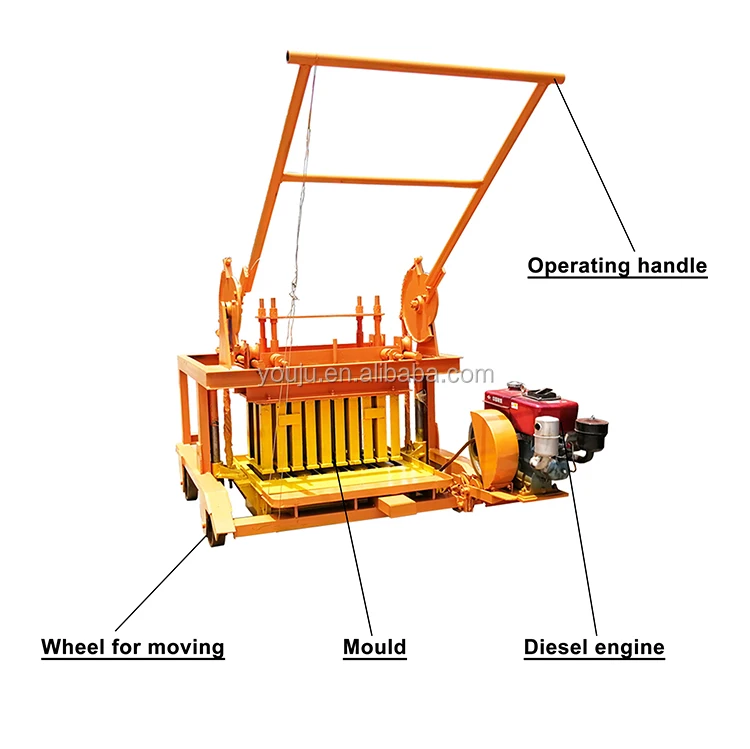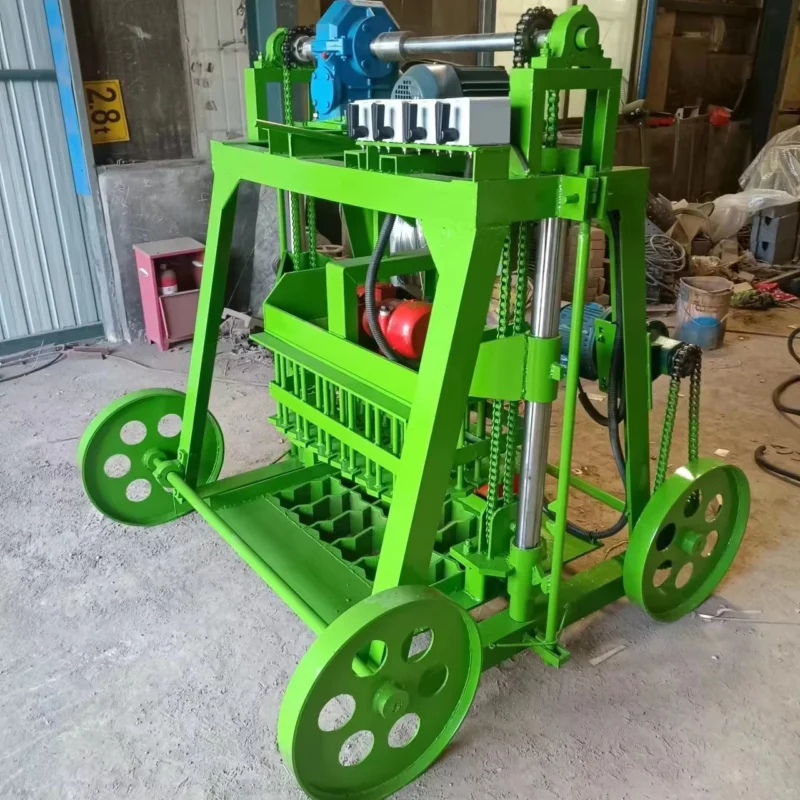
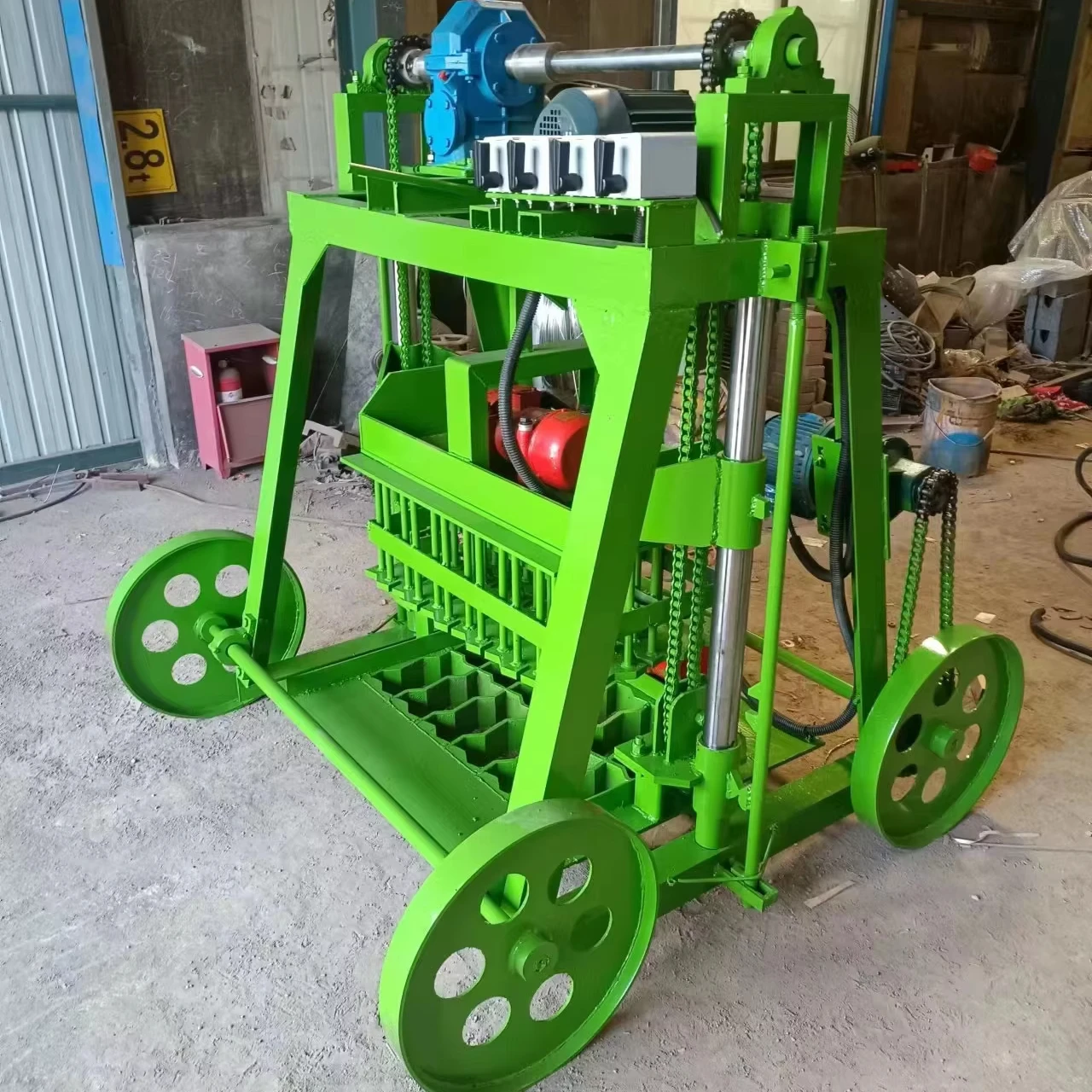
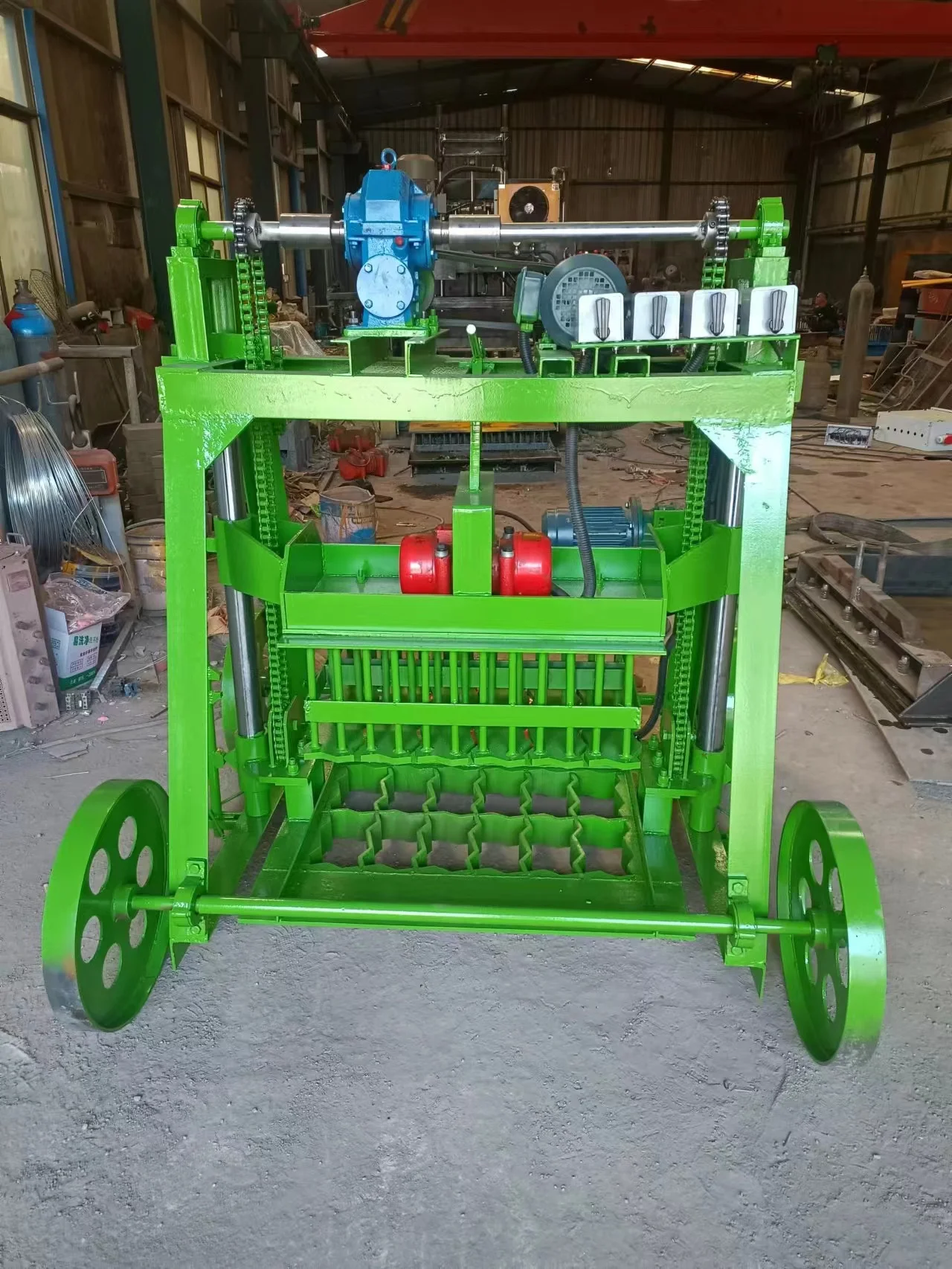


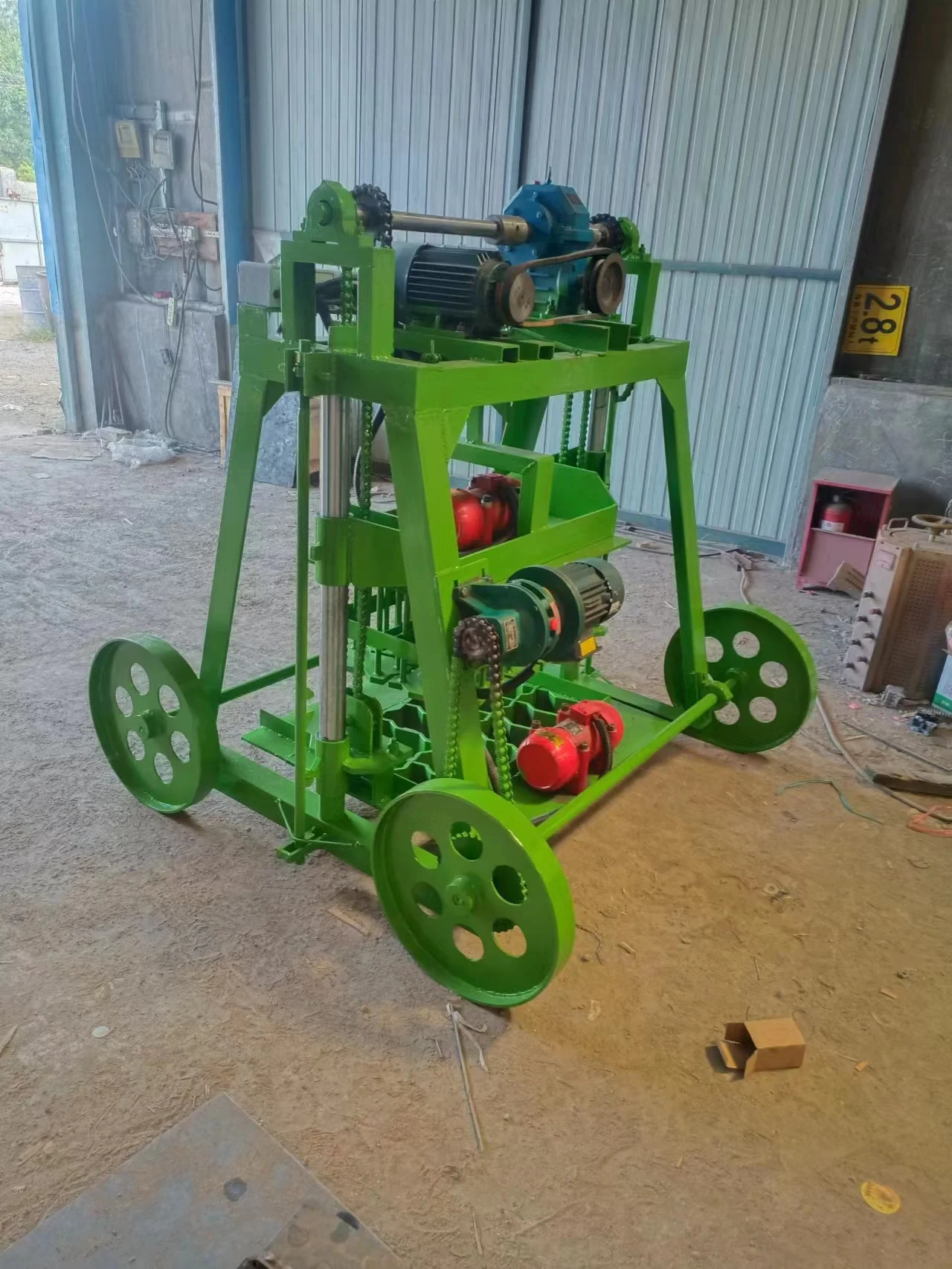

Description
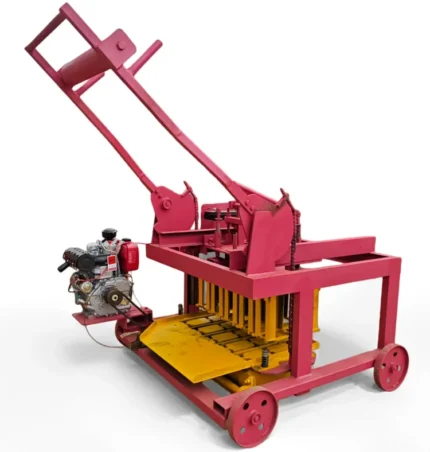
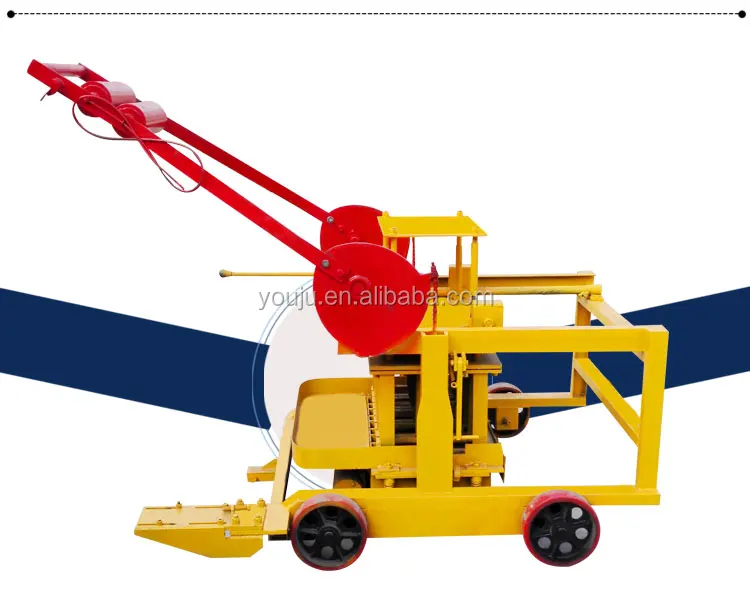
Matched System Sizing — Every QMJ4-45 mobile block machine we send out is configured against the buyer’s actual mix design and target block format, so the 45-second cycle time holds true once the machine reaches your site.
Technical Specifications
| Parameter | Value |
|---|---|
| Product Type | Mobile Egg Laying Block Making Machine |
| Model | QMJ4-45 |
| Molding Capacity | 4 pcs/mold (basis not stated in source — confirm block format) |
| Molding Cycle | 45 s |
| Vibration Frequency | 2400 r/m |
| Vibration Method | Mold vibration (twice-vibration upgrade) |
| Productivity | 2600-4000 pcs/day (basis not stated in source — confirm block format / material / thickness) |
| Demold Method | Manual |
| Turning Method | Manual |
| Total Power | 6 kW |
| Power Source | Diesel / Petrol engine |
| Automation Level | Manual / egg-laying mobile |
| Block Formats Supported | Hollow block 400×200×200 mm (4 pcs/mould, ~3000 pcs/day); 400×150×200 mm (5 pcs/mould, ~3500 pcs/day); 400×120×200 mm (6 pcs/mould, ~4500 pcs/day) |
| Voltage & Frequency | Not applicable (diesel/petrol engine powered) |
| Warranty | One year guarantee for the whole machine |
Application Suitability
| Application | Material or Output |
|---|---|
| On-site hollow block production for housing projects | Crushed stone, river sand, cement, and local aggregate blends |
| Off-grid contractor block manufacturing | Remote construction sites with no grid electricity access |
| Small-scale block plant startups | Entrepreneurs producing hollow blocks without a fixed curing facility |
| Cement yard and building supply retail production | Daily hollow block runs in 400×200, 400×150, and 400×120 formats |
What the Daily Output Figure Does Not Tell You
Capacity numbers only mean something when tied to a specific block format and mix design. The QMJ4-45 automatic mobile block machine lists output at 2600–4000 pieces per day, but that range spans three different hollow block sizes with varying cycle behaviors. I have stood on jobs in West Africa where the machine arrived, the operator loaded the hopper with a local river sand mix, and the first run produced cracked blocks because the vibration force was calibrated for a completely different aggregate. The diesel engine was rated correctly, but the vibration frequency did not match the material’s compaction needs. We pulled the mix sample back, adjusted the mold vibration timing, and only then did the PLC controlled egg laying block machine hold its cycle consistently. [NEED_CITE: aggregate moisture and particle size effects on concrete block density]
Diesel Independence Removes the Grid Bottleneck
Most construction sites in developing regions cannot guarantee stable three-phase power during early build phases. The QMJ4-45 runs entirely on a diesel or petrol engine, meaning your block production starts on day one of site mobilization — not after the utility connection is finalized. The 6 kW total power draw is handled by the onboard engine, and fuel consumption scales with your daily run length rather than a fixed electrical tariff. This makes the automatic mobile block machine practical for housing developments, road projects, and bridge abutment work where temporary power infrastructure would otherwise delay masonry schedules by weeks.
Twice-Vibration Molding for Consistent Density
The QMJ4-45 uses a twice-vibration mold system rather than the single-vibration setup found on earlier egg-laying designs. The first vibration settles the concrete mix into the mold cavity, and the second compresses it under pressure before the block is released onto the ground. This two-stage action addresses a problem I have seen repeatedly: blocks that look dense on the surface but have void channels inside, leading to breakage during stacking or transport. The 2400 r/m vibration frequency is tuned for standard cement-aggregate blends, though we verify this against your material sample before the machine leaves the factory. [NEED_CITE: vibration compaction stages and concrete block compressive strength]
Cycle Time, Format, and What Fits Your Market
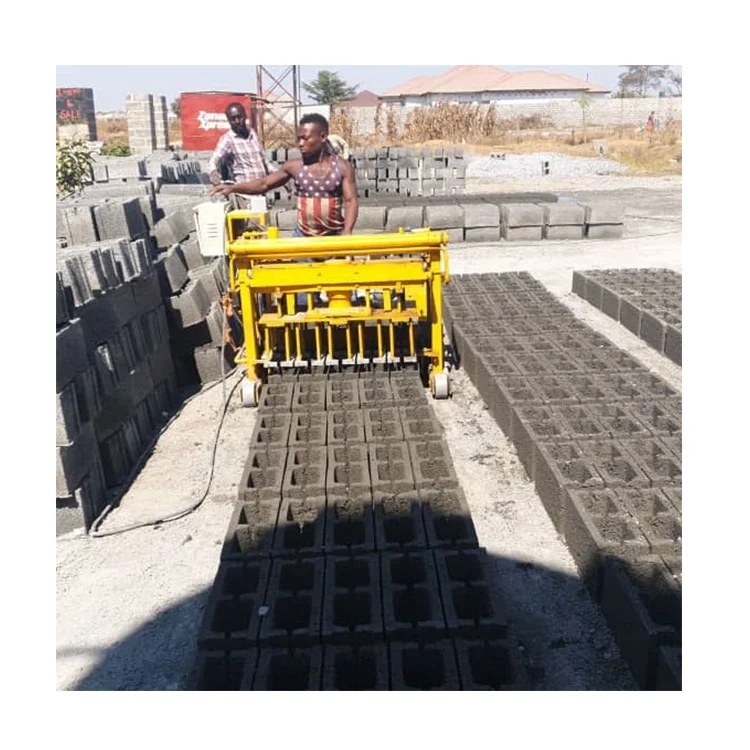
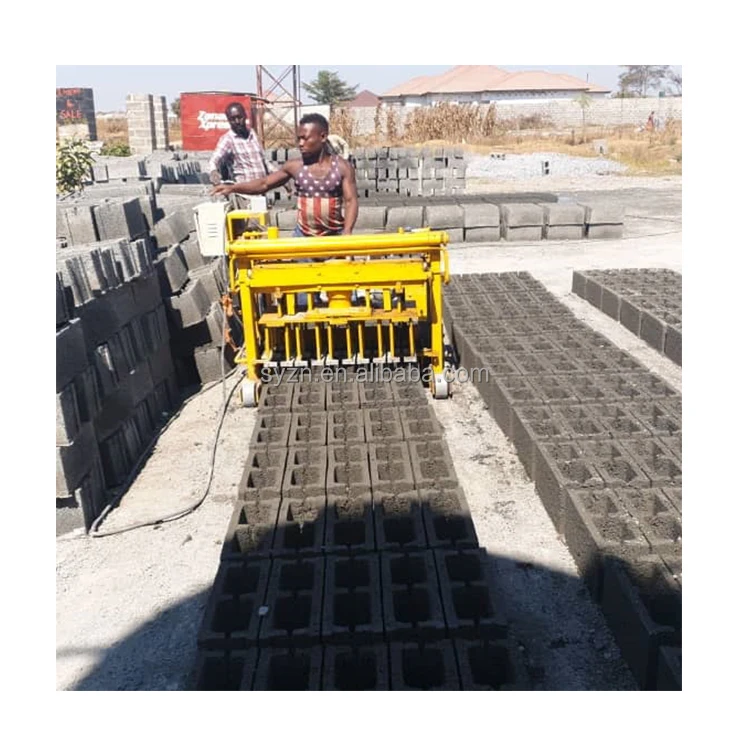
The 45-second molding cycle applies across all three hollow block formats the QMJ4-45 supports: 400×200×200 mm at 4 pieces per mold, 400×150×200 mm at 5 pieces, and 400×120×200 mm at 6 pieces. The productivity figures shift with each format — roughly 3000, 3500, and 4500 pieces per day respectively — because the cycle time stays constant while the mold cavity count changes. When sizing this PLC controlled egg laying block machine, the question is not maximum output but which format your local market actually buys. A contractor producing 400×200 blocks for load-bearing walls has a different daily target than a supplier making 400×120 partitions for interior use, and the machine handles both without hardware modification beyond a mold swap.
The Cost of Skipping the Material Test
Sending the machine to site without a confirmed mix sample creates a specific kind of failure. The blocks come out of the mold with edge chipping or hairline cracks, the operator assumes the vibration is too aggressive and dials it back, and then the blocks are too weak to stack. I have watched this cycle consume a full week of production while the contractor tried different sand-to-cement ratios by guesswork. The root cause is almost always that the vibration frequency and compaction pressure were set for a reference mix — clean quartz sand at controlled moisture — while the site is using laterite soil or unwashed river gravel. Testing your material before dispatch eliminates this trial-and-error period entirely. [NEED_CITE: effect of local aggregate variation on concrete block forming parameters]
Why Buyers Specify Through This Supplier
Single-focus block machinery supplier — The QMJ4-45, its molds, and any supporting handling equipment are specified as one matched system, not assembled from separate vendors with incompatible tolerances.
Configuration against your actual conditions — We set the vibration timing and engine specification to your confirmed mix design and local fuel availability, not to a catalogue default that assumes conditions you do not have.
Mold design for your market formats — Beyond the three standard hollow block sizes, custom mold drawings can be produced to match regional block dimensions that your buyers expect.
Upgrade path from manual operation — The QMJ4-45 starts as a fully manual egg-laying machine, but the automation level is selectable if you later add a fixed plant with automatic stacking and curing.
Installation and operator training included — Commissioning support covers first-run parameter adjustment on your actual material, not just a generic power-on check.
Documentation & Verification
- Line layout showing egg-laying path spacing and curing area requirements
- Machine specification sheet with confirmed engine type and fuel specification
- Mold drawing and format list matching your target block dimensions
- Factory test record run on your submitted material sample before dispatch
- Operation and maintenance manual with vibration motor service intervals
- Wear parts and mold replacement list with part numbers for reordering
Installation, Commissioning & Support
- Ground surface must be a level concrete pad to support egg-laying block release without cracking
- Diesel fuel supply confirmed on-site before machine arrival to enable immediate first run
- Machine ships partially assembled with engine and vibration motor pre-mounted
- First commissioning run uses your actual aggregate blend to verify 45-second cycle stability
- Operator training covers manual demold technique and mold changeover procedure
- Vibration motor brushes and mold liner wear parts included in first-order spare parts pack
Before You Send the Inquiry
To size the QMJ4-45 correctly for your project, prepare the following details. Share the specific block formats your market demands — not just "hollow blocks" but the exact dimensions in millimeters. Confirm the aggregate materials available at your site, including sand type and maximum particle size, and send a representative sample for pre-shipment testing. State your available fuel type and any altitude conditions that affect diesel engine performance, so the engine specification matches your operating environment.
Frequently Asked Questions
Q: What block format is the daily output based on, and how does output change with different mold sizes?
A: The 2600–4000 pieces per day figure varies by format. With the 400×200×200 mm mold producing 4 blocks per cycle at 45 seconds, output sits around 3000 per day. The 400×150×200 mm mold yields roughly 3500, and the 400×120×200 mm mold reaches approximately 4500. Daily totals assume an 8-hour shift with material feeding and block movement factored in.
Q: Can the QMJ4-45 run entirely without grid electricity, and what engine is fitted?
A: Yes, the machine uses a diesel or petrol engine for all power needs, including the 6 kW vibration motor drive. No grid connection is required. Engine specification is confirmed during the order process based on your local fuel availability and altitude conditions, ensuring reliable starting and sustained operation at your site.
Q: What ground surface is needed for egg-laying operation?
A: The QMJ4-45 lays blocks directly on the ground without pallets, so a level concrete pad or firmly compacted hardstanding is necessary. Soft or uneven soil causes blocks to tilt during release, leading to deformation and stacking failures. The curing area must be adjacent and large enough to hold a full day’s output with spacing for air circulation.
Q: How long does a mold change take, and are other formats available?
A: Mold changeover on the QMJ4-45 is a manual process involving bolt release and mold lifting, typically completed within a single shift segment. Additional mold formats for solid blocks or paving blocks can be designed to buyer drawings. Confirming your full format list at order stage ensures all required molds ship together and are ready for immediate use on arrival.
Q: What does the one-year warranty cover, and which wear parts should I order upfront?
A: The warranty covers the complete machine for one year from dispatch. Wear items subject to regular replacement include vibration motor brushes, mold liners, and drive belts. We recommend ordering a first-set spare parts pack with the initial shipment so replacements are on hand before your first wear cycle, avoiding production stoppages while waiting for parts delivery.