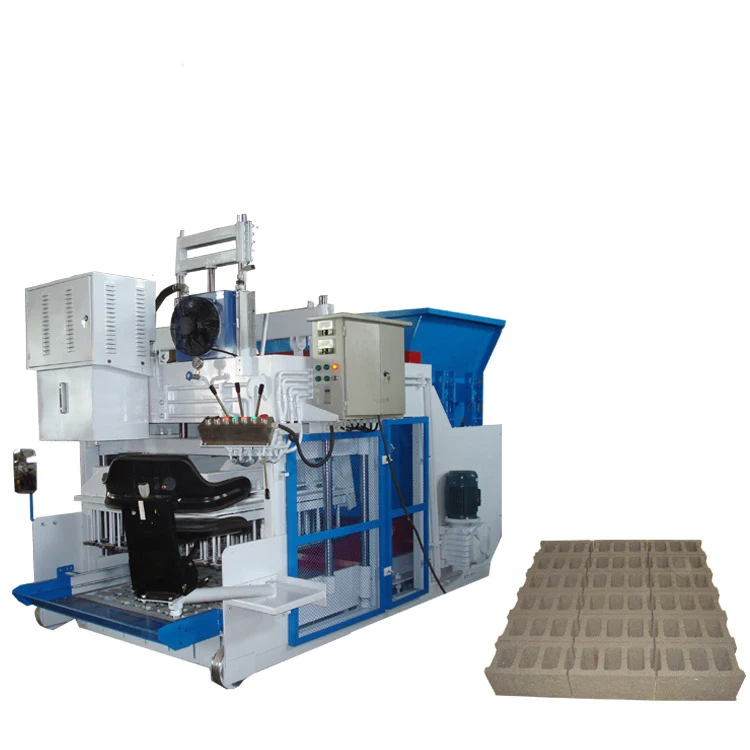
Description
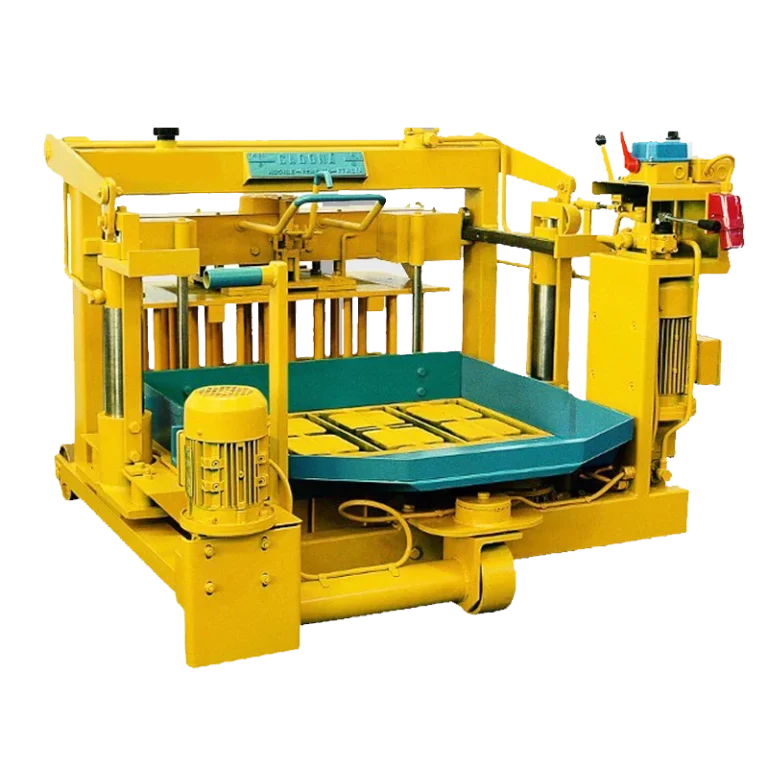
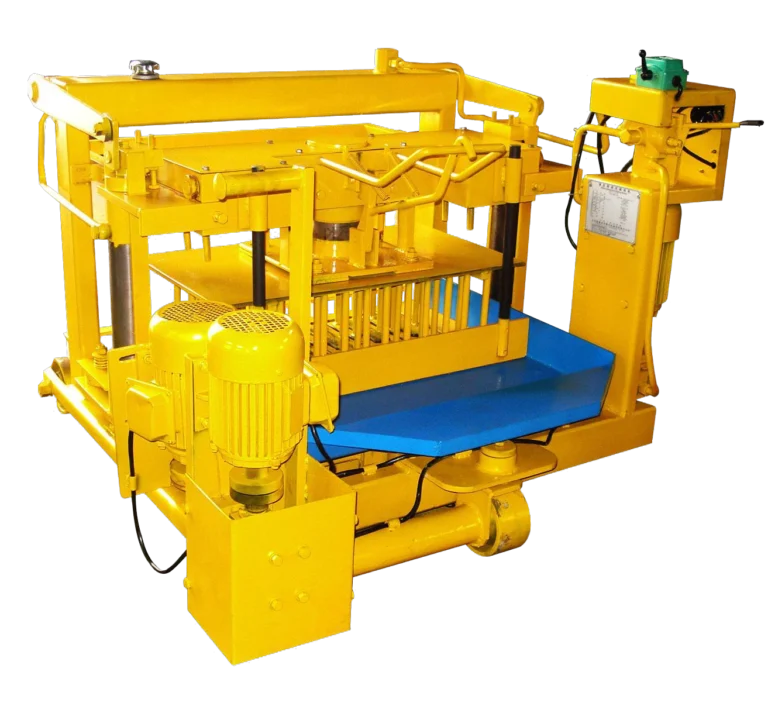
Matched System Integration — The QMY18-15 mobile egglaying press, its hydraulic circuit, and mould set are specified as a single package so vibration force and pressure stay aligned with the buyer’s actual block format and local aggregate.
Technical Specifications
| Parameter | Value |
|---|---|
| Model | QMY18-15 |
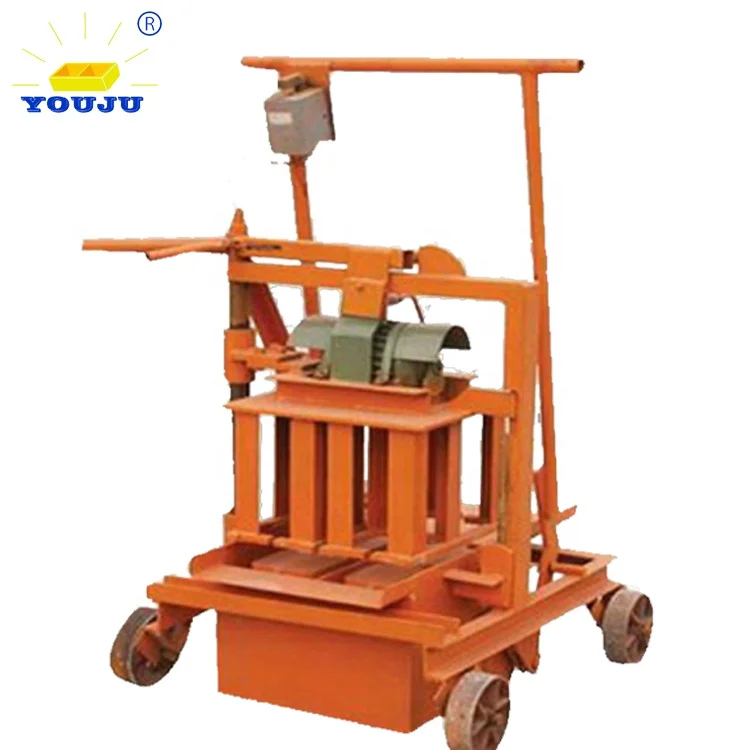
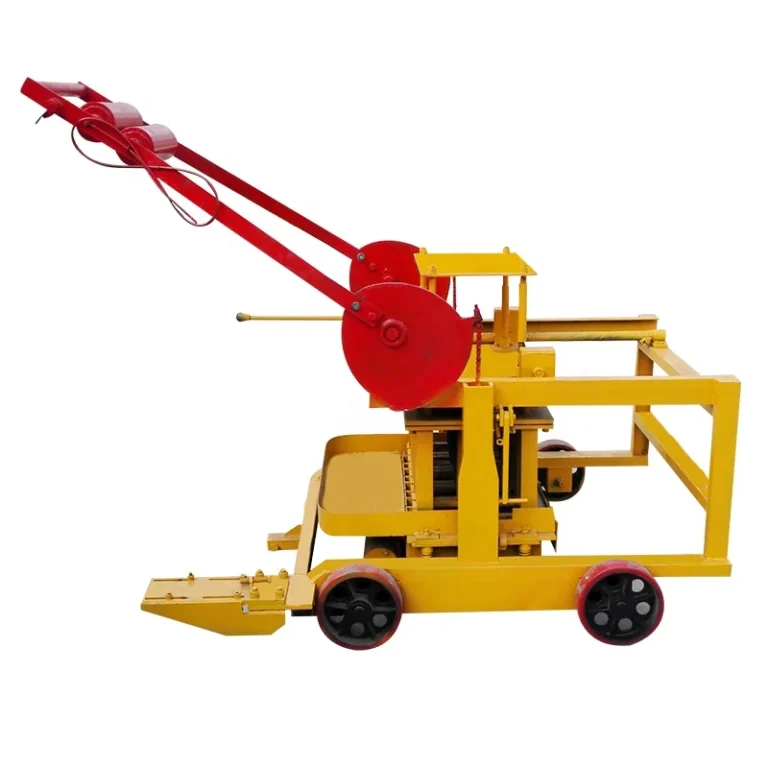
| Product Type | Mobile Hydraulic Egglaying Block Making Machine |
| Machine Type | Hydraulic mobile egglaying (pallet-free) |
| Base Model | Upgraded from QMY12-15 |
| Pallet Requirement | No pallet required (egglaying / on-ground curing) |
| Operation Mode | Man-machine unity, reduced labor configuration |
| Pressure Characteristic | High hydraulic pressure (exact MPa rating to be confirmed) |
| Vibration Force | Rating to be confirmed (kN) |
| Output Capacity | High output envelope (basis not stated in source — confirm block format, cycle time, and daily shift hours) |
| Cycle Time | To be confirmed per block format |
| Mould Format Options | To be confirmed (hollow / solid / paving / interlocking) |
| Mould Change Time | To be confirmed (minutes per change) |
| Power / Voltage / Frequency | To be confirmed (kW, V, Hz for target market) |
| Control System | PLC or manual control options available (brand to be confirmed) |
| Overall Dimensions | To be confirmed (L × W × H) |
| Net Weight | To be confirmed (kg) |
| Assembly State | Mobile, integrated unit |
| HMI Language Options | Display language to be confirmed before dispatch |
Application Suitability
| Application | Material or Output |
|---|---|
| On-site hollow block production for housing projects | Crushed stone, river sand or manufactured sand with cement binder |
| Solid block manufacturing at infrastructure sites | Local aggregate blends, weathered sand with adjusted moisture |
| First-stage entrepreneur block plant | Low-investment, pallet-free curing on prepared ground |
| Paving and interlocking block runs on flat ground | Fine aggregate mixes with pigment additives where applicable |
What "High Output" Actually Means When No Block Format Is Named
A cycle-per-hour figure without a stated block format is a number detached from reality.
Buyers routinely receive quotations promising strong daily throughput, only to discover that the quoted rate assumes a small solid block while the project demands 200mm hollow blocks with a much longer cycle. On a recent site commissioning, I watched a mobile egglaying unit lose an entire shift because the quoted output was based on a format the buyer never intended to produce. The PLC controlled egglaying block machine you select must have its capacity documented against the exact hollow, solid, or paving format your market actually buys, including the cycle time per mould and the number of working hours per shift. [NEED_CITE: block format assumptions in capacity quotations across mobile machine suppliers]
Removing the Pallet Loop from On-Site Production
The egglaying principle means the QMY18-15 extrudes each block directly onto the ground surface, eliminating the need to purchase, feed, retrieve, and store pallets. For a contractor working a remote housing site, this removes an entire material-handling chain — no pallet racks, no forklift dedicated to pallet rotation, no pallet replacement budget. The automatic mobile block machine therefore operates with a smaller crew, since the logistics of pallet cycling are taken entirely out of the operator’s workflow.
How Hydraulic Pressure Replaces Pure Mechanical Vibration
Earlier mobile egglaying machines relied on mechanical vibration alone, which limited block density and left strength inconsistent across a run. The QMY18-15 integrates a hydraulic pressure system that applies controlled force during each compaction stroke, working alongside vibration to pack the mix more evenly. On sites where I have commissioned this class of machine, the shift from mechanical-only to hydraulic-assisted compaction produced noticeably denser blocks with sharper edges — provided the vibration force and hydraulic pressure were both matched to the local aggregate and moisture content. [NEED_CITE: hydraulic versus mechanical compaction in mobile egglaying block machines]
Reading the Specs That Determine Real Daily Output
Hydraulic pressure rating and vibration force together govern how tightly the mix is compacted inside the mould box, which directly determines block density and compressive strength. If the pressure is set too low for a coarse aggregate blend, blocks emerge friable; too high and the mould wear accelerates. Mould change time dictates how many format switches are practical in a single shift — a change taking most of a working day cancels the flexibility the buyer paid for. The PLC control system, where fitted, manages batching accuracy and cycle sequencing, reducing operator dependency for consistent block dimensions across long production runs. Voltage and frequency must match the site supply exactly; a 380V/50Hz machine landed at a 440V/60Hz site will not commission without a transformer and a reprogrammed drive.
The Cost of Skipping Configuration Checks Before Dispatch
When a mobile unit arrives with the wrong voltage or an unspecified PLC language, commissioning stalls until the correct components are sourced locally — sometimes weeks into a project deadline. I have seen a buyer lose an entire week because the HMI display arrived in a language the site crew could not read, and the local distributor had no programming cable for that PLC brand. Moulds specified without confirming the buyer’s target block format lead to a second order and a second shipment, doubling logistics cost before the first block is sold. Pallet-free curing also requires a flat, prepared ground area; arriving at an uneven site without prior ground preparation means blocks cure with dimensional variation that fails quality checks. [NEED_CITE: site preparation standards for pallet-free egglaying block production]
Why Sourcing This Machine Here Makes Sense
Block machinery is our single focus, so the QMY18-15 is specified alongside its moulds, hydraulic settings, and control configuration as a matched system rather than assembled from separate suppliers. We configure the machine against your actual mix design and local aggregate, not a catalogue default — because a mobile unit running weathered sand behaves very differently from one running washed river sand. Mould design and supply cover the formats your market sells, with custom drawings available when standard options do not match. Automation level is selectable, so a buyer can start with manual control and move to PLC operation as the project scales. Installation support includes on-site commissioning and operator training, so the crew is producing saleable blocks before the technician leaves.
Documentation & Verification
- Machine specification sheet with confirmed hydraulic pressure and vibration force ratings
- Mould drawing and format list showing cycle time per block type
- Voltage, frequency, and PLC display language confirmation before production
- Factory test record on your specified block format prior to dispatch
- Operation and maintenance manual with wear parts and mould replacement schedule
Installation, Commissioning & Support
- Level, compacted ground area required for pallet-free curing, sized to daily output
- Dedicated power circuit matching confirmed kW, voltage, and frequency ratings
- Machine arrives as an integrated mobile unit, minimal on-site assembly
- First-run commissioning includes amplitude and布料 time tuning for local aggregate
- Operator training covers mould change procedure and daily hydraulic system checks
- Wear parts list with recommended reorder intervals for mould liners and vibration springs
What to Prepare Before Requesting a Quote
To size the QMY18-15 accurately, share the block formats your market sells — hollow, solid, paving, or interlocking — along with the target daily output per format and the number of shift hours you plan to run. Provide your local aggregate type and typical moisture range so the vibration and pressure settings can be configured before the machine leaves the factory. Confirm your site voltage, frequency, and preferred PLC display language so that commissioning begins on day one rather than waiting for electrical corrections.
Frequently Asked Questions
Q: How is output capacity calculated for the QMY18-15, and which block format is the figure based on?
A: Output capacity must be stated per block format — hollow, solid, or paving — because each format has a different cycle time and mould volume. We provide a line layout document showing the capacity calculation for your chosen format, based on confirmed cycle time and shift hours, rather than a single generic cycles-per-hour number that may not match your actual production target.
Q: What automation level does the QMY18-15 ship with, and what is the upgrade path?
A: The machine is available with manual control or PLC-controlled operation depending on buyer requirements. A unit shipped with manual controls can later be upgraded to PLC operation, adding automated cycle sequencing and batching accuracy. The upgrade path is discussed during initial configuration so the control cabinet is wired to accommodate future expansion.
Q: Which mould formats are available, and how long does a mould change take on site?
A: Mould options typically include hollow block, solid block, paving block, and interlocking formats, with custom mould design available to buyer drawings. Mould change time depends on the format and the quick-release system fitted; we supply a written procedure with the estimated time per change so you can plan format switches within a shift.
Q: How does egglaying curing affect block strength compared to pallet-based stationary lines?
A: Egglaying blocks cure directly on prepared ground without pallet support, so ground flatness and surface compaction become critical to dimensional accuracy. When the curing area is properly prepared and the hydraulic pressure is matched to the mix, block strength is comparable to pallet-based production for standard construction grades, though high-precision paving formats may still favor stationary pallet lines.