

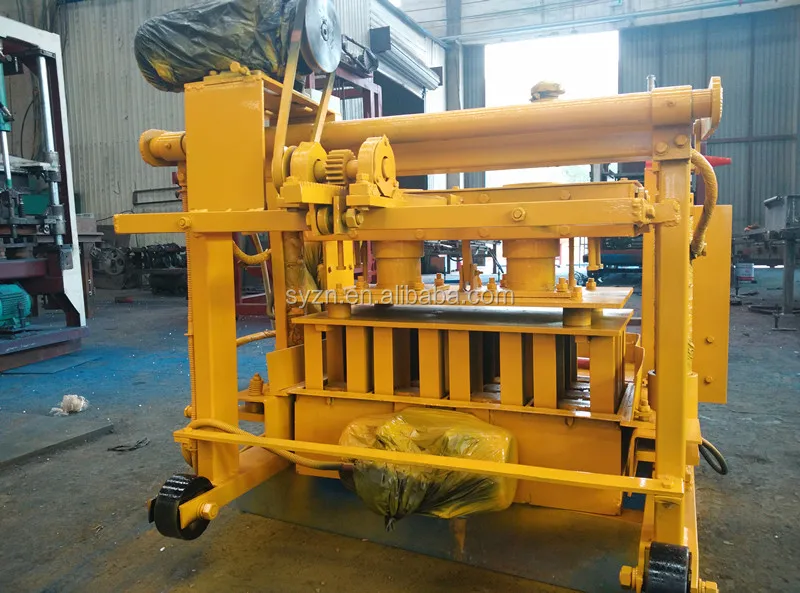
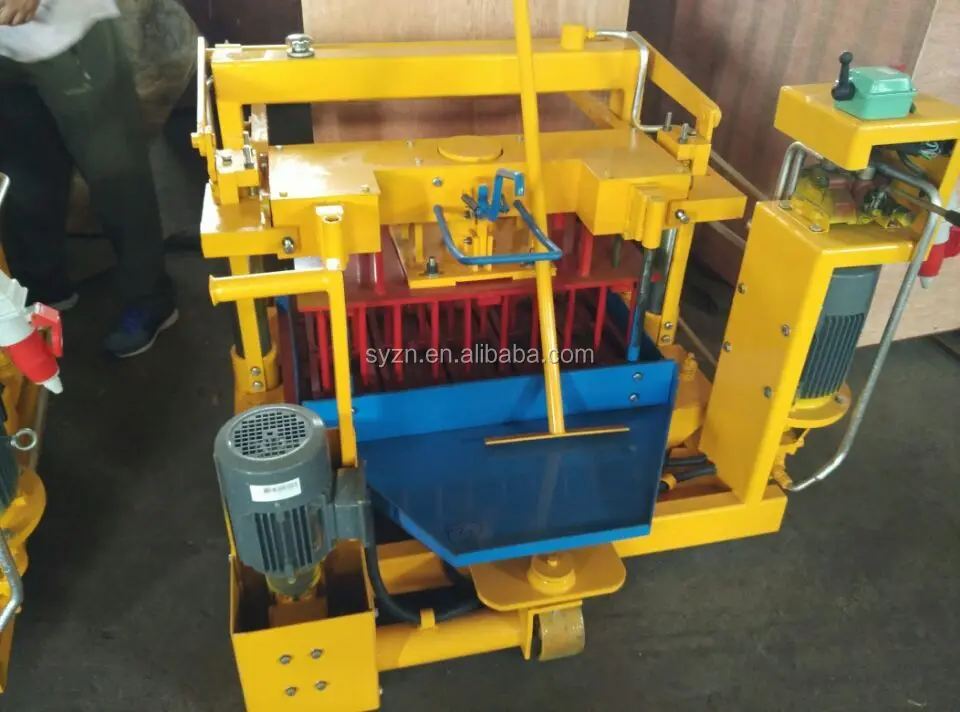

Description
Integrated Line Control — even on a manual egg-layer, the vibration cycle and hydraulic mold descent are sequenced as one timed event, not left to operator feel, so block density stays consistent across a shift.
Technical Specifications
| Parameter | Value |
|---|---|
| Model | QMY4-30 |
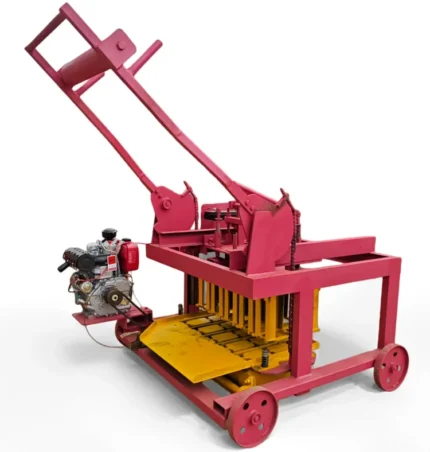
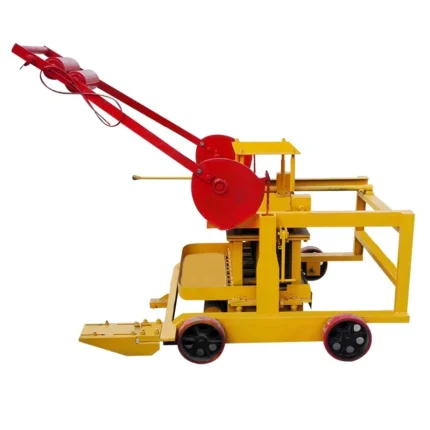
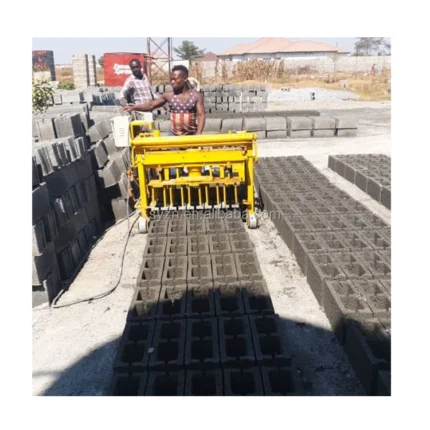
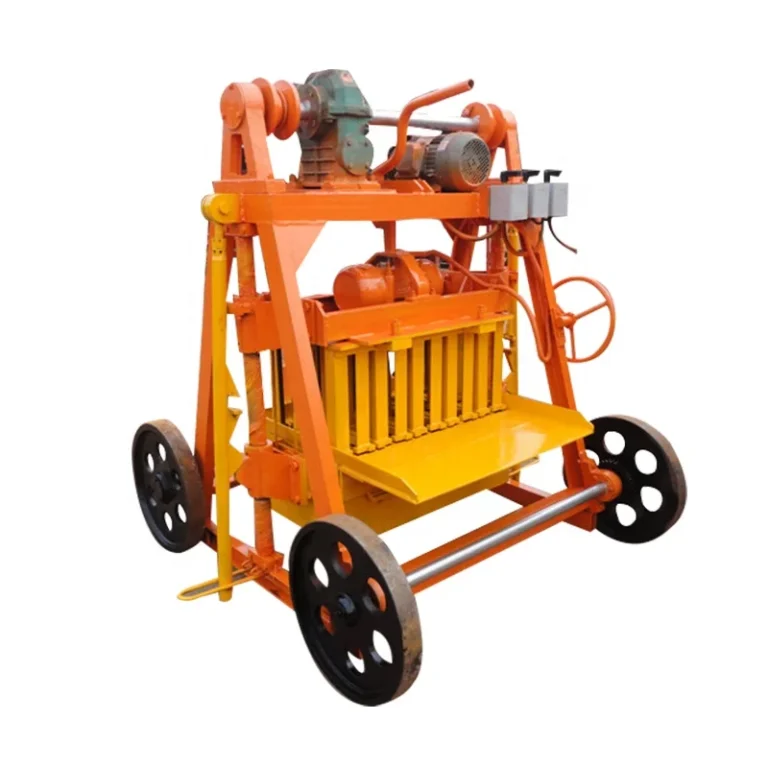
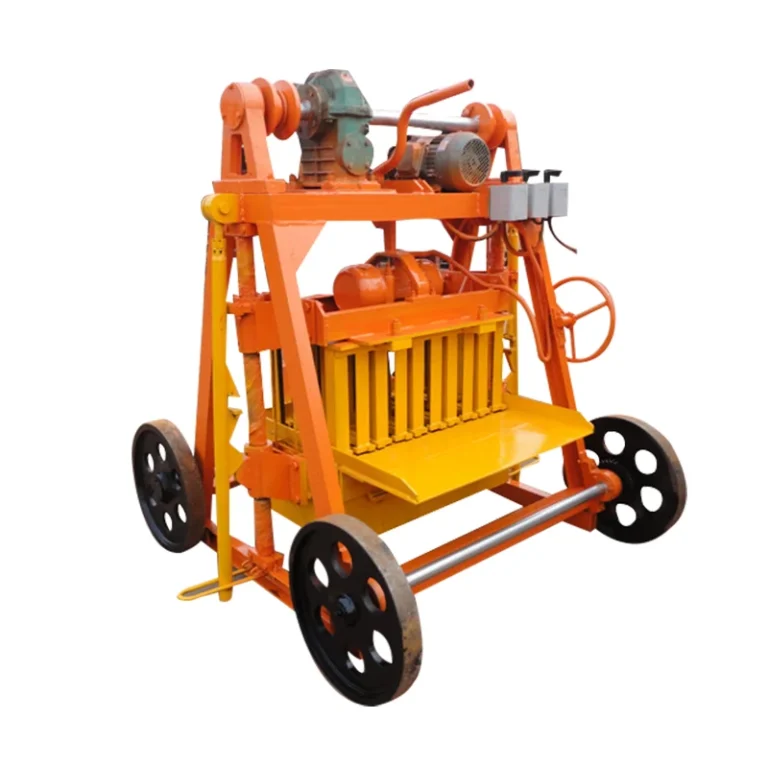
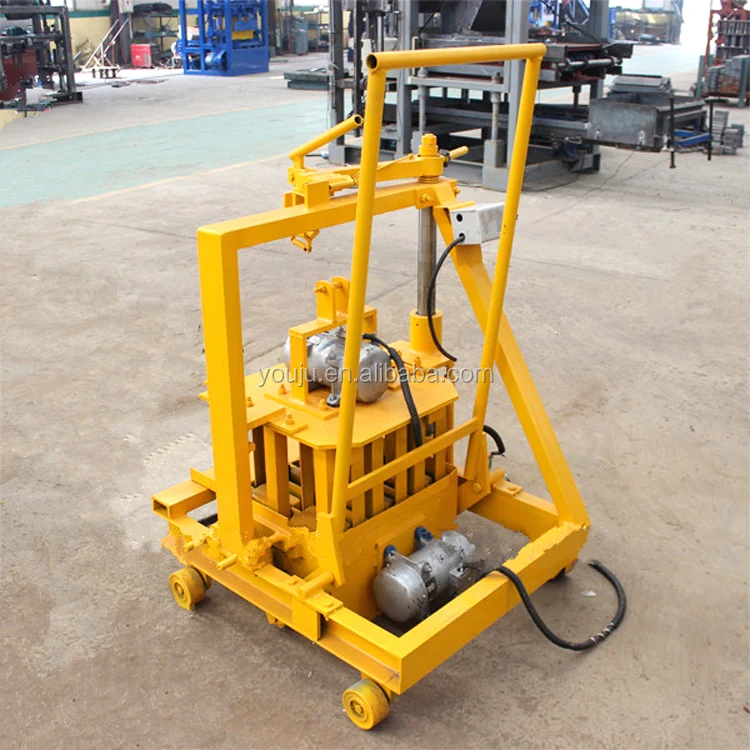
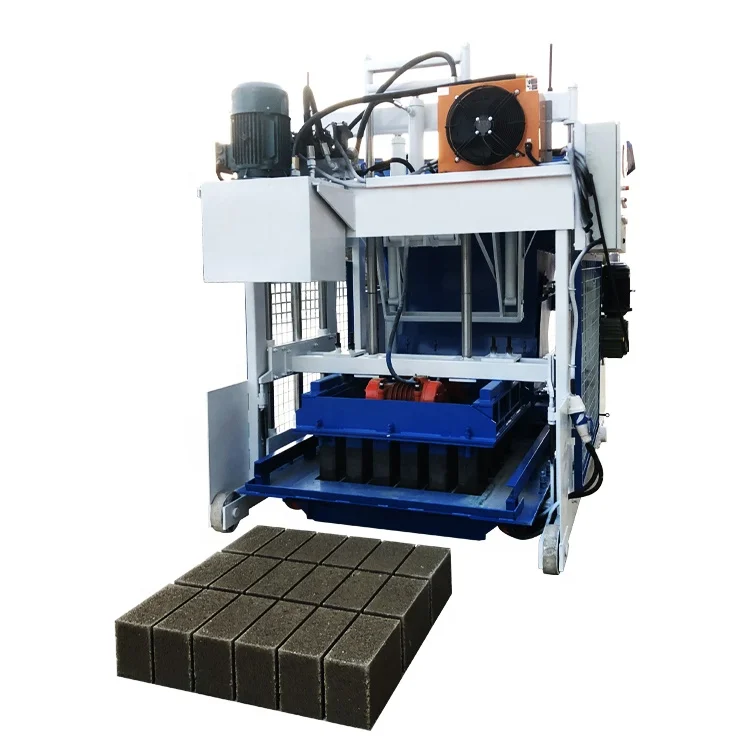
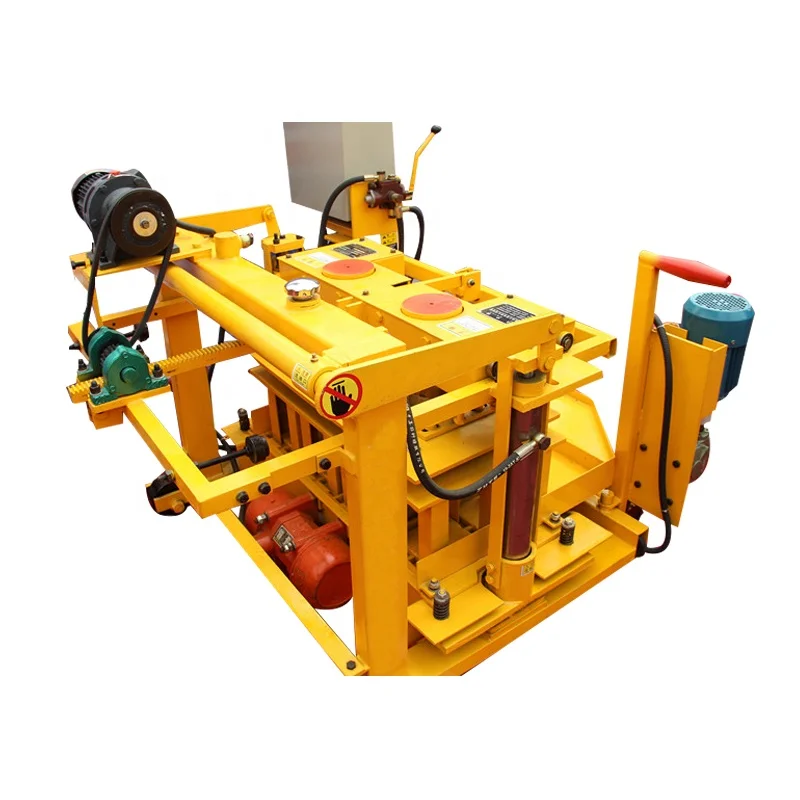
| Product Type | Mobile Egg-Laying Block Making Machine |
| Total Power | 5.95 kW |
| Exciting Power | 28.6 kN |
| Excitation Frequency | 4500 r/min |
| Hydraulic Method | Mold Vibration |
| Molding Cycle | 30 s |
| Transmission | Hydraulic + Manual (forward, reverse, corner) |
| Vibration Type | Excitation mold box |
| Overall Dimensions (L×W×H) | 1300 × 1500 × 1000 mm |
| Total Mass | 950–1000 kg |
| Raw Materials | Concrete, sand, cement, fly ash, lime, gypsum, stone dust, construction waste, slag, mine tailings, river sand, coal gangue |
| Control System | Manual lever operation with hydraulic assist |
| Output Capacity | 3000 pcs/day (8 hours) (basis not stated in source) |
| Stacking Method | Manual, egg-laying on ground |
Application Suitability
| Application | Material or Output |
|---|---|
| On-site housing project block production | Hollow and solid blocks from local sand-cement mix |
| Remote infrastructure build in mountainous or desert terrain | Blocks from crushed stone and available aggregate |
| Small contractor producing custom formats on job site | Construction waste and mine tailings blended with cement |
| First-time entrepreneur block yard | Standard concrete mix with fly ash or stone dust |
What "3000 Pieces Per Day" Leaves Out on a Mobile Egg-Layer
Capacity only means something once the block format is named.
Every mobile block machine brochure quotes a daily number, but that figure depends entirely on which block size the operator is running. A 400×200×200 mm hollow block takes longer to form and cure than a small interlocking paver, so the same 30-second cycle produces very different daily totals. Without the format assumption, a buyer comparing machines is comparing unknowns. I always push the conversation toward the specific block the buyer’s market actually sells, then recalculate from there. [NEED_CITE: block format effect on daily output calculation]
Sequencing Vibration and Mold Descent Without a PLC
The QMY4-30 uses manual lever operation with hydraulic assist rather than a full PLC panel. That means the operator controls the timing of mold vibration and mold rise manually — but the vibration motor itself runs at a fixed 4500 r/min once engaged. For a plant owner moving from fully manual hand-tamping to a hydraulic-assisted egg-layer, this automatic mobile block machine removes the most physically demanding steps while keeping the control logic simple enough that any operator can learn it in a shift.
Why Panel Language Still Matters on a Manual Machine
Even without a PLC screen, the electrical panel carries voltage labels, motor direction indicators, and safety interlocks that must be readable on-site. When an egg-laying block machine arrives with Chinese-only wiring diagrams and motor rotation arrows, the local electrician spends hours tracing circuits before the first block is laid. Confirming control labels, wiring schematic language, and motor rotation markings before shipment prevents that first-day stall. [NEED_CITE: electrical label language requirements for exported machinery]
Reading the Vibration and Cycle Numbers Together
The 28.6 kN exciting power at 4500 r/min defines how densely the concrete is compacted inside the mold box. Higher excitation force means less cement needed to reach target block strength — but only if the mold is rigid enough to transmit that force into the mix rather than absorbing it in frame flex. The 30-second molding cycle includes fill, vibration, and mold lift; shortening the cycle to chase output risks under-compacted blocks that crack during curing. These two parameters should be evaluated as a pair, not in isolation.
The Cost of Skipping Voltage Confirmation Before Dispatch
A 5.95 kW machine built for 380V/50Hz will not run on a 220V/60Hz site supply, and rewinding a vibration motor in a remote project location is rarely an option. Buyers focused on mold selection and block format sometimes treat voltage as an afterthought, only to discover the mismatch when the electrician opens the panel on arrival. Matching motor winding, frequency rating, and plug configuration to the site grid is a five-minute conversation that prevents a week-long delay. [NEED_CITE: voltage and frequency standards by export market]
Why Configuration Confirmation Belongs Before the Quotation
Every QMY4-30 leaves as a matched system: mold format chosen against the buyer’s target block, voltage and frequency set to the destination grid, and control labels printed in the operator’s language. Block machinery is the single focus here, so the machine, mold, and hydraulic circuit are specified together rather than assembled from separate suppliers. Mould design covers standard hollow and solid formats plus custom drawings from buyers who need a format their local market demands. The semi-automatic nature of this egg-layer means a buyer can start here and move to a higher-automation line later without retraining operators from scratch. Factory testing on the buyer’s chosen block format runs before packing, so the test record ships with the machine. [NEED_CITE: CE machinery directive requirements for industrial equipment]
Documentation & Verification
- Factory test record showing cycle timing on the buyer’s chosen block format
- Hydraulic and electrical schematic with language matching the destination country
- Voltage and frequency confirmation sheet signed before production begins
- Operation manual covering mold change, lever sequence, and daily maintenance points
- Mould drawing and format list for every mold included in the order
- Packing photographs showing dismantling state and container loading arrangement
Installation, Commissioning & Support
- Level ground pad required; the 1300 × 1500 mm footprint fits any flat concrete slab
- Dedicated circuit for the 5.95 kW total load, breaker sized per local code
- Machine ships fully assembled; no field bolting of vibration motor or hydraulic lines
- First-run commissioning covers lever timing, mold fill depth, and vibration duration tuning
- Operator training on mold change procedure and daily grease-point schedule
- Wear parts list with mold liner and vibration motor brush replacement intervals
What to Prepare Before Requesting a Proposal
Share the exact block format and dimensions the project or local market requires, along with the raw materials available on-site — sand type, cement grade, and any fly ash or stone dust supply. Confirm the local voltage and frequency so the motor winding is wound correctly before assembly. If existing mixers, water tanks, or curing areas are already in place, note their capacity so the egg-layer workflow slots in without bottlenecks.
Frequently Asked Questions
Q: How is the 3000 pieces per day figure calculated for the QMY4-30?
A: That number assumes an eight-hour shift with the 30-second molding cycle, but the block format it references is not stated in the source data. A larger hollow block produces fewer pieces per cycle than a small solid brick. Request a capacity table tied to the specific block size and wall thickness the buyer plans to produce before treating the headline number as a commitment.
Q: What voltage and frequency options fit the 5.95 kW drive system?
A: The motor winding can be configured for common industrial voltages, but the exact rating must match the site grid before the motor is wound. Supplying the destination voltage, phase, and frequency early in the inquiry prevents a rewinding delay after the machine is already built. Always confirm this before the factory test.
Q: Which block formats can the QMY4-30 mold, and how long does a change take?
A: The mold box accepts custom designs to buyer drawings, covering hollow blocks, solid blocks, and interlocking formats. The source does not state a specific mold change time, so ask for a demonstration of the swap procedure during the factory test. Having the correct wrench sizes and lift points documented in the manual keeps the change within a single shift.
Q: What supporting equipment does the QMY4-30 need on-site?
A: A pan mixer for the concrete feed, a reliable water supply for mix batching, and a flat curing area large enough for the day’s egg-laid output are the minimum. The machine itself needs no pallets or curing racks since it lays blocks directly on prepared ground, which is the core advantage of the mobile egg-layer design over stationary presses.