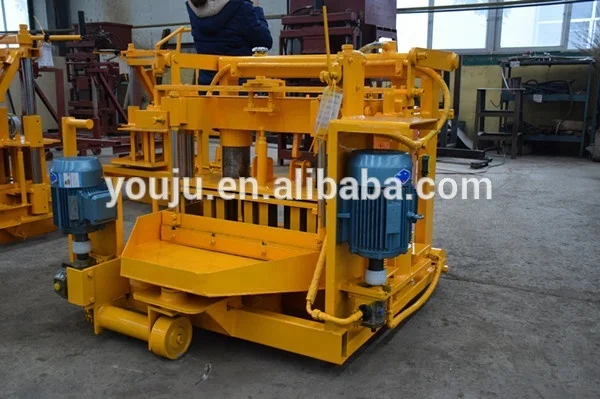
Description
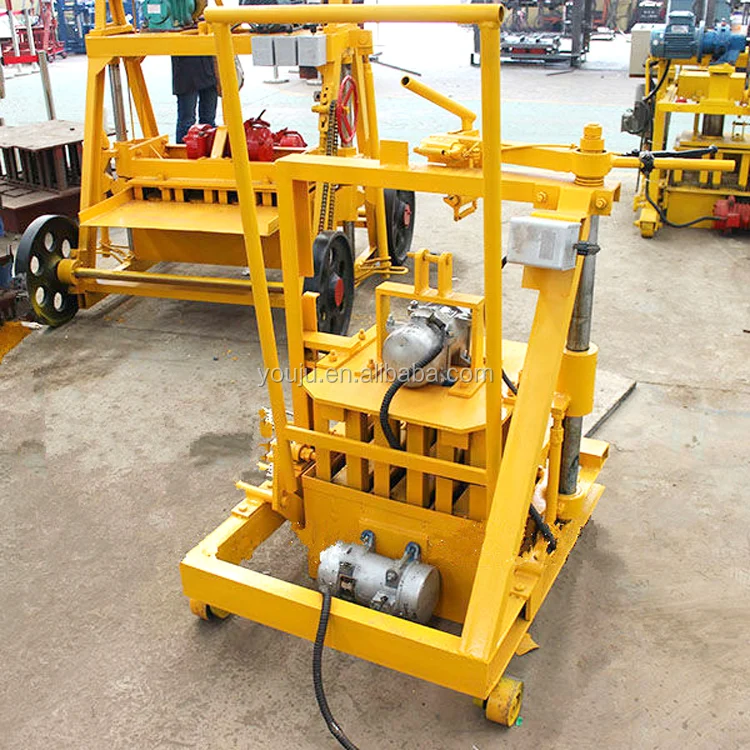
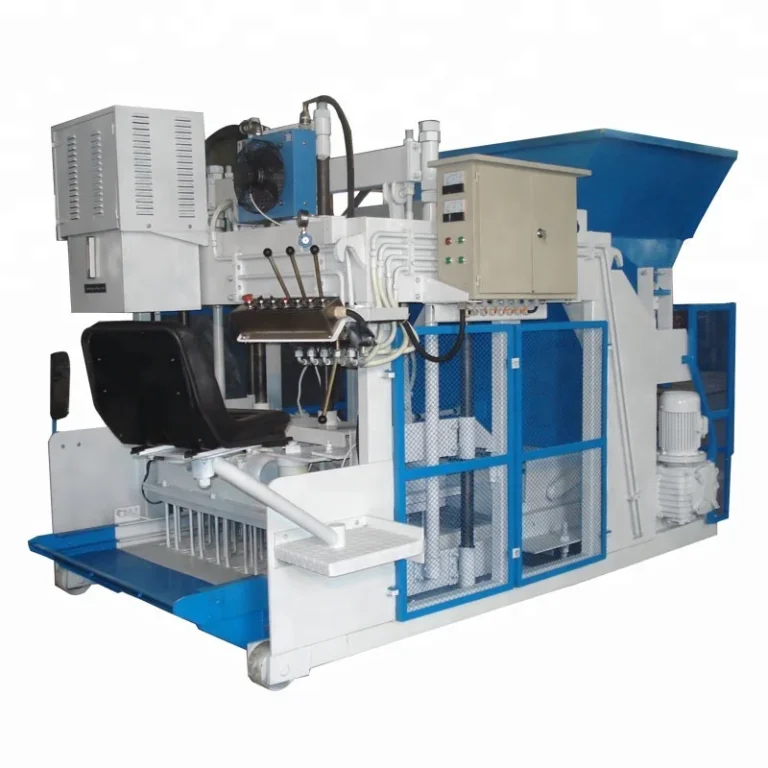
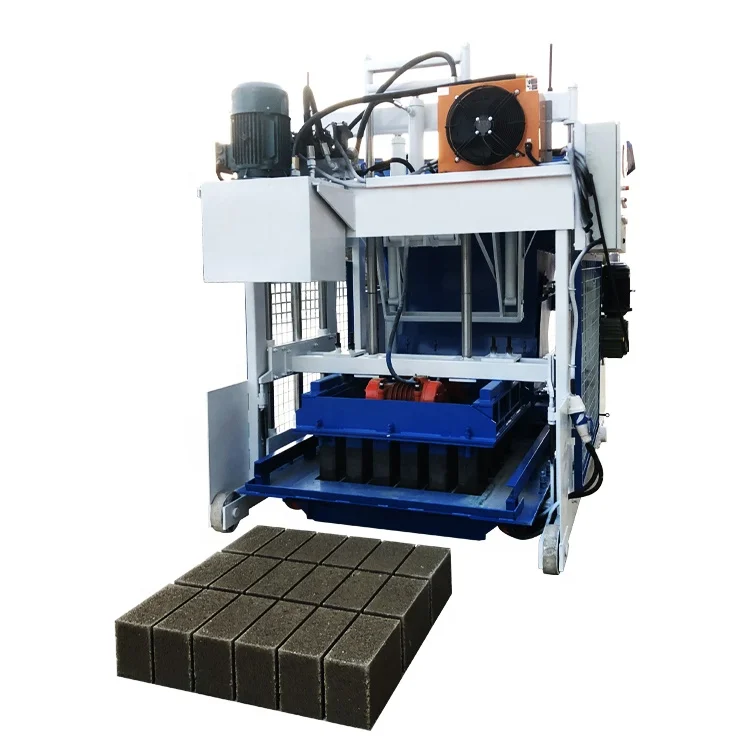
Automation-ready mobile block production — the QMY4-30 arrives configured for manual egg-laying operation but carries a documented upgrade path toward PLC-controlled batching and stacking, so your control philosophy can evolve as output demand grows.
Technical Specifications
| Parameter | Value |
|---|---|
| Model | QMY4-30 |
| Product Type | Mobile Concrete Block Making Machine |
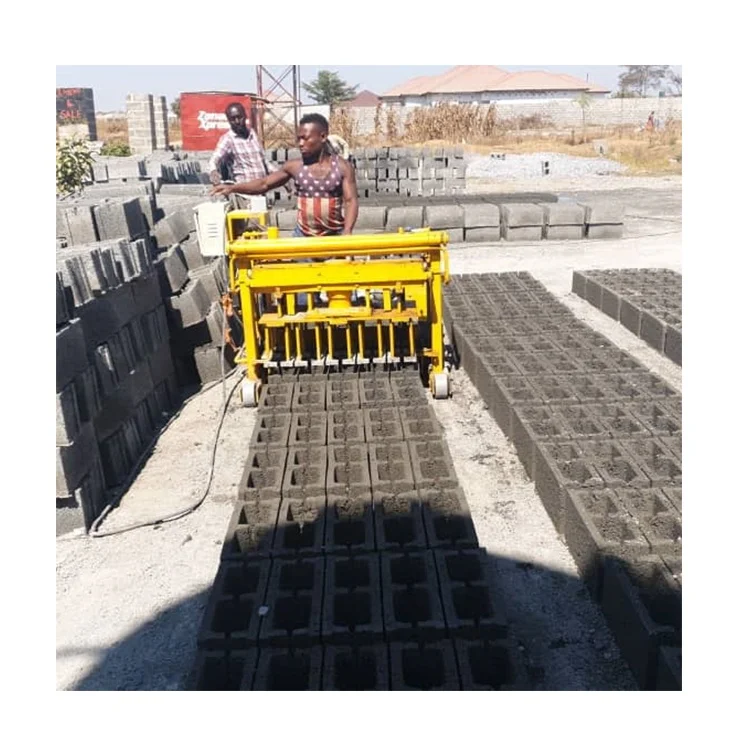
| Machine Type | Mobile (egg-laying) |
| Rated Power | 5 kW |
| Molding / Cycle Time | 30 seconds |
| Overall Dimensions | 1200 × 1200 × 1100 mm |
| Net Weight | 950 kg |
| Automation Level | Manual / low-investment operation; PLC control available as upgrade option |
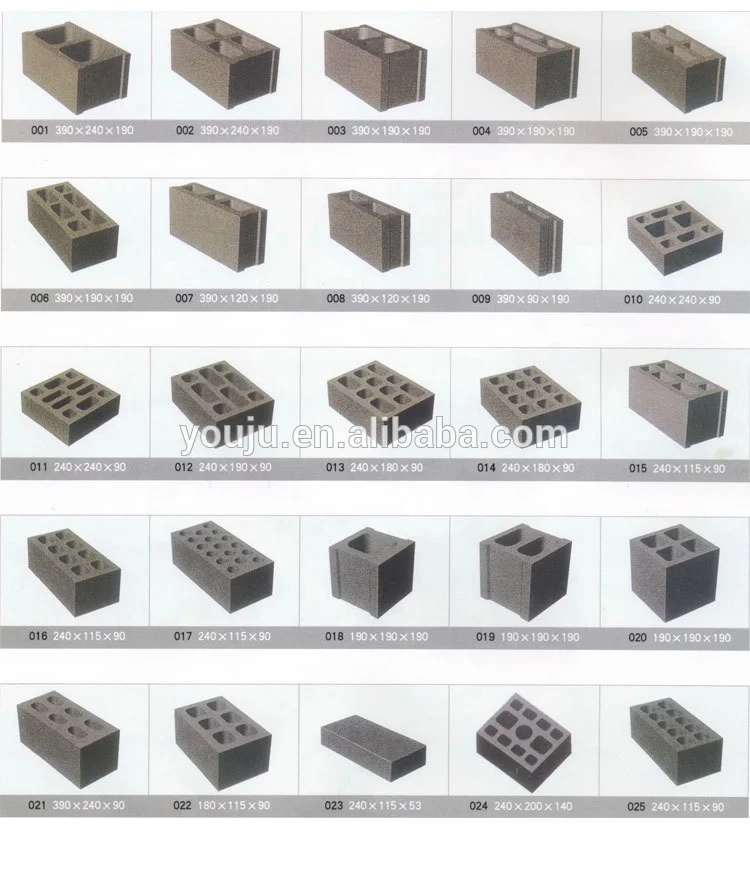
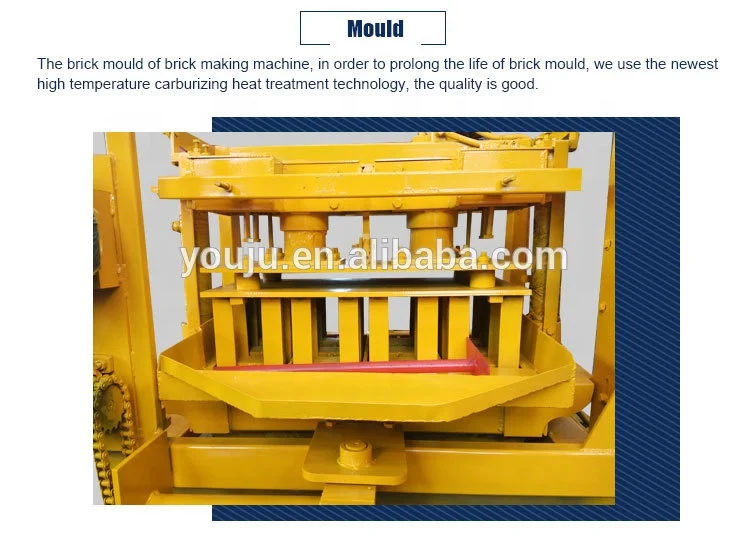
| Mould Format | Hollow block and solid brick (changeable moulds) |
| Raw Materials | Cement, sand, crushed stones, slag |
| Output Capacity | 480 pcs/hour based on 400 × 200 × 200 mm hollow block, 4 pcs/mould |
| Output Capacity | 600 pcs/hour based on 400 × 150 × 200 mm hollow block, 5 pcs/mould |
| Output Capacity | 840 pcs/hour based on 400 × 100 × 200 mm hollow block, 7 pcs/mould |
| Daily Output (8 h) | 3,840 pcs based on 400 × 200 × 200 mm hollow block |
| Daily Output (8 h) | 4,800 pcs based on 400 × 150 × 200 mm hollow block |
| Daily Output (8 h) | 6,720 pcs based on 400 × 100 × 200 mm hollow block |
| Warranty | One year |
Application Suitability
| Application | Material or Output |
|---|---|
| On-site hollow block production for housing projects | Cement, sand, crushed stone mixes laid directly on ground |
| First plant setup by entrepreneurs with limited capital | Solid brick and hollow block formats from locally sourced aggregate |
| Project-based block manufacturing by contractors | Slag-blended mixes for lightweight hollow blocks on development sites |
What "840 Pieces per Hour" Leaves Out When Buying an Automatic Mobile Block Machine
The number only holds if your block format, mould cavity count, and mix design all match the test conditions — change any one and the real output shifts.
Capacity figures quoted on mobile egg-laying machines almost always assume a specific block size, and the QMY4-30 is no exception. The 840 pcs/hour figure assumes a 400 × 100 × 200 mm hollow block with 7 cavities per mould; switch to the larger 200 mm-wide format and the same 30-second cycle delivers 480 pcs/hour. Buyers who skip this detail regularly find their daily tally falling well short of the brochure number. [NEED_CITE: block format and cavity count impact on hourly output claims]
Mapping the Control Upgrade Path
The QMY4-30 ships as a manual egg-laying unit, but its electrical architecture supports a staged transition toward a PLC controlled mobile brick machine. The base configuration handles mould vibration and travel through relay logic; adding a programmable controller later replaces operator timing judgement with repeatable cycle parameters. This means vibration duration, dwell time, and travel speed can be locked in once the mix design is validated, removing the batch-to-batch variation that manual throttling introduces.
Where Operator Language Meets Commissioning Speed
A control panel displaying parameters in a language the operator cannot read is effectively a blank panel. Before any PLC controlled mobile brick machine leaves the factory, the display language must be confirmed against the crew that will actually run it — French for West African sites, Spanish for Latin American projects, Arabic for Gulf contractors. Skipping this step routinely adds days of idle time while the installer waits for remote guidance. [NEED_CITE: PLC display language confirmation before industrial equipment shipment]
Reading the Specs That Actually Shape Daily Output
The 30-second cycle time governs every format the QMY4-30 can press, but cycle time alone does not set throughput — mould cavity count does. A 7-cavity mould for 100 mm blocks produces nearly double the pieces per cycle compared with a 4-cavity mould for 200 mm blocks, even though the press completes both in the same half-minute. Understanding this relationship prevents the common mistake of sizing labour and curing area against the highest catalogue number when the market actually demands the larger format.
The 5 kW rated power reflects a mobile unit that must stay within the tow capacity of a standard site vehicle. This power ceiling limits vibration force, meaning the machine relies more on mix consistency and less on brute compaction. Operators feeding poorly graded aggregate will see lower block density regardless of cycle settings, because the available vibration energy cannot overcome an inconsistent feed. [NEED_CITE: vibration force and mix design relationship in mobile block presses]
Raw material flexibility — cement, sand, crushed stone, slag — means the machine can run whatever aggregate is locally available, but the moisture content and particle size distribution still need to fall within a workable window. Slag blends, for instance, tend to retain more water, requiring shorter initial vibration to avoid surface slumping.
The Cost of Skipping Configuration Confirmation
When voltage, frequency, and control language are left to assumption, the machine arrives as dead weight. A 380 V / 50 Hz unit plugged into a 60 Hz supply will run its vibration motor at a different speed, altering the compaction rhythm and producing blocks that fail the site strength test. Similarly, a PLC interface left in English for a French-speaking crew means no operator dares adjust a single parameter, leaving the automatic mobile block machine sitting idle until someone flies in or connects remotely to reconfigure the display. [NEED_CITE: voltage and frequency mismatch consequences for industrial motors]
Why Sourcing the Intelligent Side Matters
Block machinery is our single focus, which means the QMY4-30 is specified as a matched system — machine, mould, and handling logic — rather than assembled from unrelated catalogue pages. Configuration is set against your actual mix design and local aggregate, not a generic default.
Mould design covers the hollow and solid formats your market actually sells, with custom drawings available when standard cavities do not match local dimensions. The automation upgrade path is selectable: a buyer can begin with manual pallet-free egg-laying and add PLC control and automatic batching as volume grows, without replacing the press itself. Installation support includes operator training on whatever control level you choose, and wear parts lists are provided so the first replacement cycle does not catch you unprepared. [NEED_CITE: matched block machine system specification practice]
Documentation & Verification
- Machine specification sheet stating output per block format and mould cavity count
- Mould drawing and format list for every hollow and solid block size included
- Hydraulic and electrical schematic matching the confirmed voltage and frequency
- PLC display language screenshot approved before production begins
- Factory test record run on buyer-specified block format and mix ratio
Installation, Commissioning & Support
- Level compacted ground required; the 1200 × 1200 mm footprint fits standard site access paths
- 5 kW supply needs a dedicated circuit with correct voltage and frequency confirmed pre-shipment
- Machine arrives assembled on plywood pallet; forklift offload and immediate placement
- First-day commissioning covers vibration timing, travel speed, and mould alignment checks
- Operator training on cycle sequence, mould change procedure, and daily grease points included
- Wear parts list and mould inventory provided for first-year maintenance planning
Before You Send the Inquiry
Tell us the exact hollow block and solid brick dimensions your market demands, along with the daily piece target for each format. Confirm your site voltage, frequency, and the language your operators read on a control screen. If you already source a specific aggregate blend, share the sieve analysis so the vibration and dwell settings can be matched before the automatic mobile block machine enters production.
Frequently Asked Questions
Q: How is the stated output capacity verified, and which block format does each figure assume?
A: Every capacity number is tied to a specific block size and mould cavity count. For the QMY4-30, 480 pcs/hour assumes a 400 × 200 × 200 mm hollow block with 4 cavities; 840 pcs/hour assumes a 400 × 100 × 200 mm block with 7 cavities. Daily figures multiply the hourly rate over an 8-hour shift under continuous operation.
Q: What automation upgrade options are available for this mobile block machine?
A: The base QMY4-30 runs on relay logic with manual cycle initiation. A PLC controller can be added to govern vibration duration, dwell time, and travel speed for repeatable output. Further upgrades include automatic batching accuracy control. The press frame and mould system remain the same across upgrade stages.
Q: How are voltage, frequency, and control language confirmed before shipment?
A: We request your site electrical specification and the operator’s preferred display language at the inquiry stage. The PLC interface screenshot is sent for written approval before production starts. A factory test on the confirmed voltage and frequency is recorded and shared prior to dispatch.
Q: What mould formats can the QMY4-30 run, and how practical is a mould change?
A: The machine accepts changeable moulds for hollow block and solid brick formats. Mould change involves unbolting the current mould plate, positioning the replacement, and re-aligning the vibration head. Buyers should verify the change time fits their daily format rotation plan rather than relying on catalogue claims alone.