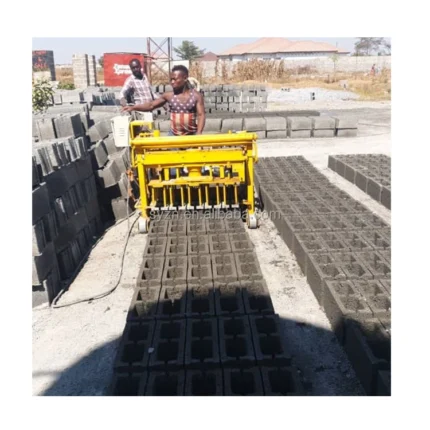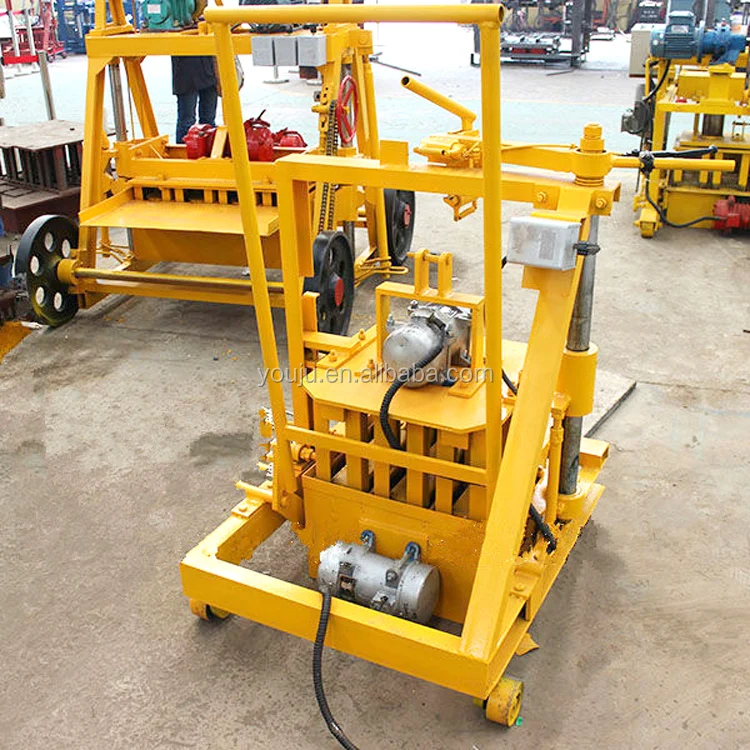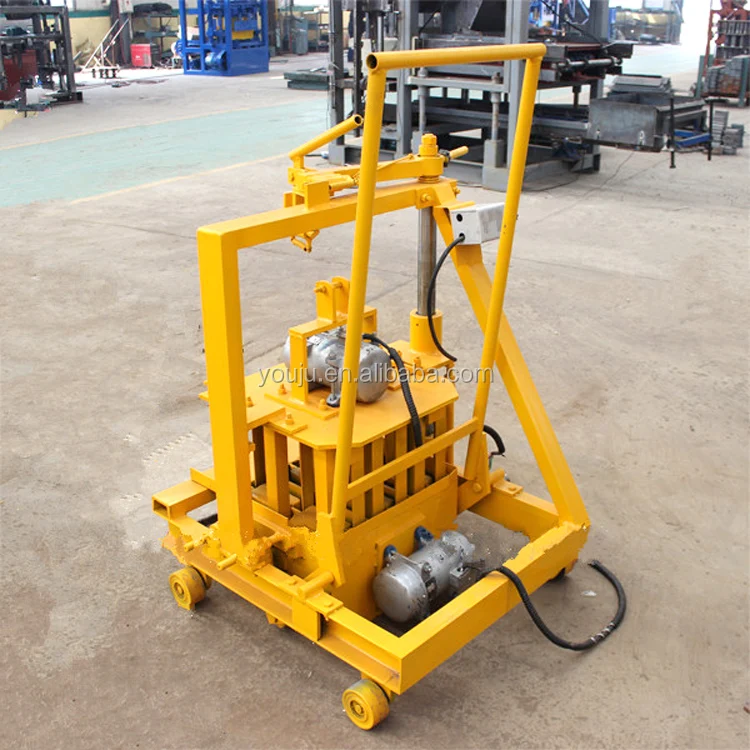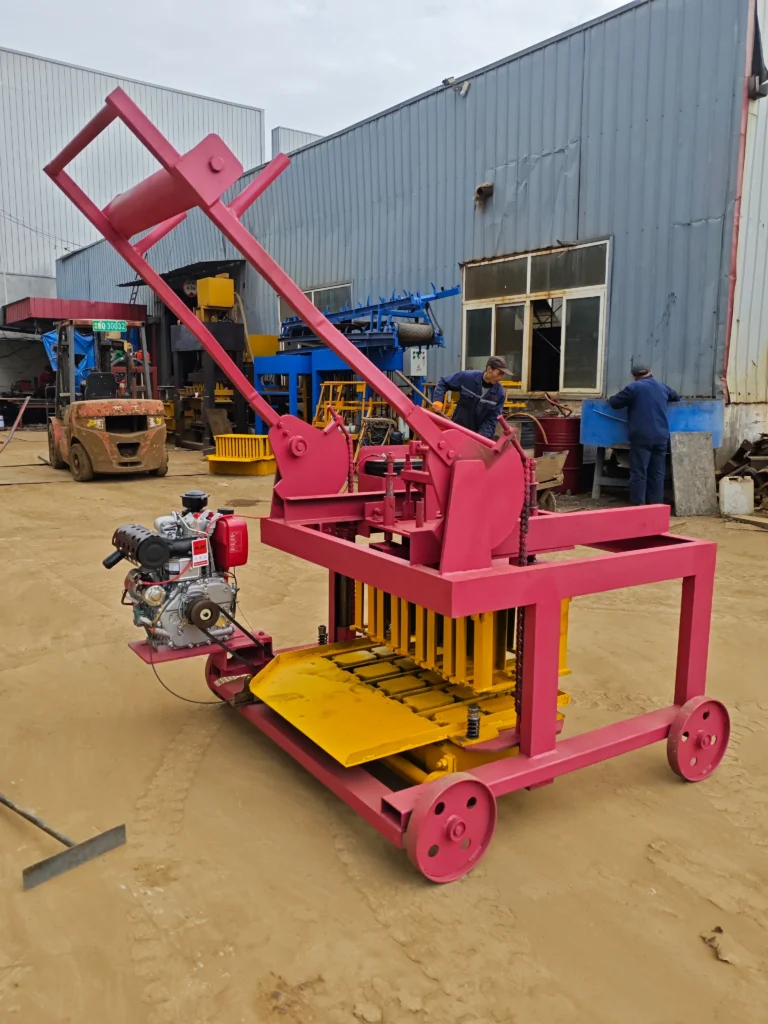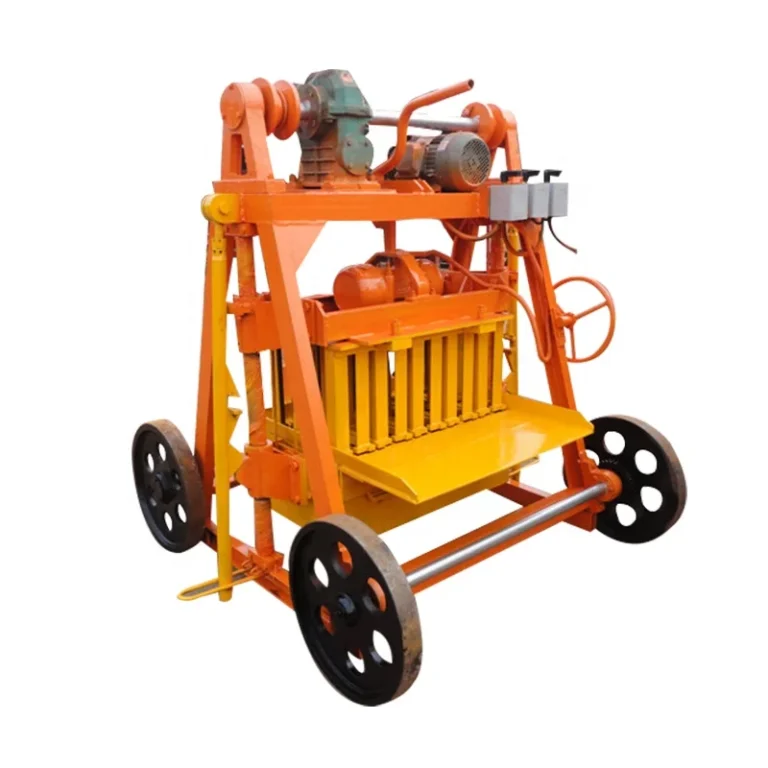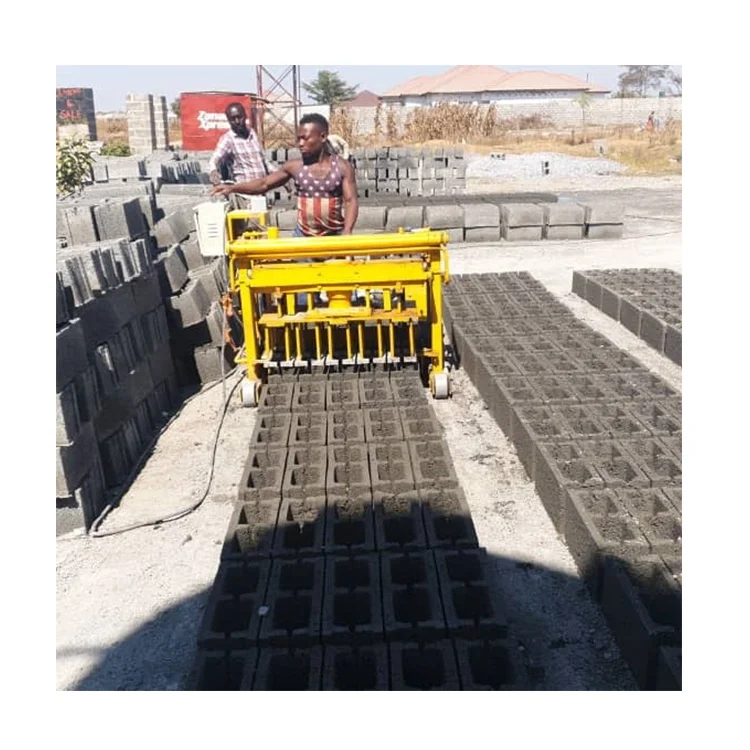
Description
Configuration Set Against Your Material — we match the QMY4-30 vibration and power to your local aggregate and mix, not a generic test run.
Technical Specifications
| Parameter | Value |
|---|---|
| Model | QMY4-30 |
| Product Type | Mobile Concrete Block Making Machine |
| Machine Configuration | Mobile / egg-laying |
| Automation Level | Manual operation (upgradeable) |
| Mould System | Changeable moulds for hollow block and solid brick |
| Molding Cycle | 30 seconds |
| Rated Power | 5 kW |
| Overall Dimensions | 1200 × 1200 × 1100 mm |
| Net Weight | 950 kg |
| Pallet Requirement | Not required (egg-laying operation) |
| Raw Materials | Cement, sand, crushed stones, slag |
| Output — 400×200×200 mm Hollow Block | 4 pcs/mould, 480 pcs/hour, 3840 pcs per 8-hour shift |
| Output — 400×150×200 mm Hollow Block | 5 pcs/mould, 600 pcs/hour, 4800 pcs per 8-hour shift |
| Output — 400×100×200 mm Hollow Block | 7 pcs/mould, 840 pcs/hour, 6720 pcs per 8-hour shift |
| Voltage & Frequency | To be confirmed before dispatch (basis not stated in source) |
| Control System | To be confirmed before dispatch (basis not stated in source) |
Application Suitability
| Application | Material or Output |
|---|---|
| Small-scale hollow block production on construction sites | Cement, sand, and crushed stone mixes |
| On-site solid brick manufacturing for housing projects | Slag and sand blends with cement binder |
| Startup block businesses with limited capital | Low-power, pallet-free egg-laying operation |
| Local production for remote development projects | Locally sourced aggregate with cement |
| Format-switching within a single shift | Hollow block and solid brick in multiple standard dimensions |
What a "30-Second Cycle" Actually Means for Your Daily Output
Cycle time only translates to real output when the block format, mix design, and mould are specified together.
Many buyers receive a single cycles-per-hour figure and assume it applies across every block they plan to produce. In reality, a 30-second cycle on the QMY4-30 means 480 hollow blocks per hour for 400×200×200 mm format, but 840 per hour for 400×100×200 mm — the mould cavity count changes the output entirely. [NEED_CITE: capacity calculation standards for mobile block machines] I have seen buyers plan their entire project schedule around a number that only held true for one of their five target formats. When you request a quotation, make sure the supplier breaks down capacity per format, not just per cycle.
From Manual Start to PLC-Controlled Mobile Block Machine
The QMY4-30 ships as a manual operation unit, keeping the initial investment low for entrepreneurs and small contractors. The control architecture is structured so that automation additions — such as automated material feeding or PLC-based cycle control — can be layered in as your production volume grows. This means you are not locked into a fixed automation tier from day one. An automatic mobile block machine configuration becomes available when your daily output demands justify the upgrade.
Why Voltage and Control Language Matter Before Dispatch
A PLC controlled mobile block machine is only useful if the display language matches your operators and the voltage matches your site supply. [NEED_CITE: voltage and frequency standards by export market] We confirm voltage, frequency, and PLC interface language before the QMY4-30 leaves the factory, avoiding the commissioning delays that occur when these details are assumed. A machine wired for 380V/50Hz arriving at a 440V/60Hz site will not simply underperform — it will fail to start or damage the motor on first energisation.
Reading the QMY4-30 Specs for Actual Production Impact
The 5 kW rated power reflects the energy needed for vibration and mould actuation on an egg-laying machine of this size. Lower power keeps running costs manageable for small-scale or site-based production where generator supply may be the only option. The 30-second moulding cycle is consistent across all supported formats, meaning your operators work to a single rhythm regardless of which block is in production. Machine weight at 950 kg provides enough mass to stabilise vibration during compaction while still allowing the unit to be repositioned across a casting floor. The changeable mould system covers three hollow block heights and solid brick, giving format flexibility without requiring a second machine.
The Hidden Cost of Skipping Material Validation
I once shipped a mobile block machine to a region where the local aggregate was volcanic ash instead of standard sand. The machine ran perfectly during factory testing, but on site the vibration force was insufficient for that material, and blocks crumbled out of the mould. We had to fly out and recalibrate. [NEED_CITE: effect of local aggregate properties on block compaction] The cost of that trip far exceeded what a material sample and pre-configuration would have required. When you source a QMY4-30, send your raw material details first so the vibration and pressure settings can be matched before the machine is built.
Why Buyers Source the QMY4-30 Through This Channel
Block machinery is our single focus, so the QMY4-30 is specified alongside its moulds and handling requirements as a matched system, not assembled from separate suppliers. We set the machine configuration against your actual mix design and local aggregate rather than shipping a catalogue default. Mould design covers the formats your market actually sells, including custom dimensions drawn to your specifications. The automation level is selectable, so you can start with manual operation on the QMY4-30 and add PLC-controlled functions later. Installation support includes operator training so your team can run independent production from the first week.
Documentation & Verification
- Line layout showing QMY4-30 placement and casting area footprint requirements
- Capacity calculation sheet stating output per block format with 30-second cycle assumption
- Mould drawing and format list covering all ordered cavity configurations
- Factory test record run on material matching your local aggregate specification
- Operation and maintenance manual with mould change procedure and cycle timing
- Voltage and control language confirmation document signed off before dispatch
Installation, Commissioning & Support
- Flat concrete casting floor required; the 1200 × 1200 mm footprint needs no dedicated foundation pit
- 5 kW power supply on a dedicated circuit; confirm voltage and frequency match before connection
- Machine ships assembled; position on casting floor and connect power for first run
- Mould installation and vibration parameter tuning performed against your specific mix design
- Operator training covers 30-second cycle rhythm, mould changeover, and daily maintenance checks
- Wear parts and replacement mould list provided at order stage for first replenishment cycle
What to Include in Your Enquiry
To size the QMY4-30 correctly for your operation, share your target block formats with dimensions, your daily output requirement per format, and the raw materials available locally including aggregate type. Include your site voltage and frequency, and let us know whether operators will need a specific PLC display language. If you plan to upgrade from manual to automated control in the future, mention that so the control architecture can be prepared from the start.
Frequently Asked Questions
Q: How is daily output calculated for each block format and what cycle time is assumed?
A: The QMY4-30 runs a 30-second moulding cycle. Output depends on the mould cavity count: 480 pieces per hour for 400×200×200 mm hollow blocks at 4 pcs per mould, 600 per hour for 400×150×200 mm at 5 pcs, and 840 per hour for 400×100×200 mm at 7 pcs. Multiply by your shift length for daily totals.
Q: Can the QMY4-30 be upgraded from manual to semi-automatic or PLC control later?
A: Yes. The QMY4-30 is designed with an upgrade path from manual operation to higher automation. PLC-controlled functions such as automated material feeding or cycle management can be added as your production volume increases, without replacing the base machine.
Q: What voltage and frequency options are available and is the display language configurable?
A: Voltage and frequency are confirmed with the buyer before dispatch to match local supply standards. The control display language is also specified at order stage. Providing your site electrical details during the enquiry prevents commissioning delays when the machine arrives.
Q: Which mix designs and local aggregates have been validated for this machine?
A: The QMY4-30 is configured against the buyer’s actual raw materials — cement, sand, crushed stone, or slag. We ask for your local aggregate details before building so vibration and compaction settings match your mix, avoiding the block strength failures that occur when machines are tuned only for standard test sand.
Q: What mould formats are available and how long does a changeover take?
A: Standard moulds cover 400×200×200 mm, 400×150×200 mm, and 400×100×200 mm hollow blocks plus solid brick formats. Custom moulds are available to buyer drawings. Changeover involves releasing the mould mounting bolts and swapping the unit — trained operators complete this within a single shift without special tooling.