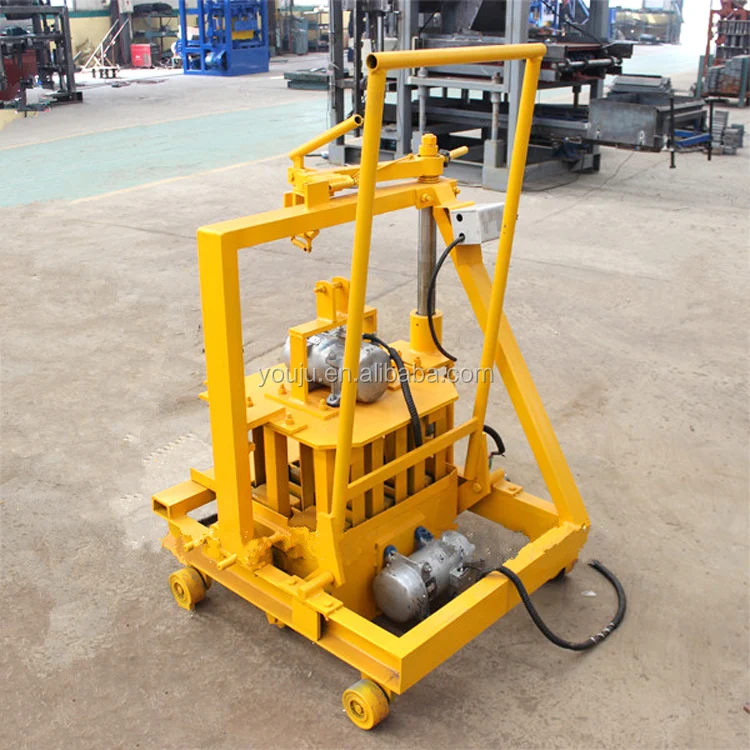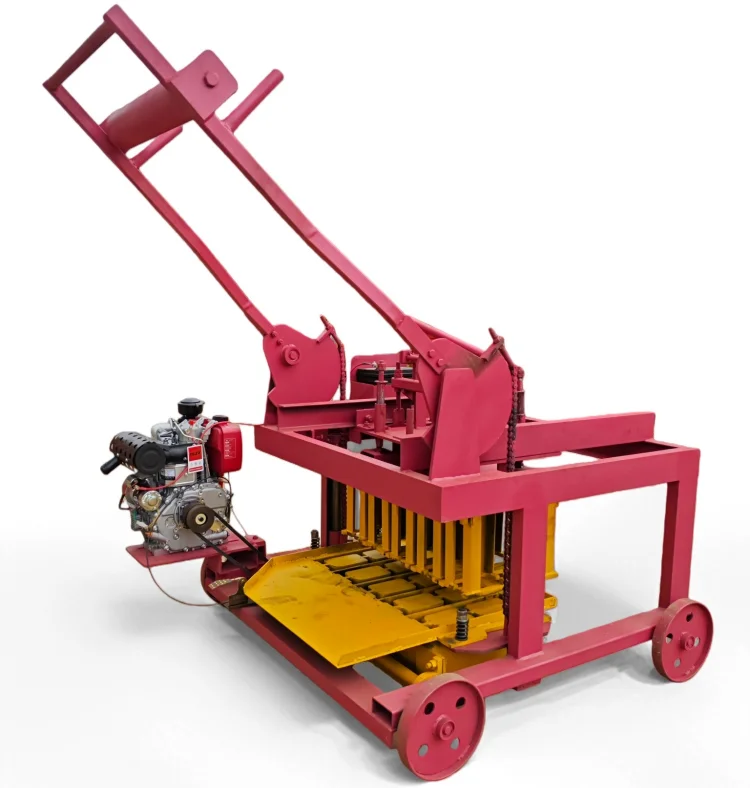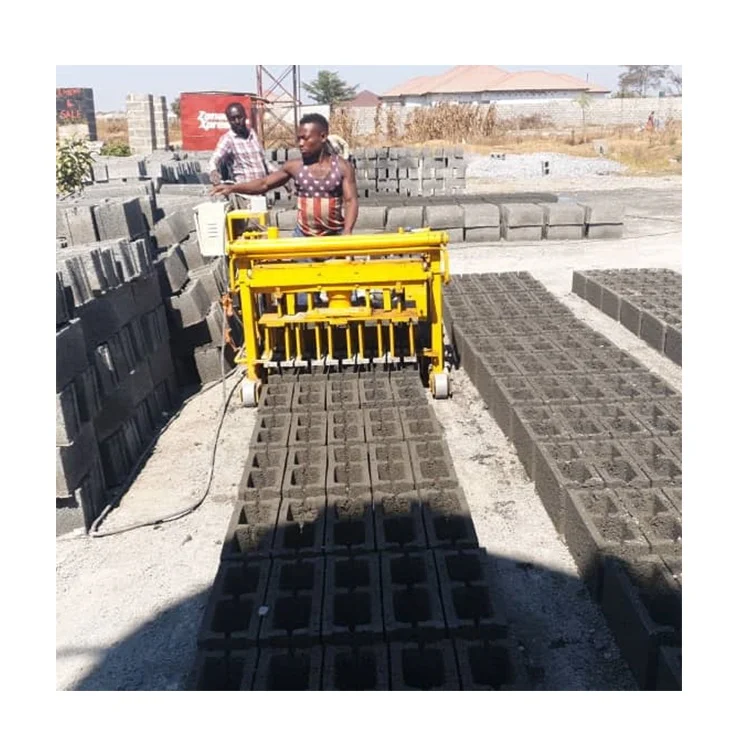
Description
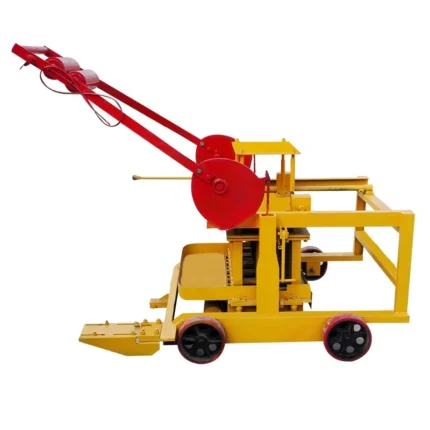
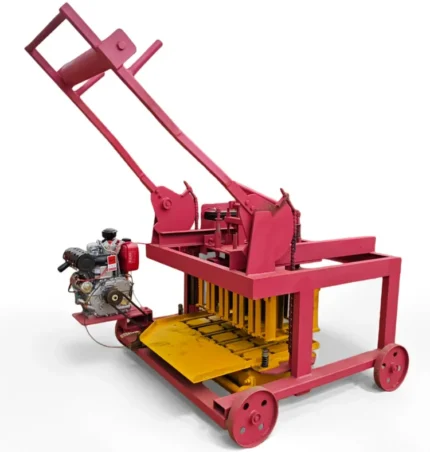
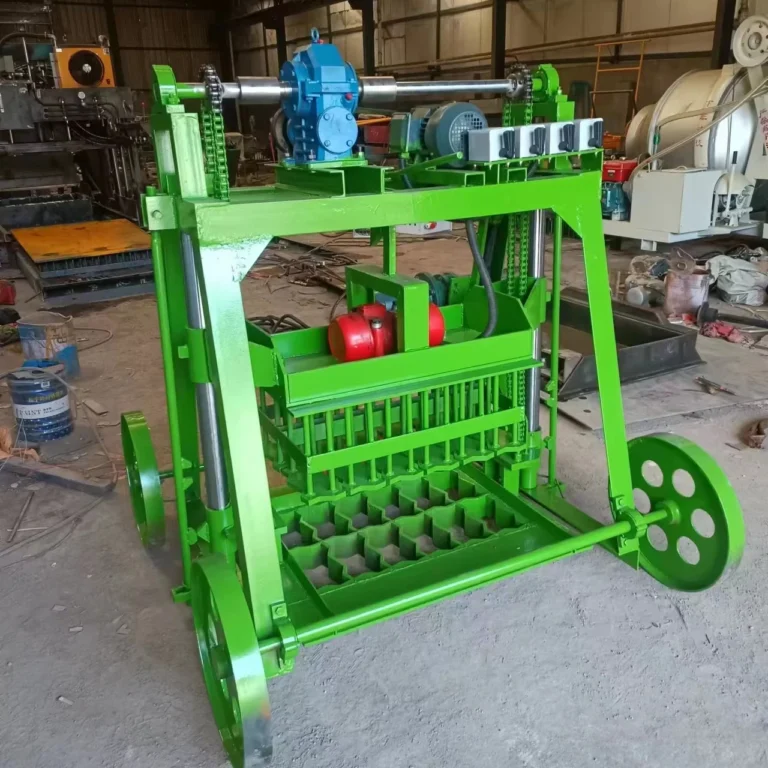
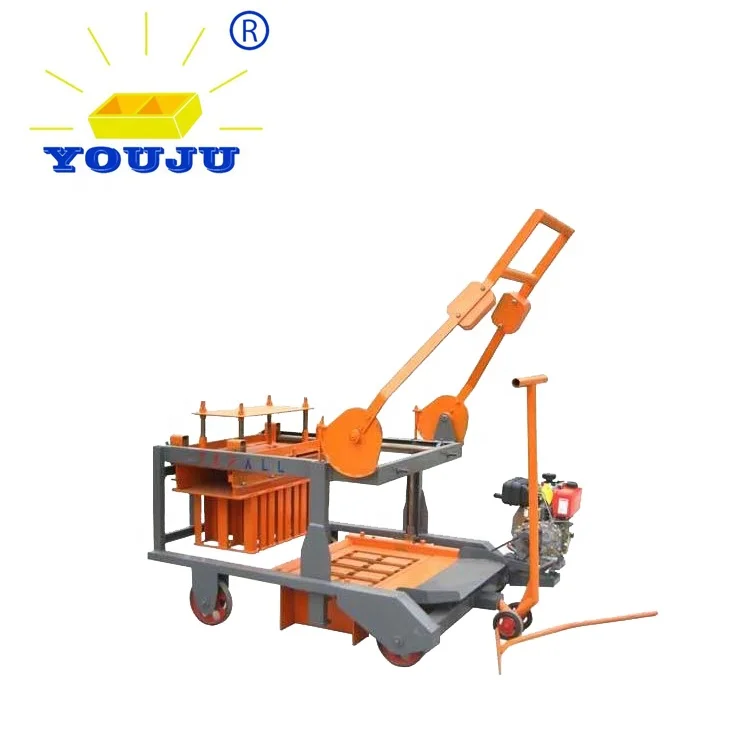
Mould and Machine as a Matched System — The QMY4-30 mobile block machine is configured around the buyer’s target block format, local aggregate, and mix design rather than shipped as a catalogue default.
Technical Specifications
| Parameter | Value |
|---|---|
| Model | QMY4-30 |
| Product Type | Mobile Concrete Block Making Machine |
| Rated Power | 5 kW |
| Overall Dimensions (L×W×H) | 1200×1200×1100 mm |
| Net Weight | 950 kg |
| Molding Cycle Time | 30 seconds |
| Automation Level | Manual / mobile egg-laying type |
| Mould Format | Changeable for hollow block and solid brick |
| Output (400×200×200 mm hollow block) | 480 pcs/hour, 3840 pcs/8 hours |
| Output (400×150×200 mm hollow block) | 600 pcs/hour, 4800 pcs/8 hours |
| Output (400×100×200 mm hollow block) | 840 pcs/hour, 6720 pcs/8 hours |
| Raw Materials | Cement, sand, crushed stones, slag |
| Pallet Size | Not applicable (lays blocks directly on ground) |
| Voltage & Frequency | To be confirmed with buyer market |
| Control System | To be confirmed with buyer requirements |
| Hydraulic Pressure | To be confirmed against manufacturer catalog |
| Vibration Force | To be confirmed against manufacturer catalog |
| Assembly State | Fully assembled, mobile unit |
Application Suitability
| Application | Material or Output |
|---|---|
| On-site hollow block production for housing projects | Cement, sand, crushed stones — 400×200×200 mm format |
| Small-scale solid brick manufacturing | Cement, slag, sand — standard solid brick format |
| Contractor block production at remote job sites | Locally sourced aggregate with cement binder |
| Startup block production with low initial investment | Hollow block and solid brick formats via mould swap |
What "Pieces per Hour" Leaves Out When Sizing an Automatic Mobile Block Machine
Cycle time only matters once you know which block format that number assumes.
I once saw a buyer receive a mobile block machine quoted at a certain hourly output, only to discover the figure was based on the smallest block size in the mould range — not the hollow block format that made up the majority of daily orders. The real daily output fell far short of the project schedule, and the contractor had to bring in a second unit to cover the gap. That is why we state output capacity for the QMY4-30 against each specific block format separately: 480 pieces per hour for 400×200×200 mm hollow blocks, 600 for the 150 mm width variant, and 840 for the 100 mm width. Without this breakdown, a buyer cannot plan labour, curing space, or raw material delivery [NEED_CITE: capacity calculation standards for concrete block production equipment].
Control Configuration and the Upgrade Path
The QMY4-30 is a manual egg-laying machine, which means the operator handles mould filling, movement, and block placement. For many first-time producers, this simplicity is an advantage — fewer systems to maintain and no PLC to troubleshoot in regions where trained electricians are scarce. However, the machine sits at the entry point of an automation ladder that buyers can climb as output demand grows.
When a producer is ready to move beyond manual operation, the transition typically involves adding a fixed-line press with PLC controlled mobile block machine capabilities — automatic pallet feeding, vibration timing tied to the moulding cycle, and stacking systems that remove the heaviest manual tasks. The QMY4-30 remains useful alongside a larger fixed line for smaller batch runs, custom orders, or on-site work at satellite locations [NEED_CITE: automation upgrade paths in concrete block production].
Voltage, Frequency, and the Commissioning Gap
One of the most avoidable delays in mobile block machine deployment happens before the crate is opened. The QMY4-30 ships with a motor rated for a specific voltage and frequency. If those values do not match the buyer’s local grid, the machine sits idle while a replacement motor or transformer is sourced — sometimes for weeks.
In my early years on the assembly floor in Linyi, I once shipped a unit to East Africa without confirming the local standard. The buyer’s grid ran at 415V while the motor was wound for 380V. The on-site electrician waited three weeks for a rewound motor before production could start. Since then, I check the motor nameplate against the destination grid parameters on every mobile unit before it leaves the factory. The QMY4-30 voltage and frequency are confirmed during the quotation stage, not assumed from a default setting [NEED_CITE: voltage and frequency standards by export market].
Reading the Core Specifications
The 5 kW rated power of the QMY4-30 is modest, which reflects its role as a single-operator mobile unit rather than a high-throughput fixed-line press. This power level feeds both the vibration motor and the mould lifting mechanism. On a mobile egg-laying machine, vibration force and hydraulic pressure together determine the density and compressive strength of each block. If the vibration is too low for a given mix design, blocks emerge crumbly and fail drop tests; too high and the aggregate segregates, leaving weak zones.
The 30-second molding cycle applies across all three hollow block formats listed in the capacity table. This consistent rhythm lets a manual operator develop a predictable workflow — mix, fill, vibrate, move — without waiting for the machine between steps. The 950 kg net weight keeps the unit mobile enough to relocate around a job site with a small forklift or even a heavy-duty pallet jack, yet heavy enough to resist walking during vibration. The changeable mould system allows switching between hollow block and solid brick formats on the same chassis, which matters when a small producer serves multiple customer segments from one machine.
The Cost of Skipping Configuration Details
A mobile block machine that arrives with the wrong voltage specification does not just delay production — it cascades. The contractor misses a masonry deadline, pays idle labour, and loses credibility with the project owner. A machine configured for a mix design the buyer cannot source locally forces a material change that alters block cost and strength. When vibration force and pressure are left at catalogue defaults rather than matched to the buyer’s actual aggregate, the result is inconsistent block strength that shows up only after curing — by which time hundreds of blocks may already be stacked and waiting for delivery [NEED_CITE: concrete block quality testing and aggregate matching].
Why Source This Machine Through a Block-Line Specialist
Block machinery is our single focus, which means the QMY4-30 is specified as a system — mould, vibration setting, and power configuration matched to the buyer’s format and mix — not assembled from separate catalogue pages. Mould design covers the formats the buyer’s market actually sells, including custom drawings when standard hollow and solid formats do not cover local demand. Configuration is set against the buyer’s local aggregate and target block strength, not a generic default. The automation level is selectable across our range, so a buyer starting with the QMY4-30 can transition to a PLC-controlled fixed line later without learning a new control philosophy. Installation support includes operator training on cycle rhythm, mould change procedure, and daily maintenance routines.
Documentation & Verification
- Line layout showing QMY4-30 placement and curing area requirements for your block format
- Capacity calculation stating output per block format with cycle time assumptions
- Mould drawing and format list confirming hollow and solid block dimensions
- Voltage and frequency confirmation sheet matched to your local grid
- Factory test record on your specified mix design before dispatch
- Operation and maintenance manual covering mould change and daily checks
Installation, Commissioning & Support
- Confirm 5 kW power supply with dedicated circuit matching quoted voltage and frequency before arrival
- Levelled concrete floor required — the 1200×1200 mm footprint needs a flat surface for consistent egg-laying
- Machine ships fully assembled; no on-site frame bolting or hydraulic line connection needed
- First-run vibration and cycle timing set against your local aggregate and cement mix during commissioning
- Operator training covers 30-second cycle rhythm, mould swap procedure, and daily lubrication points
- Wear parts list and mould replacement schedule provided for your production volume
Before You Send an Inquiry
To match the QMY4-30 to your project, share your target block format and daily output requirement so we can confirm which capacity figure applies. Let us know your local voltage, frequency, and preferred control language so the motor and any instrumentation arrive ready to run. If you have a specific mix design or aggregate source, include that detail so vibration and pressure settings can be configured before the machine leaves the factory.
Frequently Asked Questions
Q: How do I verify the real daily output of this mobile block machine and what format must the capacity quote assume?
A: Request a written capacity calculation that names the exact block format behind each hourly figure. The QMY4-30 outputs 480 pieces per hour for 400×200×200 mm hollow blocks, but that number changes with each format. Without a format-specific breakdown, you cannot accurately plan curing space, raw material orders, or daily labour shifts.
Q: What voltage and frequency does the QMY4-30 require, and can the interface be set to my local language?
A: Voltage and frequency are confirmed during quotation to match your local grid — there is no single default. Before shipment, we verify the motor nameplate against your site’s electrical standard. Control display language, where applicable, is also confirmed at this stage to avoid commissioning delays after the machine arrives.
Q: How do I match vibration and pressure settings to my local sand, aggregate, and cement mix?
A: Share your mix proportions and aggregate source so we can set vibration force and pressure against those inputs rather than leaving them at catalogue defaults. Properly matched settings produce blocks with consistent density and compressive strength. We run a factory test on your specified mix before dispatch when sample materials are available.
Q: What is the upgrade path from this mobile machine to a PLC-controlled line?
A: The QMY4-30 serves as an entry point. When volume outgrows manual egg-laying, the next step is typically a fixed-line press with automatic pallet feeding, PLC-controlled batching, and stacking. Our control philosophy carries across tiers, so operators familiar with one system adapt quickly to the next without retraining from scratch.
Q: How long does a mould change take and what formats are available beyond standard hollow and solid blocks?
A: Mould change time depends on operator familiarity and is covered during training. The QMY4-30 supports hollow block and solid brick formats through its changeable mould system. If your market requires formats outside the standard range — such as interlocking or porous bricks — we can review custom mould drawings against the machine’s moulding envelope and vibration capacity.