Description
Control language verified before dispatch — every Qmy6-25 leaves the factory with PLC display, button labels and operating manual matched to the buyer’s site language, eliminating the commissioning standstill that hits when operators cannot read the interface.
Technical Specifications
| Parameter | Value |
|---|---|
| Model | Qmy6-25 |
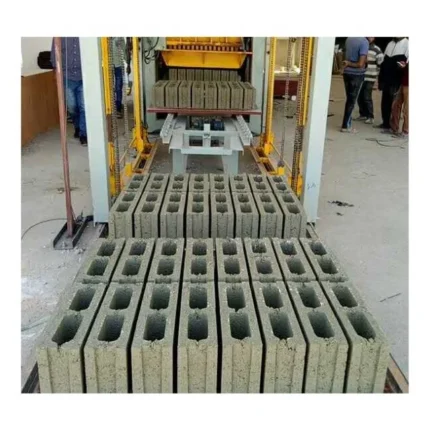
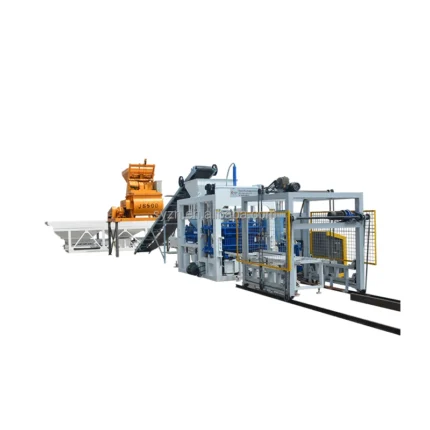
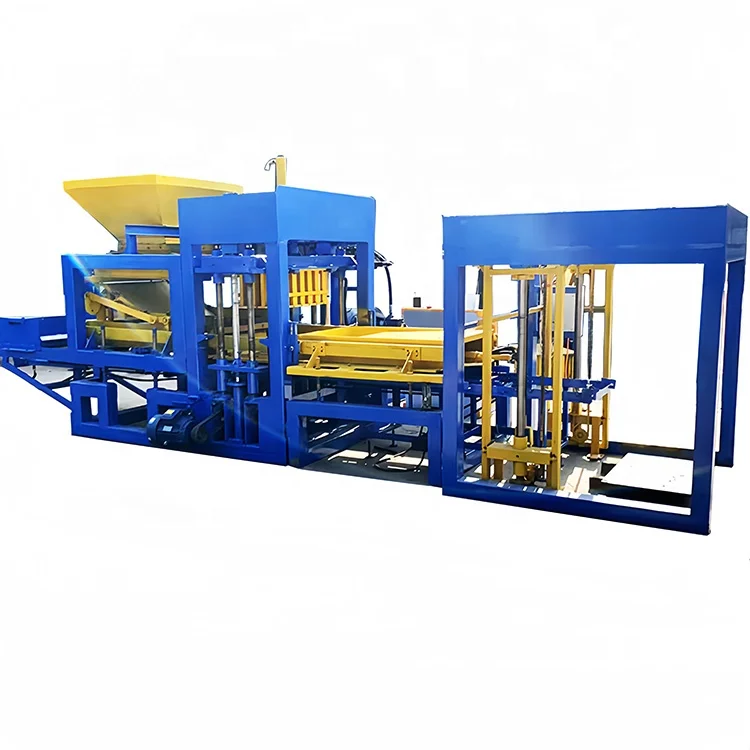
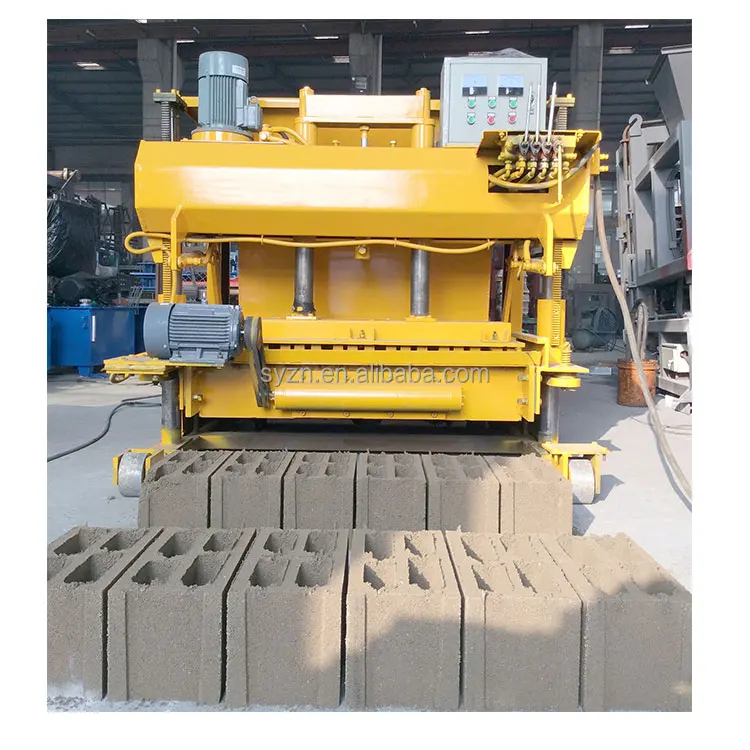
| Product Type | Mobile Egg-Laying Block Making Machine |
| Molding Capacity | 6 pcs/mold |
| Hydraulic Pressure | 16 MPa |
| Vibration Form | Mold Vibration |
| Molding Cycle | 20s–25s (basis not stated in source — confirm block format / material / thickness) |
| Turning Method | Hydraulic |
| Total Power | 9.6 kW |
| Total Mass | 2.5 Tons |
| Voltage & Frequency | Customizable according to buyer requirement |
| Control System | Configurable (PLC / relay logic — confirm at inquiry) |
| Mould Format | Interchangeable molds for hollow, solid, paving and other block types |
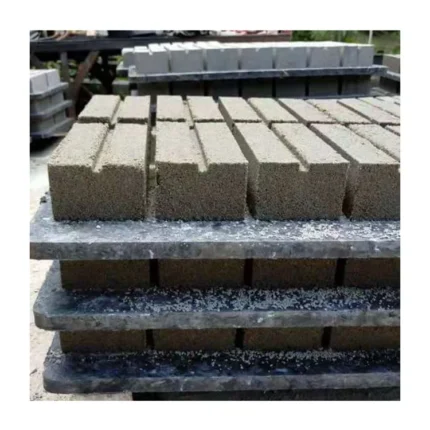
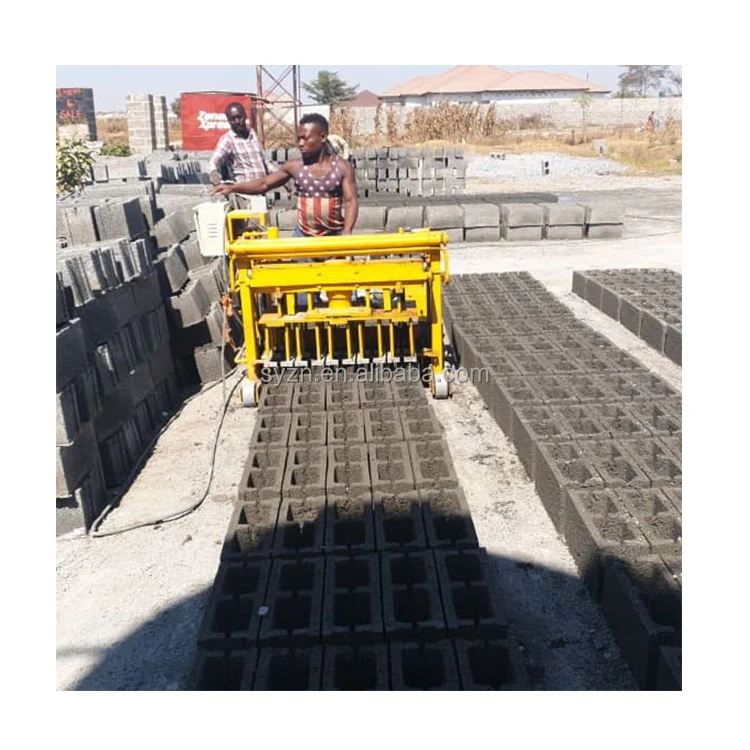
| Automation Level | Mobile egg-laying, no pallet required for curing on ground |
| Warranty | 1 year for whole machine (excluding spare parts) |
Application Suitability
| Application | Material or Output |
|---|---|
| On-site hollow block production for housing projects | Crushed stone, sand, cement and water mix laid directly on prepared ground |
| Solid block manufacturing at remote construction sites | Local aggregate and cement with no fixed plant infrastructure required |
| Paving block and interlocking brick runs for estate developers | Interchangeable molds on the same mobile platform across formats |
| First-stage block plant for entrepreneurs | Low-footprint egg-laying operation with upgrade path to pallet-based semi-automatic lines |
Why the Control Panel Language Must Be Confirmed Before the Machine Ships
An automatic mobile block making machine with unreadable PLC text is a manual machine by default.
I spent a week in Abidjan troubleshooting a line that sat idle because the touch-screen defaulted to a language the local crew could not parse. The hydraulic pressure was correct, the vibration timing was dialed in, but the operator could not acknowledge a fault code, so the entire egg-laying cycle was locked out. That delay cost the contractor more than the freight [NEED_CITE: common commissioning delays caused by unconfirmed HMI language in West African construction sites]. When you specify a PLC controlled egg-laying block machine, the display language, alarm text and button legends have to be locked into the build sheet alongside voltage and frequency — not treated as an afterthought once the crate is opened.
Matching the Control Logic to the Operator, Not the Catalogue
The Qmy6-25 runs a mold-vibration cycle governed by a control system that can be configured from basic relay logic through to a full PLC with multi-language HMI. The choice depends on who will be standing next to the machine. A contractor rotating crews across a housing development benefits from a PLC with icon-based navigation and alarm descriptions in the local language, while a small-scale producer in a region with limited technician access may prefer relay logic that a local electrician can troubleshoot with a multimeter. Specifying the automatic mobile block making machine at the right automation tier avoids paying for intelligence that the site cannot maintain.
Configuring Voltage and Frequency Against the Actual Grid
A 9.6 kW motor package drawing on a 380 V / 50 Hz supply behaves very differently from the same package on a 440 V / 60 Hz grid common in parts of Latin America and West Africa [NEED_CITE: voltage and frequency standards by export market]. The Qmy6-25 is built with a customizable electrical configuration so the motor winding, contactor ratings and PLC power supply are matched to the buyer’s confirmed grid spec before assembly begins. This step is non-negotiable: a motor wound for the wrong frequency overheats within the first production shift, and the damage is rarely covered under standard warranty because the supply condition was outside the nameplate rating.
Reading the Pressure and Vibration Numbers Together
The 16 MPa hydraulic pressure and the mold-vibration system on the Qmy6-25 are not independent specs — they work as a pair. Hydraulic pressure compacts the mix vertically while the mold vibration settles fines into the voids between aggregate particles. If the vibration force is too low for a given pressure, the block comes out dense on the top face but crumbly at the base. If pressure is too low for the vibration amplitude, the block edges break during the hydraulic turning release. The cycle time of 20 s to 25 s is achievable only when both values are matched to the specific mix design, which is why the proposal stage must include the buyer’s local aggregate gradation and cement ratio rather than a catalogue default.
What Happens When Automation and Site Conditions Are Mismatched
Buyers who specify a high-automation PLC system without confirming the operating language, local electrical code and available technician support often find that the smartest machine on the site becomes the most vulnerable [NEED_CITE: automation system downtime caused by unconfirmed site conditions in emerging market block plants]. A fault code in an unfamiliar script halts production until someone can translate it. A voltage spike outside the PLC tolerance wipes the program. The hidden cost is not the repair — it is the idle crew, the missed delivery commitment and the loss of confidence from the project owner who is waiting for blocks.
Why Procurement Through This Channel Reduces Configuration Risk
Block machinery is the single focus here, so the Qmy6-25 is specified as a matched system of press, mold and control rather than assembled from unrelated suppliers. The configuration is set against the buyer’s actual mix design, local aggregate and target block format — not a catalogue default. Mould design covers the formats the buyer’s market actually sells, with custom drawings available when standard options do not fit. Automation level is selectable, meaning a buyer can start with relay logic and move to full PLC later without replacing the press. Factory testing includes a run on the buyer’s confirmed block format with photographic evidence before the machine is crated.
Documentation & Verification
- Capacity calculation sheet stating the exact hollow or paving block format used for the quoted cycle time
- Machine specification confirming voltage, frequency, PLC display language and hydraulic pressure before production starts
- Mould drawing and format list showing every block type the Qmy6-25 will produce on arrival
- Factory test record with photographs taken on the buyer’s target block format
- Operation and maintenance manual written in the confirmed site operating language
Installation, Commissioning & Support
- Ground preparation guidance matching the 2.5-ton machine mass and egg-laying travel path
- Electrical hookup spec for the 9.6 kW total power draw on the buyer’s confirmed voltage and frequency
- Hydraulic turning system commissioning with pressure set to match the buyer’s mix design
- PLC or relay control language verified on-site during the first production run
- Operator training covering mold change procedure and daily vibration system inspection
- Wear parts list with lead times for first mold and hydraulic seal replacements
What to Include in Your Inquiry
Send the block format you sell most — hollow, solid, paving or interlocking — along with the target daily output and the local aggregate you plan to use. Confirm your site voltage, frequency and the language your operators read. If you already run a mixer or loader, note the model so the feeding sequence can be matched.
Frequently Asked Questions
Q: How is daily output calculated per block format, and what cycle time applies to my specific hollow or paving block?
A: The 20 s to 25 s molding cycle is a starting reference that shifts depending on block height, mix stiffness and mold configuration. A tall hollow block requires a longer vibration phase than a thin paving block. The proposal includes a capacity table that states the assumed format, pieces per mold and resulting hourly output so the number you plan against matches what the Qmy6-25 actually produces on your mix.
Q: What PLC control options and display languages are available, and can the automation level be upgraded later?
A: The control system ranges from relay logic for sites with limited technical support through to a full PLC with multi-language HMI and icon-based navigation. Language and alarm text are confirmed before the machine is built. The automation tier can be raised later — sensors, auto-feeding and stacking modules can be added without replacing the Qmy6-25 press itself.
Q: How is the machine configured to match my local aggregate and mix design so block strength stays consistent?
A: The 16 MPa hydraulic pressure and mold vibration amplitude are set against the buyer’s submitted mix design and aggregate gradation during factory testing. If the local stone is angular and coarse, vibration duration is adjusted; if the sand is fine, pressure is tuned to avoid over-compaction. The test record ships with the machine as a baseline for the operator.
Q: What voltage and frequency configurations are supported, and how are they confirmed before shipment?
A: The 9.6 kW motor package, contactors and PLC power supply are wound and rated to the buyer’s confirmed grid specification — whether 380 V / 50 Hz, 440 V / 60 Hz or another combination. The voltage and frequency are written into the build sheet and verified on the factory test bench before crating, preventing the overheating and control failures that arise from mismatched supply.
Q: Which wear parts and mold components are included, and what is the lead time for first replacements?
A: The shipment includes a wear parts list covering hydraulic seals, vibration springs and mold liners specific to the Qmy6-25 configuration. First replacement lead times are stated in the proposal so the buyer can order spares before the originals reach end-of-life, avoiding an unplanned production stop on site.