Description
Configured for your automation reality — the QT10-15 block making machine is matched to your specific mix design and local aggregate rather than shipped as a catalogue default, so PLC parameters and vibration settings arrive calibrated for your actual production conditions.
Technical Specifications
| Parameter | Value |
|---|---|
| Model | QT10-15 |
| Product Type | Automatic Cement Block Making Machine |
| Control System | PLC control cabinet |
| Hydraulic System | Independent integrated hydraulic station |
| Vibration Mode | Vertical station mode resonance, automatic FM-AM |
| Mould Change | Simple replacement of mould for multi-format production |
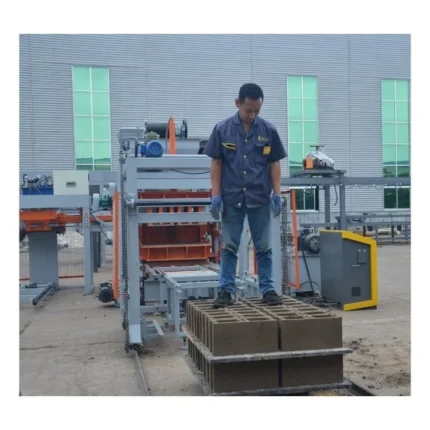
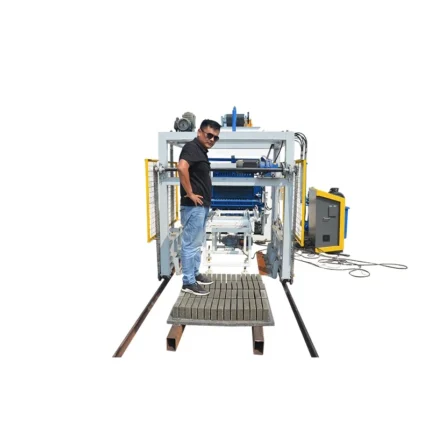
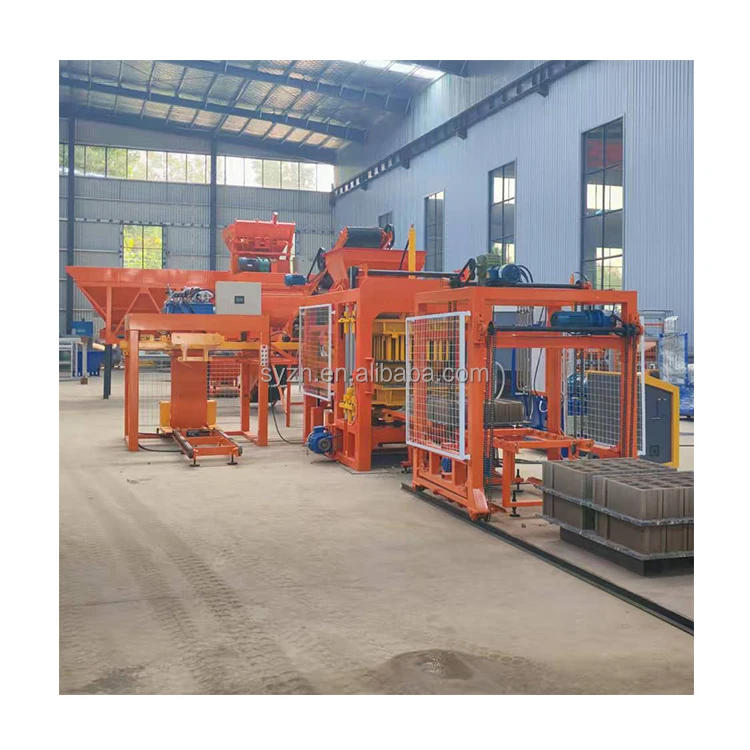
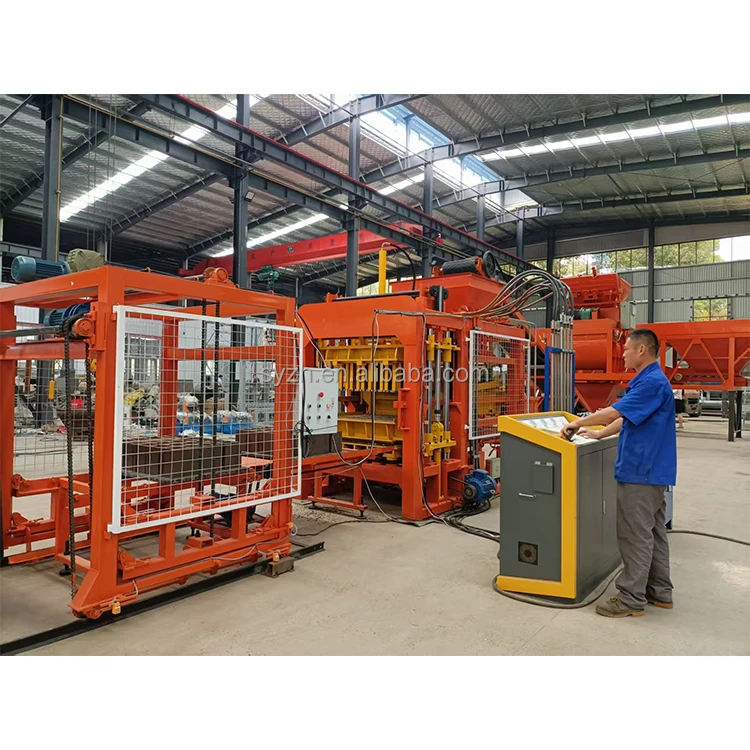
| Components Included | Pallet feed machine, block making machine, storage hopper, conveyor, hydraulic unit, PLC control cabinet |
| Output Capacity (400×200×200mm hollow block) | 1,800–2,400 pcs/hour, 14,400–19,200 pcs/8hr (basis: 10 pcs/mould, 15–20s cycle) |
| Output Capacity (400×150×200mm hollow block) | 2,160–2,880 pcs/hour, 17,280–23,040 pcs/8hr (basis: 12 pcs/mould, 15–20s cycle) |
| Output Capacity (240×115×53mm solid brick) | 8,928–11,160 pcs/hour, 71,424–89,280 pcs/8hr (basis: 62 pcs/mould, 15–20s cycle) |
| Output Capacity (200×100×60mm paving block) | 5,184–6,480 pcs/hour, 41,472–51,840 pcs/8hr (basis: 27 pcs/mould, 20–25s cycle) |
| Output Capacity (225×112.5×60mm paving block) | 4,032–5,040 pcs/hour, 32,256–40,320 pcs/8hr (basis: 24 pcs/mould, 20–25s cycle) |
| Cycle Time (hollow block) | 15–20s |
| Cycle Time (paving block) | 20–25s |
| Automation Level | Automatic |
| Warranty | 1 year for the whole machine (excluding spare parts) |
| Rated Power (kW) | Not stated — confirm with manufacturer |
| Voltage & Frequency | Not stated — confirm with manufacturer |
| Overall Dimensions (L×W×H) | Not stated — confirm with manufacturer |
| Net Weight | Not stated — confirm with manufacturer |
| Pallet Size | Not stated — confirm with manufacturer |
| Hydraulic Pressure (MPa) | Not stated — confirm with manufacturer |
| Vibration Force (kN) | Not stated — confirm with manufacturer |
| PLC Display Language | Not stated — confirm with manufacturer |
| Mould Change Time | Not stated — confirm with manufacturer |
Application Suitability
| Application | Material or Output |
|---|---|
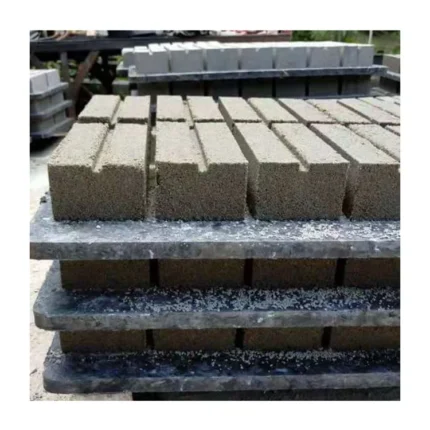
| Hollow block production | Crushed stone, sand, cement, and water mix for structural wall blocks |
| Multicellular brick production | Lightweight aggregate blends for partition and infill bricks |
| Paving block production | Fine aggregate and cement blends for pedestrian and light-traffic surfaces |
| Standard solid brick production | Dense aggregate and cement for load-bearing masonry units |
| Construction contractor on-site production | Local quarry materials processed directly at project location |
| Concrete product manufacturer format expansion | Additional mould sets for kerbstones, interlocking bricks, or porous bricks |
What "Cycles Per Hour" Leaves Out About the automatic QT10-15 block machine PLC controlled
Cycle speed means nothing unless you know which block format and mould cavity count that number assumes.
I spent years on assembly floors watching machines get shipped with a single throughput figure printed on the spec sheet. Buyers would receive their equipment, start production on their target block size, and immediately notice output falling well below what they planned their contracts around. The problem was never the machine itself — it was the gap between a catalogue cycle time measured on one specific mould and the reality of producing a different format with a different mix. The automatic QT10-15 block machine PLC controlled addresses this by storing cycle parameters per format in the PLC, so switching from hollow blocks to pavers recalibrates vibration duration and press timing automatically [NEED_CITE: PLC parameter storage for multi-format block production].
How PLC Logic Manages the Full Pressing Sequence
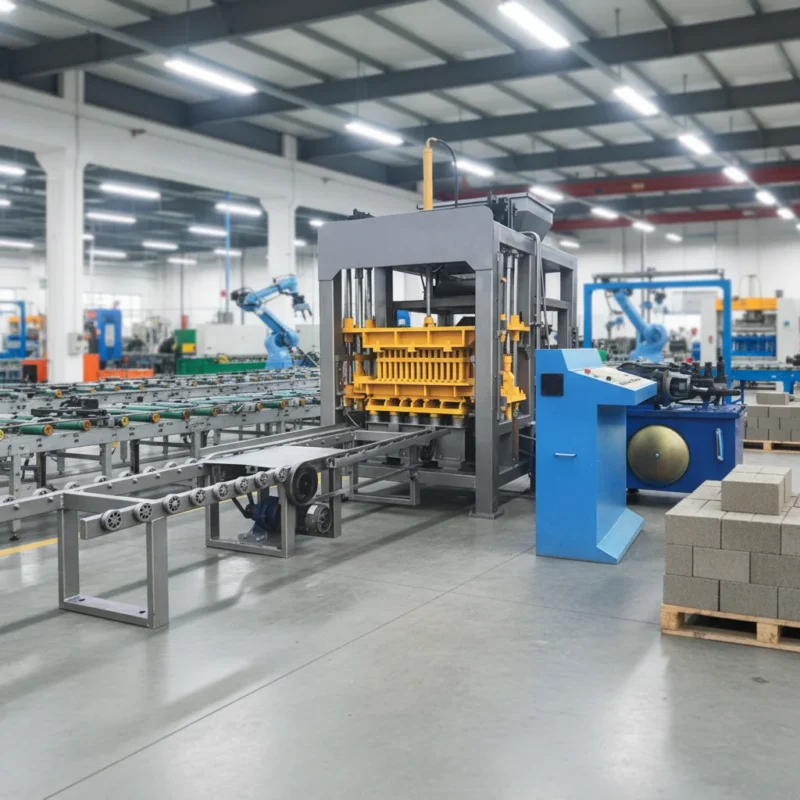
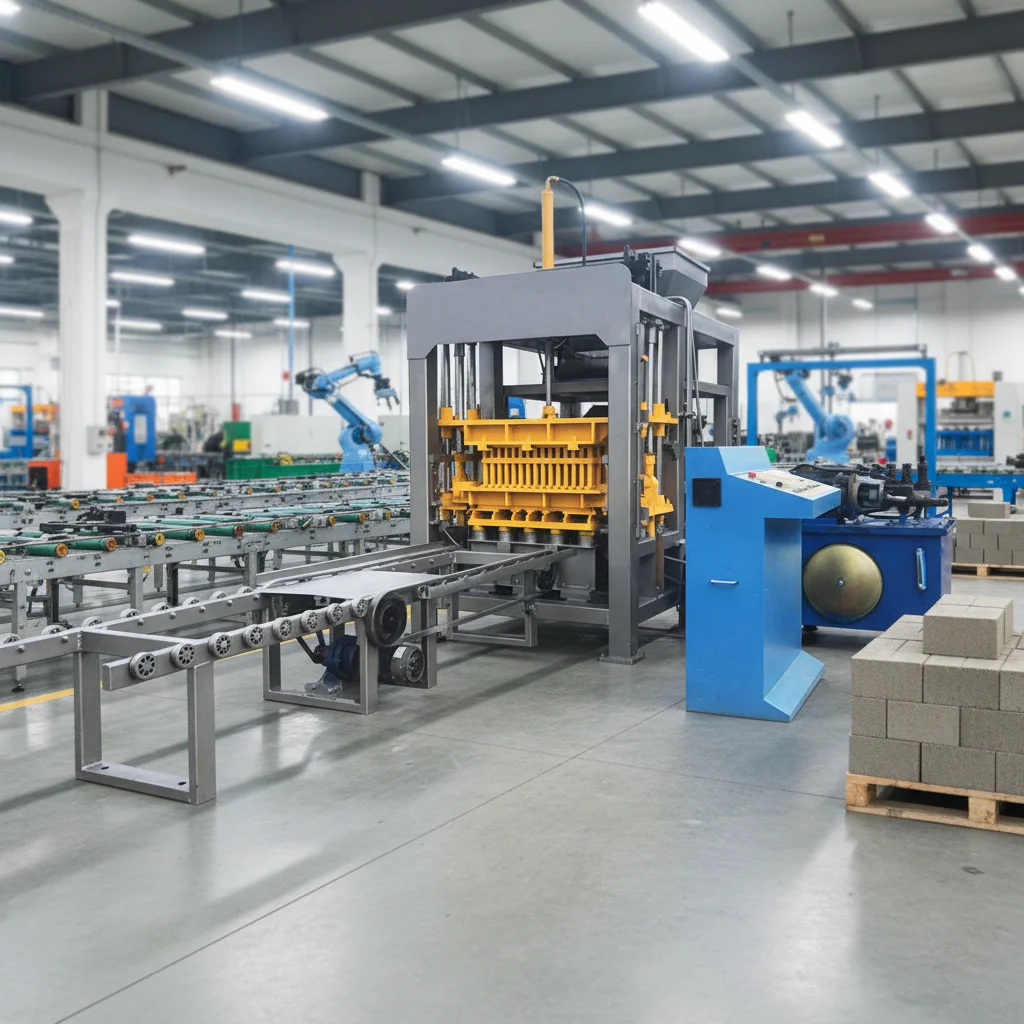
The PLC control cabinet on this automatic QT10-15 block machine PLC controlled coordinates pallet feeding, material distribution from the storage hopper, vibration activation, hydraulic press engagement, and block ejection as one continuous sequence. Each step triggers the next based on sensor feedback rather than fixed timers, which means the system adapts when a pallet arrives slightly late or the mix consistency varies between batches. For an operator, this removes the need to manually watch each station and intervene when timing drifts. The automation level means the line runs with minimal manual pallet handling, which is where semi-automatic setups typically lose the most time per shift.
Where Independent Hydraulics Meet Vibration Control
The integrated hydraulic station sits physically separated from the main press frame, connected by hoses rather than bolted directly to the vibrating structure. This isolation matters because vertical station mode resonance generates substantial force through the mould box, and transmitting that vibration into hydraulic valves and pump assemblies accelerates seal wear and causes pressure inconsistency over time [NEED_CITE: hydraulic component degradation under vibration exposure]. By keeping the station independent, oil temperature remains more stable and valve response stays consistent across a full production shift. The automatic FM-AM vibration system adjusts frequency and amplitude depending on which block format is running, delivering higher amplitude for dense pavers and tuned frequency for lighter hollow blocks.
Reading the Specs That Actually Determine Block Quality
Hydraulic pressure and vibration force work together to achieve target block density — pressure alone compresses the mix, but vibration rearranges aggregate particles into a tighter packing arrangement before pressure locks them in place. The mould cavity count determines how many blocks form per cycle, which directly multiplies into hourly output when combined with cycle time. Pallet size must align with both the mould footprint and the buyer’s existing curing rack dimensions, because a mismatch means blocks cannot be racked without manual rehandling. The cycle time difference between hollow blocks and paving blocks reflects the additional compaction duration that denser formats require, not a machine limitation.
When Automation Configuration Goes Wrong at Commissioning
A buyer who skips voltage and frequency confirmation before production often discovers on arrival that the PLC cabinet does not match local three-phase supply standards, requiring transformer installation or motor rewinding before the line can start. Language settings on the PLC display, if not specified in advance, leave operators reading fault codes in an unfamiliar language during the critical first weeks of operation [NEED_CITE: PLC display language configuration for export machinery]. These are not machine defects — they are configuration gaps that delay commissioning by days or weeks and erode the productivity gains the buyer invested in automation to achieve.
Why Procurement Here Means Configuration Before Shipment
Every automatic QT10-15 block machine PLC controlled order begins with a line layout and capacity calculation that states output per specific block format the buyer intends to produce, not a generic hourly figure. The mould design process accounts for the buyer’s target block dimensions, pallet size, and local market requirements before steel is cut. Voltage, frequency, and PLC display language are confirmed during the order stage so the control cabinet arrives ready to connect. Factory testing runs the actual mould set the buyer ordered, producing sample blocks that verify cycle time and density before the machine is dismantled for shipment. Hydraulic and electrical schematics ship with the documentation package, giving the buyer’s maintenance team the references they need from day one.
Documentation & Verification
- Line layout and capacity sheet stating output per your target block format and mould cavity count
- Mould drawing with block dimensions and pallet size matched to your curing infrastructure
- Hydraulic schematic showing independent station routing and valve specifications
- PLC I/O map with display language confirmed to your operator preference
- Factory test record running your ordered mould set before dispatch
- Voltage and frequency confirmation document matching your site electrical supply
Installation, Commissioning & Support
- Foundation plan sized to the QT10-15 press weight and vibration isolation requirements
- Dedicated three-phase circuit matching confirmed voltage and frequency before cabinet connection
- Pallet feed machine alignment to press entry ensuring smooth pallet transfer without jamming
- PLC parameter loading for each ordered mould format during first-week commissioning
- Operator training covering PLC fault codes, mould change procedure, and daily maintenance checks
- Wear parts list with hydraulic seal and vibration component replacement intervals
What We Need From You to Configure the Line
Tell us the block formats your market actually sells — hollow block, paving block, solid brick — and the daily volume you need per format. Share your local aggregate type and any material constraints, because mix composition affects vibration tuning and cycle parameters. Confirm your site voltage, frequency, and preferred PLC display language so the control cabinet arrives configured for your electrical supply and your operators [NEED_CITE: electrical standards for industrial machinery by region].
Frequently Asked Questions
Q: How is output capacity verified for each block format on this machine?
A: Output is calculated by multiplying mould cavity count by cycles per hour, with cycle time varying by format. Hollow blocks run shorter cycles while pavers require longer compaction. The capacity sheet provided with your quotation states output per specific format rather than a single blanket number.
Q: What automation functions does the PLC control versus semi-automatic operation?
A: The PLC manages pallet feeding, material distribution, vibration sequencing, hydraulic press timing, and block ejection as one coordinated cycle. Semi-automatic machines require manual pallet handling and operator-triggered press cycles. The QT10-15 reduces operator dependency and improves batch-to-batch density consistency.
Q: How are voltage and PLC language handled for different export markets?
A: Voltage, frequency, and PLC display language are confirmed during the order stage before cabinet assembly. This prevents commissioning delays caused by incompatible power supply or unreadable fault codes. The confirmation document ships with the machine for your electrical contractor’s reference.
Q: What does mould changeover involve in practice?
A: The mould is unbolted from the press, the replacement mould is positioned and secured, and the PLC is switched to the stored parameter set for that format. Simple mould replacement enables multi-format production on a single press, though changeover time should be confirmed based on your specific mould configuration.
Q: Why does the hydraulic station sit separately from the press frame?
A: Vibration from the press would accelerate seal wear and cause pressure fluctuation in hydraulic components mounted directly on the frame. Physical isolation keeps oil temperature stable and valve response consistent, extending service intervals and maintaining compaction force uniformity across production shifts.