


Description
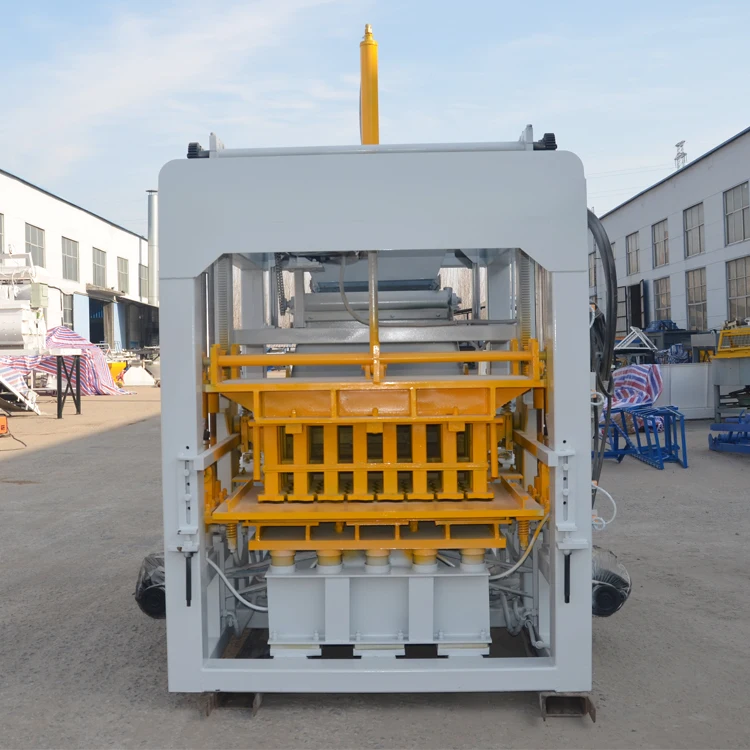
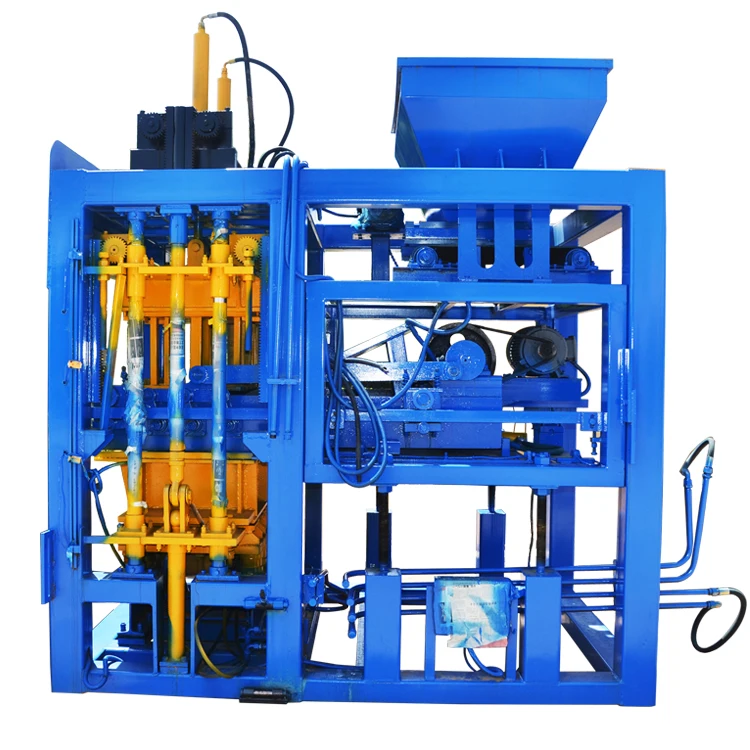
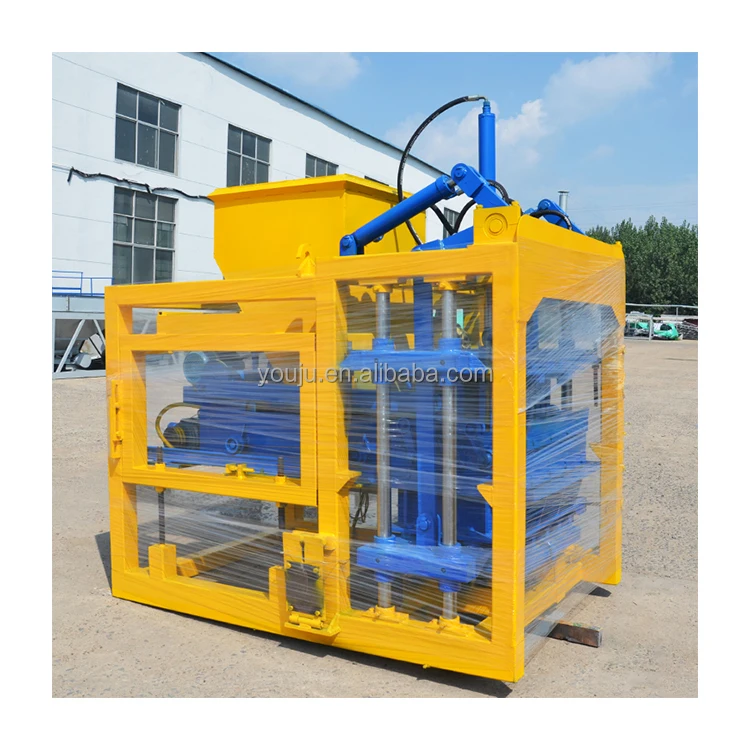
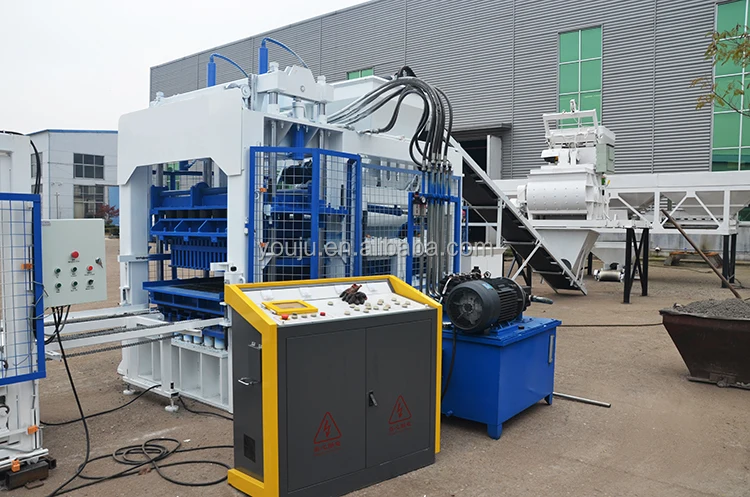
Single Focus on Block Machinery — Machine, mould, pallet and handling are specified as one matched system around the QT10-15 press rather than assembled from separate suppliers.
Technical Specifications
| Parameter | Value |
|---|---|
| Model | QT10-15 |
| Product Type | Fully Automatic Concrete Block Making Machine |
| Overall Dimensions (L×W×H) | 9350×2320×2950 mm |
| Rated Pressure | 21 MPa |
| Main Vibration Form | Platform vibration |
| Vibration Frequency | 4500–5100 r/min |
| Pallet Size | 1100×900 mm |
| Moulding Area | 1025×810 mm |
| Forming Height | 40–250 mm |
| Molding Cycle | 15–25 s |
| Overall Power | 44 kW |
| Mixer Model | JS750 |
| General Water Consumption | 12 T/day |
| Voltage | Customized to local request (confirm frequency and phase with buyer) |
| Control System | PLC (Mitsubishi electric) |
| Hydraulic Unit | Taiwan Jiugang |
| Switches | Omron |
| Electrical Elements | Schneider |
| Host Machine & Mixer Motor | Siemens |
| Other Motors | European CE standard |
| Mould Treatment | High temperature carburizing heat treatment |
| Block Productivity (400×200×200 mm hollow block) | 10 pcs/mould, 1800–2400 pcs/h, 14400–19200 pcs/8h |
| Block Productivity (400×150×200 mm hollow block) | 12 pcs/mould, 2160–2880 pcs/h, 17280–23040 pcs/8h |
| Block Productivity (240×115×90 mm solid brick) | 52 pcs/mould, 9360–12480 pcs/h, 74880–99840 pcs/8h |
| Automation Level | Fully automatic (basis not stated in source — confirm whether stacking, cubing and pallet handling are included) |
Application Suitability
| Application | Material or Output |
|---|---|
| Hollow block production | Crushed stone, sand, cement and fly ash blends for load-bearing and partition walls |
| Solid brick production | Cement-based mixes for structural and infill masonry |
| Paving block production | High-density concrete for pedestrian and vehicular surfaces |
| Interlocking brick production | Interlocking profile concrete for retaining and landscape walls |
| Kerbstone production | Reinforced concrete mixes for road edge and drainage channels |
| Fly ash brick production | Fly ash, lime and gypsum blends for lightweight masonry units |
Why "Fully Automatic" Needs a Line-by-Line Definition
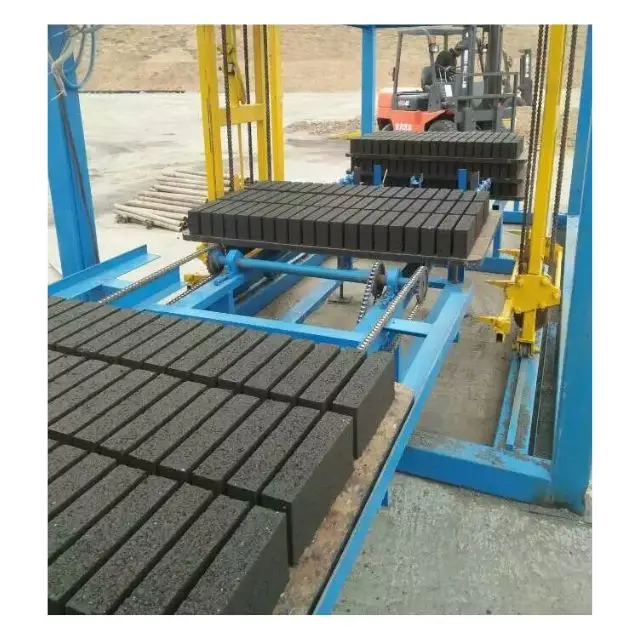
An automatic QT10-15 block machine PLC controlled press cycle means nothing if pallets are still fed by hand at the infeed station. Clarify which stations are automated before you compare quotations.
I have watched plant owners sign for a fully automatic line and then discover the quotation covered the press alone. Pallets were loaded manually, wet blocks were stacked by hand on the curing floor, and the promised cycle time collapsed because the operator could not keep up. The press sat idle between every third cycle. [NEED_CITE: typical block plant automation station breakdown]
This machine coordinates moulding, vibration and hydraulic sequence through the Mitsubishi PLC. Whether that intelligence extends to pallet feeding, automatic stacking, cubing and curing rack handling is a separate conversation — one that must happen before the purchase order.
What the PLC Actually Controls on This Press
The Mitsubishi PLC manages the moulding cycle, vibration timing and hydraulic pressure sequence so the operator does not manually trigger each stage. The automatic QT10-15 block machine PLC controlled logic holds the cycle within 15–25 seconds depending on block format and mix consistency, reducing the variability that comes from operator fatigue during long shifts.
Where Automation Stops and Manual Labour Begins
The critical gap in most quotations is the boundary between the press and the rest of the line. Pallet feeding, wet block stacking, curing rack transfer and return pallet handling are separate stations that each require their own automation decision. A press cycling every 18 seconds produces a pallet of blocks roughly every third of a minute. If the stacking station cannot match that rhythm, the PLC simply waits — and your daily output drops regardless of what the press is rated for. [NEED_CITE: block plant throughput losses from bottleneck stations]
Pressure, Vibration and What They Mean for Block Density
The 21 MPa rated hydraulic pressure works together with platform vibration at 4500–5100 r/min to compact the concrete mix inside the mould cavity. Higher pressure alone does not guarantee density; the vibration must fluidise the mix so the pressure can close voids evenly across the moulding area of 1025×810 mm. When pressure and vibration are mismatched to the buyer’s aggregate gradation, blocks come out with hard edges but a soft core — a defect that only shows up during the drop test at the construction site.
The moulding area determines how many blocks fit per cycle. A 400×200×200 mm hollow block fits 10 per mould, while a 240×115×90 mm solid brick fits 52. The forming height range of 40–250 mm means the same press can produce thin pavers and tall kerbstones with a mould change, provided the new mould matches the pallet size of 1100×900 mm and the hydraulic stroke is recalibrated. Siemens motors on the host machine and JS750 mixer sustain continuous operation without the thermal derating that smaller motors suffer after several hours under load.
The Cost of Skipping the Voltage and Language Check
Arriving at a job site in Colombia, I found a block machine still in its container because the control panel was wired for 50 Hz and the local grid runs at 60 Hz. The PLC display was in a language the operators could not read. Two weeks of production lost before the first block was made. Voltage, frequency, phase and PLC display language must be confirmed in writing before production starts — not after the machine is bolted to the floor. [NEED_CITE: voltage and frequency standards by export market]
Why Procurement Through a Block Machinery Specialist Differs
Block machinery is a single focus here, so the QT10-15 press, its moulds, pallets and handling equipment are specified as one system rather than pulled from unrelated catalogues. Configuration is set against your actual mix design, local aggregate and target block format — not a default template. Mould design covers the formats your market actually sells, including custom drawings when standard sizes do not match. Automation level is selectable, so a buyer can begin with semi-automatic pallet handling and add stacking later. Installation includes on-site commissioning with operator training so the crew understands PLC fault codes before the technician leaves.
Documentation & Verification
- Factory test record documenting cycle time and pressure settings for your target block format
- Machine specification sheet with confirmed voltage, frequency and PLC display language
- Mould drawing and format list showing every cavity dimension and product type covered
- Hydraulic and electrical schematic for on-site troubleshooting by your maintenance team
- Wear parts and mould list with part numbers for reordering high-frequency replacements
- Packing photographs taken before container loading for damage verification on arrival
Installation, Commissioning & Support
- Foundation must accommodate the 9350×2320 mm footprint and 44 kW power draw with a dedicated circuit breaker
- Voltage and phase confirmed against local grid before the host machine and Siemens motors are energised
- Mitsubishi PLC display language and fault codes verified with operators during commissioning
- JS750 mixer and water supply line calibrated to achieve the 12 T/day consumption rate for your mix
- High temperature carburized moulds inspected and forming height calibrated between 40–250 mm on your block format
- Hydraulic seal and vibration bearing spare kit supplied so first replacement does not halt the line
What to Prepare Before Requesting a Quotation
Share your target block formats with dimensions, the daily output you need per format, and the raw materials available locally — including aggregate type and maximum particle size. Confirm your site voltage, frequency and phase, along with the preferred PLC display language. Let us know your existing pallet size and curing area dimensions so the handling stations can be matched. If you are replacing an older press, describe the upstream mixer and downstream stacking setup so the QT10-15 integrates without creating a new bottleneck.
Frequently Asked Questions
Q: How is capacity verified per block format and what cycle time does each figure assume?
A: Capacity is stated per format with the mould cavity count and cycle time range. For a 400×200×200 mm hollow block, 10 pieces per mould at a 15–25 second cycle yields 1800–2400 pieces per hour. Your actual output depends on mix workability, pallet change speed and whether stacking keeps pace with the press.
Q: What does "fully automatic" include in this quotation?
A: The automation level must be confirmed station by station. The press itself runs on PLC-controlled cycles, but pallet feeding, wet block stacking, cubing and curing rack handling are separate line items. Each station must be specified individually so the line runs without manual bottlenecks.
Q: Can the PLC display language and voltage match my plant before shipment?
A: Yes. Voltage, frequency, phase and Mitsubishi PLC display language are confirmed in writing before production begins. The factory test record documents these settings so the control panel matches your local grid and operator language upon arrival.
Q: How do I upgrade from a semi-automatic press without replacing the entire line?
A: If your existing mixer, pallet return conveyor and curing racks are sized for higher throughput, the QT10-15 press can replace the old unit while keeping the rest of the line. Confirm pallet size compatibility and ensure the PLC automation level matches your current handling setup.