

Description
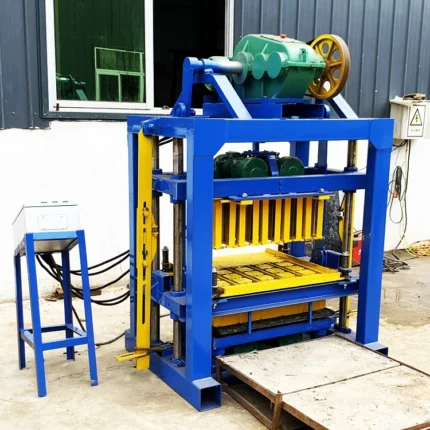
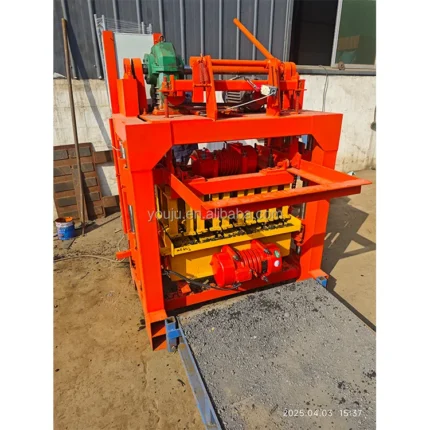
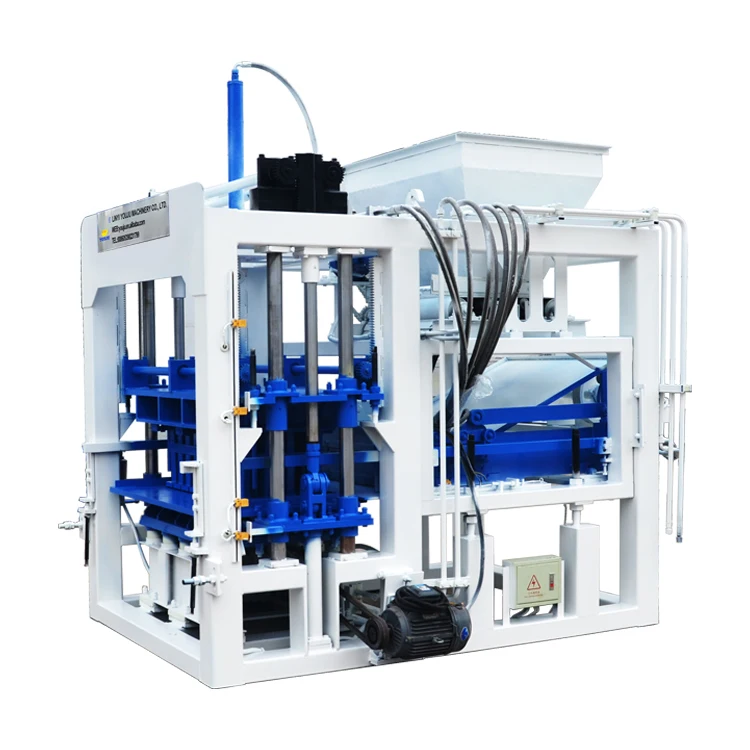
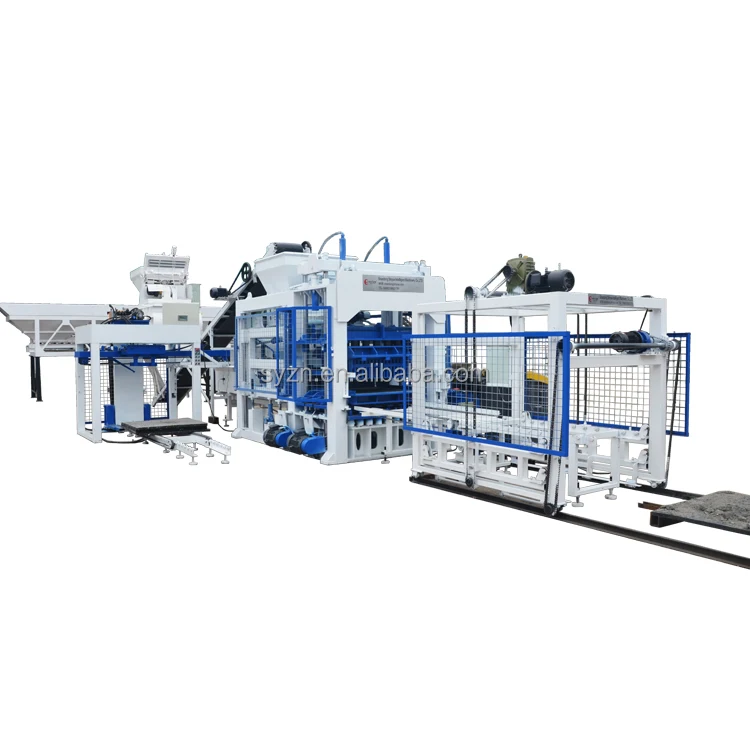
Intelligent System Integration — The QT10-15 automatic PLC controlled concrete block making machine coordinates pallet feed, hydraulic pressing, and material discharge through a single programmable logic sequence rather than independent relay switches [NEED_CITE: PLC control standards for concrete block machinery].
Technical Specifications
| Parameter | Value |
|---|---|
| Model | QT10-15 |
| Product Type | Stationary Fully Automatic Hydraulic Concrete Block Making Machine |
| Control System | PLC control cabinet |
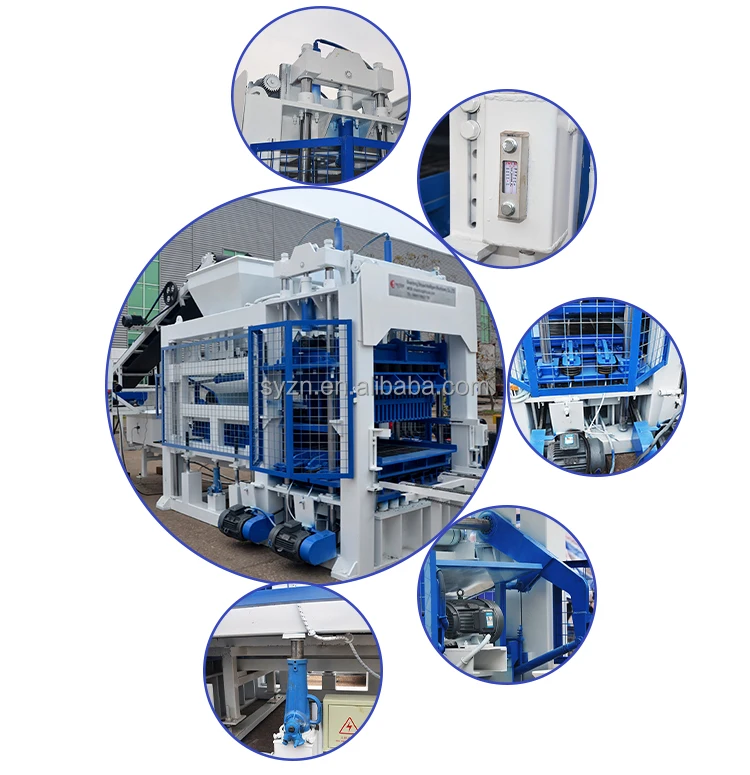
| Hydraulic System | Independent integrated hydraulic station |
| Vibration Mode | Vertical station mode resonance, automatic FM-AM |
| Automation Level | Fully automatic |
| Assembly State | Stationary (fixed plant) |
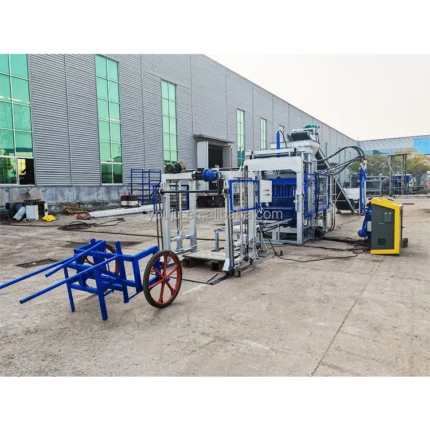
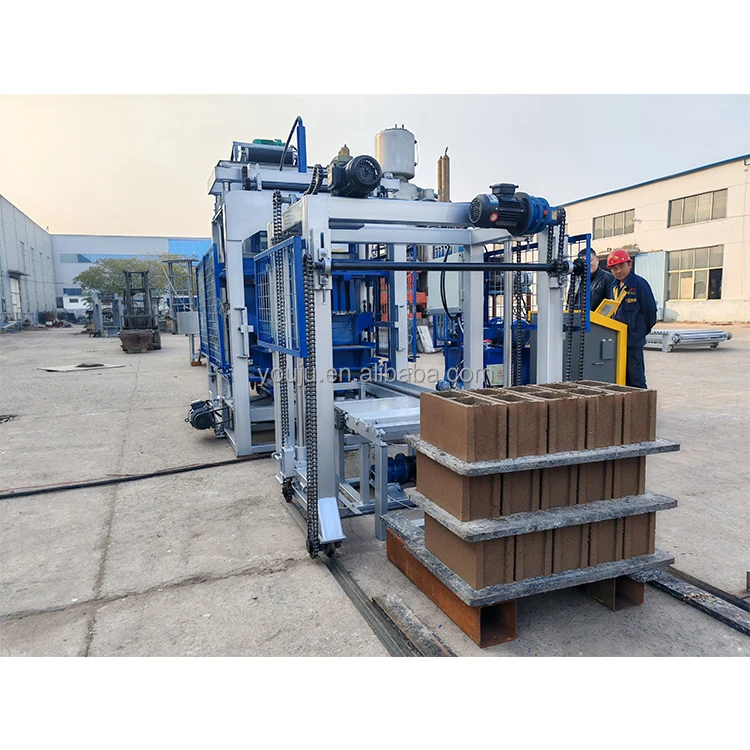
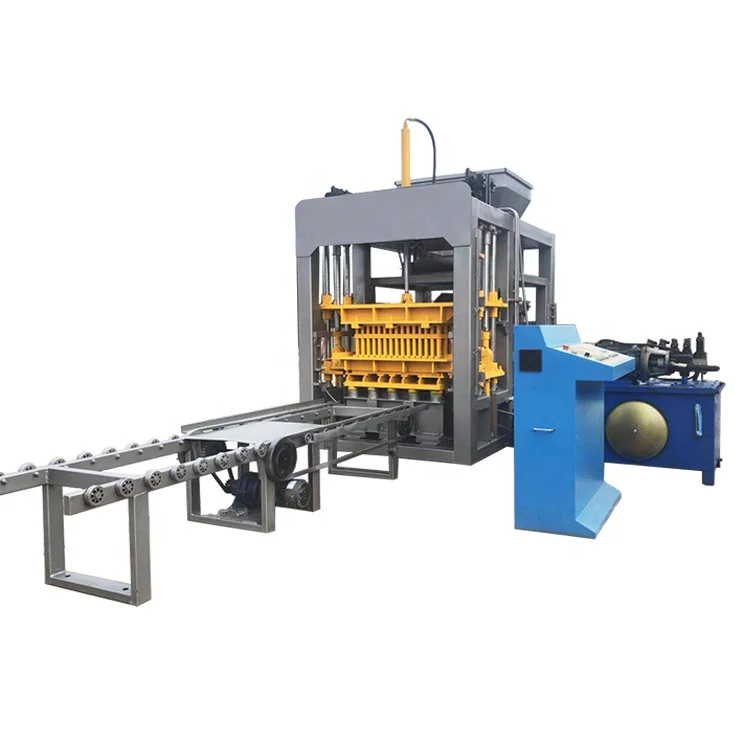
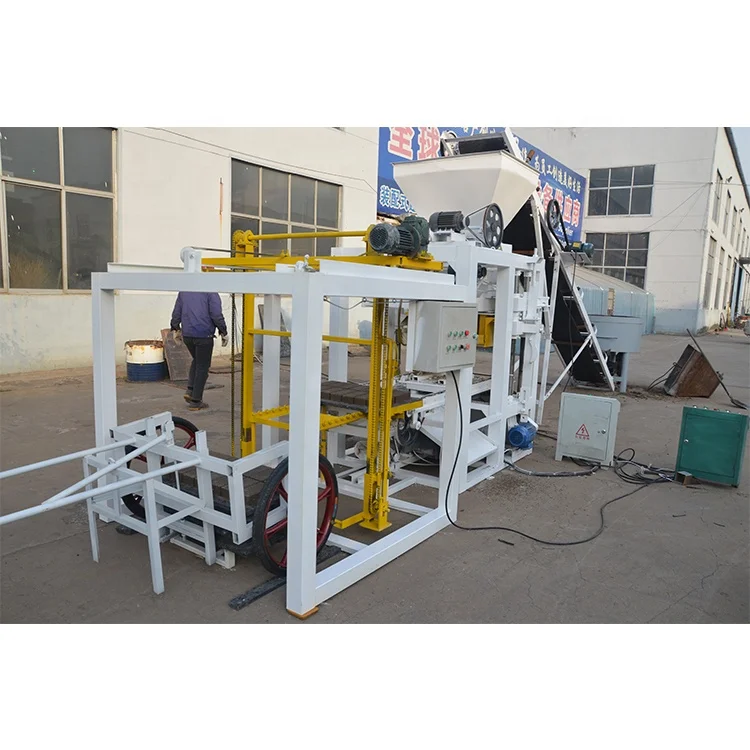
| Component List | Pallet feed machine, block making machine, storage hopper, conveyor, hydraulic unit, PLC control cabinet |
| Cycle Time (400×200×200mm hollow block) | 15-20 seconds |
| Qty/Mould (400×200×200mm) | 10 pcs |
| Output Capacity (400×200×200mm hollow block) | 1800-2400 pcs/hour (14400-19200 pcs/8hr shift) |
| Cycle Time (400×150×200mm block) | 15-20 seconds |
| Qty/Mould (400×150×200mm) | 12 pcs |
| Output Capacity (400×150×200mm block) | 2160-2880 pcs/hour (17280-23040 pcs/8hr shift) |
| Cycle Time (240×115×53mm solid brick) | 15-20 seconds |
| Qty/Mould (240×115×53mm) | 62 pcs |
| Output Capacity (240×115×53mm solid brick) | 8928-11160 pcs/hour (71424-89280 pcs/8hr shift) |
| Cycle Time (200×100×60mm paving block) | 20-25 seconds |
| Qty/Mould (200×100×60mm) | 27 pcs |
| Output Capacity (200×100×60mm paving block) | 5184-6480 pcs/hour (41472-51840 pcs/8hr shift) |
| Cycle Time (225×112.5×60mm interlocking brick) | 20-25 seconds |
| Qty/Mould (225×112.5×60mm) | 24 pcs |
| Output Capacity (225×112.5×60mm interlocking brick) | 4032-5040 pcs/hour (32256-40320 pcs/8hr shift) |
| Mould Change | Simple replacement for multi-format production |
| Warranty | 1 year for whole machine (excluding spare parts) |
| Rated Power | To be confirmed with manufacturer |
| Voltage & Frequency | To be confirmed with manufacturer |
| Overall Dimensions | To be confirmed with manufacturer |
| Pallet Size | To be confirmed with manufacturer |
Application Suitability
| Application | Material or Output |
|---|---|
| Hollow block production | Crushed stone, sand, cement, fly ash aggregates |
| Multi-cellular brick production | Lightweight aggregate and cementitious binders |
| Paving block production | Dense aggregate blends with pigment additives |
| Standard solid brick production | River sand, quarry dust, cement mixes |
| Interlocking brick production | Graded aggregate with controlled moisture content |
| On-site contractor production | Locally sourced aggregate at housing project locations |
What the Control Panel Language Means for Your First Production Week
A PLC screen showing text the operator cannot read turns a commissioning visit into a waiting period.
When I supported the commissioning of a QT10-15 automatic PLC controlled concrete block making machine in Eastern Europe, the default display language on the control cabinet was set to Chinese. The local operators could not navigate fault codes, adjust cycle parameters, or acknowledge alarms. Four days passed before the language pack was updated and production could begin [NEED_CITE: PLC display language requirements for export machinery]. That delay was not caused by the machine itself but by a confirmation step that was skipped during the order process. Voltage, frequency, and interface language must be locked before the control cabinet enters assembly.
How Programmable Logic Replaces Manual Timing Decisions
The PLC control cabinet on the QT10-15 manages the full production sequence from pallet indexing through material feed, vibration compaction, hydraulic pressing, and block discharge. Each station operates on a coordinated timer rather than operator judgment, which removes the variation that occurs when different shifts run the press at slightly different rhythms. The automatic PLC controlled concrete block making machine stores cycle parameters per mould, so switching from hollow blocks to paving blocks loads a pre-set timing profile instead of requiring manual recalibration at each station.
Vibration Tuning That Adapts to Your Aggregate
The vertical station mode resonance system uses automatic FM-AM vibration tuning, which adjusts compaction frequency and amplitude based on the resistance the mould presents. Dense aggregate blends for paving blocks demand different energy input than lightweight mixes for hollow blocks. This automatic tuning removes the need for the operator to manually select vibration intensity, reducing the chance of under-compacted blocks in one format and over-stressed moulds in another [NEED_CITE: vibration compaction principles in concrete block production]. The system responds to actual conditions inside the mould rather than relying on a fixed setting chosen at the factory.
Reading the Capacity Table Without Misinterpreting the Numbers
The output figures for the QT10-15 vary significantly depending on the block format in production. At 10 pieces per mould with a 15-20 second cycle, the 400×200×200mm hollow block reaches 1800-2400 pieces per hour. The same machine producing 240×115×53mm solid bricks at 62 pieces per mould reaches 8928-11160 pieces per hour. These are not different machines — they are the same press operating at different mould densities. Buyers comparing this automatic PLC controlled concrete block making machine against alternatives must ensure the comparison uses the same block format and cycle time assumption. Paving blocks at 20-25 seconds per cycle produce fewer pieces per hour than hollow blocks because the denser aggregate and higher compaction requirement extend the cycle. Planning daily plant output requires multiplying the format-specific hourly figure by actual running hours, subtracting mould change time and planned stops.
The Cost of Skipping the Electrical Confirmation
Buyers who confirm price and lead time but leave voltage and frequency unspecified risk receiving a machine that cannot connect to the local supply without a transformer or frequency converter. A 50Hz motor running on 60Hz supply spins faster and draws different current, which affects the hydraulic pump output and vibration motor behaviour. The PLC itself may tolerate a voltage range, but the hydraulic solenoids and vibration motors do not. Correcting this after the QT10-15 arrives on site means sourcing a transformer, reconfiguring wiring, and potentially replacing motors — all of which extend the gap between container arrival and first production run [NEED_CITE: voltage and frequency standards by export market].
Why Sourcing the Machine and Line Together Matters
The QT10-15 is specified as a matched system: the block making machine, pallet feed machine, storage hopper, conveyor, hydraulic unit, and PLC control cabinet are configured to operate at compatible cycle rates. When a buyer sources the press from one supplier and pallet handling from another, the pallet feed speed may not match the press cycle, leaving the machine idle between strokes. The independent integrated hydraulic station is isolated from the host vibration and dust environment, which protects valve blocks and seals from the particulate contamination that accelerates wear in concrete production environments. Mould design is matched to the pallet size and vibration characteristics of this specific platform, ensuring that compaction energy transfers fully into the mix rather than dissipating through dimensional mismatch. Factory testing runs the complete sequence with the buyer’s specified mould installed, documenting actual cycle times per format before the machine is dismantled for shipment.
Documentation & Verification
- Line layout showing station spacing and pallet flow path for your block format
- Capacity calculation sheet stating output per format with cycle time assumptions
- Hydraulic and electrical schematics for local maintenance team reference
- Voltage, frequency, and PLC display language confirmation record before assembly
- Factory test record documenting cycle times for each specified mould
- Operation and maintenance manual in the confirmed PLC display language
Installation, Commissioning & Support
- Foundation must accommodate the stationary footprint and vibration isolation requirements of the QT10-15 platform
- Dedicated electrical circuit matching confirmed voltage and frequency must be available before the PLC cabinet connects
- Machine arrives dismantled for container loading; reassembly aligns the press, conveyor, and pallet feed to factory-set datum points
- Commissioning includes loading the PLC parameters for each specified mould and running test cycles to verify format output
- Operator training covers the PLC interface in the confirmed language, fault code recognition, and daily maintenance intervals
- Wear parts list identifies hydraulic seals, vibration springs, and mould liners with replacement intervals
What We Need to Configure Your QT10-15
To prepare a specification that matches your actual production requirements, share the block formats you intend to produce with target daily volumes for each. Confirm the local voltage, frequency, and the language your operators will use on the PLC display. Let us know the aggregate types available in your area so the vibration parameters can be set to match your mix design rather than a generic default.
Frequently Asked Questions
Q: How is output capacity verified per block format before shipment?
A: The factory test runs each specified mould through a timed production sequence on the QT10-15. Cycle times are recorded for every format, and the results are documented in a test record that accompanies the machine. This ensures the capacity figures you plan against reflect actual press behaviour with your chosen moulds, not a catalogue estimate based on a different format.
Q: What automation functions does the PLC control cover on this machine?
A: The PLC cabinet manages pallet indexing, material feed timing, vibration duration and intensity, hydraulic press stroke, and block discharge sequencing. Each mould profile stores its own parameter set, so format changes load the correct timing automatically. The system reduces operator dependency for cycle execution while maintaining batch-to-batch consistency across long production shifts.
Q: What electrical and language details are confirmed before production begins?
A: Voltage, frequency, and PLC display language are confirmed during the order stage and documented before the control cabinet enters assembly. This prevents the situation where a machine arrives on site with an interface the local team cannot read or motors rated for a supply that does not match the local grid standard.
Q: How does the independent hydraulic station protect component life?
A: The integrated hydraulic station is physically separated from the press vibration zone and the dust-rich production area. This isolation prevents fine aggregate particles from contaminating valve blocks and seals, which is a common cause of hydraulic degradation in concrete block plants where the station sits directly beneath the vibration table.