Description
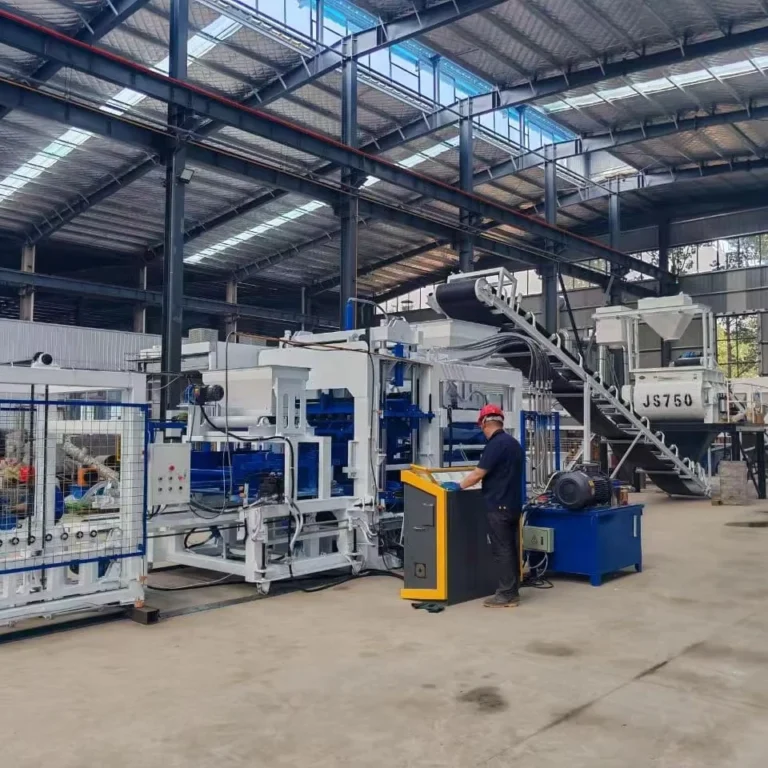
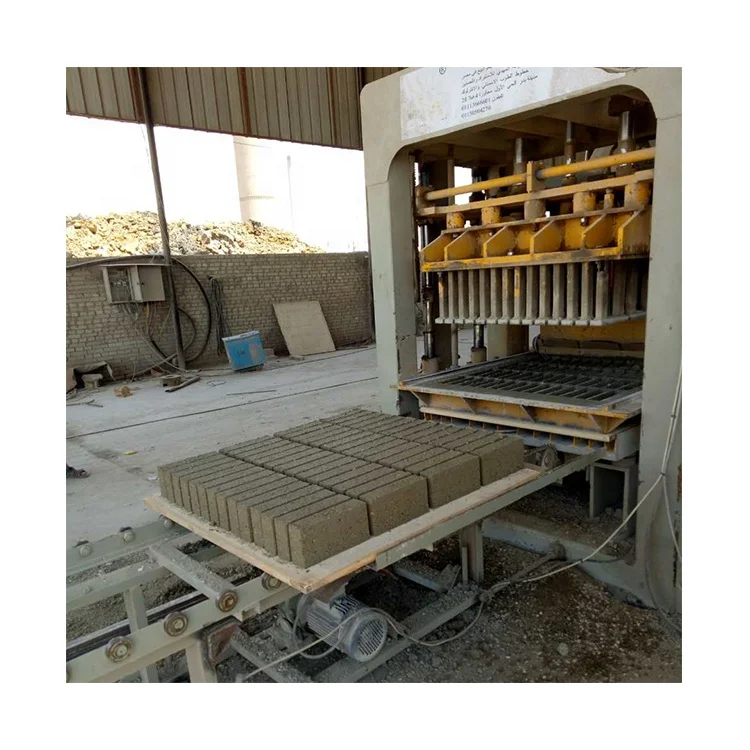
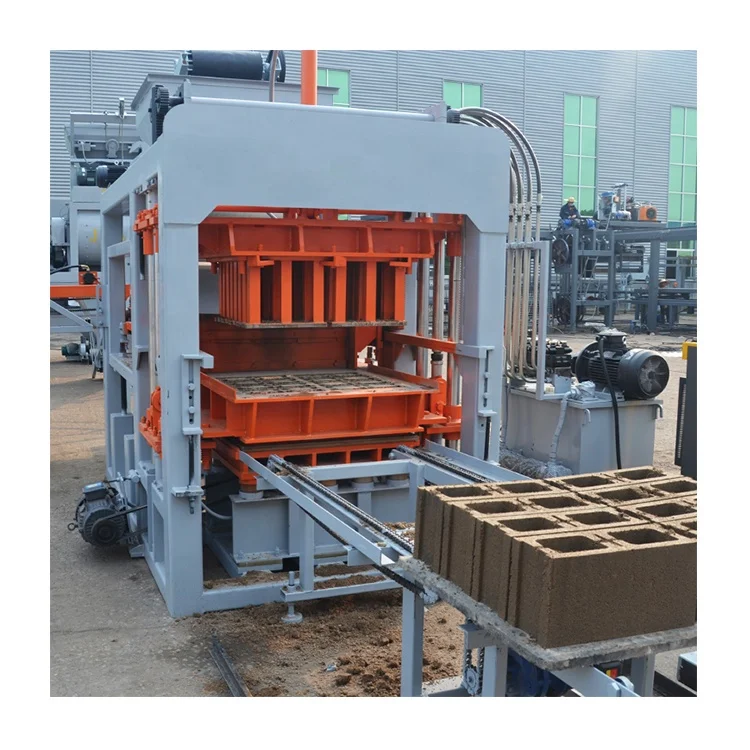
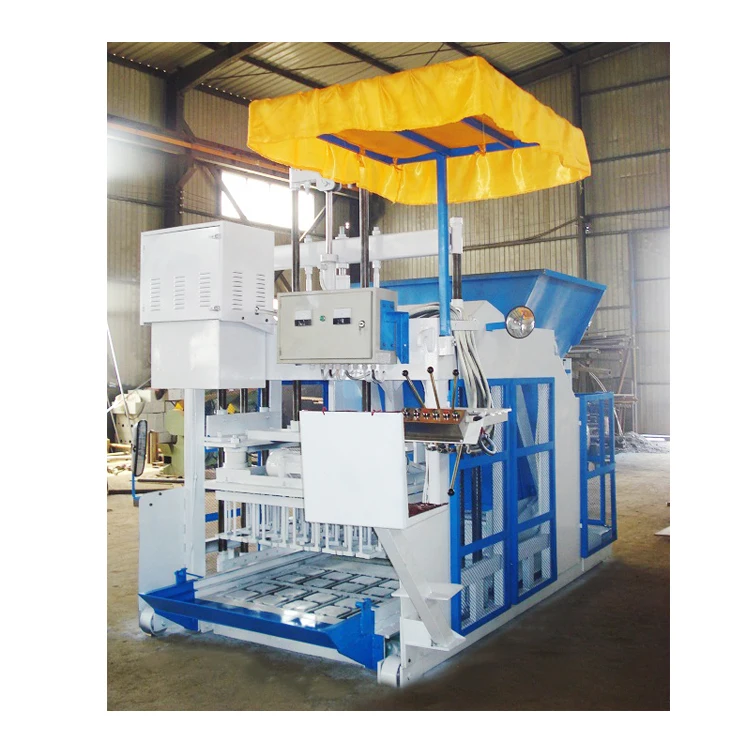
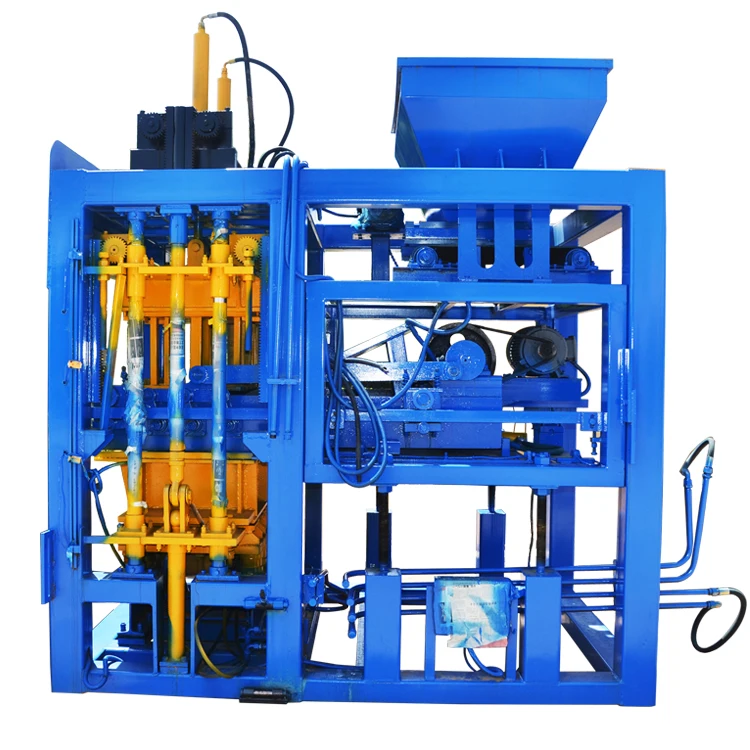
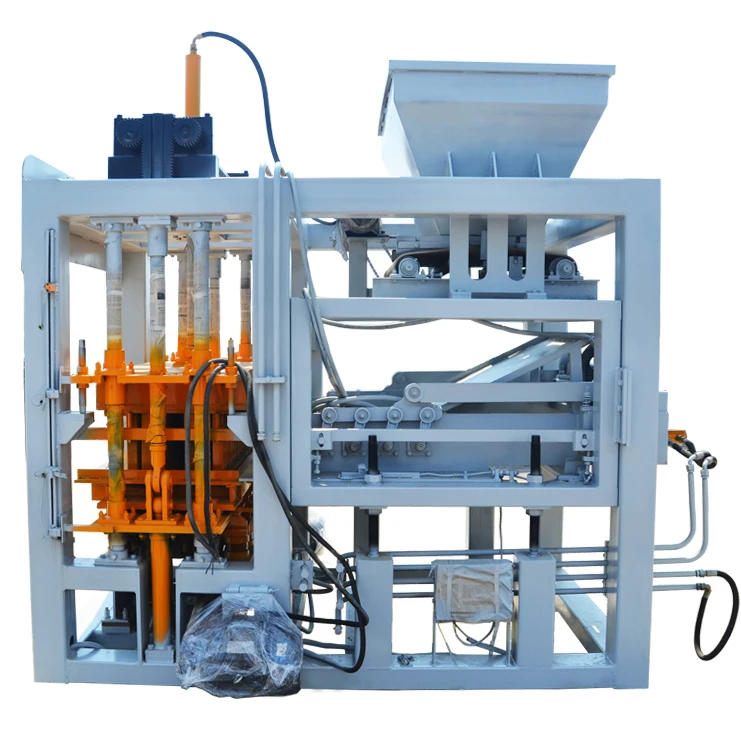
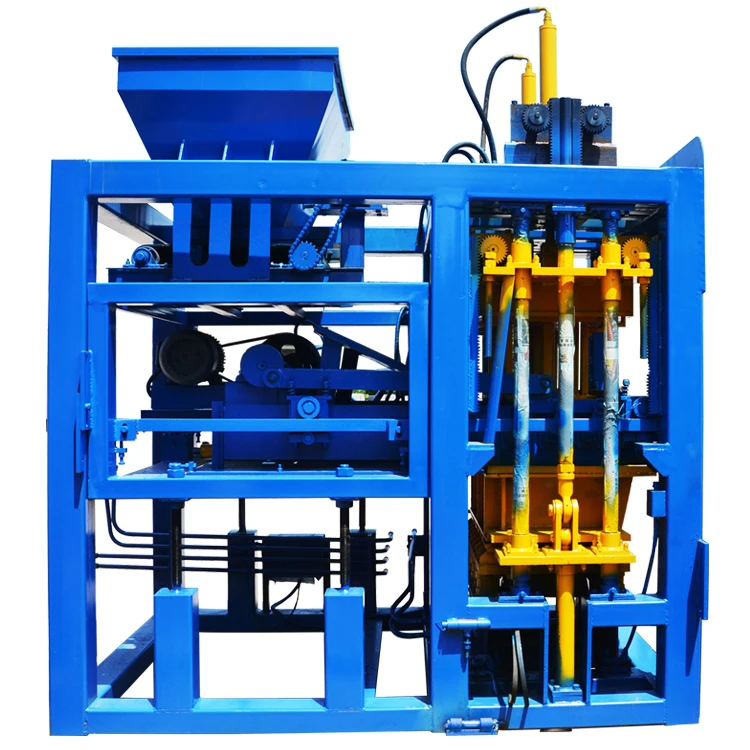
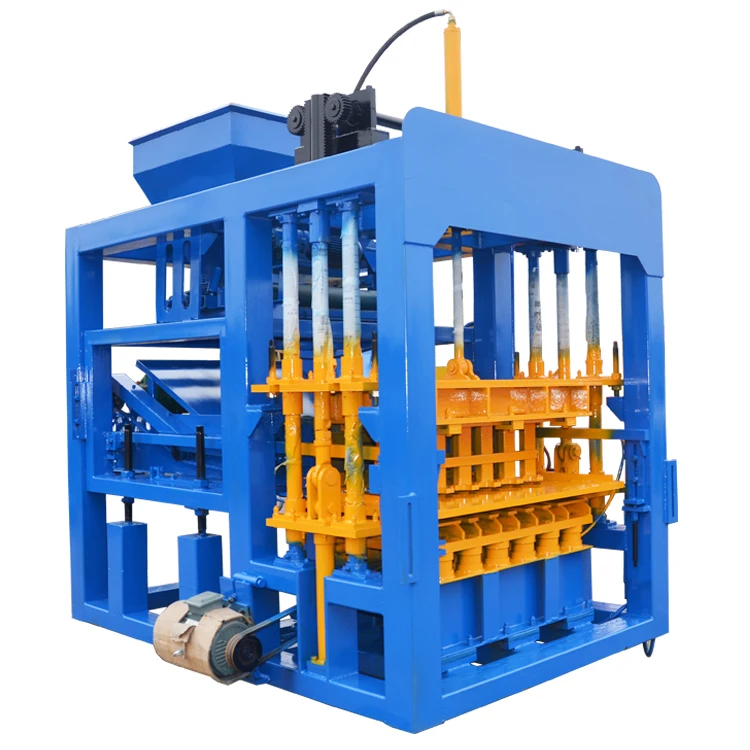
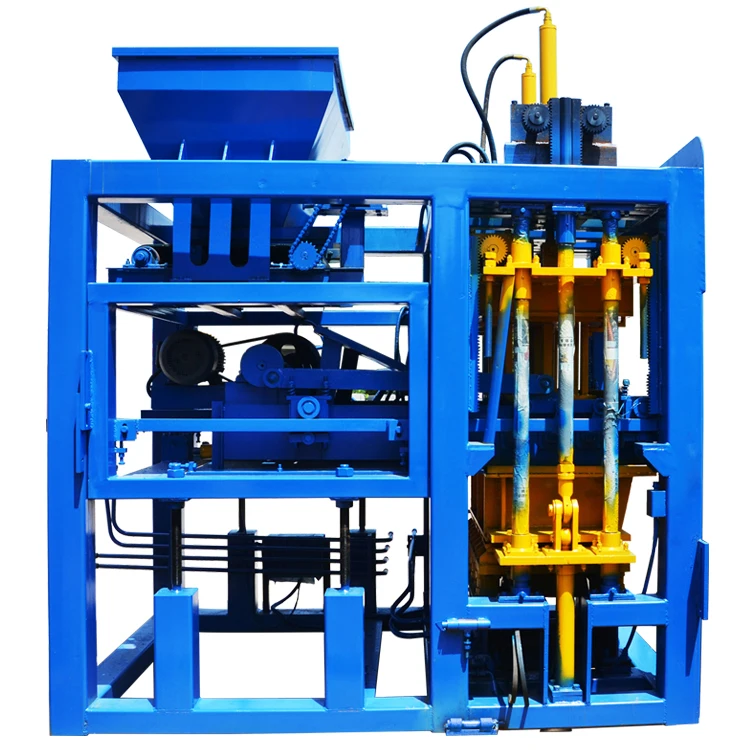
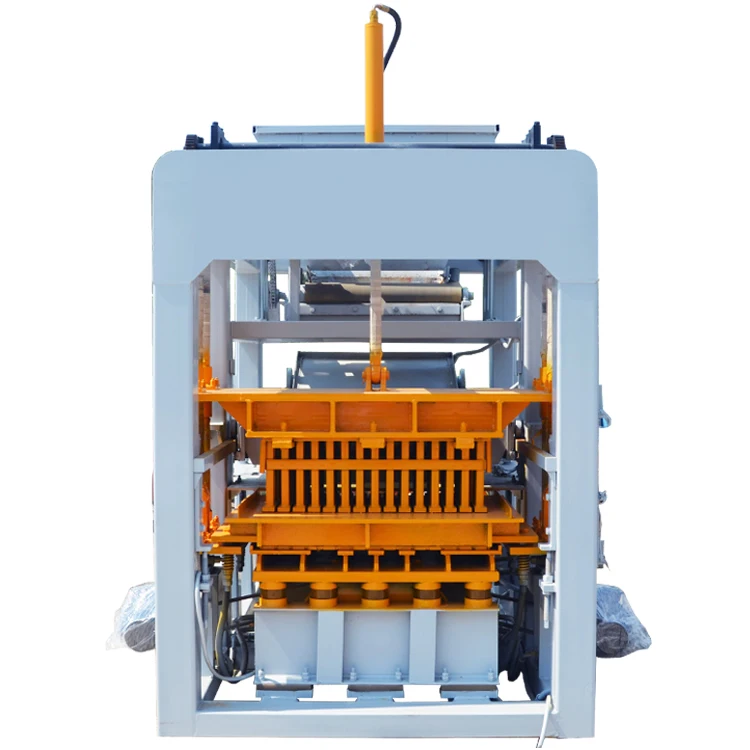
QT14-15 Automatic Concrete Block Making Machine – PLC Control
Controlled by PLC, not the operator — every cycle of the QT14-15 is governed by computer logic rather than human reflex, removing the shift-to-shift variation that plagues manual and semi-automatic block lines.
Technical Specifications
| Parameter | Value |
|---|---|
| Model | QT14-15 |
| Product Type | Automatic Concrete Block Making Machine |
| Vibration Mode | Multiaxis synchronizer vibration (vertically downward) |
| Hydraulic System | High thermal efficiency, low heat productivity |
| Control System | Computer controlled, fully automatic (PLC brand/language to be confirmed) |
| Guide Bearing | Long-period over-length guide bearing |
| Mixer System | Multiaxis forced mixer system |
| Frame Construction | High strength rack, special welding technique, vibration shock resistant |
| Moulding Cycle | 15-20s |
| Output Capacity (400x200x200mm hollow block) | 4 pcs/mould, 900-1200 pcs/hour, 7200-9600 pcs/8hr |
| Output Capacity (400x150x200mm block) | 5 pcs/mould, 1080-1440 pcs/hour, 8640-11520 pcs/8hr |
| Output Capacity (400x100x200mm block) | 8 pcs/mould, 1440-1920 pcs/hour, 11520-15360 pcs/8hr |
| Output Capacity (200x100x60mm paving block) | 16 pcs/mould, 2880-3840 pcs/hour, 23040-30720 pcs/8hr |
| Output Capacity (240x115x53mm standard brick) | 28 pcs/mould, 5930-6720 pcs/hour, 47400-53700 pcs/8hr |
| Automation Level | Fully automatic |
| Warranty | 1 year for whole machine (excluding spare parts) |
Note: Voltage & frequency, pallet size & material, rated power, overall dimensions, net weight, stacking method, and vibration force rating are subject to confirmation before order finalization.
Application Suitability
| Application | Material or Output |
|---|---|
| Hollow block production | Crushed stone, cement, sand, fly ash, and local aggregate blends |
| Paving block manufacturing | High-density concrete mixes for interlocking and curb-side formats |
| Standard brick production | Fine aggregate and cement blends for 240x115x53mm solid bricks |
| Multi-cellular brick output | Lightweight aggregate or aerated mixes compatible with forced mixing |
Why the Control System Matters More Than the Press Tonnage
A computer-controlled press eliminates the cycle-to-cycle inconsistency that breaks a buyer’s reputation in the market.
Block buyers walk away from plants when density varies pallet to pallet, and that variation almost always traces back to an operator adjusting feed time, vibration duration, or pressure manually between cycles. The QT14-15 is a fully automatic concrete block making machine PLC controlled so that every stroke, every vibration burst, and every hydraulic squeeze repeats within a programmed tolerance [NEED_CITE: PLC control standards for hydraulic block presses]. When a plant transitions from semi-automatic to this level of automation, the variability shifts from the operator’s judgment to a logic controller that does not tire, take shortcuts, or guess at mix moisture on a humid afternoon.
What the PLC Actually Removes from the Operator
In a manual or semi-automatic setup, the operator decides when the mould box is full enough to close, when to trigger vibration, and when the block has cured enough on the pallet to move. That chain of micro-decisions introduces drift across a shift. The automatic concrete block making machine PLC controlled system on the QT14-15 takes those decisions into programmed sequences — feed time, vibration duration, pressure hold, demoulding lift — and executes them identically whether it is the first cycle of the morning or the last cycle before shutdown. The operator’s role narrows to monitoring and responding to alarms rather than driving the rhythm of production.
How Batch Consistency Translates to Market Trust
When a construction contractor orders ten thousand hollow blocks and the first pallet tests at one compressive strength while the last pallet tests thirty percent lower, that contractor sources elsewhere. Block density consistency is what holds commercial relationships together over years. With the multiaxis synchronizer vibration and computer-controlled hydraulic system on the QT14-15, the compaction profile stays fixed across the entire run [NEED_CITE: block density variation and buyer rejection rates]. The plant owner gains the ability to guarantee a compressive strength figure to the buyer, and that guarantee holds because the machine repeats rather than approximates.
Reading the Specification Sheet with a Critical Eye
The vibration mode on this press is multiaxis synchronizer, meaning force is directed vertically downward through synchronized shafts rather than relying on a single eccentric weight that can introduce lateral drift. The long-period over-length guide bearing maintains alignment between the upper mould and the mould box across extended production runs, which matters because even slight misalignment widens dimensional tolerance and increases breakage at the stacking stage. The multiaxis forced mixer system handles raw materials of varying nature — from dry-crushed stone to higher-moisture fly ash blends — without the dead zones that a pan mixer leaves in heavier mixes. The moulding cycle of 15 to 20 seconds governs throughput, and every quoted output figure ties directly to that cycle range plus the number of cavities per mould.
What Happens When Voltage and Language Get Skipped at Quotation
A buyer in West Africa once took delivery of a block line only to find the PLC display defaulted to a language none of the floor staff could read, and the motor windings were spec’d for a frequency that did not match the local grid [NEED_CITE: voltage and frequency standards by export market]. Commissioning stalled for days while a technician flew in to re-flash the controller and rewire the main contactor. Confirming voltage, frequency, and PLC display language in writing before the machine enters production avoids a delay that costs more in idle labour and missed delivery deadlines than the confirmation conversation ever would. A plant owner who skips this step at inquiry stage inherits a problem that can only be solved on the floor under time pressure.
Why Sourcing Through a Single-Focus Builder Reduces Integration Risk
Block machinery is the only product line here, which means the press, the moulds, the pallets, and the handling stations are specified as one matched system rather than assembled from separate suppliers who point blame at each other when cycle times do not align. Configuration is set against the buyer’s actual mix design and local aggregate, not a catalogue default that assumes ideal materials. The moulds are designed for the formats the buyer’s market actually sells, including custom drawings when a local standard demands a non-catalogue dimension. Automation level is selectable so a buyer can begin semi-automatic and upgrade stations as volume justifies the investment, and installation support includes operator training so the PLC parameters are understood before the commissioning engineer leaves site.
Documentation & Verification
- Line layout and capacity calculation stating the block format assumed for each output tier
- Machine specification sheet with confirmed pallet size and automation scope
- Mould drawing and format list matching the buyer’s market requirements
- Voltage, frequency, and PLC display language confirmation in writing before production
- Factory test record on the buyer’s specified block format before dispatch
- Hydraulic and electrical schematic supplied for local maintenance teams
Installation, Commissioning & Support
- Foundation plan sized to the QT14-15 vibration load and frame footprint
- Dedicated power circuit matching confirmed voltage and frequency before machine arrival
- Machine assembled at factory for testing, dismantled for container loading, reassembled on site
- First-run parameter tuning against the buyer’s local aggregate and mix design
- Operator training covering PLC interface navigation and alarm response procedures
- Wear parts list with reorder codes for hydraulic seals, vibration shafts, and mould liners
What to Include with Your Inquiry
To get a configuration that matches the plant rather than a generic quotation, share the block formats the market demands, the target daily output per format, and the local aggregate and cement type available. Confirm the site voltage and frequency, the preferred PLC display language, and which automation stations — pallet feeding, stacking, cubing — are in scope or planned for later. If the plant is replacing an existing line, note the current pallet size and curing area dimensions so the new system integrates without rework.
Frequently Asked Questions
Q: How is the output capacity verified, and which block format does each figure assume?
A: Every capacity figure on the QT14-15 is stated against a specific block format and mould cavity count. The 900–1200 pieces per hour figure assumes a 400x200x200mm hollow block at four cavities per mould. Different formats yield different hourly outputs because the moulding cycle and cavity count change. A capacity calculation document accompanies every proposal so the buyer sees the exact assumption behind each number.
Q: What PLC brand is used, and can the display language be set before shipment?
A: The PLC brand is confirmed during the proposal stage based on availability and the buyer’s preference for local service support. The display language is set and tested at factory before dispatch so operators see their language from the first power-on. This is documented in the pre-production confirmation sheet that both parties sign off before manufacturing begins.
Q: Which automation stations are included, and what is the upgrade path?
A: The scope covers the press, mixer, and control system as standard. Pallet feeding, automatic stacking, and cubing are configurable additions that can be included at purchase or added later as production volume grows. The upgrade path is documented in the line layout so the buyer knows which mechanical and electrical interfaces are reserved for future stations.
Q: How is vibration force and hydraulic pressure matched to the local aggregate?
A: The multiaxis synchronizer vibration and hydraulic system are configured against the buyer’s submitted mix design and local aggregate sample. Parameters are tuned during factory testing with the buyer’s material where possible, and fine-tuned on site during commissioning to account for moisture and grading variation in actual production conditions.
Q: What is the mould change procedure, and is a quick-change system available?
A: The mould change involves releasing the clamping bolts, lifting the mould assembly with the plant crane, and seating the replacement mould onto the guide bearings. Change time depends on operator familiarity and crane availability. A quick-change clamping system can be specified at order to reduce the procedure to a shorter window for plants running multiple formats per shift.