


Description
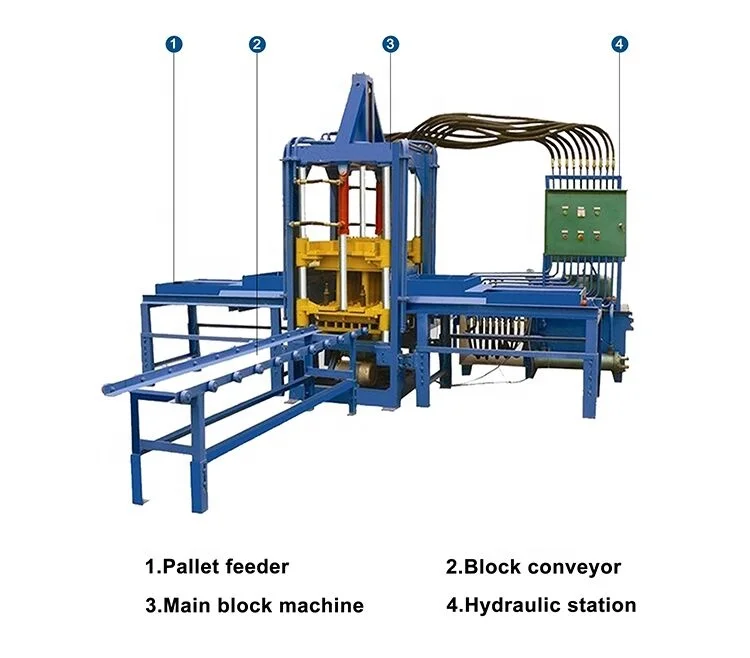
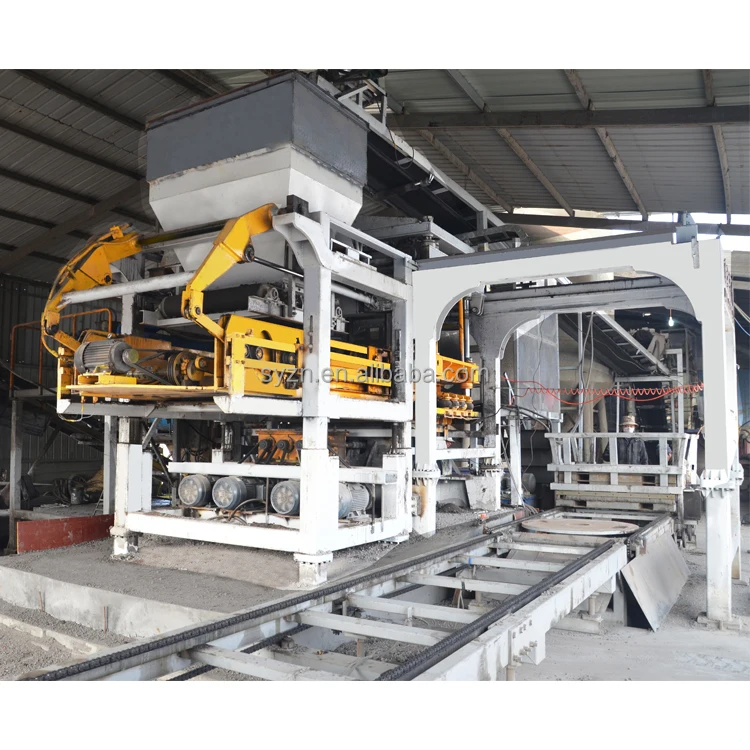
Integrated Line Control — PLC logic governs every station from batching through stacking, so the press never waits on an upstream delay or downstream bottleneck.
Technical Specifications
| Parameter | Value |
|---|---|
| Model | QT18-15 |
| Product Type | Fully Automatic Block Making Machine |
| Brick Height Range | 50–300 mm |
| Maximum Stacking Height | 1200 mm |
| Vibration Form | Platform Vibration |
| Vibration Frequency | 2800–4500 r/min |
| Vibration Power | 60 kW |
| Hydraulic System Power | 59 kW |
| Driving Method | Hydraulic |
| Demolding Method | Vibration and Hydraulic |
| Pallet Size | 1350 × 1350 × 120 mm |
| Pallet Requirement | Pallet-free design |
| Molding Cycle | 15–25 s (basis to be confirmed by block format) |
| General Water Consumption | 8 T/Day |
| Factory Area | 2000 m² |
| Control System | PLC with person-machine conversation interface |
| Automation Level | Fully automatic (blocks stacked directly after moulding) |
| Raw Materials | Crushed stone, sand, cement, dust, fly ash, gravel, slag |
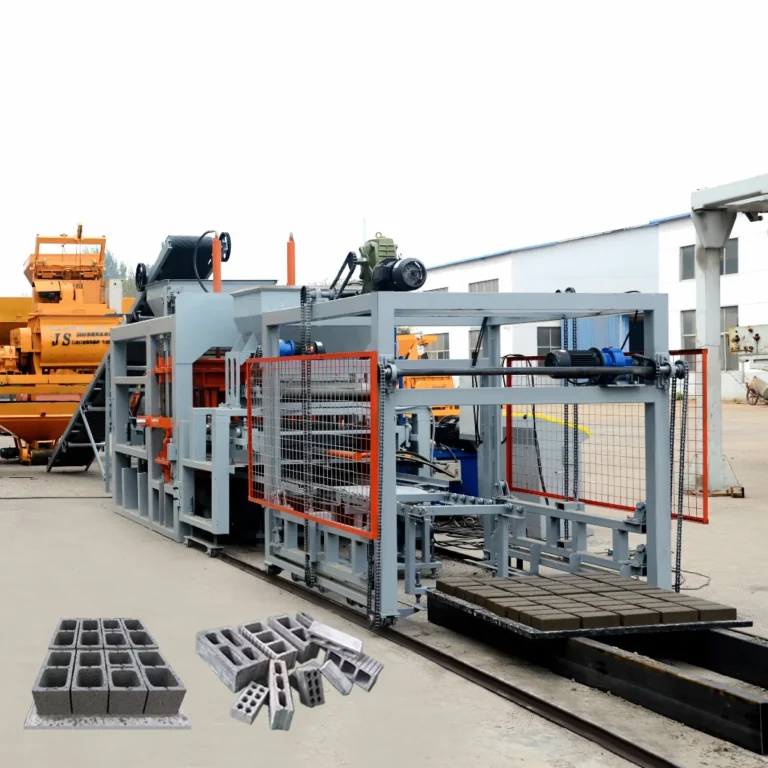
| Applied Products | Concrete blocks, hollow/solid blocks, pavers, interlocking blocks, curbstone, colored pavers |
Application Suitability
| Application | Material or Output |
|---|---|
| Hollow block production for commercial walls | Crushed stone, sand, cement blends |
| Solid block manufacturing for load-bearing structures | Gravel, cement, fly ash mixes |
| Interlocking paver runs for driveways and walkways | Fine aggregate with pigment additives |
| Kerbstone and curb production for road infrastructure | Coarse aggregate, high-cement ratios |
| Colored paver batches for landscaping projects | Standard mix with oxide pigments |
What "15-25 Seconds per Cycle" Actually Means for Your Shift
Cycle time is only meaningful when tied to a specific block format and mix design.
Catalogue sheets often quote the fastest possible cycle — typically a small solid paver with a low-profile mould — while buyers planning hollow block output discover their real cycle sits at the upper end of the range or beyond it. I have watched plants in Peru and Ecuador miss daily targets because the quotation assumed a format the buyer never intended to produce. Before you compare machines on cycle time alone, confirm which block dimension, cavity count, and mix recipe the figure was measured against [NEED_CITE: block format assumptions in capacity quotations]. An automatic block making machine PLC controlled to its rated cycle only delivers that pace when vibration, pressure, and material flow are all matched to the same target product.
Removing the Operator from the Pallet Loop
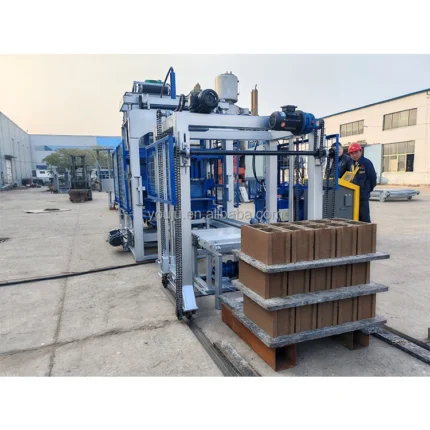
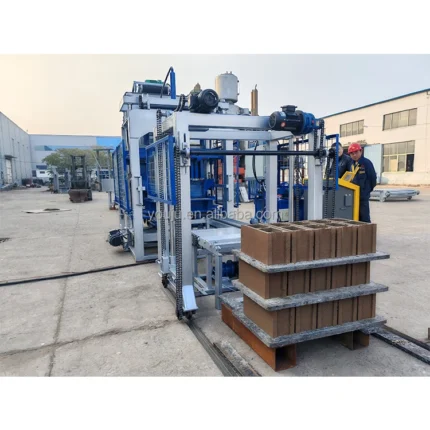
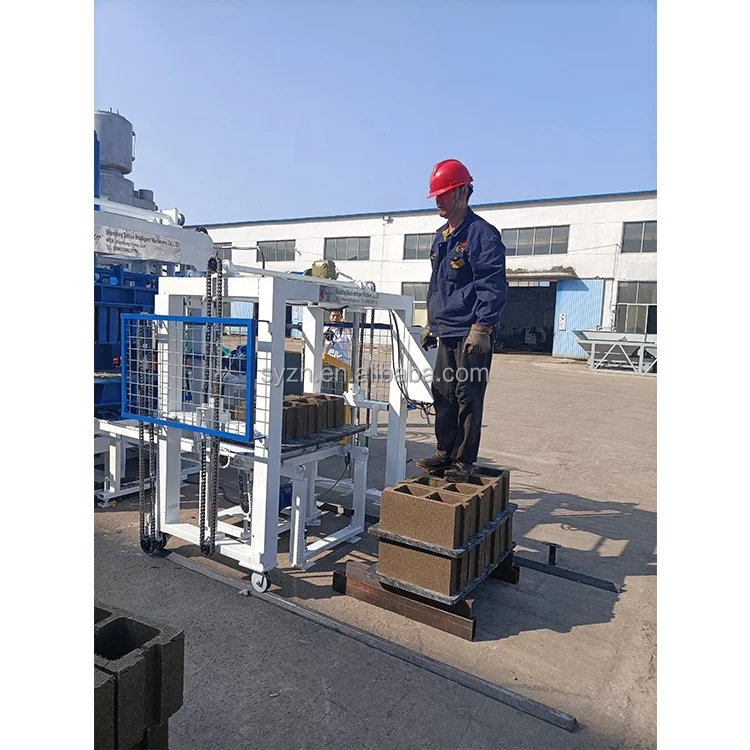
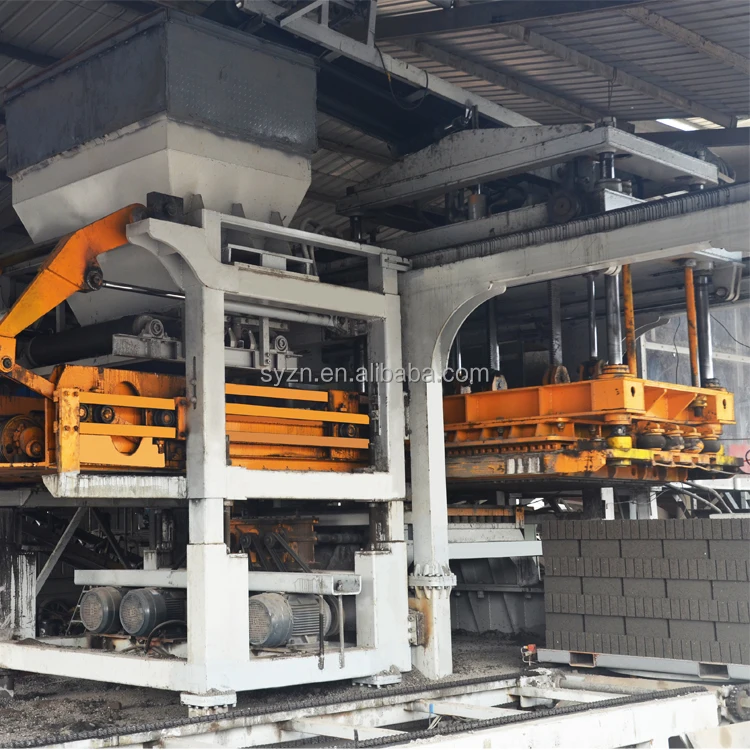
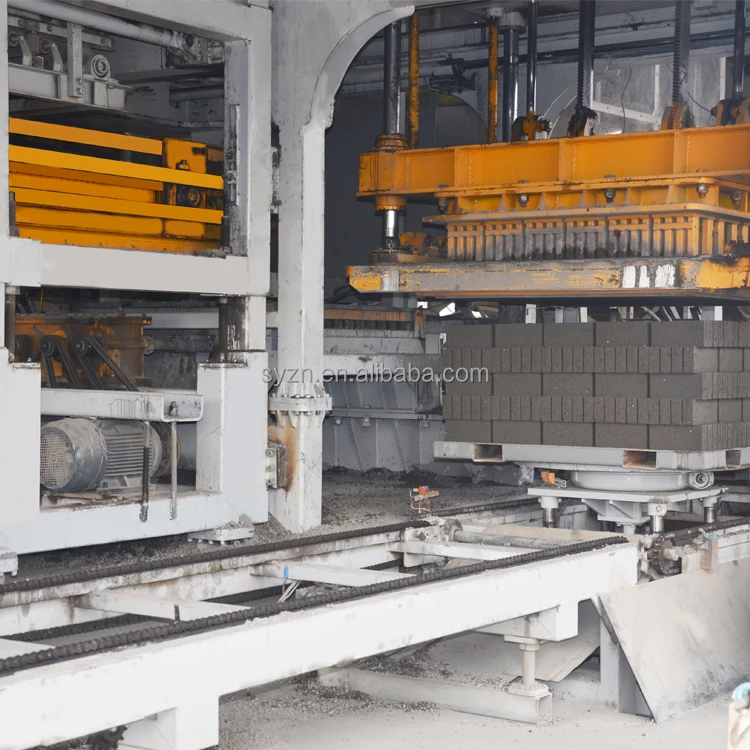
The most labour-intensive stage in a semi-automatic plant is not pressing — it is moving wet blocks on pallets from the press to the curing yard. The QT18-15 eliminates this stage with a pallet-free design: blocks are stacked directly after moulding up to 1200 mm high, so no pallet return conveyor, no pallet inventory, and no crew dedicated to pallet handling. For a plant owner upgrading from manual pallet transfer, the shift changes from managing people to monitoring an automatic block making machine PLC controlled sequence.
Consistency That Outlasts a Shift Change
Batch-to-block consistency depends on variables an operator cannot hold steady by feel: vibration duration, hydraulic dwell time, feed volume per cavity. The PLC person-machine interface stores these parameters per mould recipe, so a night-shift operator pressing interlocking pavers runs the exact profile the day shift used for hollow blocks. What automation removes from the operator — guesswork on vibration timing, manual pallet alignment, visual judgement of mix moisture — it adds back as repeatable density and dimensional tolerance across every shift [NEED_CITE: PLC recipe management in concrete product plants].
Reading the Numbers Behind the Press
Platform vibration in the 2800–4500 r/min range works with hydraulic pressure to compact the mix from below. Higher frequency suits fine-aggregate paver mixes where surface finish matters; lower frequency paired with longer dwell drives density into coarse-aggregate hollow blocks. The 60 kW vibration motor and 59 kW hydraulic system are sized to run simultaneously without starving either circuit — a common failure point in lines where vibration and hydraulics share undersized power supplies. Moulding cycles of 15–25 seconds span small solid pavers at the fast end to 300 mm hollow blocks at the slow end, and the PLC lets you store each format’s profile so changeovers mean selecting a recipe, not re-tuning the press from scratch.
When the Wrong Automation Level Costs More Than the Machine
Buying a fully automatic line without confirming pallet logistics on the curing side is a recurring mistake I have seen on sites from Bogotá to Lima. The press stacks blocks to 1200 mm, but if the curing yard forklift cannot handle that stack height or the rack spacing does not match the stack footprint, blocks sit on the shop floor and the line stops. Similarly, specifying PLC control without agreeing on display language before production means commissioning delays while the interface gets rewritten on-site [NEED_CITE: PLC language configuration delays at commissioning]. These are not equipment faults — they are specification gaps that surface only after the crate arrives.
Why Source This Machine Through a Line-Focused Supplier
Block machinery as a single focus means the press, moulds, stacking system, and PLC logic arrive as one matched set rather than assembled from separate vendors who point at each other when output cracks. Configuration starts from your actual mix design and local aggregate — volcanic rock, river sand, or fly ash — not a catalogue default that assumes quartz sand. Mould design covers the formats your market sells, with custom drawings available when standard cavity layouts do not fit your paver dimensions. Automation level is selectable, so a plant can start with semi-automatic pallet handling and add the stacking module later without replacing the press. Installation includes operator training on the PLC interface, recipe programming, and hydraulic troubleshooting specific to this platform.
Documentation & Verification
- Line layout showing press, stacker, and curing rack spacing matched to 1350 × 1350 mm pallet footprint
- Capacity calculation sheet stating block format and mix assumed for the 15–25 s cycle
- PLC program printout with recipe parameters for each confirmed mould format
- Factory test record run on your specified aggregate and target block type
- Hydraulic and electrical schematic with circuit ratings for 60 kW vibration and 59 kW hydraulic loads
Installation, Commissioning & Support
- Foundation plan sized for 2000 m² factory area with press and stacker load points marked
- Dedicated power circuit confirmed for combined 119 kW vibration and hydraulic draw plus control voltage
- PLC display language and voltage frequency locked before production to avoid on-site reprogramming
- Mould-specific commissioning: vibration frequency, hydraulic pressure, and feed timing set per block format
- Operator training covering PLC recipe selection, fault codes, and hydraulic pressure adjustment
- Wear parts list covering vibration motor bearings, hydraulic seals, and mould liner plates
What to Share Before Requesting a Quote
To size the line correctly, we need the block formats you plan to produce, your target daily output per format, the local aggregate and cement you can source, and the voltage and frequency at your site. If you are replacing an existing press, tell us the pallet size and curing rack layout already in place so the stacking module aligns with your current yard.
Frequently Asked Questions
Q: What does PLC automation remove from the daily operator routine?
A: The PLC takes over vibration timing, hydraulic dwell, feed volume, and stacking sequence — tasks an operator would otherwise judge by eye and adjust manually each cycle. The operator’s role shifts to monitoring the interface for fault codes, loading raw material, and performing scheduled maintenance checks rather than physically managing every press stroke.
Q: How do I verify the realistic daily output for my specific block format?
A: Request a capacity calculation that names the exact block dimension, cavity count, and mix recipe behind the quoted cycle time. The 15–25 second range covers small pavers at the fast end and tall hollow blocks at the slow end; your actual output depends on which format dominates your production schedule.
Q: Can the PLC interface be configured in the local language of my operators?
A: Yes, the person-machine conversation interface supports multiple language options that must be confirmed before production begins. Changing the display language after the machine arrives requires on-site PLC reprogramming, which delays commissioning and risks parameter errors during translation.
Q: Is there an upgrade path from semi-automatic to this fully automatic configuration?
A: The platform supports staged upgrades. A plant can start with manual pallet handling and add automatic stacking, pallet feeding, or cubing modules later. The PLC architecture accommodates additional I/O stations so the upgrade involves hardware addition and program expansion rather than a full control replacement.
Q: What integration points must my existing batching system meet?
A: The PLC expects a dry-mix feed signal and a water-dosing confirmation before each cycle starts. Your batching plant must deliver consistent volume per cycle within the tolerance the PLC monitors; otherwise the press will hold for a feed-fault alarm. Confirm your mixer discharge rate and water metering accuracy during the specification stage.