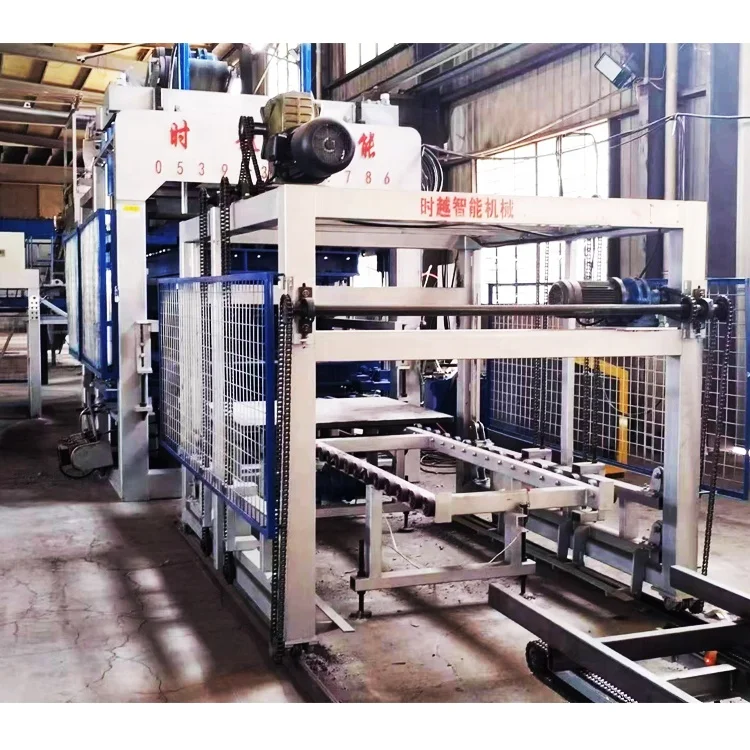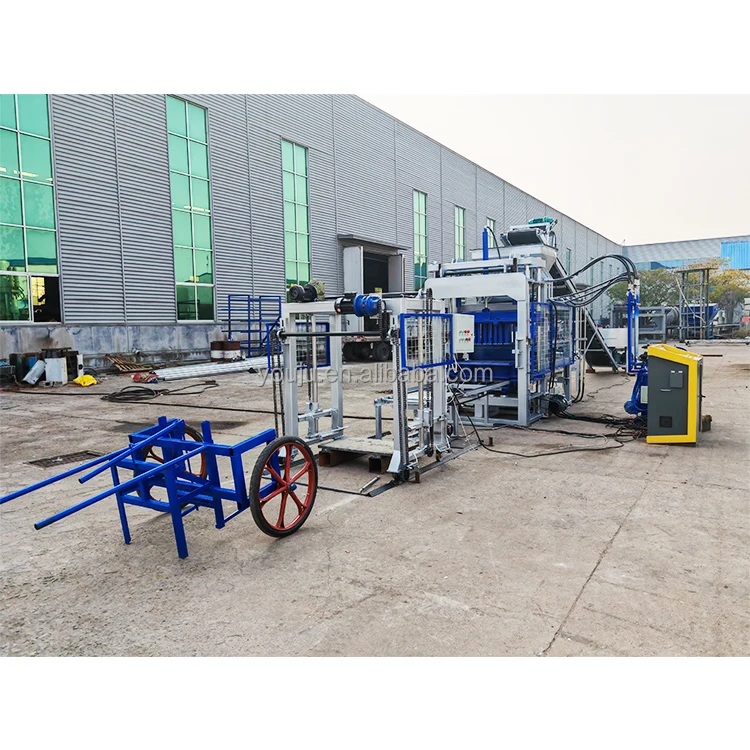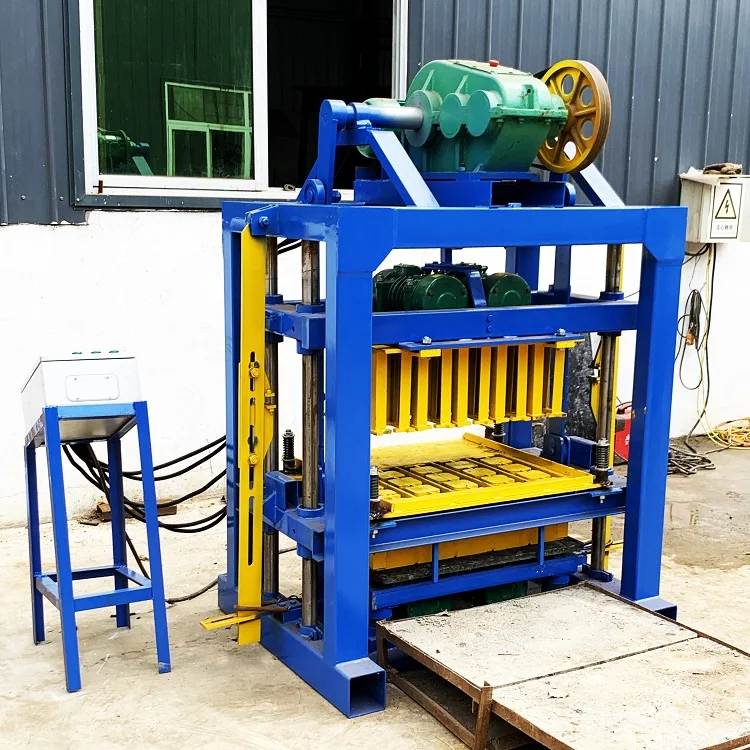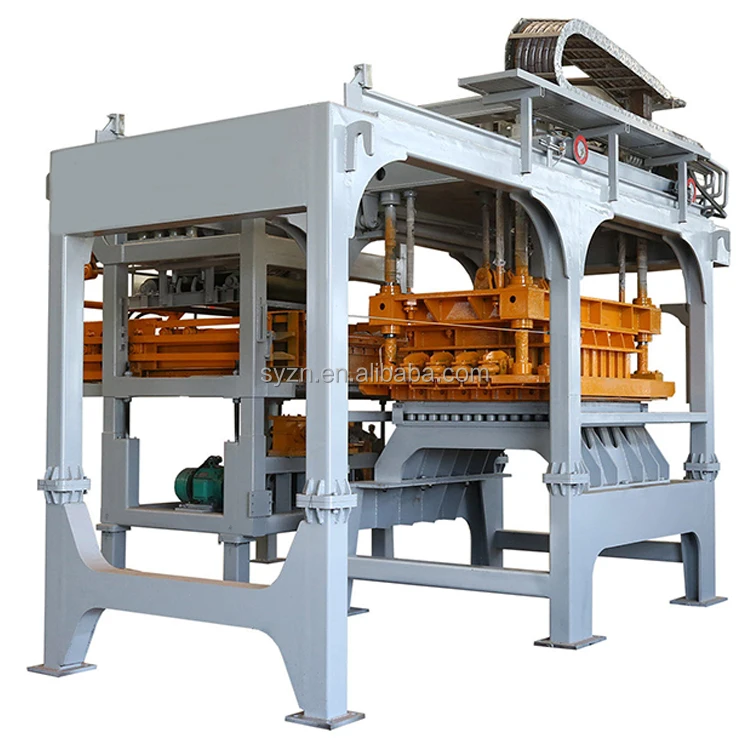


Description
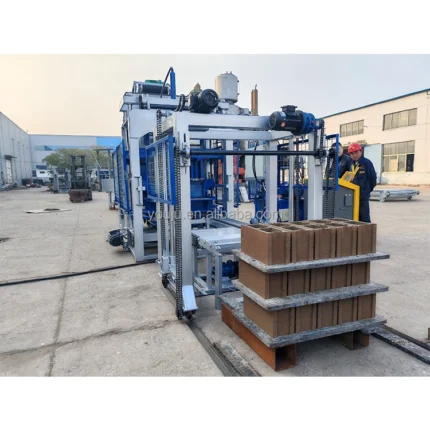
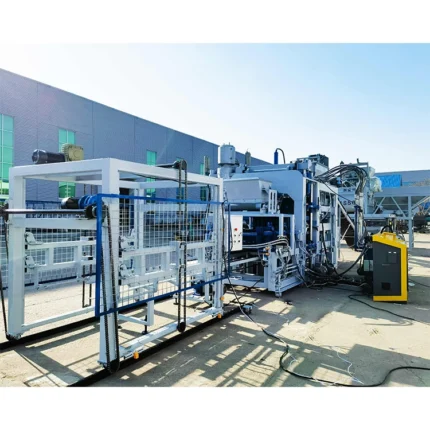
Pallet-Free by Design — blocks stack directly after moulding under full PLC control, removing pallet investment and forklift dependency from the curing workflow.
Technical Specifications
| Parameter | Value |
|---|---|
| Model | QT18-25 |
| Product Type | Fully Automatic Pallet-Free Block Making Machine |
| Brick Height Range | 50–300 mm |
| Stacking Height Range | 0–1200 mm |
| Main Vibration Form | Platform Vibration |
| Vibration Frequency | 2800–4500 r/min |
| Vibration Power | 60 kW |
| Hydraulic System Power | 59 kW |
| Diving Method | Hydraulic |
| Demolding Method | Vibration and Hydraulic |
| Molding Cycle | 15–25 s (basis not stated in source — confirm block format, material and thickness) |
| General Water Consumption | 8 T/day |
| Factory Area Required | 2000 m² |
| Control System | PLC with person-machine conversation interface |
| Automation Level | Fully automatic, pallet-free stacking |
| Stacking Method | Automatic stacking without pallet |
| Applied Products | Concrete blocks, hollow/solid blocks, pavers, interlocking blocks, curbstone, colored pavers |
| Raw Materials | Crushed stone, sand, cement, dust, fly ash, gravel, slag |
| Warranty | 1 year (spare parts excluding quick-wear parts; repair for design and production defects) |
Application Suitability
| Application | Material or Output |
|---|---|
| High-capacity solid block production | Crushed stone, sand and cement blends |
| Hollow block manufacturing for wall systems | Lightweight aggregate and fly ash mixes |
| Interlocking paver production for roads and plazas | Colored concrete with fine aggregate |
| Curbstone forming for municipal infrastructure | High-strength concrete with coarse gravel |
| On-site project block production | Locally sourced aggregate where pallet logistics are constrained |
What "15–25 Seconds per Cycle" Leaves Out for a Pallet-Free Line
Cycle time only translates to daily output when the block format, mix design and stacking stability are all confirmed together.
I once watched a buyer receive an automatic pallet-free block making machine PLC controlled and expect it to run at the fastest quoted cycle from day one. The reality was that his local volcanic aggregate required longer vibration to reach target density, and the wet blocks needed a slower stacking speed to avoid corner damage. The 15-second figure applied to a standard sand mix and a thin solid block — not his 200 mm hollow block on pumice [NEED_CITE: effect of local aggregate on block moulding cycle]. Without a format-by-format capacity sheet, buyers plan shifts around a number that never materialises on the factory floor.
How the PLC Removes Guesswork from Batch Consistency
The QT18-25 runs on a PLC with a person-machine conversation interface, meaning vibration frequency, hydraulic pressure and moulding time are stored as named recipes rather than dial settings an operator might adjust mid-shift. When the same automatic pallet-free block making machine PLC controlled switches from a hollow block to a paver format, the operator calls up the matching recipe and the press adjusts cycle parameters accordingly. This recipe-based approach keeps block density and dimensional tolerance within the range established during the factory test, shift after shift.
Why Stacking Height Matters More Than Press Speed
The stacking height range of 0–1200 mm determines how many layers the wet blocks can bear before the bottom course deforms. On a pallet-free line, each block rests directly on the one below it, so concrete strength gain in the first minutes after demolding becomes the real constraint on output continuity. If the mix reaches early strength too slowly, the stacker must pause or reduce layers, and the press sits idle waiting for the stack to clear [NEED_CITE: early-strength requirements in pallet-free block stacking]. The QT18-25 platform vibration at 2800–4500 r/min paired with 59 kW hydraulic demolding is designed to compact blocks densely enough to support multi-layer stacking, but the achievable layer count still depends on the buyer’s specific mix and curing conditions.
Reading the Specs That Actually Shape Daily Output
Vibration power at 60 kW and hydraulic system power at 59 kW together determine whether the machine can compact a stiff, low-slump mix into a block that holds its shape the moment the mould lifts. Platform vibration transmits force through the mould table rather than through individual mould walls, which distributes energy more evenly across larger formats like curbstones. The hydraulic diving and demolding system applies downward pressure during filling and upward force during extraction, reducing the risk of corner cracks that would make pallet-free stacking impossible. Brick height range from 50 to 300 mm covers most structural and paving formats, but each format demands a different balance of vibration duration and hydraulic pressure — a balance the PLC stores per recipe. Water consumption rated at 8 T/day signals a line running continuous shifts; a single-shift operation would see proportionally lower usage, and curing method will shift that figure further.
The Hidden Cost of Skipping Voltage and Language Confirmation
Buyers who confirm price before confirming voltage and PLC display language often discover after arrival that the control panel labels are in a language the operators cannot read, or that the motor winding does not match the local grid frequency [NEED_CITE: voltage and frequency standards by export market]. A 60 kW vibration motor rewound on-site delays commissioning by weeks and voids the original factory test baseline. For the QT18-25, voltage and frequency must be locked in before the electrical cabinet is wired, and the PLC display language must be specified so that recipe names, alarm messages and maintenance prompts are legible to the crew that will actually run the automatic pallet-free block making machine PLC controlled every day.
Why Buyers Source This Line Here
Block machinery is our single focus, so the QT18-25 press, mould, stacking system and handling equipment are specified as one matched system rather than assembled from separate suppliers. We configure the vibration and hydraulic parameters against the buyer’s actual mix design and local aggregate, not a catalogue default. Mould design covers the formats the buyer’s market sells, with custom drawings available for non-standard shapes. Automation level is selectable, so a plant can start with semi-automatic pallet handling and upgrade to full pallet-free stacking later. Installation and commissioning include on-site operator training so the crew understands recipe selection, mould change procedure and daily maintenance before the engineer leaves.
Documentation & Verification
- Line layout showing QT18-25 footprint with stacking zone and curing area clearances
- Capacity calculation stating the exact block format assumed for each quoted cycle time
- PLC recipe list with vibration and hydraulic parameters per confirmed mould format
- Factory test record on the buyer’s specified mix and target block dimensions
- Voltage, frequency and PLC display language confirmation signed before production
- Hydraulic and electrical schematic matching the as-built QT18-25 configuration
Installation, Commissioning & Support
- Foundation plan sized to the QT18-25 platform vibration footprint and dynamic load
- Dedicated power circuit rated for the combined 119 kW vibration and hydraulic load
- On-site assembly and alignment of mould table, hydraulic cylinders and stacker frame
- PLC recipe programming for each confirmed block format during commissioning week
- Operator training covering mould change, recipe selection and emergency stop procedures
- Wear parts list identifying hydraulic seals and vibration motor bearings for first reorder
What to Share Before Requesting a Quotation
Tell us which block formats your market actually buys — solid, hollow, paver, interlocking or curbstone — and the daily volume you need per format. Share your local aggregate type, any fly ash or slag you plan to use, and a lab mix design if you have one. Confirm your site voltage, frequency and the language your operators read, so the PLC panel and documentation arrive ready to run.
Frequently Asked Questions
Q: Which block formats are proven pallet-free and which still require pallets?
A: Solid blocks, standard pavers and interlocking bricks with sufficient early strength stack reliably without pallets. Thin-walled hollow blocks and certain curbstone profiles may still need pallet support during the first curing hours. We confirm pallet-free viability per format during the factory test using your mix design and target dimensions before shipment.
Q: How is the PLC display language configured for our operators?
A: The person-machine conversation interface on the QT18-25 is set to the buyer’s specified language before the electrical cabinet is wired. Recipe names, alarm messages and maintenance prompts are all translated. We confirm the language in writing during the voltage and control confirmation step so there is no mismatch when the machine powers up on site.
Q: What is the realistic daily output per block format rather than a single cycle figure?
A: We provide a capacity sheet listing each confirmed block format with its individual moulding cycle, stacking time and expected daily output based on an agreed shift length. The 15–25 second range in the specification covers multiple formats and mixes, so the only meaningful number is the one calculated against your specific product list and raw material.
Q: What voltage and frequency options are available for the QT18-25?
A: The vibration motor at 60 kW and hydraulic system at 59 kW can be wound for the buyer’s local grid specification. Voltage, frequency and plug standard must be confirmed before production starts so that the motor, control panel and wiring match the site supply exactly. We document the confirmed electrical specification in the factory test record.
Q: What automation upgrade path exists if we later add batching or remote diagnostics?
A: The PLC architecture on the QT18-25 supports additional modules for automatic batching, cubing and remote monitoring. A plant running semi-automatic pallet handling today can transition to full pallet-free stacking by adding the stacker and adjusting PLC recipes. We scope the upgrade against the existing cabinet capacity so the buyer knows whether a panel expansion is needed.