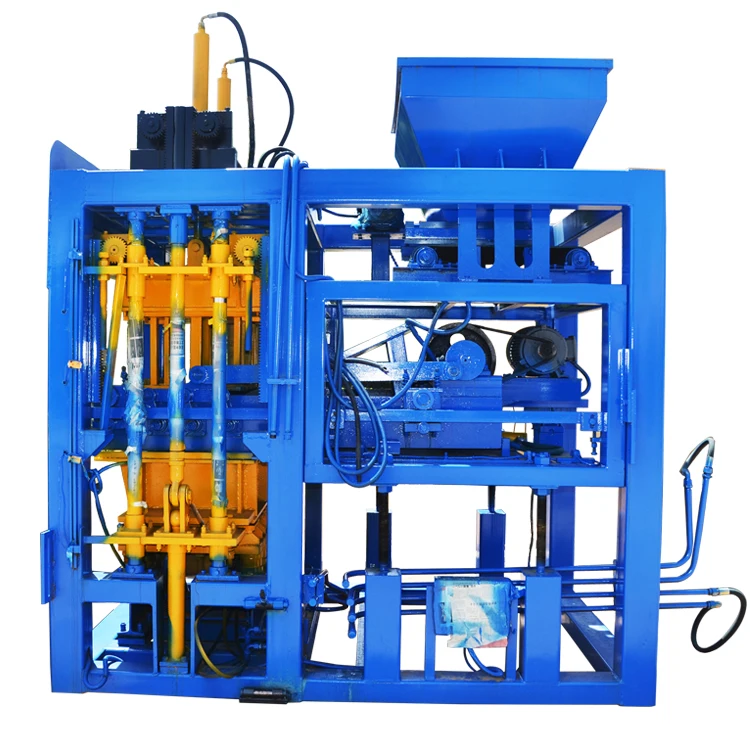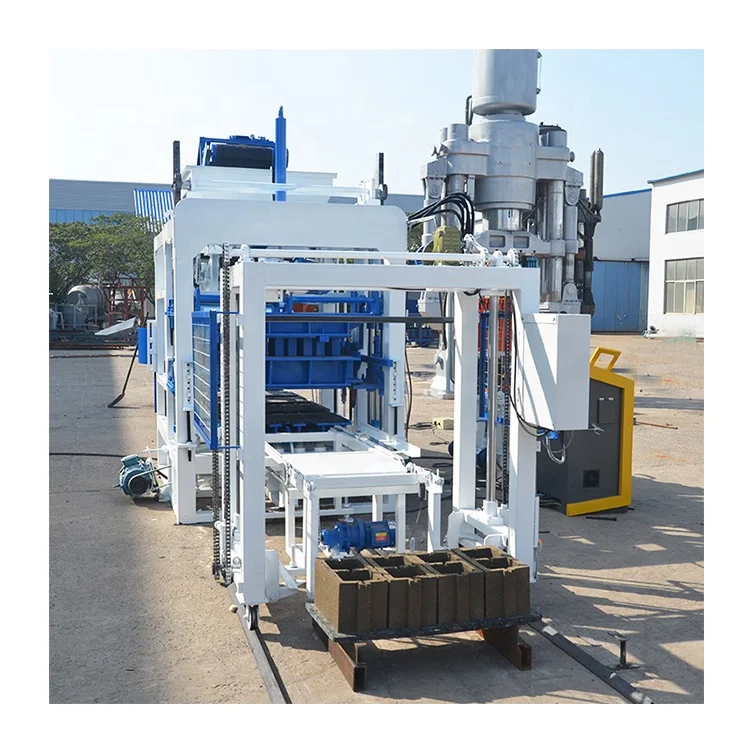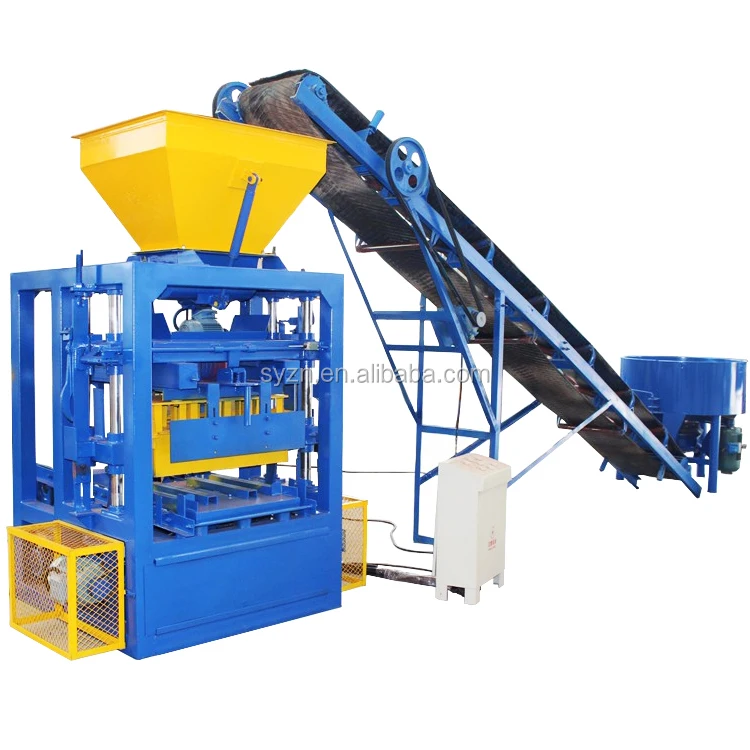


Description
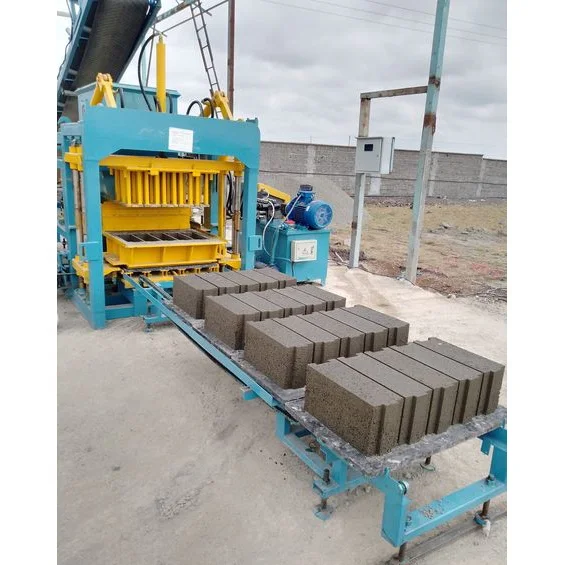
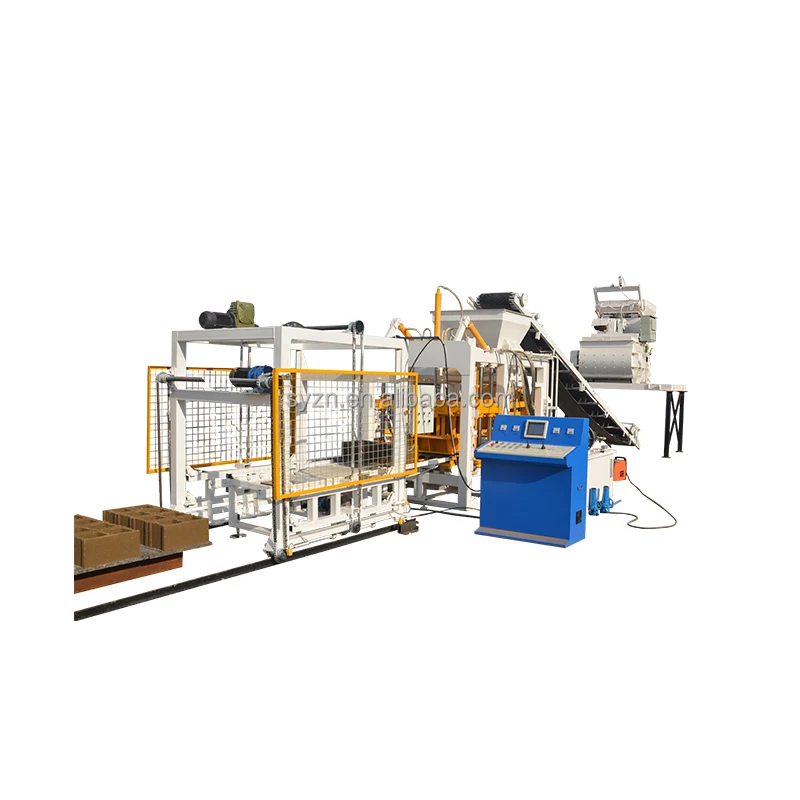
Matched System Integration — the QT4-15 block machine, its moulds, pallets and handling equipment are specified as one coordinated line rather than sourced from separate vendors, ensuring cycle times align across every station.
Technical Specifications
| Parameter | Value |
|---|---|
| Model | QT4-15 |
| Product Type | Automatic Hydraulic Block Making Machine |
| Control System | PLC (computer controlled, fully automatic) |
| Vibration Mode | Multiaxis synchronizer vibration, vertically downward |
| Hydraulic System | High thermal efficiency design with low heat generation |
| Mixer System | Multiaxis forced mixer |
| Guide Bearing | Long-period over-length guide bearing for precise mould alignment |
| Rack Construction | High strength steel with vibration shock resistant welding |
| Automation Level | Fully automatic |
| Cycle Time | 15–20 seconds (basis to be confirmed per block format and material) |
| Output (400×200×200mm hollow block) | 900–1,200 pcs/hour (7,200–9,600 pcs per 8-hour shift) |
| Output (400×150×200mm block) | 1,080–1,440 pcs/hour (8,640–11,520 pcs per 8-hour shift) |
| Output (400×100×200mm block) | 1,440–1,920 pcs/hour (11,520–15,360 pcs per 8-hour shift) |
| Output (200×100×60mm paver) | 2,880–3,840 pcs/hour (23,040–30,720 pcs per 8-hour shift) |
| Output (240×115×53mm solid brick) | 5,930–6,720 pcs/hour (47,400–53,700 pcs per 8-hour shift) |
| Mould Formats Supported | Hollow block, multicellular brick, paving brick, standard solid brick |
| Warranty | 1 year for the whole machine (excluding spare parts) |
Application Suitability
| Application | Material or Output |
|---|---|
| Hollow block production for building walls | Crushed stone, cement, sand, and fly ash aggregates |
| Paving brick for walkways and yards | Fine aggregate with cement binder, high surface density required |
| Solid brick for load-bearing masonry | Cement and locally sourced coarse aggregate blends |
| Multicellular brick for partition walls | Lightweight aggregate mixes with controlled moisture |
| On-site production by construction contractors | Variable local aggregate, requiring flexible mix tolerance |
What "Fully Automatic" Actually Removes From Your Operator
Automation on the QT4-15 takes pallet feeding, block stacking and cycle timing away from the operator, leaving them to monitor rather than manually handle every step.
Many block plants still quote a single headline capacity figure that assumes one ideal block format, then the buyer discovers on day one that the real daily throughput drops considerably when switching to pavers or thicker hollow blocks. The automatic block making machine PLC controlled system addresses this by executing each cycle with programmed parameters for the loaded mould, so consistency does not depend on operator attention or fatigue. [NEED_CITE: common discrepancies between quoted and actual block plant throughput]
I once spent an entire afternoon on a video call with a Southeast Asian plant owner whose operator could not read the default English interface on his control panel. The machine sat idle while we translated every menu item line by line. That is why the PLC display language must be confirmed before the machine enters production, not after it arrives on site.
How the PLC Removes Operator Variability
The automatic block making machine PLC controlled architecture stores cycle parameters for each mould format, so when the operator selects a new block type the vibration duration, hydraulic pressure sequence and feeder travel adjust automatically. This means a morning shift and a night shift produce blocks with the same density profile, and a new operator can run the line with the same consistency as an experienced one.
Batch-to-Batch Consistency Across Format Changes
Without programmed control, every mould change introduces manual judgement calls on vibration time and feed volume that shift block weight and dimensions. The QT4-15 holds those variables in memory per format, so a production run of 400×200×200mm hollow blocks followed by a switch to 200×100×60mm pavers does not require a trial-and-error warm-up period. The first block off the new mould matches the last block from the previous run in dimensional tolerance. [NEED_CITE: PLC parameter recall and mould change consistency in block production]
Reading the Specs That Shape Real Output
The multiaxis synchronizer vibration with vertically downward force compacts aggregate from multiple contact points simultaneously, which matters when the mould cavity is deep and narrow, such as with 400×100×200mm blocks where single-axis vibration leaves density gradients. The long-period over-length guide bearing keeps the upper mould and mould box aligned through thousands of cycles per shift; worn guide bearings are a frequent cause of flash and out-of-tolerance block edges. The multiaxis forced mixer feeds material with consistent moisture distribution, which directly affects how the hydraulic pressure and vibration translate into green block strength.
The Cost of Skipping the Language and Voltage Check
When the PLC display language is set to a default the operator cannot read, every parameter change becomes a guess. Menus for vibration duration, feeder speed and hydraulic hold time all look the same in an unfamiliar script, so operators leave settings unchanged even when switching moulds. The result is blocks that pass visual inspection but fail compression tests weeks later in the curing yard. Voltage mismatch is equally silent: a machine wired for a frequency different from the local grid runs at the wrong motor speed, and the vibration force drops without triggering any alarm. [NEED_CITE: PLC interface language and electrical compatibility requirements for exported machinery]
Why Procurement Starts With the Line, Not Just the Press
The QT4-15 is specified alongside its mould set, pallet dimensions and handling stations so that cycle times match across the entire line and the press is not left waiting for the next pallet. Every configuration is set against the buyer’s actual mix design and local aggregate rather than a catalogue default, which prevents the costly material substitution that occurs when a machine is tuned for an unavailable sand grade. Mould designs cover the formats the buyer’s market actually sells, including custom drawings when standard options do not match local demand. The automation level is selectable, so a buyer can commission the QT4-15 at its current configuration and plan a future expansion of stacking and cubing stations without replacing the press. Factory testing records document performance on the buyer’s specified block format before the machine ships.
Documentation & Verification
- Line layout showing station spacing and pallet flow matched to the QT4-15 cycle time
- Capacity calculation per block format with stated assumptions for mix and moisture
- PLC language, voltage and frequency confirmation sheet signed before production
- Hydraulic and electrical schematic for local electrician reference during installation
- Factory test record on the buyer’s specified mould format before dispatch
- Mould drawing set with dimensional tolerances and format changeover procedure
Installation, Commissioning & Support
- Foundation plan specifying load points and curing space for the QT4-15 pallet size
- Dedicated electrical circuit matching confirmed voltage and frequency before arrival
- PLC display language verified against operator requirements during pre-shipment check
- First-run parameter setting with vibration and hydraulic tuning for local aggregate
- Operator training covering mould change sequence and daily maintenance intervals
- Wear parts list with hydraulic seals and guide bearing replacement schedule
What to Include in Your Inquiry
To size the QT4-15 correctly for your plant, specify the block formats you intend to produce and the daily volume for each, along with the local aggregate types and cement grade available to you. Confirm the voltage, frequency and required PLC display language for your market so the control system arrives ready for commissioning. If you have existing pallets, curing racks or forklifts on site, share their dimensions so the handling equipment can be matched to your current setup.
Frequently Asked Questions
Q: How is capacity verified per block format, and what does the quoted output assume?
A: Each output figure for the QT4-15 is stated with the specific block format and dimensions it references, such as 400×200×200mm hollow block at 900–1,200 pieces per hour. A capacity calculation document accompanies the proposal listing the mix, moisture and cycle time assumed for every format you intend to run, so daily planning is based on verified data rather than a single headline number.
Q: What PLC control language options are available, and how is voltage confirmed for my market?
A: The automatic block making machine PLC controlled interface can be configured to your operator’s language, confirmed on a signed sheet before the machine enters production. Voltage and frequency are matched to your local grid standard and documented in the electrical schematic, so your site electrician can prepare the correct circuit before the machine arrives and commissioning proceeds without delay.
Q: How does automation on the QT4-15 compare to semi-automatic, and what is the upgrade path?
A: The QT4-15 handles pallet feeding, cycle execution and stacking timing automatically through its PLC, removing those manual tasks from the operator. Buyers who start at this automation level can later add cubing and curing rack handling stations that connect to the same control architecture, expanding throughput without replacing the press.
Q: How is vibration force and hydraulic pressure matched to my local aggregate and mix design?
A: During configuration, your local aggregate type, cement grade and target block strength are reviewed so the multiaxis vibration and hydraulic pressure settings suit your actual material. The factory test runs your specified mix before dispatch, and the parameter set is recorded so your operator can restore it if adjustments are made during production.
Q: What batch-to-batch consistency monitoring does the PLC system provide?
A: The PLC logs cycle parameters for each mould format, so vibration duration and hydraulic sequence remain constant across shifts and operators. If a setting is changed during production, the record shows when and by whom, making it straightforward to trace any dimensional or density variation back to its source.