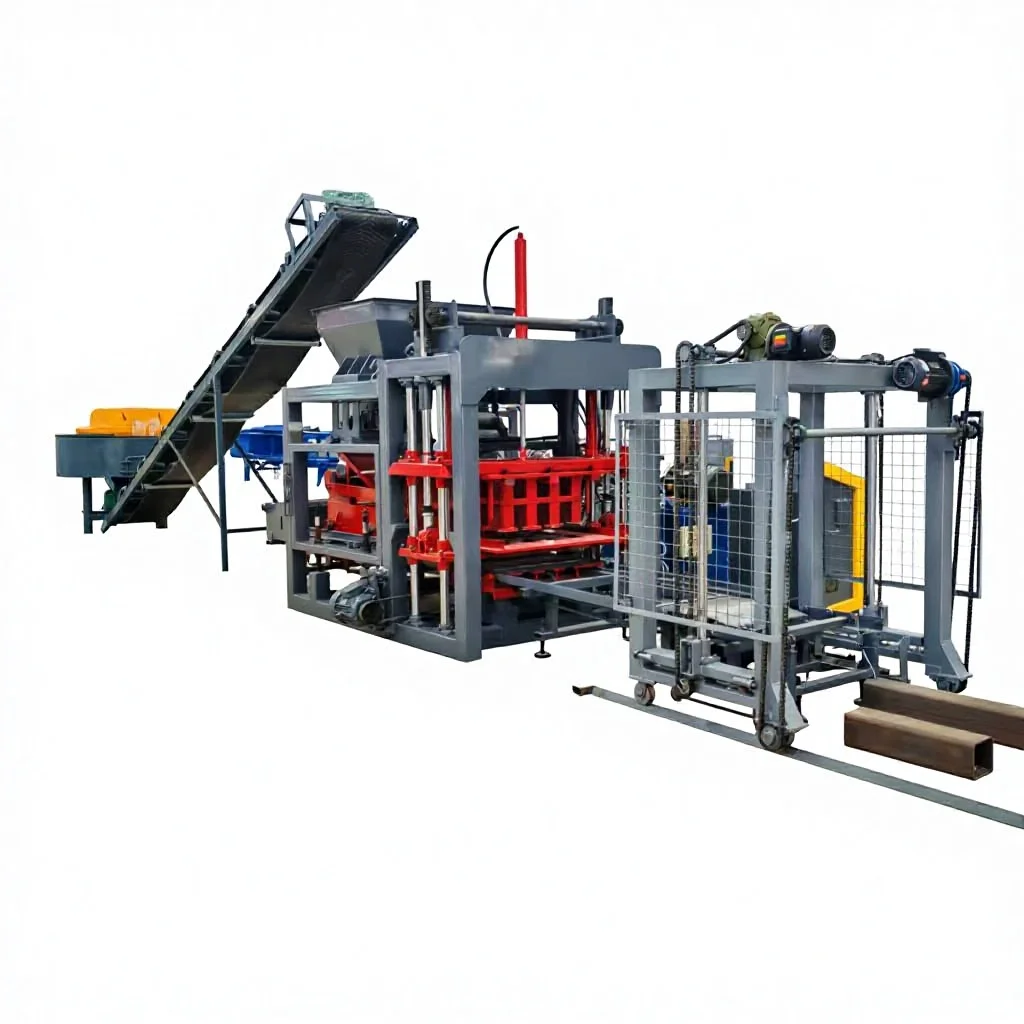
Description
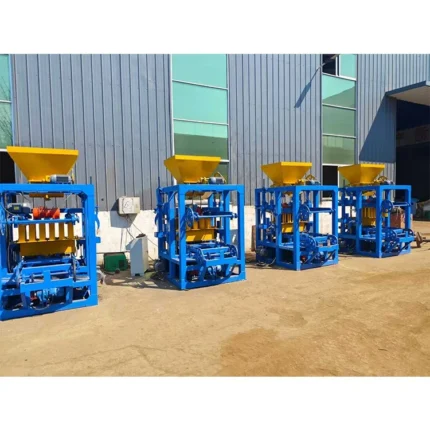
Configured Against Your Actual Mix — the QT4-15A hydraulic block press is matched to your local aggregate, target block format, and existing curing infrastructure, not pulled from a catalogue default and shipped blind.
Technical Specifications
| Parameter | Value |
|---|---|
| Model | QT4-15A |
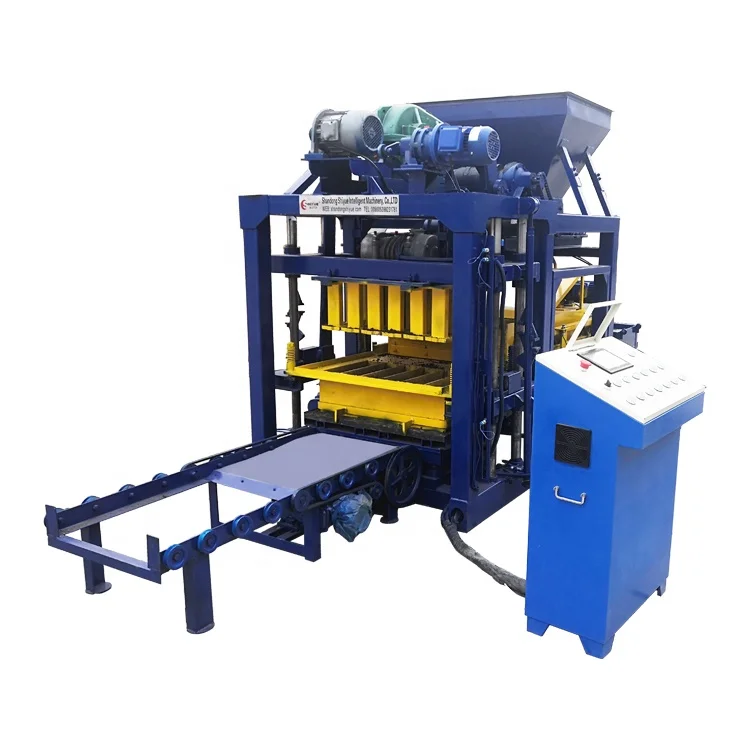
| Product Type | Fully Automatic Hydraulic Block Making Machine |
| Overall Dimensions (L×W×H) | 4100×1600×2600 mm |
| Rated Pressure | 16–21 MPa |
| Main Vibration Form | Platform Vibration |
| Vibration Frequency | 4200 r/min |
| Vibration Force | 55 kN |
| Pallet Size | 880×550 mm |
| Molding Cycle | 25–30 s (basis not stated in source — confirm block format / material / thickness) |
| Overall Power | 18.45 kW (source value listed as 18.45W — verify against manufacturer catalog) |
| Total Mass | 4 T |
| Demolding Method | Hydraulic |
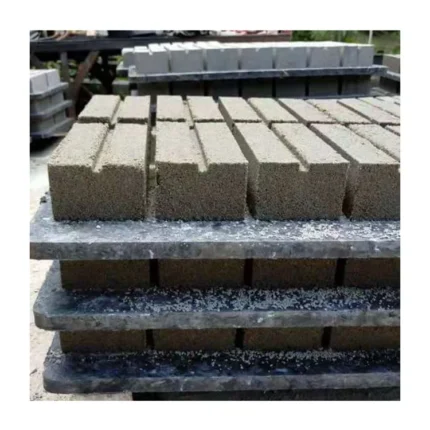
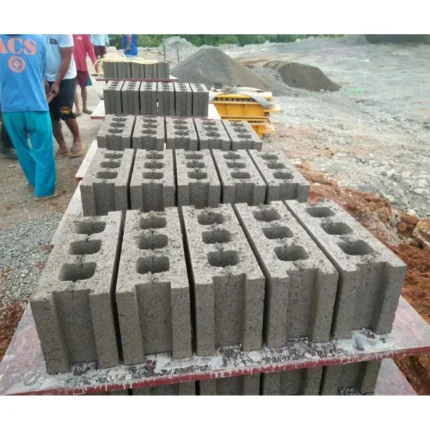
| Applied Products | Hollow blocks, solid blocks, pavers, interlocking blocks, curbstone, colored pavers |
| Raw Materials | Crushed stone, sand, cement, fly ash, gravel, slag |
| Control System | PLC (brand, model, and language options to be confirmed) |
| Voltage & Frequency | Configurable to site supply (to be confirmed before production) |
| Factory Area | 300 m² |
| Warranty | 1 year (whole machine, excluding spare parts) |
Application Suitability
| Application | Material or Output |
|---|---|
| Hollow block production for residential and commercial walls | Crushed stone, sand, cement, fly ash blends |
| Solid block manufacturing for load-bearing structures | Gravel, cement, and slag aggregates |
| Interlocking paver and colored paver runs | Fine sand, cement, pigment additives |
| Curbstone and kerb production for road and infrastructure projects | Coarse aggregate and cement mixes |
| On-site block production by construction contractors | Locally sourced sand, fly ash, and crushed stone |
Why the Voltage Question Must Come Before the Price
Confirming supply voltage, frequency, and PLC display language before the purchase order is signed prevents a three-week commissioning delay that no amount of after-sales support can shorten.
I once watched a fully automatic block making machine PLC controlled sit idle on an Indonesian job site because the motors were wound for 50 Hz while the local grid ran at 60 Hz. The plant owner had already paid for shipping, customs clearance, and foundation work before anyone asked what came out of the transformer. That machine waited nearly three weeks for replacement motor windings while the contractor’s block delivery schedule fell apart [NEED_CITE: voltage and frequency standards by export market].
The QT4-15A is configurable across common industrial voltages and frequencies, but the specification must be locked in writing before production begins — not discovered during on-site commissioning. The same applies to the PLC interface language: an operator staring at alarm codes in an unfamiliar script is not running an automatic line, they are troubleshooting blind.
What "Fully Automatic" Actually Covers on the QT4-15A
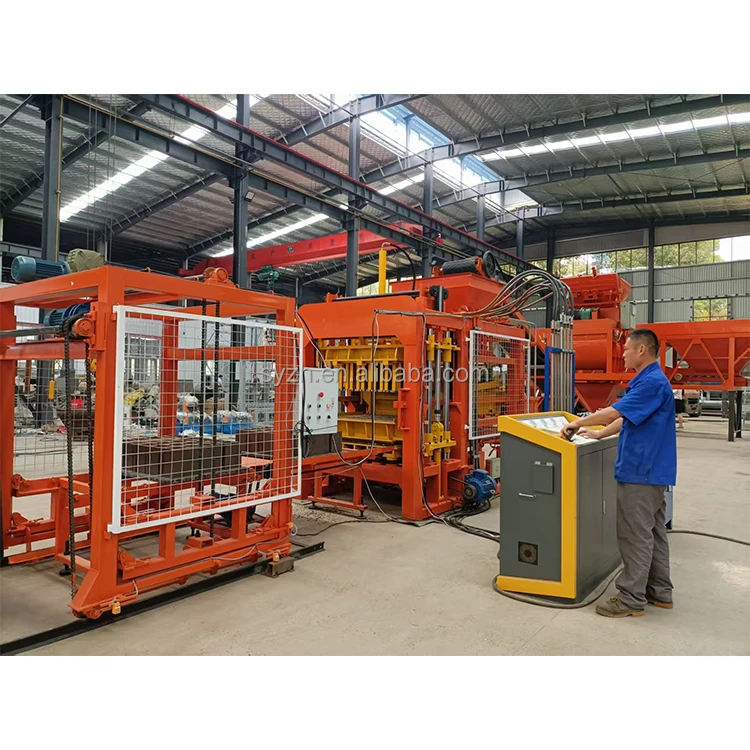
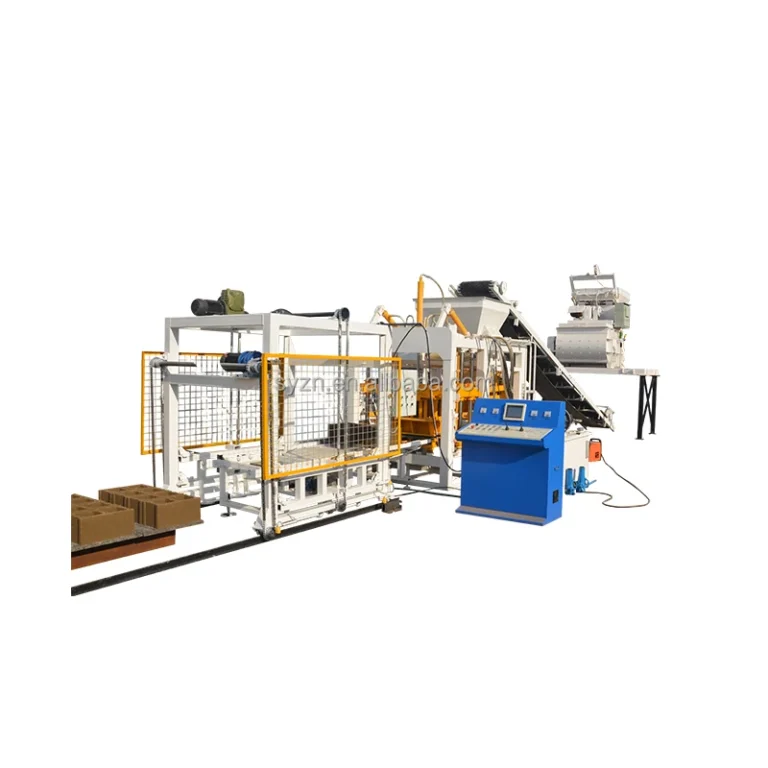
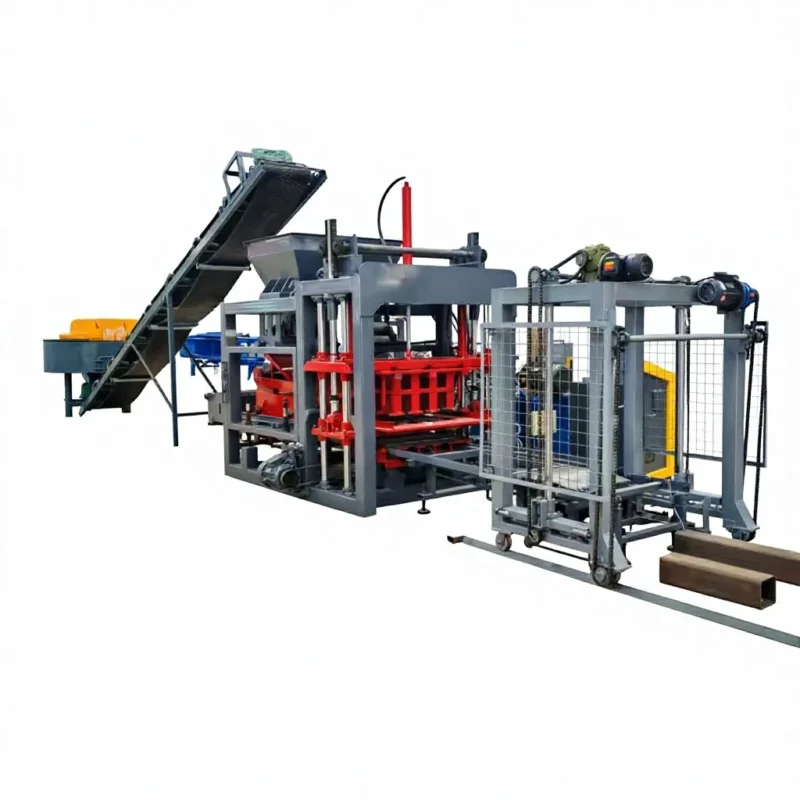
The term "fully automatic" in block machinery can mean different things depending on who is quoting. On the QT4-15A, the PLC governs the press cycle — vibration timing, hydraulic pressure sequence, and demolding stroke. The critical question for a buyer upgrading from semi-automatic operation is whether pallet feeding, wet-product stacking, and cubing are included in the quoted scope or remain separate line items. An automatic block making machine PLC controlled only at the press stage still requires manual pallet handling unless the upstream and downstream stations are specified and matched to the press cycle time.
Matching Automation Level to Your Current Line Layout
Plant owners moving from manual pallet handling need to know exactly where the operator’s role ends and the machine’s role begins. The QT4-15A platform vibration and hydraulic demolding remove the heaviest physical tasks from the press station, but raw material batching accuracy, pallet return speed, and stacking rhythm must all keep pace with the molding cycle or the press waits idle. When planning an automatic block making machine PLC controlled upgrade, the entire line — from mixer discharge to curing rack loading — should be specified as one system rather than assembled from mismatched stations [NEED_CITE: block production line synchronization standards].
Pressure, Vibration, and Pallet Size: Reading the Specs Against Your Mix
The QT4-15A delivers 16–21 MPa rated hydraulic pressure combined with platform vibration at 4200 r/min and 55 kN vibration force. This combination determines how densely the aggregate pack is compacted before the hydraulic head applies final forming pressure. For hollow blocks using coarse crushed stone, higher vibration force drives particles into the mould corners; for smooth-face pavers using fine sand, excessive vibration can cause segregation. The 880×550 mm pallet size must align with the curing rack spacing and forklift fork width already in use at the plant — a mismatch here means either replacing the curing infrastructure or accepting a pallet size that does not fit the handling equipment.
The Hidden Cost of Skipping Configuration Verification
When a block machine arrives configured for a mix the buyer cannot source locally, the options are either to reformulate the concrete blend — risking inconsistent block strength — or to ship in compliant aggregate at a cost that erodes the project margin. A pallet size chosen without checking the curing yard layout forces the plant to re-rack manually or invest in new handling equipment. These are not warranty issues; they are specification failures that surface only after the machine is bolted to the floor. Every unconfirmed parameter — voltage, frequency, PLC language, pallet dimensions — represents a decision the buyer did not make but will pay for [NEED_CITE: common commissioning delays in exported block machinery].
Why Buyers Source the QT4-15A Through This Channel
Block machinery is the single focus here, which means the press, moulds, pallets, and handling equipment are specified as one matched system rather than assembled from separate suppliers. Configuration is set against the buyer’s actual mix design and local aggregate, not a catalogue default. Mould design covers the formats the buyer’s market actually sells, including custom drawings when standard formats do not match local demand. The automation level is selectable — a buyer can start semi-automatic and add pallet feeding or stacking stations later as volume grows. Installation includes on-site commissioning with operator training, so the first production run happens with someone who knows the PLC interface standing beside the operator.
Documentation & Verification
- Machine specification sheet listing confirmed voltage, frequency, and PLC language
- Capacity calculation stating output per specific block format, not a single generic cycle time
- Mould drawing and format list matching buyer’s target products
- Pallet specification with dimensions and material grade confirmed against curing area layout
- Hydraulic and electrical schematic showing rated pressure and circuit protection values
- Factory test record on buyer’s specified block format before dispatch
Installation, Commissioning & Support
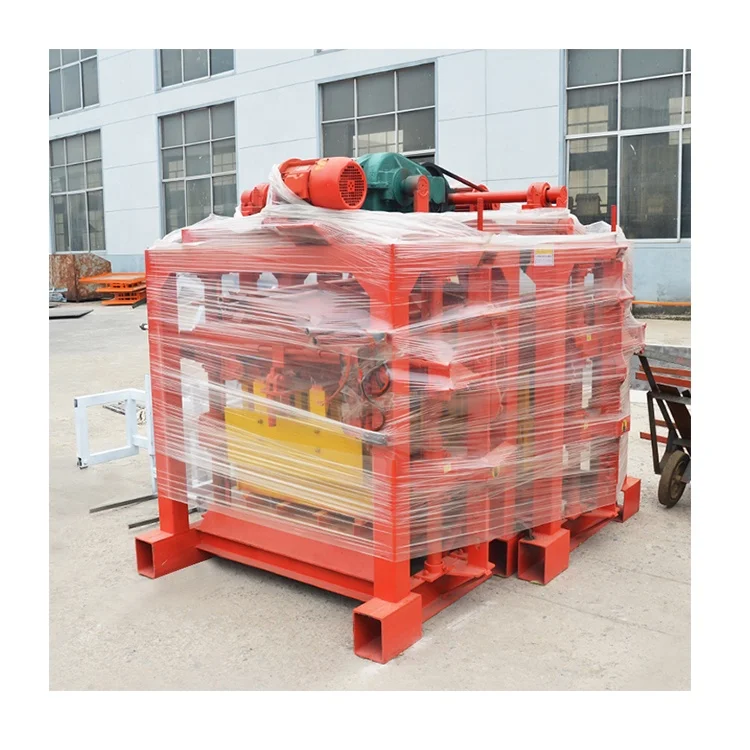
- Foundation must accommodate 4100×1600 mm footprint and 4 T total mass with vibration isolation
- Dedicated power circuit sized for 18.45 kW overall draw at confirmed site voltage and frequency
- PLC display language set and verified during factory test before crating
- Hydraulic system pressurized to 16–21 MPa and demolding stroke verified on buyer’s mould during commissioning
- Pallet size 880×550 mm checked against existing curing racks and forklift fork dimensions on arrival
- Operator training covers PLC alarm codes, mould change procedure, and daily vibration platform inspection
What to Prepare Before Requesting a Quote
To size the QT4-15A correctly, share the block formats your market demands along with the daily output target per format. Confirm the raw materials available locally — type of aggregate, cement grade, and any fly ash or slag supply. Specify site voltage and frequency, the PLC display language your operators need, and whether existing curing racks and forklifts constrain the pallet size.
Frequently Asked Questions
Q: What does "fully automatic" actually include on the QT4-15A?
A: The PLC controls the press cycle including vibration timing, hydraulic pressure sequence, and demolding. Pallet feeding, stacking, and cubing depend on the line configuration quoted. Confirm with the supplier whether upstream and downstream stations are included in the scope or listed as separate equipment.
Q: How do I confirm PLC language and voltage before the machine ships?
A: Request written confirmation of PLC brand, model, display language, and motor voltage/frequency rating before production begins. These values should appear on the machine specification sheet and in the purchase contract. A factory test using your confirmed parameters should be documented before crating.
Q: Why does a single molding cycle number mislead buyers?
A: A cycle time of 25–30 seconds means different things for a 400×200×200 mm hollow block versus a thin interlocking paver. Each format has its own fill time, vibration duration, and demolding stroke. Request a capacity sheet that states cycle time and daily output per specific block format you intend to produce.
Q: Can the QT4-15A be upgraded from semi-automatic operation later?
A: Yes. The automation level is selectable, meaning a buyer can start with manual pallet handling and add automatic pallet feeding, stacking, or cubing stations as production volume grows. The press and PLC architecture support this expansion without replacing the core machine.
Q: How must vibration force match local aggregate for consistent block strength?
A: The 55 kN vibration force at 4200 r/min must be matched to the particle size distribution of the buyer’s local aggregate. Coarse crushed stone requires strong vibration for mould corner fill, while fine sand blends need lower amplitude to prevent material segregation. The mix design and vibration settings should be validated together during commissioning.