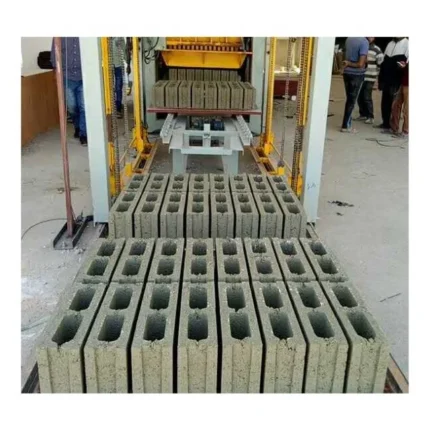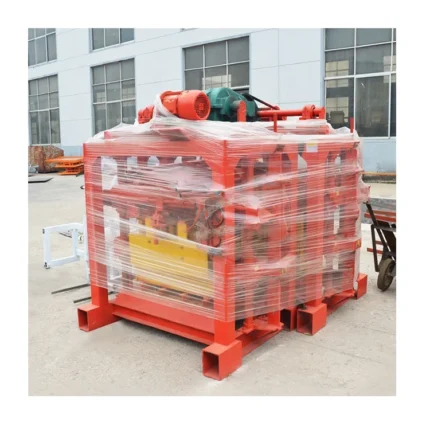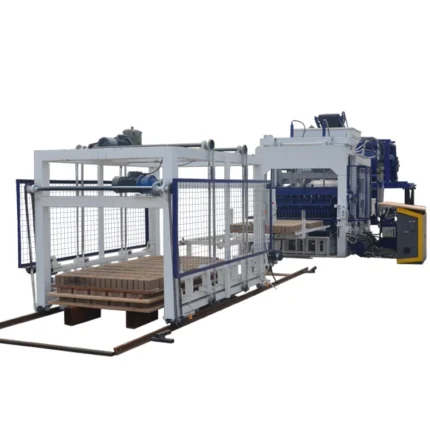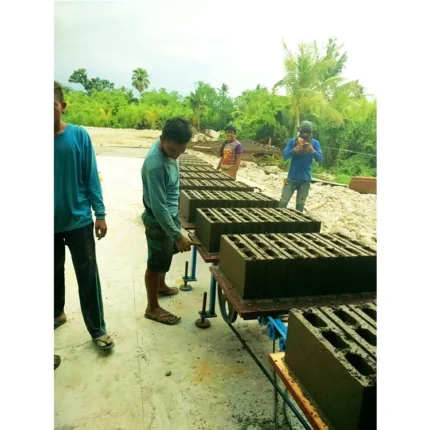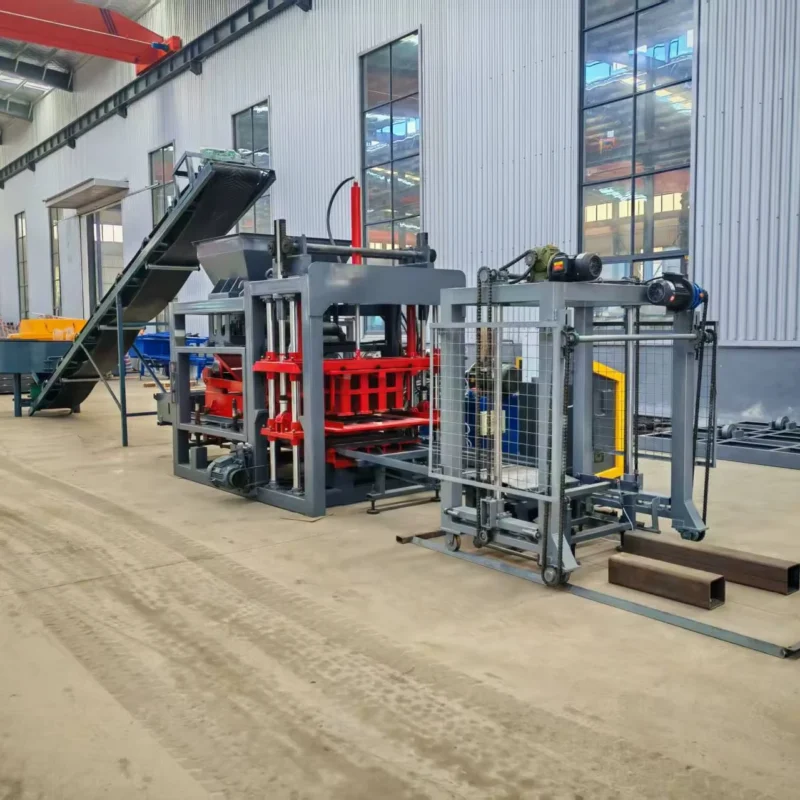
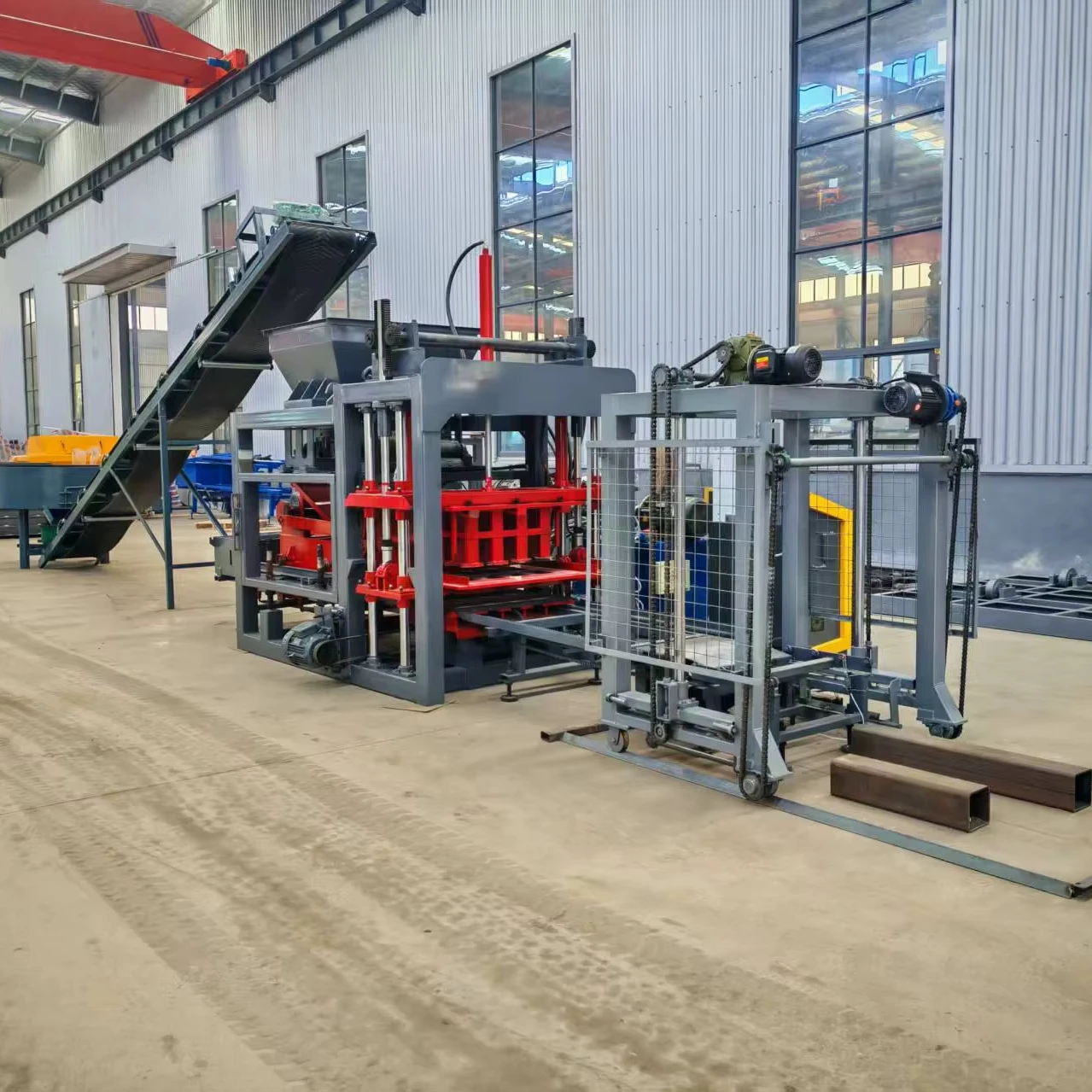


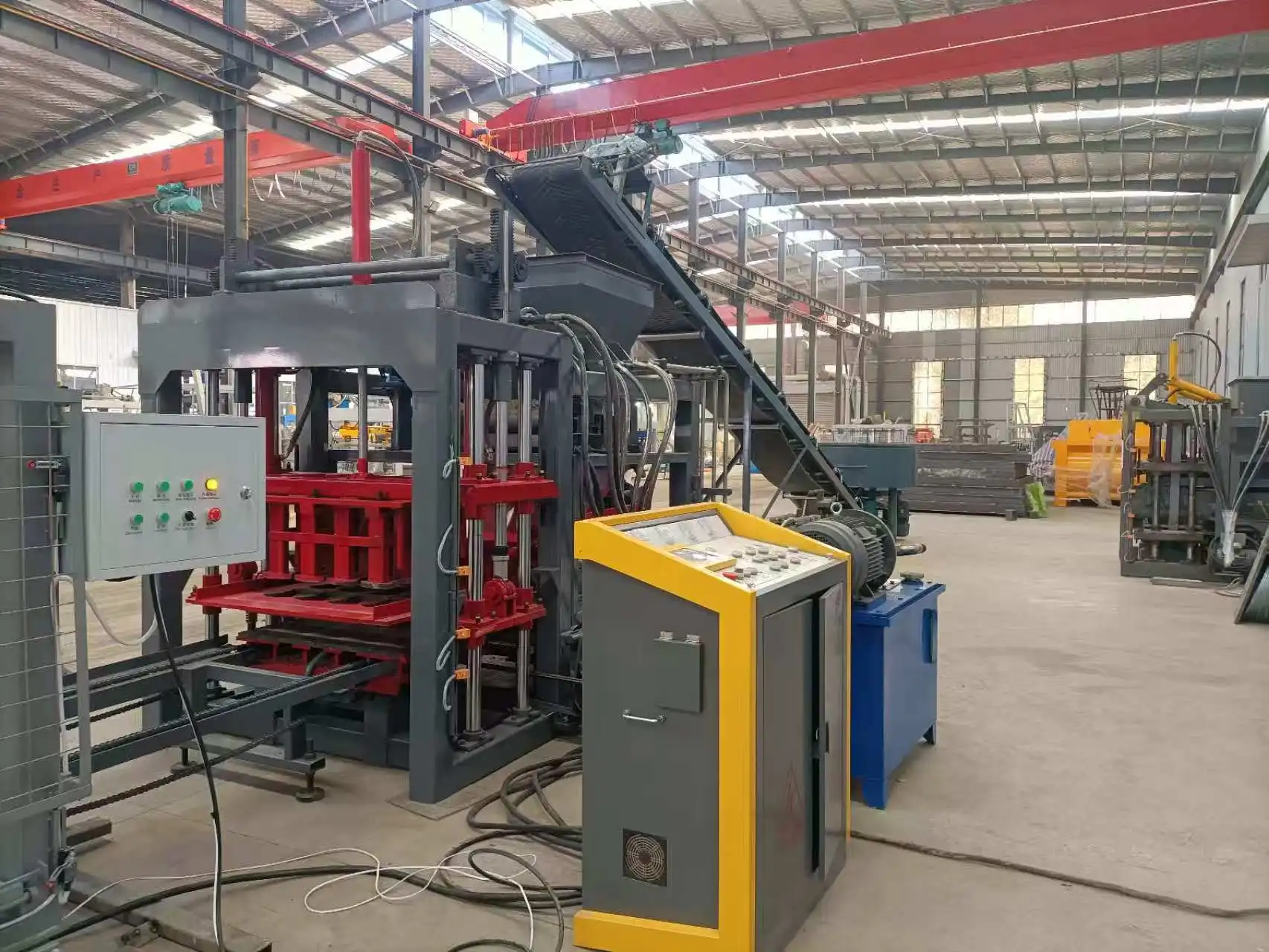
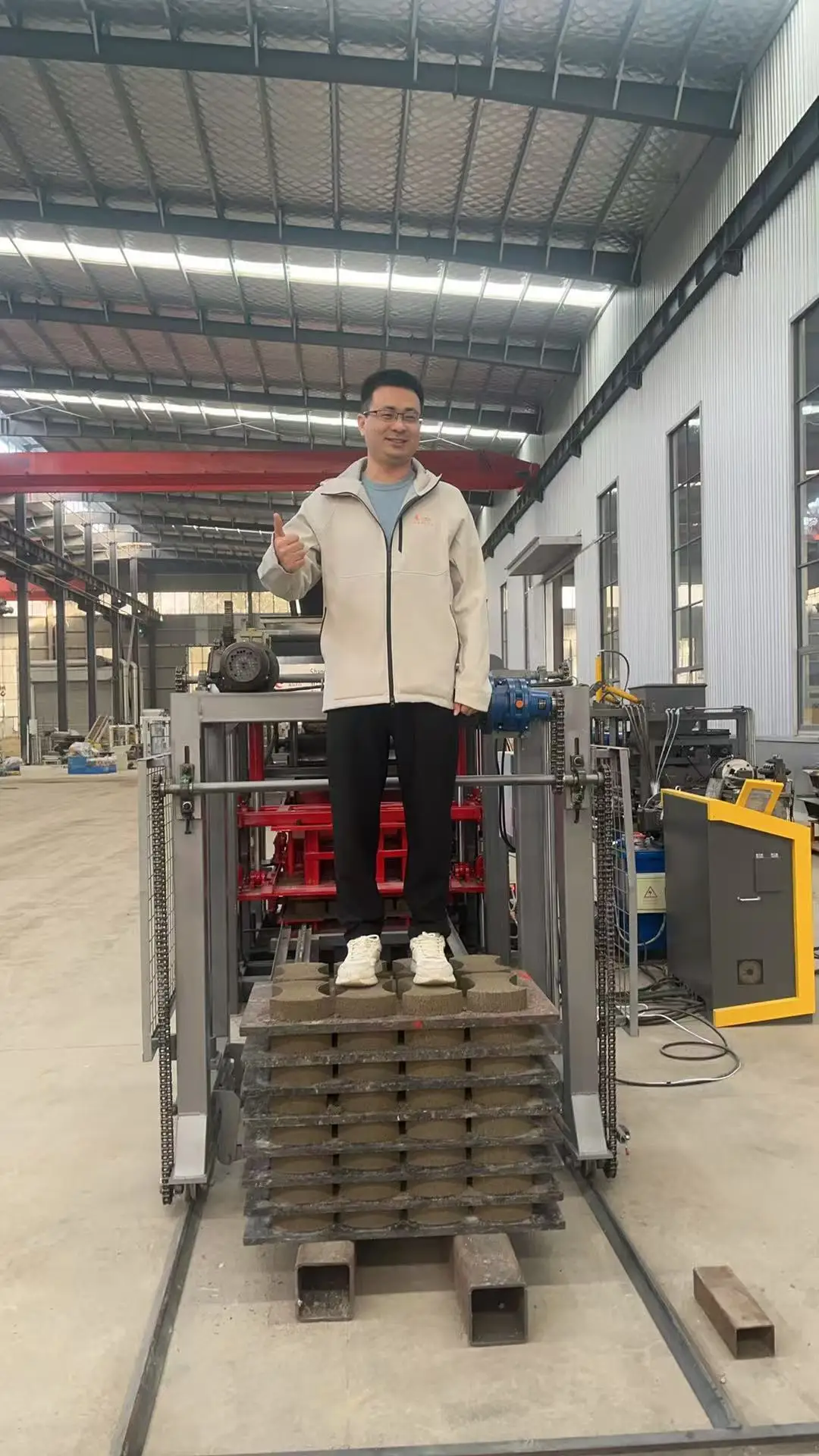
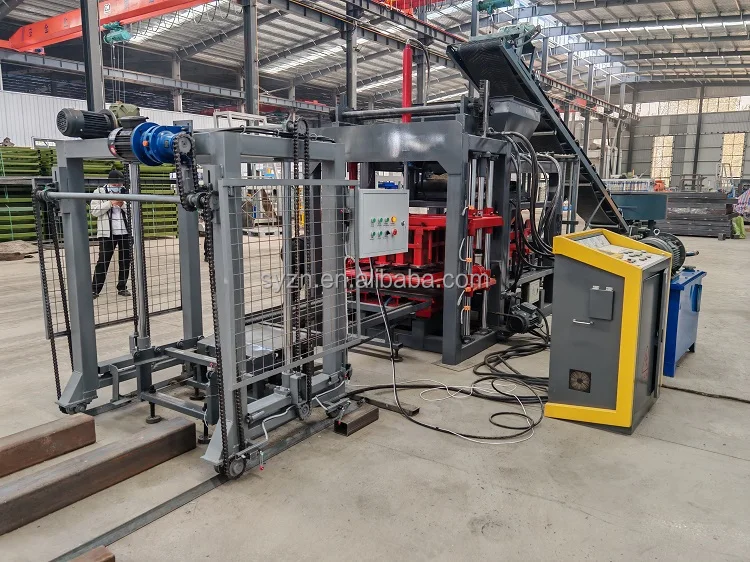
Description
Intelligent Control Integration — A Siemens PLC coordinates hydraulic pressure, vibration force, and cycle timing on the QT4-15, ensuring every block leaving the press matches the first pallet of the shift without manual parameter adjustment.
Technical Specifications
| Parameter | Value |
|---|---|
| Model | QT4-15 |
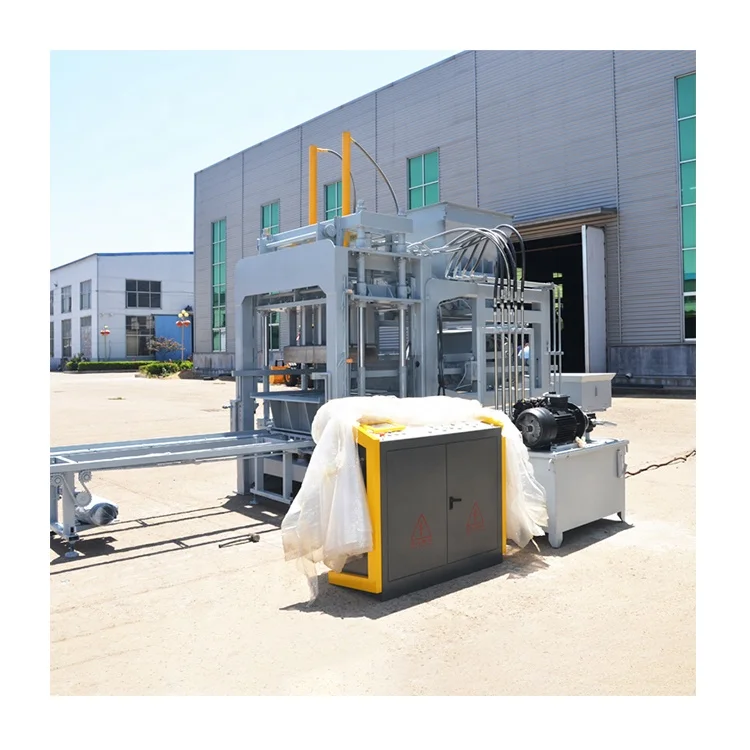
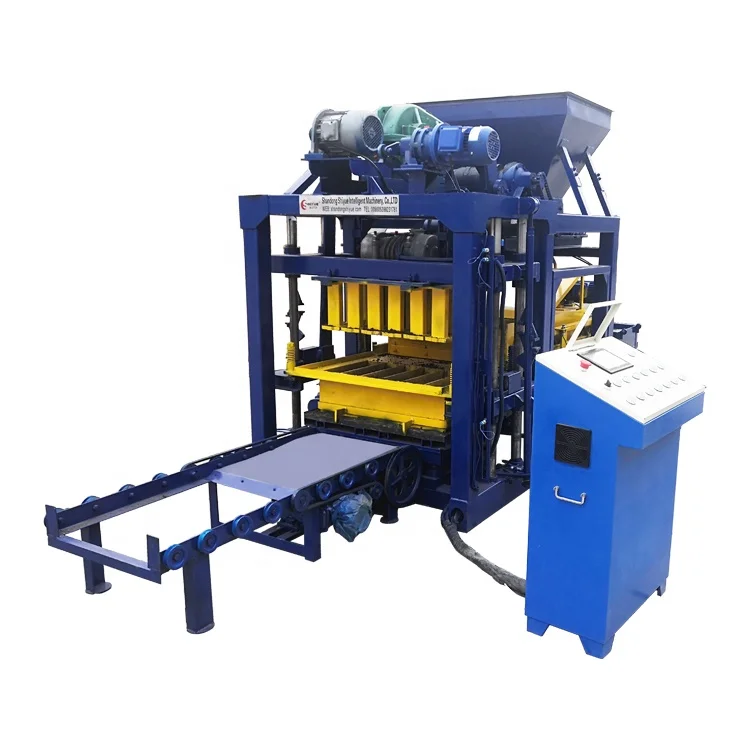
| Product Type | Full Automatic Hydraulic Block Making Machine |
| Overall Dimensions (L×W×H) | 7100×1600×2610 mm |
| Host Machine Dimensions | 2800×1800×2550 mm |
| Rated Hydraulic Pressure | 16 MPa |
| Main Vibration Form | Platform Vibration |
| Vibration Frequency | 4600 r/min |
| Vibration Force | 40 kN |
| Pallet Size | 950×550×20/25 mm |
| Molding Cycle | 15–25 s (basis not stated in source — confirm block format / material / thickness) |
| Overall Power | 27.5 kW |
| Host Machine Power | 19.2 kW |
| General Water Consumption | 4 T/day |
| Total Mass | 5 T |
| Control System | PLC (original Siemens PLC with independently developed control program) |
| Motor Brand Options | Siemens or ABB (according to buyer needs) |
| Hydraulic Valve | Double proportional hydraulic valve (Calyca or Youken brand) |
| Automation Level | Full automatic |
| Output Capacity — Hollow Brick | 720–960 pcs/h (based on 390×190×190 mm, 4 pcs/mold, 15–20 s cycle) |
| Output Capacity — Porous Brick | 2520–3360 pcs/h (based on 240×115×90 mm, 14 pcs/mold, 15–20 s cycle) |
| Output Capacity — Standard Brick | 5930–6720 pcs/h (based on 240×115×53 mm, 28 pcs/mold, 15–17 s cycle) |
| Warranty | 1 year for the whole machine (excluding spare parts) |
Application Suitability
| Application | Material or Output |
|---|---|
| Hollow block production for residential and commercial wall construction | Crushed stone, sand, cement, and fly ash aggregates |
| Paving brick manufacturing for roads, walkways, and parking areas | Coarse aggregate blends with high cementitious content |
| Porous brick production for lightweight partition walls | Lightweight aggregates, perlite, or expanded clay mixes |
| Standard solid brick production for load-bearing masonry | Dense aggregate and cement mixtures requiring high compaction |
| Interlocking brick production for retaining walls and landscaping | Interlocking profile moulds with dry-cast concrete mixes |
Why Cycle Consistency Matters More Than Quoted Output
The automatic QT4-15 block making machine PLC controlled stores process parameters per mould format, removing the manual adjustments that cause shift-to-shift density variation.
A block plant in Eastern Europe ran a German-designed press where the operator reset pressure and vibration by feel every time the aggregate moisture drifted. Output looked impressive on paper, but compressive strength scatter across batches failed local building code audits [NEED_CITE: CE machinery directive requirements for industrial equipment]. When vibration frequency and hydraulic timing are left to manual input, the real daily yield of compliant blocks falls noticeably short of the quoted figure. The QT4-15 addresses this by locking the entire pressing sequence into the PLC program, so the 16 MPa hydraulic ramp and the 4600 r/min vibration profile execute identically on the last pallet of the day as on the first.
How the PLC Removes Operator Guesswork
The automatic QT4-15 block making machine PLC controlled uses an original Siemens unit running an independently developed program that sequences the feed hopper, hydraulic press, and platform vibration into a single coordinated cycle. When a mould change is required, the operator selects the stored recipe for that format, and the system recalls the exact pressure ramp, vibration duration, and dwell time. This eliminates the trial-and-error period that typically consumes the first hour after a format switch on manually operated presses.
What Full Automation Actually Covers on This Line
Full automatic operation on the QT4-15 extends beyond the press itself. The PLC coordinates the pallet feed, raw material batching, and product stacking sequences so that the host machine is never left waiting for a pallet or a mix batch [NEED_CITE: automation integration standards for concrete block production lines]. Motor selection between Siemens and ABB allows the buyer to align drive components with existing plant inventory or the local service network, reducing the lead time for replacement parts.
Reading the Specs That Determine Block Quality
The rated hydraulic pressure of 16 MPa combined with 40 kN vibration force at 4600 r/min defines the compaction energy delivered to each mould cavity. In block making, hydraulic pressure consolidates the mix while vibration liquefies it momentarily, allowing particles to settle into a dense arrangement; if either parameter is under-matched to the aggregate gradation, the block emerges with internal voids and lower compressive strength. The 950×550 mm pallet size dictates the curing rack dimensions and the forklift capacity required in the yard, so confirming pallet compatibility with existing handling equipment avoids costly yard reconfiguration. The double proportional hydraulic valve, supplied in Calyca or Youken brand options, provides smooth pressure ramp-up rather than a sudden spike, which protects mould edges and extends wear part life.
The Hidden Cost of Skipping Voltage and Language Confirmation
A press arriving on site with a 380V/50Hz motor in a country running 440V/60Hz will either burn out within weeks or require a complete motor and transformer replacement before commissioning can begin [NEED_CITE: voltage and frequency standards by export market]. Similarly, a PLC display in a language the operator team cannot read turns a sophisticated control system into a source of errors rather than a safeguard. These two items, if not confirmed in writing before production starts, account for a significant share of delayed startups and warranty disputes on exported block machinery.
Why Source the QT4-15 From a Block-Machinery-Focused Supplier
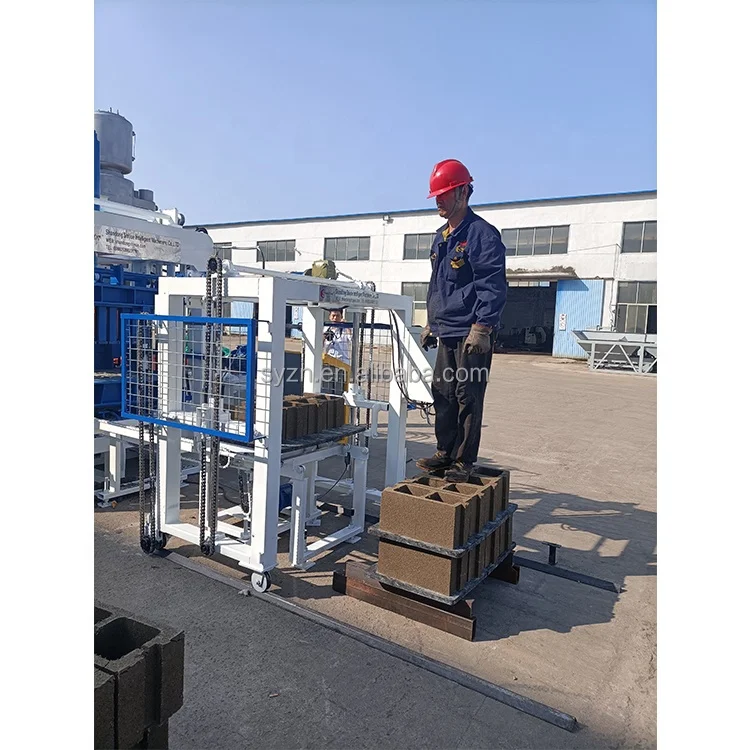
Block machinery is our single product focus, so the QT4-15 is specified as a matched system of press, mould, pallet, and handling equipment rather than assembled from separate vendor catalogues. Configuration starts from the buyer’s actual mix design and local aggregate sieve analysis, not a default setting. Mould design covers the formats the buyer’s market actually sells, including custom profiles drawn to buyer specifications. The automation level is selectable, meaning a plant can commission the QT4-15 in semi-automatic mode and add automatic stacking later without replacing the host machine. Factory testing runs the buyer’s target mould with parameters logged by the PLC before the machine is crated for shipment.
Documentation & Verification
- Line layout drawing showing QT4-15 footprint with pallet feed and stacking station positions
- Capacity calculation sheet stating output per block format with the mould and cycle time assumed
- Factory test record including PLC parameter log from a run with the buyer’s target mould
- Hydraulic and electrical schematic showing Siemens PLC I/O mapping and valve circuit
- Voltage and frequency confirmation sheet signed before production begins
- Operation and maintenance manual in the buyer’s specified language
Installation, Commissioning & Support
- Foundation plan specifying load-bearing requirements for the 5 T host machine and 7100 mm line length
- Dedicated 27.5 kW circuit specification with breaker sizing for the overall power draw
- Host machine dismantling state for container loading and reassembly sequence on site
- On-site PLC parameter tuning against the buyer’s actual aggregate and mix moisture content
- Operator training covering PLC recipe selection, mould change procedure, and daily greasing points
- Wear parts list with hydraulic seal kits and mould liner replacement intervals
What to Include With Your Enquiry
Provide the block formats your market sells most, including dimensions and required compressive strength, so that the mould and cycle parameters can be configured before the quotation stage. Confirm your site voltage, frequency, and the language your operators read, as these determine the motor winding and PLC interface configuration. Share your local aggregate sieve analysis and cement source so that the vibration profile can be matched to your actual mix design rather than a generic default.
Frequently Asked Questions
Q: How does the PLC store and recall parameters for different mould formats, and can the operator add new programmes on-site?
A: The Siemens PLC stores a recipe for each mould format, including hydraulic pressure ramp, vibration duration, and dwell time. Operators select the recipe from the HMI menu before a run. New programmes can be created on-site through the control interface, allowing the plant to add mould formats as market demand shifts without waiting for a factory technician.
Q: What voltage and frequency configurations are available, and is the PLC display language confirmed before dispatch?
A: Motor and control cabinet are built to the voltage and frequency of the destination grid, confirmed in writing before production. The PLC display language is specified during the order stage and verified during factory testing. This prevents commissioning delays caused by mismatched electrical supply or unreadable interface text.
Q: How does the automation level affect labour count on the block line?
A: Full automatic operation covers pallet feeding, material batching, pressing cycle, and stacking, reducing manual tasks mainly to mould changes, raw material loading into the hopper, and quality sampling. The PLC coordinates timing between stations so the press does not idle between cycles, which keeps output consistent across shifts without adding skilled operators.
Q: What is the upgrade path from semi-automatic operation to full automatic stacking and cubing?
A: The QT4-15 platform supports a staged upgrade. A buyer can commission the press with manual pallet handling and add automatic pallet feeding, stacking, and cubing modules later. The Siemens PLC architecture accommodates these additions through reserved I/O channels, so the control system does not require replacement during the upgrade.
Q: How is hydraulic pressure and vibration matched to a specific mix design before shipment?
A: During factory testing, the buyer’s target mould is installed and the machine runs with an aggregate sample or a documented mix ratio. The PLC logs the pressure curve and vibration profile for that run, and adjustments are made until block density and surface finish meet the buyer’s requirements. The logged parameters are saved as the default recipe for that mould.