

Description
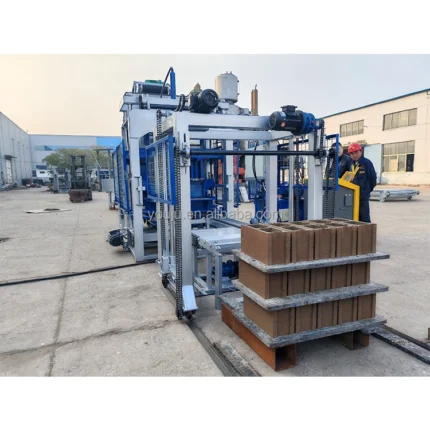
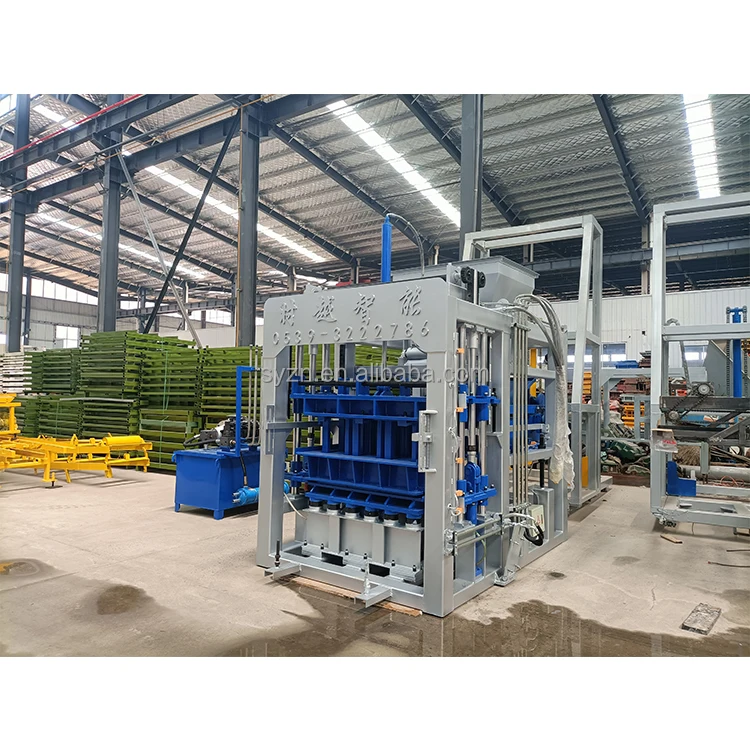
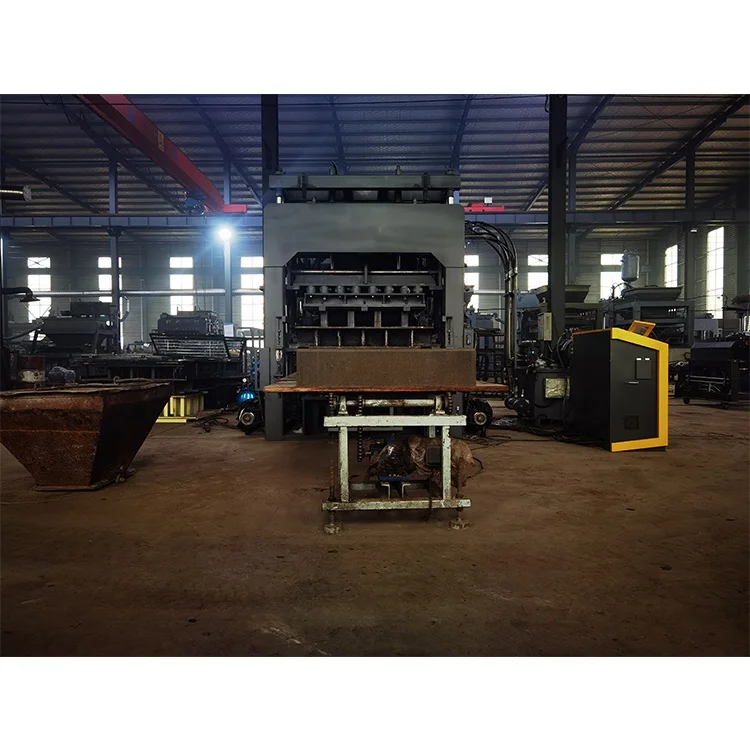
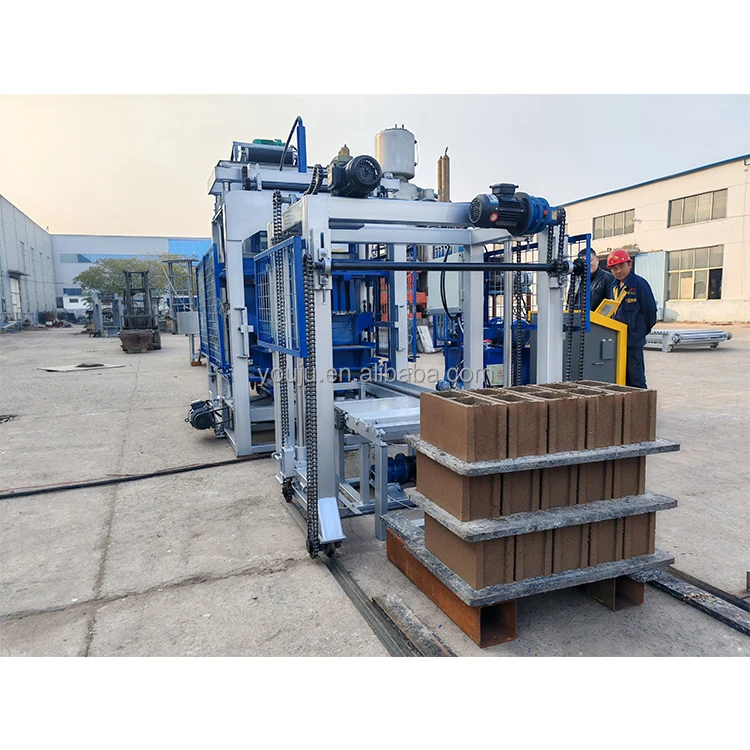
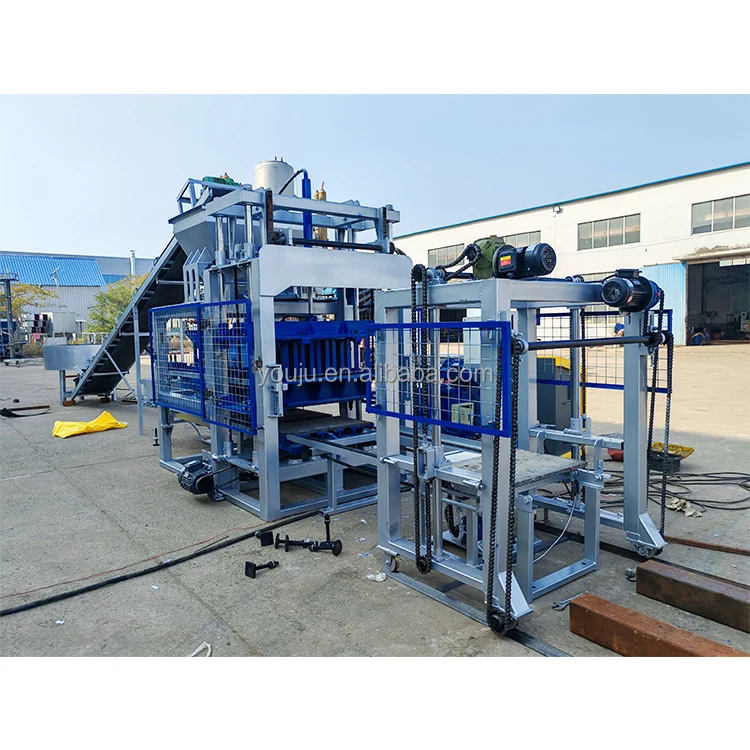
Matched System Design — the QT4-15 PLC controlled automatic block making machine integrates press, pallet handling and control logic as one coordinated unit rather than a collection of independent components.
Technical Specifications
| Parameter | Value |
|---|---|
| Model | QT4-15 |
| Product Type | Hydraulic Automatic Concrete Block Making Machine |
| Control System | PLC controlled with approach switch monitoring |
| Molding Cycle | 15–30s (basis not stated in source — confirm block format / material / thickness) |
| Pallet Size | 900×500mm |
| Vibration Type | Platform vibration |
| Vibration Frequency | 50–70 Hz |
| Product Height Range | 50–220mm |
| Overall Power | 24.5 kW |
| Demolding Method | Hydraulic |
| Automation Level | Automatic pallet feeding, material feeding, vibrating, demoulding |
| Block Compressive Strength | >15 MPa |
| Output Capacity (Hollow Block 400×200×200mm) | 900–1200 pcs/h (based on 4 pcs/mould, 15–20s cycle) |
| Output Capacity (Hollow Block 400×150×200mm) | 1080–1440 pcs/h (based on 5 pcs/mould, 15–20s cycle) |
| Output Capacity (Hollow Block 400×100×200mm) | 1440–1920 pcs/h (based on 8 pcs/mould, 15–20s cycle) |
| Output Capacity (Paver 200×100×60mm) | 2880–3840 pcs/h (based on 16 pcs/mould, 15–20s cycle) |
| Output Capacity (Solid Brick 240×115×53mm) | 5930–6720 pcs/h (based on 28 pcs/mould, 15–20s cycle) |
| Raw Materials | Fly ash, slag, gangue, sand, crushed stone, cement, water |
| Electrical & Hydraulic Components | Original imported or Chinese well-known brand (source value — verify against manufacturer catalog) |
| Voltage & Frequency | Configurable to target market (to be confirmed before production) |
Application Suitability
| Application | Material or Output |
|---|---|
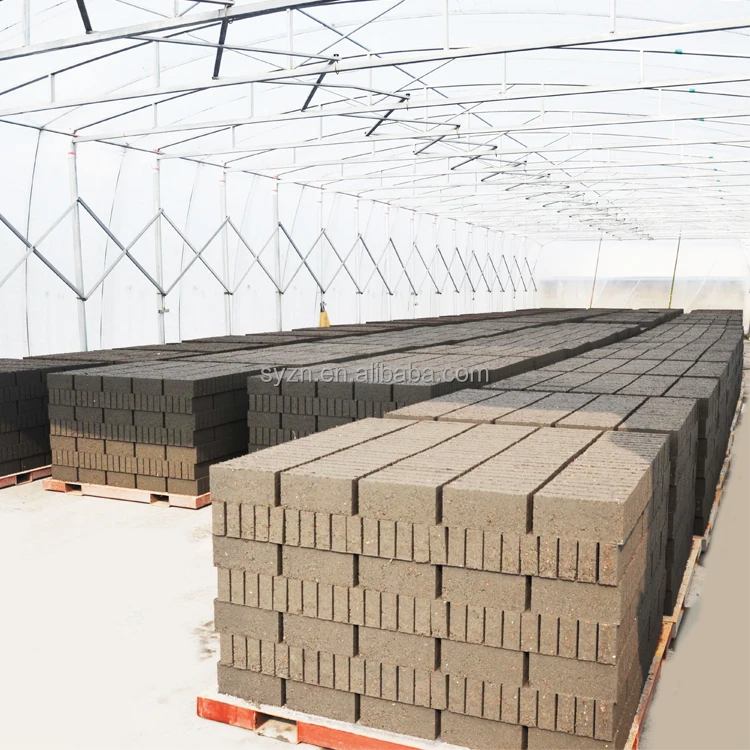
| Hollow block production for building construction | Fly ash, sand, crushed stone blended with cement |
| Paving brick production for roads and landscaping | Crushed stone and cement with fine aggregate face mix |
| Solid brick production for masonry | Slag, gangue and sand with cement binder |
| Industrial residue utilization | Fly ash, slag and gangue incorporated into block matrix |
| Small to medium-scale block plants | Single-line setup producing multiple formats on 900×500mm pallets |
What "Automatic" Actually Means on the QT4-15 PLC Controlled Automatic Block Making Machine
The automation scope must be defined line-item by line-item before the quotation is signed.
I have watched plant owners receive a machine labelled "automatic" and then discover that pallet return, stacking and curing rack handling were never part of the package. The operator ends up feeding pallets by hand and stacking wet blocks on the floor — the press runs automatically, but the line around it does not. The QT4-15 PLC controlled automatic block making machine covers pallet feeding, material feeding, vibrating and hydraulic demoulding under PLC logic, but the extent of downstream automation depends on the configuration you select [NEED_CITE: automation scope definitions in block machinery quotations].
PLC Logic That Watches Every Stroke
The QT4-15 uses approach switches to confirm pallet position, mould closure and demoulding height before the PLC allows the next step. If a pallet is misaligned or the hydraulic ram has not reached its set point, the cycle pauses rather than forcing through and damaging the mould. This eliminates the most common cause of mid-shift downtime on semi-automatic lines where the operator must watch every transition.
Removing the Operator from the Cycle
On a manual or egg-laying machine, the operator decides when to vibrate, when to stop and when to strip the mould. Shift-to-shift variation in block density follows directly from that human judgement. With the QT4-15 PLC controlled automatic block making machine, vibration duration, hydraulic pressure and feed volume are set once per mould and then repeated identically for every cycle. The operator supervises rather than executes, which is what keeps compressive strength above 15 MPa consistently [NEED_CITE: PLC monitoring and batch-to-batch consistency in concrete block production].
Reading the Numbers Behind the Cycle Time
The 15–30s molding cycle range depends on block format, material and thickness — a 400×200×200mm hollow block with four cavities fills and strips faster than a thin paver that requires a longer vibration window for surface finish. Platform vibration at 50–70 Hz compacts the mix from below, and hydraulic demoulding lifts the mould box without dragging the block. The 24.5 kW overall power figure includes the vibration motor, hydraulic pump and feeder — it is the draw for the press itself, not the full line with mixer and conveyor. Pallet size at 900×500mm determines what fits on your existing curing racks and forklift tines, so confirm that dimension against your site before locking the order.
When the Quoted Automation Stops at the Press
A plant I visited in the Gulf region had an automatic press running smoothly while two workers manually stacked wet blocks in the heat. The quotation had covered the press only, and the buyer assumed stacking was included. That gap between expectation and delivery is where labour costs silently double and block damage before curing begins eats into saleable output [NEED_CITE: hidden costs of incomplete automation scope in block plant projects]. Clarifying whether pallet return, automatic stacking and cubing are in the package — or budgeted as a future phase — is the conversation that protects your real output.
Why This Machine Fits a Specific Upgrade Point
The QT4-15 sits at the threshold where a plant outgrows manual operation but does not yet justify a high-capacity line. Block machinery as a single focus means the press, mould, pallet and control are specified together against your actual mix design and local aggregate, not pulled from separate catalogues. The PLC manages cycle parameters for hollow blocks, pavers and solid bricks on the same 900×500mm pallet, so switching formats does not mean reprogramming from scratch. Voltage, frequency and display language are confirmed before production, not discovered at commissioning. Mould design and supply for the formats your market actually sells are included, with custom drawings available when standard formats do not match local demand.
Documentation & Verification
- Line layout showing QT4-15 stations with pallet flow direction and footprint
- Capacity calculation per block format stating the mould and cycle assumed
- PLC I/O list and approach switch positions mapped to each machine function
- Electrical schematic with voltage and frequency matching your site supply
- Factory test record on your specified block format before dispatch
- Hydraulic circuit diagram for integration with existing plant piping
Installation, Commissioning & Support
- Foundation pad level to tolerance for the QT4-15 platform vibration isolation
- Dedicated circuit rated for 24.5 kW plus upstream mixer and conveyor load
- PLC display language and voltage verified before the machine leaves the factory
- First-run parameter tuning on your local aggregate and cement mix design
- Operator training covering PLC fault codes and approach switch adjustment
- Wear parts list with mould and hydraulic seal part numbers for reorder
What to Prepare Before the Enquiry
Send your target block formats with dimensions, the daily output you need per format, and the local aggregate type you plan to use. Confirm the voltage and frequency at your site, the language required on the PLC display, and whether you already have pallets and curing racks so the pallet size can be matched. If you are replacing an existing manual line, describe what equipment stays and what is removed so the automation boundary is drawn correctly.
Frequently Asked Questions
Q: What automation functions are included and what remains manual?
A: The standard QT4-15 configuration covers automatic pallet feeding, material feeding, vibration and hydraulic demoulding under PLC control. Downstream functions such as block stacking, cubing and curing rack handling depend on the option package selected. Each line item is listed separately in the quotation so you can see exactly what is included and what can be added later.
Q: Can the PLC display language and voltage match my country?
A: Yes. Voltage, frequency and PLC interface language are confirmed with the buyer before production starts. The electrical schematic is then built to those specifications, so the machine arrives ready for connection without on-site rewiring or a translator standing next to the operator during commissioning.
Q: How does cycle time differ between hollow blocks and pavers?
A: Cycle time varies with block format, material and product thickness. A hollow block with fewer cavities fills and demoulds in a shorter window, while pavers may need extended vibration for surface finish. The quotation includes a capacity calculation for each format you plan to produce, based on the mould configuration and cycle time for that specific block.
Q: Can I start with semi-automatic handling and add full automation later?
A: The QT4-15 platform supports this path. You can begin with automatic press functions and manual pallet return, then add automatic stacking and cubing as production volume grows. The PLC architecture accommodates the additional sensors and actuators without replacing the main controller, provided the upgrade provisions are planned at the initial order stage.
Q: How is block consistency maintained from one shift to the next?
A: PLC-controlled parameters for vibration duration, hydraulic pressure and material feed volume remain fixed across shifts once set for a given mould. Approach switches verify pallet and ram position before each cycle step proceeds. This removes operator judgement from the forming process and keeps compressive strength within the target range regardless of who is supervising the line.