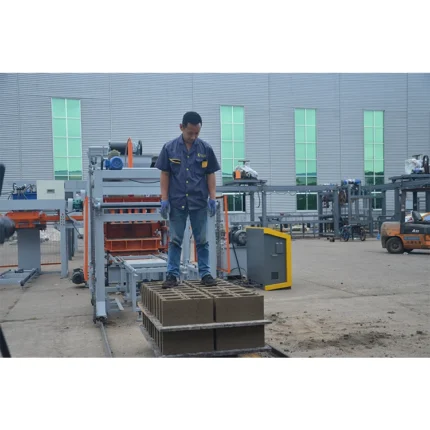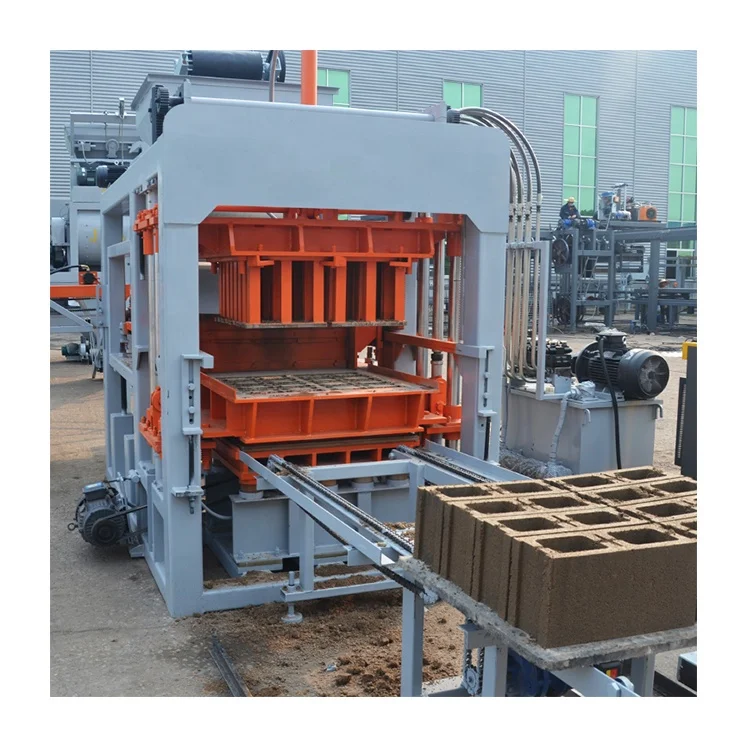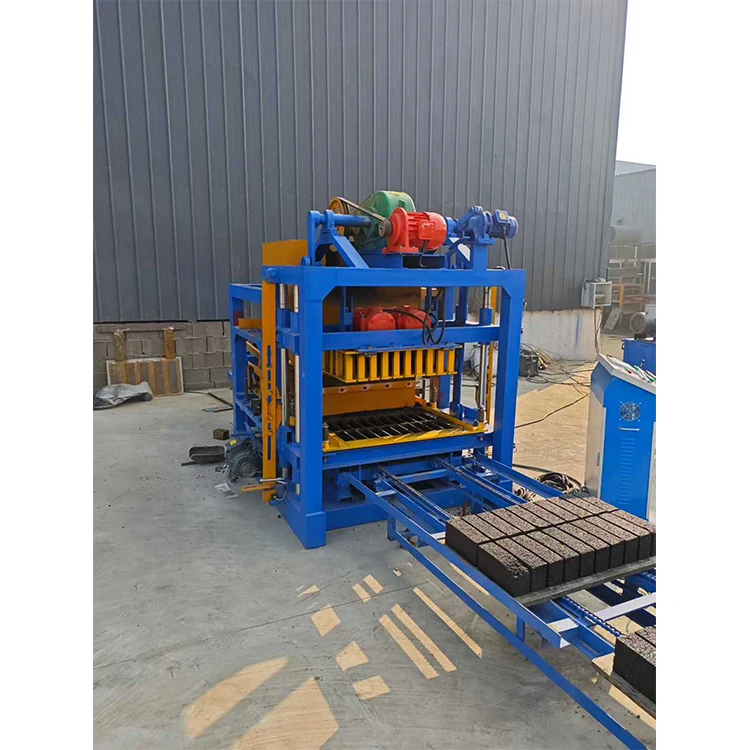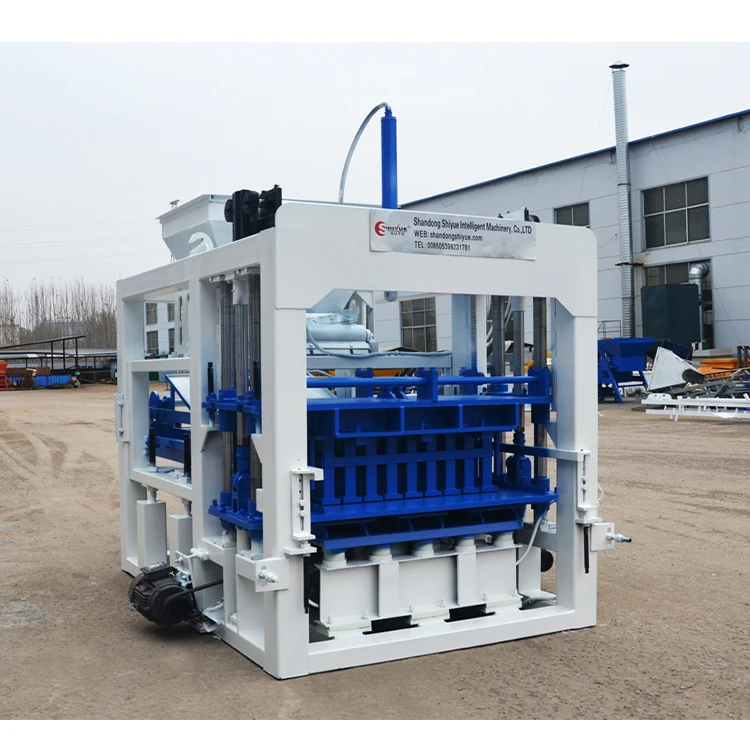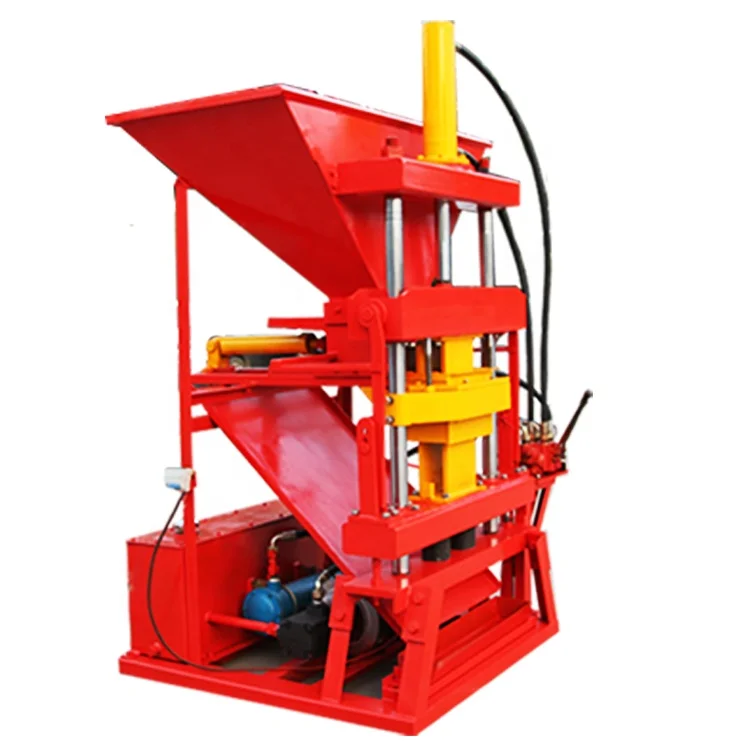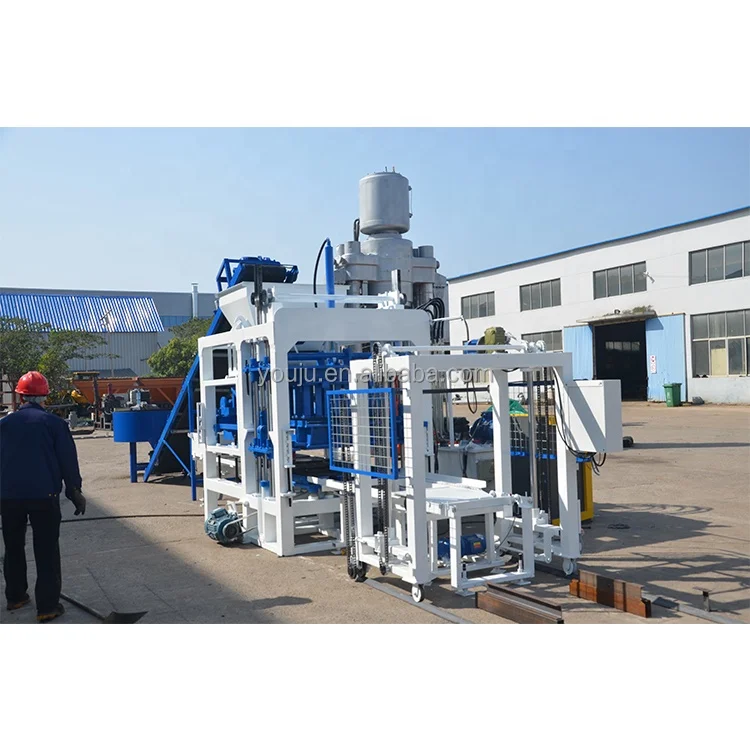
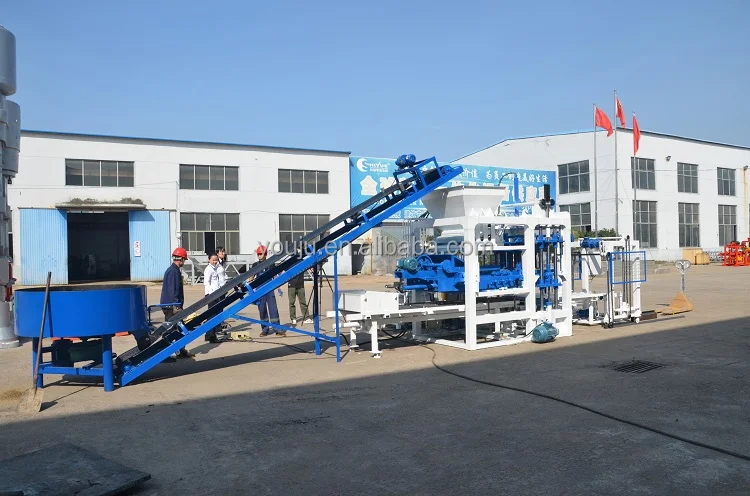
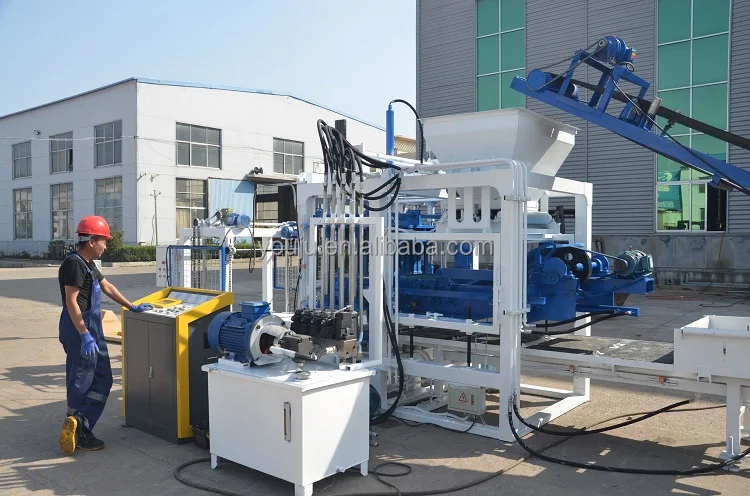
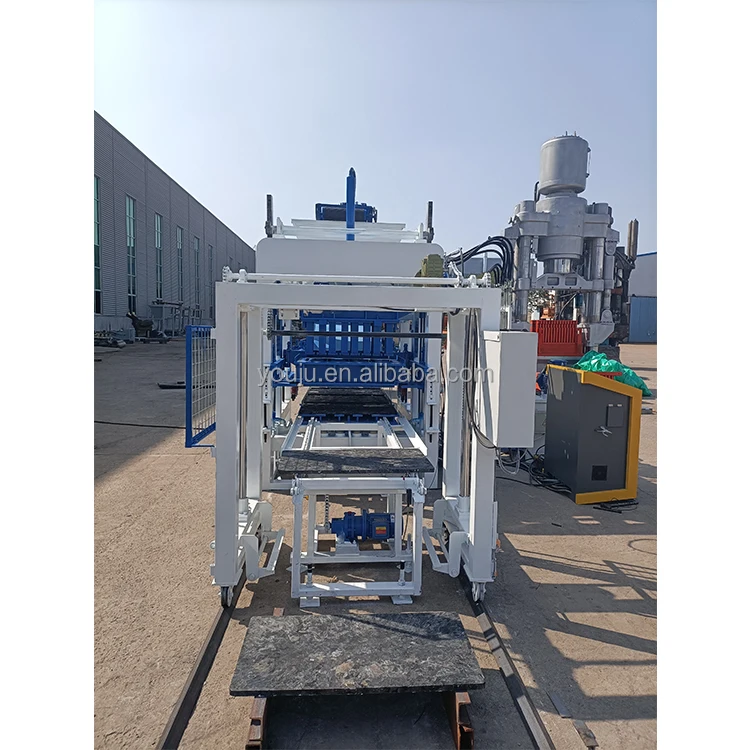
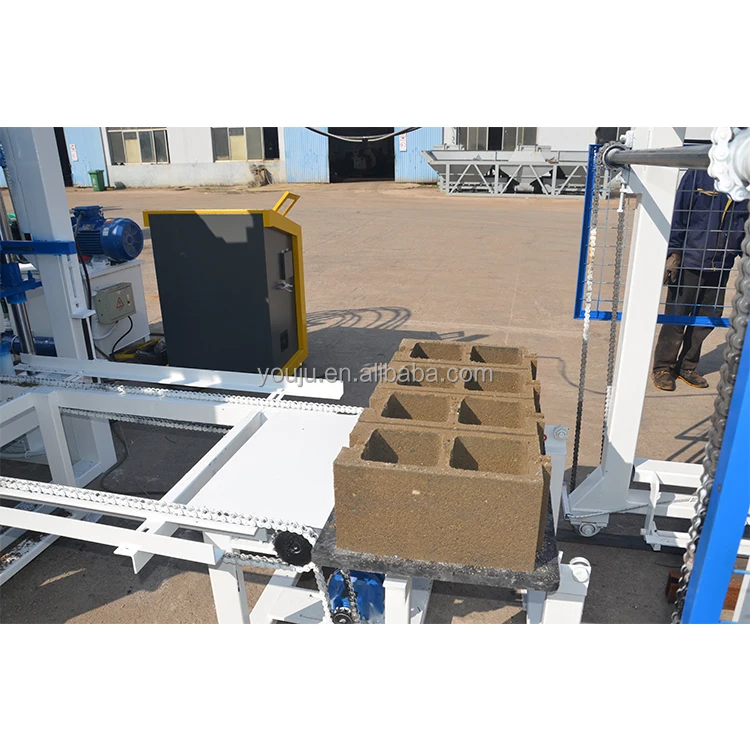
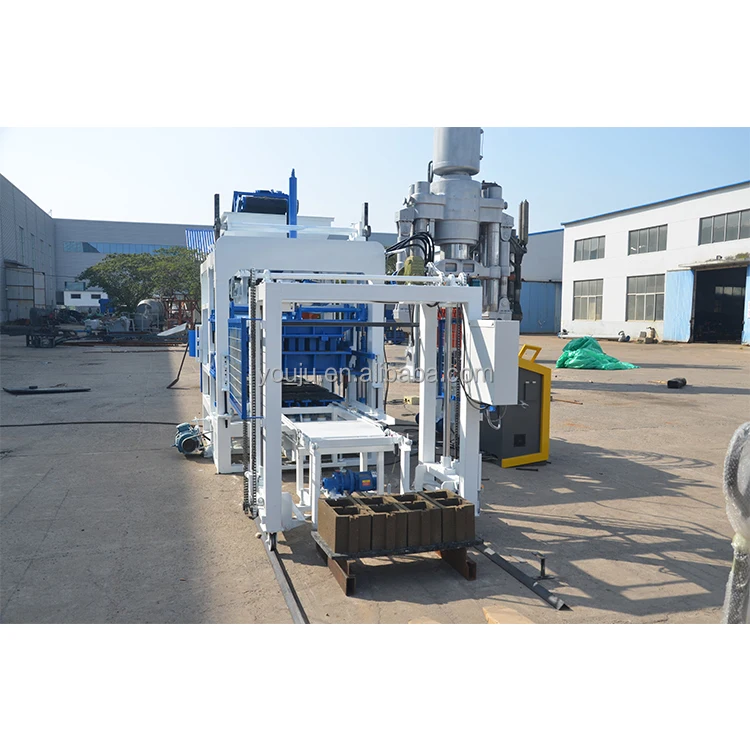
Description
System-Matched Configuration — Automation level and control parameters are tuned to the buyer’s actual mix design and block format, not a catalogue default.
Technical Specifications
| Parameter | Value |
|---|---|
| Model | QT4-18 |
| Product Type | Automatic Block Making Machine |
| Overall Dimensions | 2500×1750×2200 mm |
| Rated Hydraulic Pressure | 16 MPa |
| Vibration Form | Platform Vibration |
| Pallet Size | 950×550 mm |
| Molding Cycle | 18–25 s (basis: block format to be confirmed) |
| Overall Power | 27.5 kW |
| Control System | PLC control with frequency converter |
| Electrical Components | Schneider |
| Mold Lifting Mechanism | Double-sided synchronous gears |
| Material Feeder | Distribution belt hopper |
| Automation Level | Automatic (mixer, pallet conveyor, molding machine, block conveyor, hydraulic station, electronic console) |
| Mould Change Method | Manual bolt removal and conveyor-assisted exchange |
| Voltage & Frequency | Configurable — confirm with buyer’s site requirement (basis not stated in source) |
| Net Weight | Basis not stated in source |
| Output Capacity | Basis not stated in source — confirm block format, material, and thickness |
| Mould Format | Hollow block included; extra moulds customizable |
| Supporting Equipment Options | JQ500 pan mixer, 8 m / 6 m belt conveyor, stacker, block clamper, trolley, cement silo, batching plant |
Application Suitability
| Application | Material or Output |
|---|---|
| Hollow block production for block plants | Crushed stone, cement, sand, and lightweight aggregate mixes |
| Solid block manufacturing for housing projects | Standard concrete mixes with local sand and gravel |
| Paving block production for contractors | High-density concrete with fine aggregate and pigment additives |
Why the PLC Language Question Must Come Before the Price
An automatic block making machine PLC controlled in the wrong language is a manual machine with an expensive screen.
I once watched a Dubai site crew stand around a freshly commissioned block line because the PLC interface shipped in Chinese. The operator could not read a single menu, and commissioning stalled while we scrambled to push a language pack remotely. That two-day delay cost the contractor more than the voltage transformer they had forgotten to order. With the QT4-18, we confirm the display language alongside voltage and frequency before the machine enters final assembly [NEED_CITE: PLC display language standards for exported industrial equipment]. Skipping that conversation at the inquiry stage is how projects lose their first week of production to something that takes five minutes to fix on the front end.
What PLC Control Actually Removes from the Operator
The QT4-18 uses a PLC control system paired with a frequency converter, which governs motor speed and vibration timing rather than leaving those decisions to the operator’s thumb on a button. Every molding cycle follows the same ramp-up, peak vibration, and pressure-hold sequence, so block density stays consistent whether it is the first batch after startup or the last batch before shift change. This is what separates a true automatic block making machine PLC controlled setup from a semi-automatic press with a digital timer bolted on.
The Upgrade Path Built into the Console
The electronic console on the QT4-18 communicates with the mixer, pallet conveyor, block conveyor, and hydraulic station as one coordinated line. When you are ready to add automatic stacking or cubing, the PLC architecture already has the I/O capacity to accept those stations without ripping out the control cabinet. That upgrade path matters for plant owners who start with manual pallet handling and plan to scale as market volume justifies the investment [NEED_CITE: automation upgrade paths in concrete block production lines]. You buy the press once, and the automation grows around it.
How 16 MPa and Platform Vibration Work Together
Hydraulic pressure and vibration force are not independent numbers — they must be balanced against the same mix design to produce a block that meets strength requirements. The QT4-18 runs 16 MPa rated pressure through a platform vibration system, meaning the vibration energy enters from the pallet side and compacts the mix upward against the mold head. If the pressure is too high relative to vibration, you get a smooth face but a weak core. If vibration dominates, the block cracks on demolding. The frequency converter lets the operator fine-tune vibration duration within the 18–25 second cycle window so the balance matches the local aggregate gradation. The 950×550 mm pallet size determines how many blocks per cycle and must align with the curing yard rack spacing the buyer already has or plans to build.
The Hidden Cost of Skipping Configuration Details
I have seen buyers focus on cycle time without asking which block format that number assumes. The 18–25 second cycle on the QT4-18 is a general range; a hollow block and a paving block will sit at different ends of it, and the daily output difference is substantial. Voltage mismatch is another silent killer — if your site runs 415 V / 60 Hz and the machine was built for 380 V / 50 Hz, motors overheat within the first week [NEED_CITE: voltage and frequency standards by export market]. These are not theoretical problems; they show up at commissioning when the machine is already on the floor and the project deadline is already late.
Why Sourcing This Machine Here Makes Sense
Block machinery is the single focus of this supply operation, so the QT4-18 ships as a matched system — press, mold, pallet, and handling specified together rather than assembled from separate vendors. The mold included with the machine is sized for hollow block production, and additional formats are built to the buyer’s drawings, not forced from a limited catalogue. Automation level is selectable, meaning the same machine platform accommodates a semi-automatic start and a fully automatic expansion later. Configuration is set against the buyer’s local aggregate and target block format, not a factory default that assumes materials you cannot source. Every unit goes through a factory test before dispatch so the cycle parameters are verified under load, not just on paper.
Documentation & Verification
- Factory test record run on your specified block format before dispatch
- Machine specification sheet with voltage, frequency, and PLC language confirmed
- Mold drawing and format list for every mold included in your order
- Hydraulic and electrical schematic for your site maintenance team
- Operation and maintenance manual in your confirmed display language
- Wear parts and mold list with part numbers for reorder
Installation, Commissioning & Support
- Foundation must support 2500×1750 mm footprint with level tolerance for platform vibration accuracy
- Dedicated power circuit rated for 27.5 kW total draw at confirmed voltage and frequency
- Machine ships dismantled for container loading with reassembly guided by hydraulic schematic
- First-run cycle tuning against your mix design and local aggregate during commissioning
- Operator training covers PLC menu navigation, mold change procedure, and daily maintenance checkpoints
- Wear parts list provided so first reorder happens before stockout, not after
What to Include in Your Inquiry
To size the QT4-18 correctly for your line, we need the block format you plan to produce, the daily output target tied to that specific format, and the raw material mix available at your site. Confirm your local voltage and frequency, the PLC display language your operators read, and the curing yard layout so pallet size can be matched. If you have existing mixers or conveyors, share their specifications so the supporting equipment integrates without bottleneck.
Frequently Asked Questions
Q: How is QT4-18 output capacity calculated per block format, and what cycle time applies to my specific block?
A: The 18–25 second molding cycle is a general range. Actual output depends on which block format you produce, because a hollow block and a paving block have different fill, press, and demolding times within that window. We calculate daily capacity only after confirming your target format, mold cavity count, and shift length, then provide a written capacity table tied to that specific block.
Q: What automation level does the QT4-18 ship with, and can I add stacking later?
A: The standard QT4-18 line includes a mixer, pallet conveyor, molding machine, block conveyor, hydraulic station, and electronic console as an automatic system. Stacking and cubing are available as supporting equipment. The PLC architecture has the I/O capacity to integrate those stations later without replacing the control cabinet, giving you a clear upgrade path as volume grows.
Q: How are voltage, frequency, and PLC display language confirmed before production?
A: These three items are locked in during the quotation stage, before the machine enters final assembly. We confirm your site voltage, frequency, and the language your operators read on the PLC screen, then document them in the machine specification sheet. This prevents the most common commissioning delays we see on export shipments.
Q: What is the mold change procedure on the QT4-18?
A: The mold change uses manual bolt removal with conveyor-assisted exchange. The double-sided synchronous gear system keeps the mold balanced during lifting and lowering, which protects the cavity edges during changeover. We provide a format-specific change procedure and recommend keeping the next mold staged on the shop floor before the shift change to minimize downtime.
Q: How are PLC parameters tuned to match my local aggregate and mix design?
A: The frequency converter controls vibration timing and intensity within each molding cycle. During commissioning, we adjust those parameters against your actual mix and aggregate to find the pressure-to-vibration balance that produces consistent block density and strength. Those settings are then saved in the PLC so every subsequent batch runs the same profile.