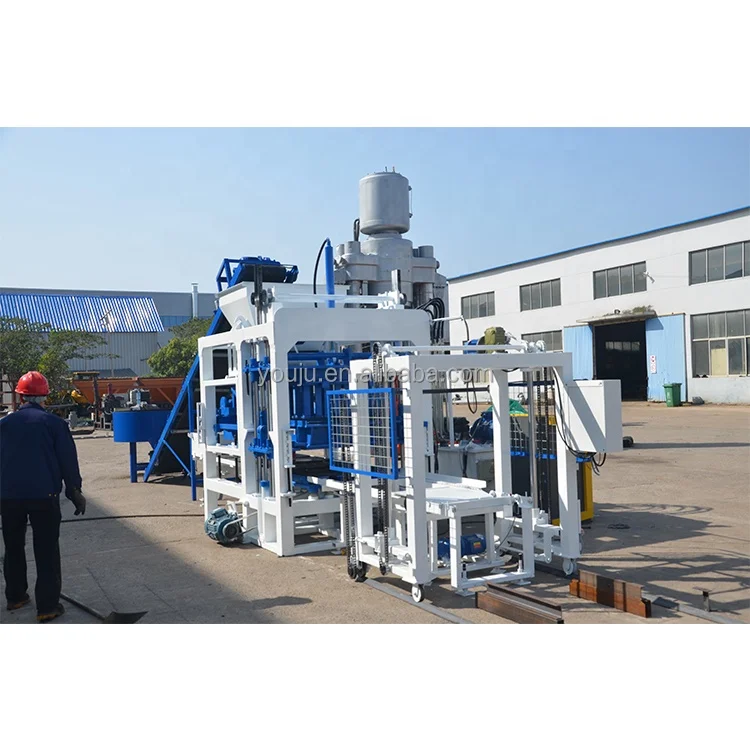


Description
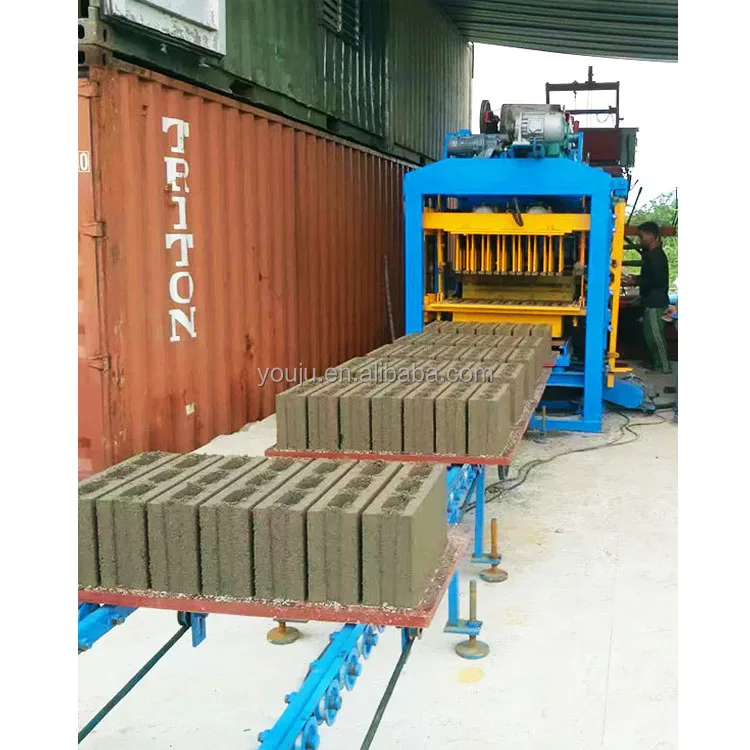
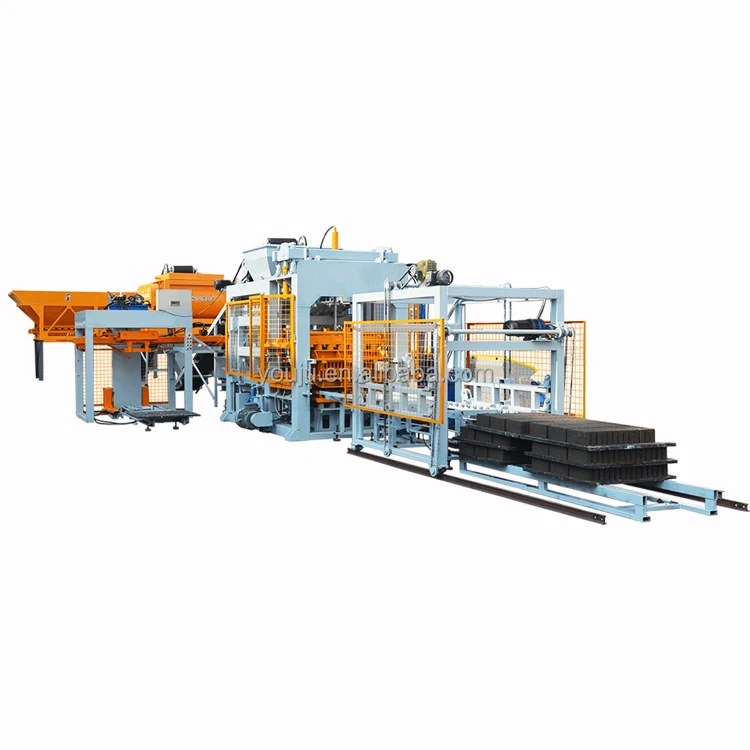
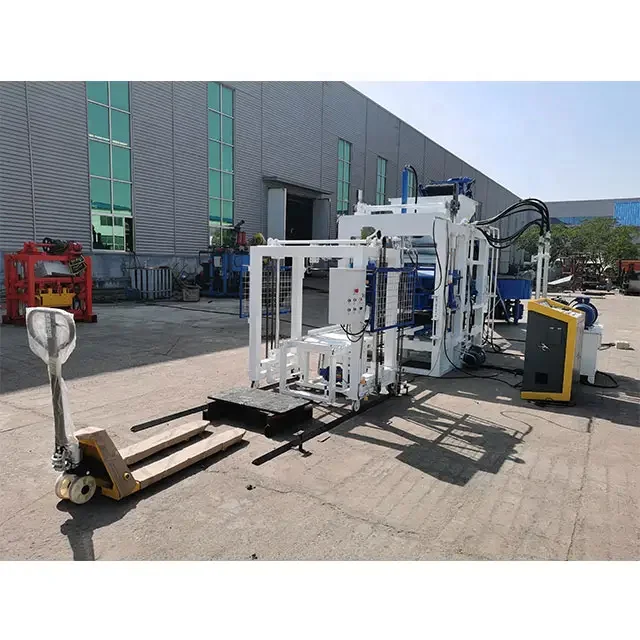
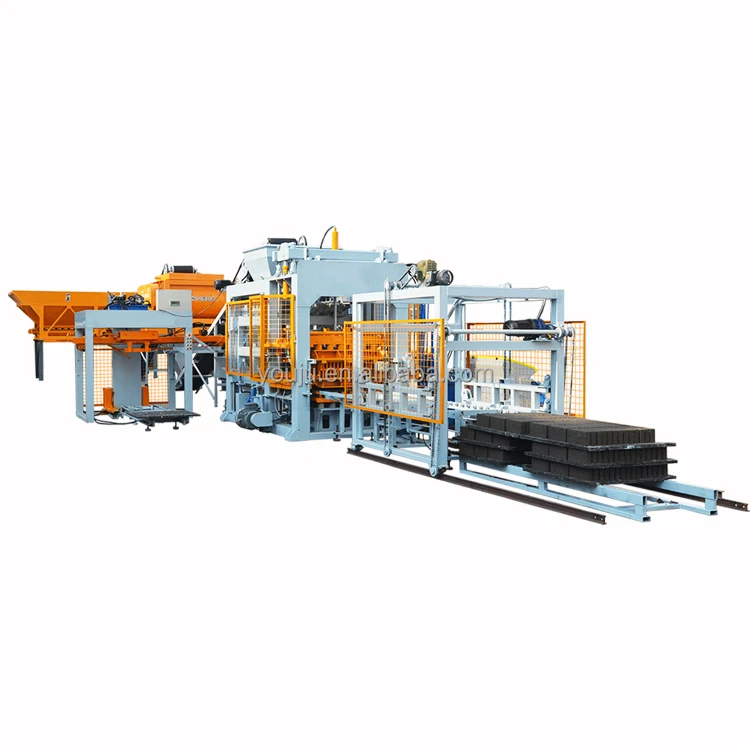
Configured as a matched system — The QT4-18 automatic concrete block making machine PLC controlled pairs the press with its mixer, conveyor and pallet handling so cycle times stay synchronized across every station, rather than leaving the operator to manage mismatched speeds.
Technical Specifications
| Parameter | Value |
|---|---|
| Model | QT4-18 |
| Product Type | Automatic Concrete Block Making Machine |
| Overall Dimensions (L×W×H) | 2500 × 1750 × 2200 mm |
| Rated Pressure | 16 MPa |
| Vibration Form | Platform Vibration |
| Pallet Size | 950 × 550 mm |
| Molding Cycle | 18–25 s (basis to be confirmed — depends on block format, material and thickness) |
| Overall Power | 27.5 kW |
| Control System | PLC with frequency converter |
| Electrical Components | Schneider |
| Mold Lifting Mechanism | Double-sided sync gears |
| Material Feeding System | Hopper, feeding box, feeding platform, conveyor |
| Block Receiver | Chassis with transport system, idlers, motor, reducer, triangular belt |
| Automation Level | PLC-controlled, operable by one person at the press |
| Supporting Equipment | JQ500 concrete mixer, 8 m belt conveyor (6 m optional), stacker, block gripper, trolley |
| Voltage & Frequency | Configurable — to be confirmed before production |
| Included Mould | One hollow mould supplied; additional formats available on request |
Application Suitability
| Application | Material or Output |
|---|---|
| Hollow block production | Cement, crushed stone, sand and fly ash blends |
| Solid block production | Dense aggregate mixes for load-bearing walls |
| Paving block production | Fine-aggregate face mix with coarse base layer (requires dedicated mould) |
| On-site contractor block making | Local quarry dust and gravel available at the construction site |
| Small to medium block plants | Daily output scaled to one-shift or two-shift operation |
Why the PLC Screen Language Matters More Than the Price Tag
A touch screen in the wrong language turns an automatic press into a silent one.
I once shipped a hollow block line to West Africa without double-checking the HMI display language. The operator arrived on the first morning and stared at a screen full of characters he could not read. That press sat idle for a week until we pushed a firmware patch across two time zones. When buyers evaluate an automatic concrete block making machine PLC controlled, the conversation usually starts with pressure and cycle time. The language on the operator interface rarely comes up until the container has already left the port [NEED_CITE: HMI language confirmation as part of pre-shipment checklist for exported industrial machinery].
How the QT4-18 Keeps the Press and the Line in Step
The frequency converter sitting alongside the PLC lets the QT4-18 ramp vibration force up or down within each molding cycle, so the machine can adapt to the specific block format sitting in the mould. Without that variable-speed control, the vibration stays at a fixed intensity and the operator has to guess whether the mix needs more or less energy to compact. The PLC stores the cycle profile for each mould format, meaning the same operator can switch from hollow blocks to pavers without rewriting timing parameters by hand.
What Single-Operator Control Actually Removes From the Workflow
Running the press with one person works because the PLC sequences material feeding, vibration, pressing and demoulding in a fixed order. The operator loads the pallet and clears the finished block — everything in between follows the stored program. In my experience on semi-automatic lines across South Asia, the biggest source of inconsistent block strength is not the mix design but the operator cutting the vibration short to chase throughput. The QT4-18 locks the vibration duration once the PLC starts the cycle, so batch-to-batch density stays repeatable regardless of how busy the shift gets [NEED_CITE: causes of density variation in concrete block production lines].
Reading the Specs That Shape Daily Output
The 16 MPa rated pressure and platform vibration together determine how tightly the aggregate particles pack inside the mould cavity. Higher pressure alone does not guarantee a stronger block — the vibration must fluidize the mix first so the pressure can squeeze air voids out. The 950 × 550 mm pallet size defines the mould footprint, which in turn sets how many blocks each cycle produces; a pallet that is too small for the curing racks already on site forces the buyer into a costly forklift and rack change. Double-sided sync gears on the mould lifting mechanism keep the mould box level during demoulding, reducing edge chipping on green blocks that have not yet gained early strength.
The Cost of Skipping the Configuration Conversation
Buyers who confirm the press model but leave voltage, frequency and PLC language as defaults often discover the mismatch during commissioning. A motor wound for 380 V / 50 Hz connected to a 440 V / 60 Hz grid will overheat within the first shift, and the PLC may refuse to boot if the incoming frequency is outside its acceptable range [NEED_CITE: voltage and frequency compatibility for exported industrial machinery]. On the mechanical side, choosing a pallet material and size without considering the curing area layout means pallets pile up on the floor instead of flowing through the rack system, creating a bottleneck that has nothing to do with press speed.
Why Buyers Source This Line Through Us
Block machinery is our single focus, so the QT4-18 press, its mould, pallet and handling equipment are specified as one matched system rather than assembled from separate suppliers. We set the configuration against the buyer’s actual mix design and local aggregate, not a catalogue default. Mould formats follow what the buyer’s market sells, and custom drawings are accommodated when standard formats do not fit. Automation level is selectable — a buyer can start with the single-operator PLC press and add automatic stacking or cubing later without replacing the main machine. Installation support includes operator training on site so the crew can run the line independently from day one.
Documentation & Verification
- Line layout showing QT4-18 footprint with capacity calculated per block format
- Machine specification sheet covering pressure, vibration and PLC parameters
- Mould drawing and format list for every cavity supplied
- Voltage, frequency and PLC display language confirmation sheet signed before production
- Hydraulic and electrical schematic with Schneider component references
- Factory test record on the buyer’s target block format before dispatch
Installation, Commissioning & Support
- Foundation plan sized to the QT4-18’s 2500 × 1750 mm footprint and dynamic vibration load
- Dedicated power circuit matching the 27.5 kW total draw at the buyer’s confirmed voltage and frequency
- Machine shipped in modular sections with labelled wiring for rapid reconnection on site
- PLC parameters set during commissioning to match the buyer’s first production mould and mix design
- Operator training covering PLC screen navigation, mould change procedure and daily maintenance checkpoints
- Wear parts list with lead times so the first replacement set arrives before the original parts wear out
What to Include With Your Inquiry
Send us the block format you sell most — dimensions, wall thickness and target compressive strength — along with the daily output you need to meet. Let us know the voltage and frequency at your site, the preferred PLC display language and whether you already have pallets, curing racks or a mixer that the QT4-18 line needs to connect to. If you are working to a project deadline, include the latest date the machine can arrive so we can map production and shipping against that window.
Frequently Asked Questions
Q: How is daily output calculated per block format, and what cycle time applies to each mould?
A: The 18–25 second molding cycle is a range that shifts depending on block height, wall thickness and material. We provide a capacity table listing every supplied mould with its specific cycle time and resulting daily output based on a defined shift length, so the number you see matches the format you actually plan to produce.
Q: What PLC display languages are available, and can the interface be set before shipment?
A: The HMI supports multiple languages and is configured during factory testing. We confirm the exact language with the buyer before production begins and include a signed confirmation sheet in the shipping documents so the operator sees the correct interface on day one.
Q: How does this automation level affect labour count on the line?
A: One operator manages the press through the PLC screen, handling pallet loading and clearing finished blocks. Upstream mixing and downstream stacking still require additional crew in this semi-automatic configuration; automatic stacking and cubing modules can be added later to reduce those roles.
Q: How are voltage and frequency confirmed to match the local grid before the machine ships?
A: We request the buyer’s site voltage, phase and frequency during the quotation stage and list those values on the specification sheet. The motor winding and PLC power supply are then built to match, and the factory test runs at the same electrical parameters to verify compatibility before packing.