Description
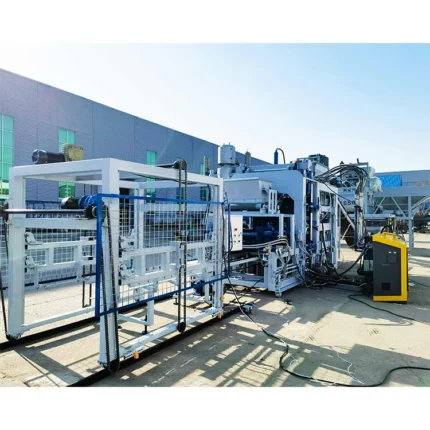
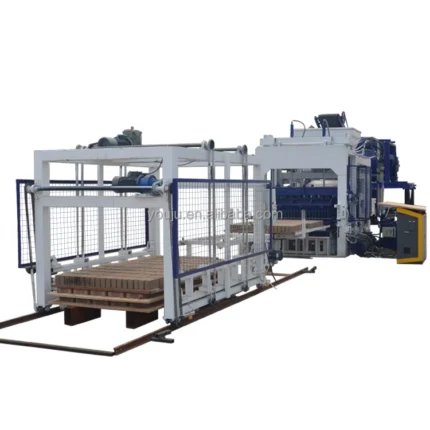
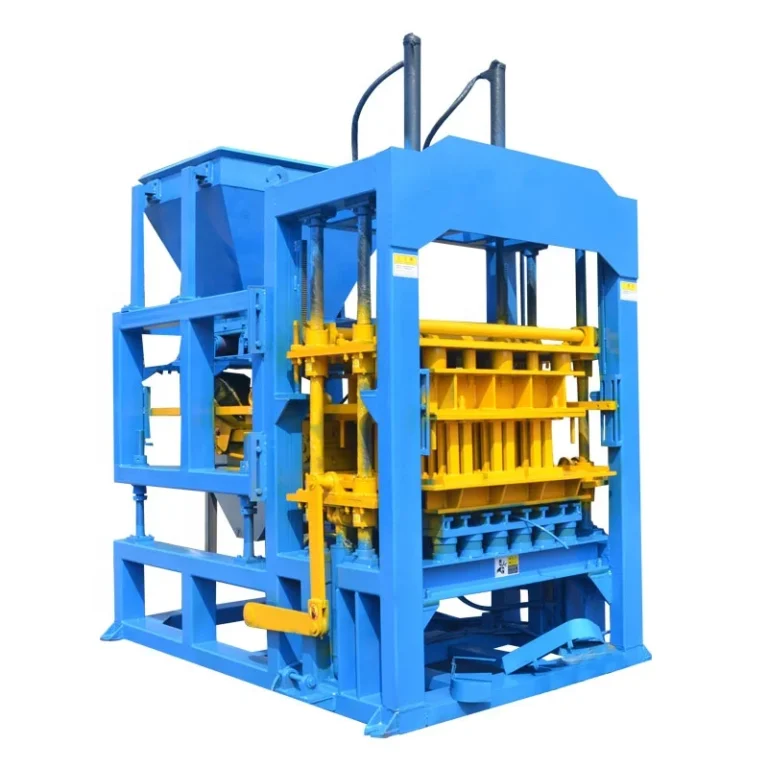
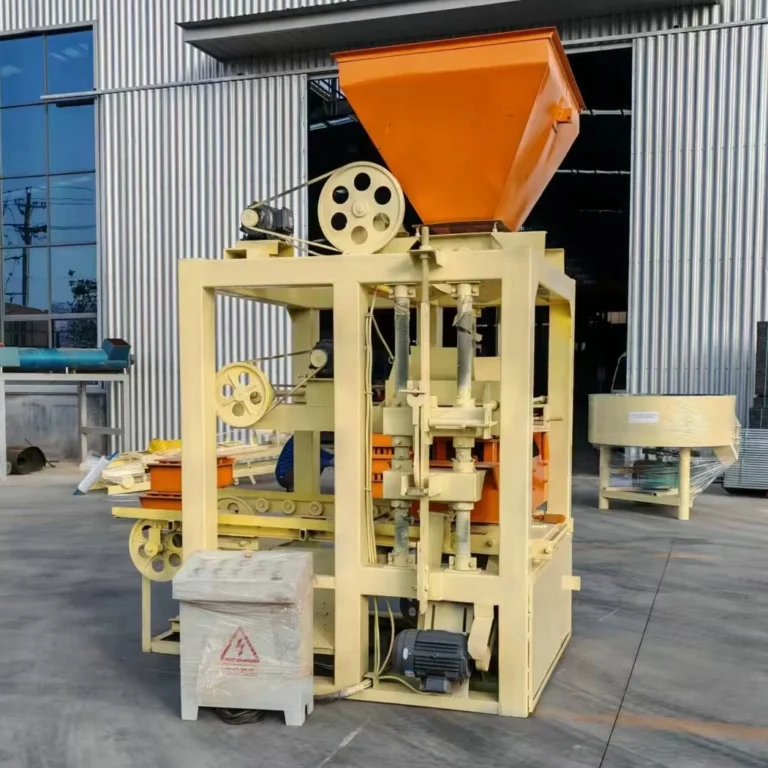
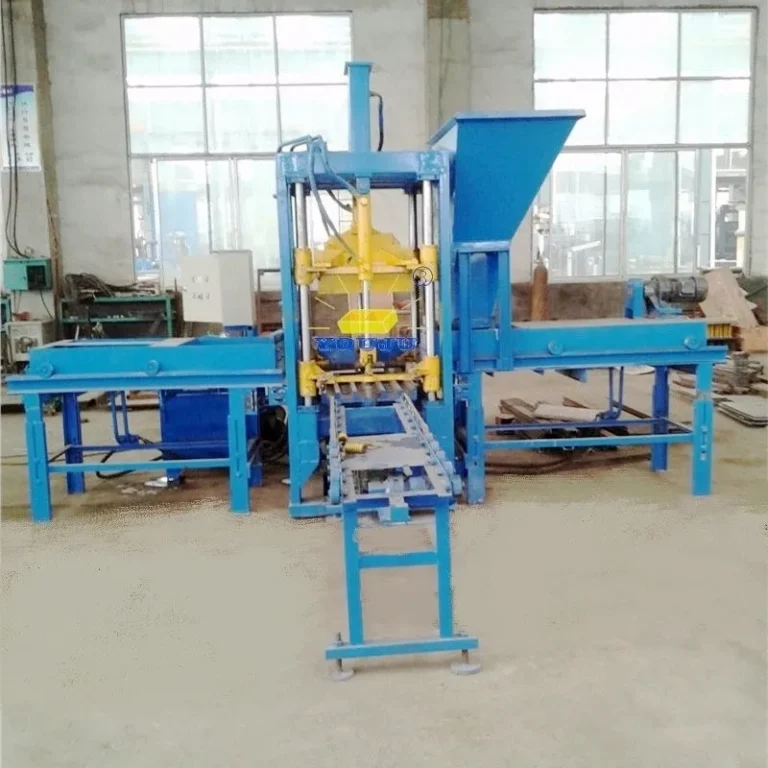
Automation configured to the operator’s language — the QT4-18 automatic QT4-18 block machine PLC controlled system is verified for display language, I/O logic, and voltage match before the crate closes, so commissioning starts on day one.
Technical Specifications
| Parameter | Value |
|---|---|
| Model | QT4-18 |
| Product Type | Automatic Hollow Block Making Machine |
| Vibration Frequency | 0–60 Hz, adjustable |
| Vibration Form | Platform vibration |
| Vibration Force | 45 kN |
| Pallet Size | 900 × 500 mm |
| Molding Cycle | 18–25 s depending on block format |
| Demolding Method | Hydraulic |
| Control System | PLC (brand and language options to be confirmed) |
| Automation Level | Automatic, PLC and engine controlled |
| Mould Format Capability | Hollow blocks, solid bricks, paving bricks, color face bricks, road curb rocks, sod bricks |
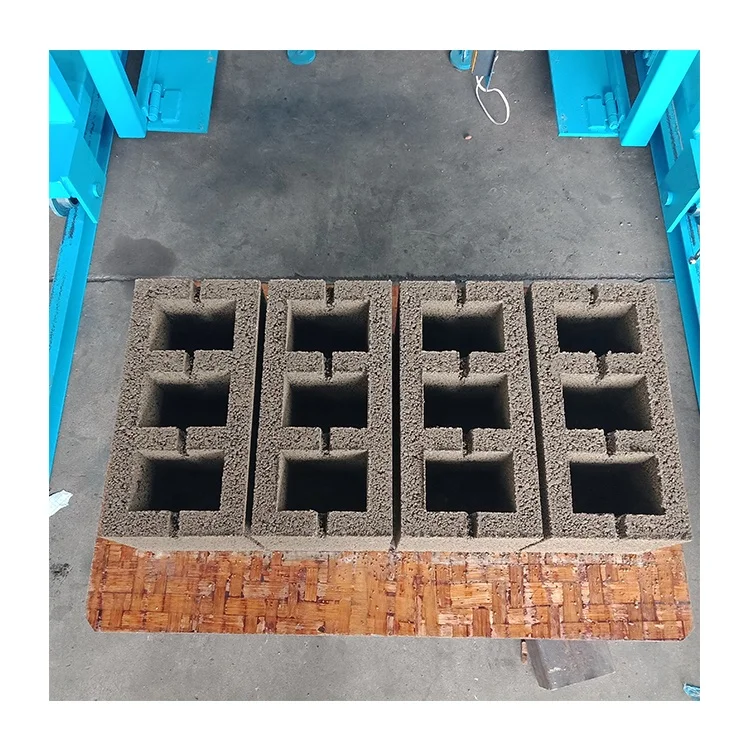
| Output Capacity | 799 pcs/h based on 400×200×200 mm hollow block, 4 pcs/mould, 18 s cycle |
| Output Capacity | 999 pcs/h based on 400×150×200 mm hollow block, 5 pcs/mould, 18 s cycle |
| Output Capacity | 5199 pcs/h based on 240×115×52 mm solid brick, 26 pcs/mould, 18 s cycle |
| Rated Power | (basis not stated in source) |
| Hydraulic Pressure | (basis not stated in source) |
| Voltage & Frequency | (basis not stated in source — configurable, confirm before production) |
| Overall Dimensions | (basis not stated in source) |
| Net Weight | (basis not stated in source) |
| Warranty | 1 year for whole machine, excluding spare parts |
Application Suitability
| Application | Material or Output |
|---|---|
| Hollow block production for building walls | Crushed stone, sand, cement, fly ash aggregates |
| Solid brick production for masonry | Fine aggregate and cement blends |
| Paving block and road curb stone | High-density concrete mixes with coarse aggregate |
| Color face brick and environmental brick | Pigmented concrete layers with base mix backing |
| Sod brick and hydraulic block | Porous concrete mixes for landscaping and drainage |
What "Automatic" Means When the PLC Speaks the Wrong Language
Automation only works when the machine powers up and speaks the operator’s tongue on day one.
I once stood in a Nairobi workshop watching a block machine sit silent for three weeks because nobody confirmed 415 V / 50 Hz before shipping. The PLC booted in a language the line operator could not read, the motor contactor tripped on phase imbalance, and the plant owner burned through an entire project buffer waiting for a replacement drive. When a buyer specifies an automatic QT4-18 block machine PLC controlled system, the conversation must cover voltage, frequency, display language, and every I/O point before the crate closes — otherwise "automatic" just means "unattended" [NEED_CITE: voltage and frequency standards by export market].
Control Logic That Removes the Operator from the Cycle
The automatic QT4-18 block machine PLC controlled architecture sequences the entire molding procedure: raw material feed, vibration onset and duration, hydraulic press engagement, and demolding release. Each step is interlocked so a fault at any station halts the cycle safely instead of producing off-spec blocks that reach the curing rack. The adjustable 0–60 Hz vibration frequency lets the plant manager dial in compaction force matched to the local aggregate rather than running a fixed catalogue default.
Where Consistency Comes from in Batch-to-Batch Production
Semi-automatic operation leaves cycle timing in the operator’s hands, which introduces variation in vibration duration and hydraulic hold time across a shift. The QT4-18 locks these parameters into the PLC program, so the ten-thousandth block of the day receives the same compaction profile as the first. For plants supplying structural hollow blocks where compressive strength must meet a declared grade, this repeatability is what separates a passed inspection from a rejected load [NEED_CITE: concrete block compressive strength testing standards].
Reading the Specs That Actually Shape Your Output
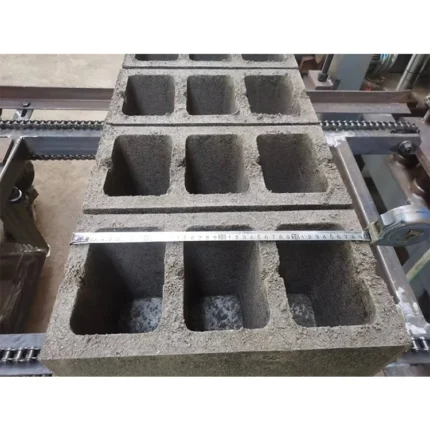
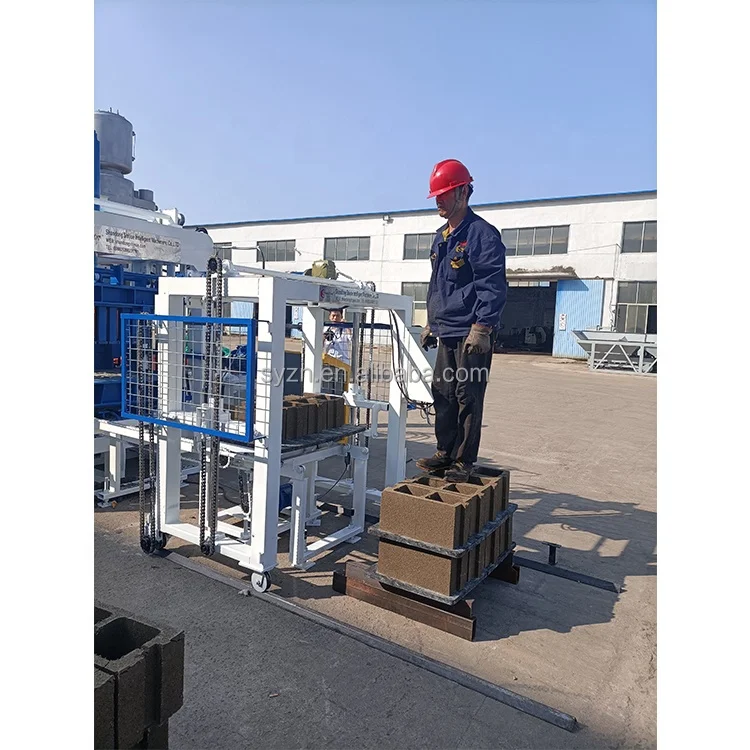
Platform vibration at 45 kN distributed across a 900 × 500 mm pallet means the compaction energy reaches the full mould cavity area rather than concentrating at the center, producing blocks with uniform density edge to edge. The hydraulic demolding system controls the release stroke speed, which reduces corner spalling on hollow blocks and edge chipping on paving formats — two defect types that typically force manual culling at the stacking station. Molding cycle figures of 18–25 seconds vary by format because deeper hollow block cavities require longer vibration dwell to consolidate the mix fully, while thin solid brick cavities fill and compact faster. Pallet size directly dictates your curing rack geometry and forklift tine spacing, so confirming the 900 × 500 mm dimension against your existing handling equipment avoids a costly mismatch after arrival.
The Hidden Cost of Skipping the Configuration Conversation
A block machine configured for a mix the buyer cannot source locally forces a material change that delays production and inflates per-block cost. When vibration force and hydraulic pressure are not matched to the buyer’s actual aggregate gradation, block strength becomes inconsistent across batches, triggering re-testing and load rejection at the project site [NEED_CITE: aggregate gradation effect on concrete block strength]. Mould change procedures that take most of a shift cancel out the format flexibility the buyer paid for, leaving the plant running a single product when the market demands variety.
Why the Configuration Conversation Happens Here
Block machinery as a single focus means the machine, mould, pallet, and handling equipment are specified as one matched system rather than assembled from separate suppliers. Configuration is set against the buyer’s actual mix design and local aggregate, not a catalogue default, so the vibration frequency and hydraulic pressure arrive tuned to your material. Mould design covers the formats the buyer’s market actually sells, including custom drawings when standard cavity layouts do not match local block dimensions. Automation level is selectable, allowing a plant to start at the current QT4-18 automation tier and plan an upgrade path as volume grows. Installation support includes operator training so the team running the PLC on day one understands fault codes, cycle adjustment, and daily maintenance checkpoints.
Documentation & Verification
- Line layout and capacity calculation stating the block format and cycle time assumed for each output figure
- Machine specification sheet with confirmed PLC brand, display language, and I/O map
- Mould drawing and format list showing cavity count per block dimension
- Voltage and control language confirmation signed off before production begins
- Factory test record on your target block format before dispatch
- Hydraulic and electrical schematic for on-site troubleshooting
Installation, Commissioning & Support
- Foundation plan matched to the QT4-18 vibration force and overall footprint
- Dedicated power circuit sized to the confirmed rated power and voltage specification
- PLC program verified on-site for language, cycle timing, and safety interlock logic
- Mould change procedure demonstrated with your first two format swaps
- Wear parts list and reorder schedule for hydraulic seals and vibration mounts
- Daily maintenance checklist covering platform bearings, hydraulic fluid level, and pallet track alignment
Before You Send the Inquiry
Confirm your target block formats and the daily output required per format so the capacity calculation reflects your actual product mix. Provide your local aggregate type, cement grade, and available voltage and frequency so the machine configuration matches site conditions from the first hour of production. Specify the PLC display language your operators read and whether existing pallet handling or curing rack equipment must interface with the 900 × 500 mm pallet dimension.
Frequently Asked Questions
Q: How is the output capacity of the QT4-18 verified, and which block format is each figure based on?
A: Every capacity figure is tied to a specific block dimension, mould cavity count, and cycle time. For example, 799 pieces per hour is based on a 400×200×200 mm hollow block with 4 cavities and an 18-second cycle. Request the capacity calculation document that states these assumptions so you can verify against your target format.
Q: What PLC brand and control language options are available for the QT4-18?
A: PLC brand and display language are confirmed during the configuration stage before production begins. The buyer specifies the operator’s preferred language, and the I/O map and fault code labels are set accordingly. This confirmation is documented and signed off to avoid commissioning delays.
Q: How does the QT4-18 automation compare to semi-automatic operation?
A: The QT4-18 automates the full molding sequence from feed through demolding, removing cycle timing variation from the operator. Semi-automatic machines require manual pallet handling and cycle initiation. The automation level is selectable, so a plant can plan an upgrade path as production volume and labor conditions change.
Q: What voltage and frequency configurations does the QT4-18 support?
A: Voltage and frequency are configurable and must be confirmed before production to match the target site’s power supply. This includes verifying phase configuration, motor ratings, and control transformer sizing. The confirmation is documented to prevent the commissioning delays that arise from mismatched electrical specifications.
Q: Which mould formats are available and what is the changeover procedure?
A: Available formats include hollow blocks, solid bricks, paving bricks, color face bricks, road curb rocks, and sod bricks. Custom mould designs can be produced to buyer drawings. Mould change time depends on the specific format and clamping system; confirm the procedure and expected duration for your target formats during the configuration stage.