

Description
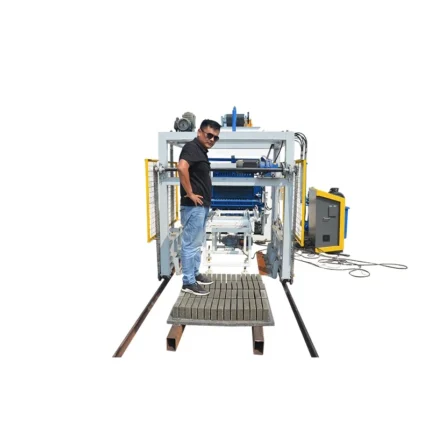
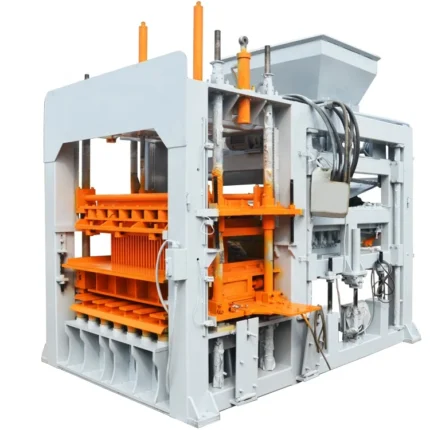
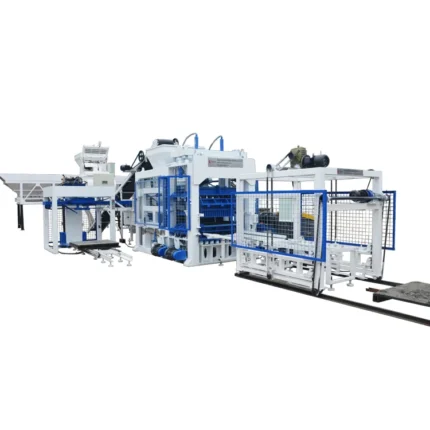
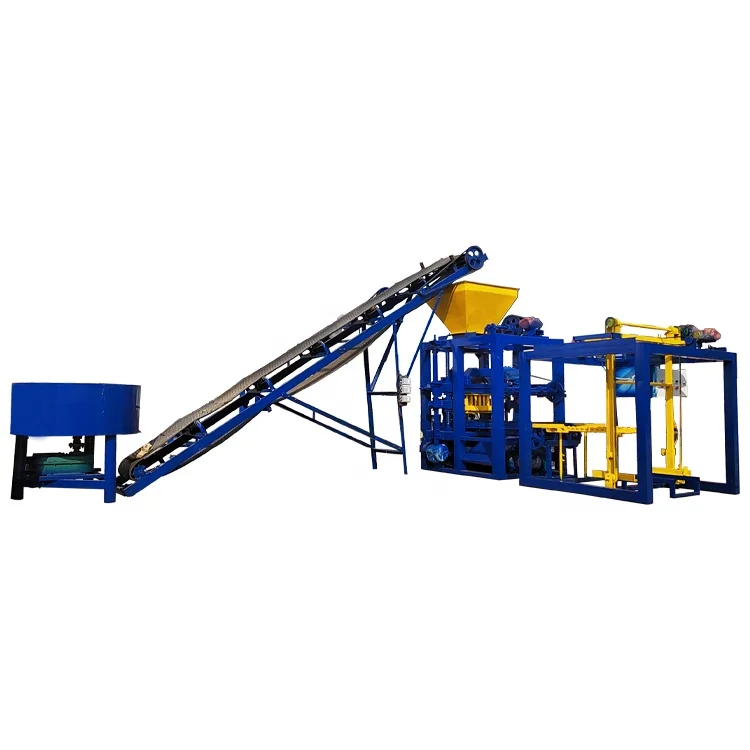
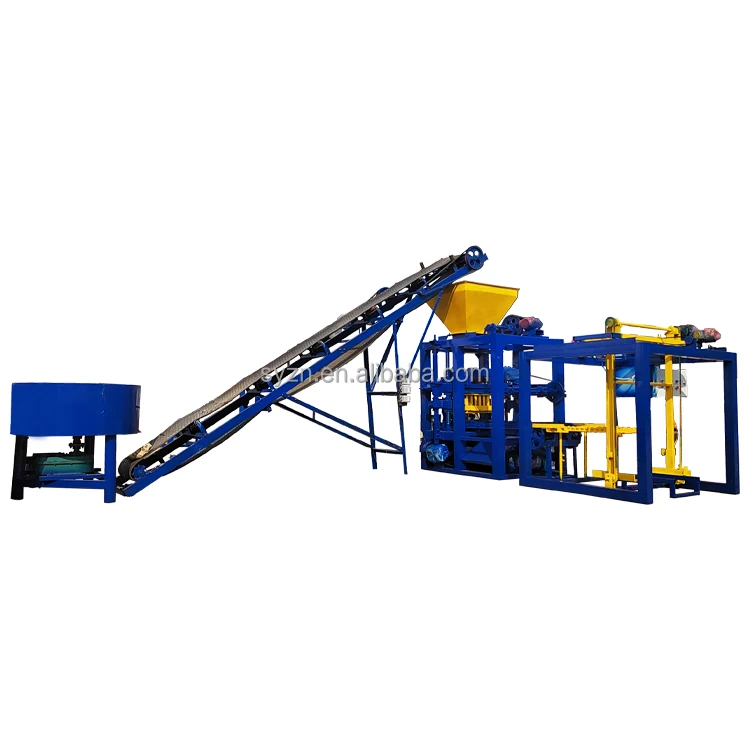
Matched System Engineering — The QTJ4-26 is specified as a unified block production setup where the press, mould, pallet and mixer are cross-checked against your target format before build, so vibration force and cycle timing align with actual block geometry rather than a generic default.
Technical Specifications
| Parameter | Value |
|---|---|
| Model | QTJ4-26 |
| Product Type | Semi-Automatic Concrete Block Making Machine |
| Overall Dimensions (L×W×H) | 2060×1730×2580 mm |
| Net Weight | 1800 kg |
| Rated Power | 14.25 kW |
| Vibration Frequency | 4200 r/min |
| Exciting Force | 35.5 kN |
| Molding Cycle Time | 26 s (basis not stated in source — confirm block format / material / thickness) |
| Pallet Size | 850×450×20 mm |
| Mixer Model | JQ350 |
| Guide System | Four guide pillars |
| Automation Level | Semi-automatic with manual pallet handling |
| Stacking Method | Manual |
| Raw Materials | Crushed stone, sand, cement, dust, fly ash |
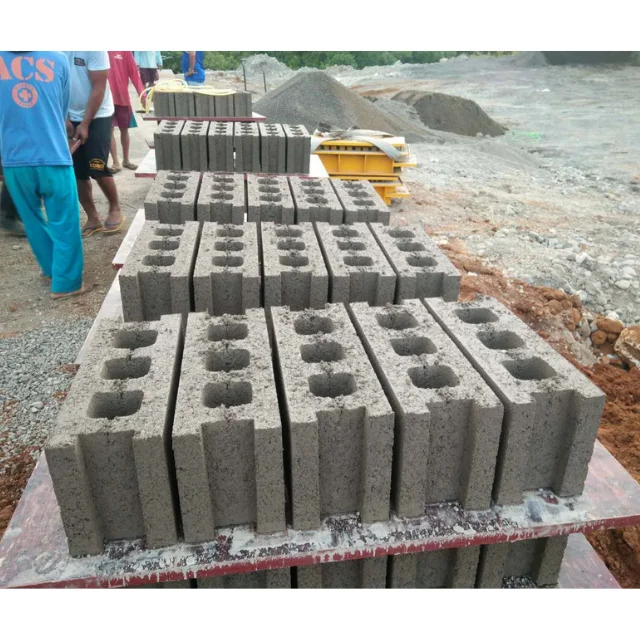
| Mould Formats | Hollow block (390×190×190 mm, 400×150×200 mm), Solid brick (240×115×53 mm) |
| Output Capacity | 480 pcs/h based on 390×190×190 mm hollow block, 4 pcs/mould |
| Output Capacity | 600 pcs/h based on 400×150×200 mm hollow block, 5 pcs/mould |
| Output Capacity | 2100 pcs/h based on 240×115×53 mm solid brick, 18 pcs/mould |
| Daily Output (8 hr) | 3800 pcs based on 390×190×190 mm hollow block |
| Daily Output (8 hr) | 4800 pcs based on 400×150×200 mm hollow block |
| Daily Output (8 hr) | 17000 pcs based on 240×115×53 mm solid brick |
Application Suitability
| Application | Material or Output |
|---|---|
| Small to medium block production plants | Hollow block and solid brick from crushed stone, sand and cement |
| On-site block production for construction contractors | Hollow block from locally sourced aggregate and fly ash blends |
| Entrepreneurs setting up a first block plant | Semi-automatic hollow block and solid brick production with manual stacking |
| Concrete product manufacturers adding formats | Solid brick and hollow block on shared 850×450 mm pallet platform |
What "Cycle Time" Actually Means for Your Output
A 26-second molding cycle only matters if you know which block format and mix it was measured on.
When I first started in the assembly workshop, I watched machines leave the factory with a single cycle time printed on the nameplate. Buyers would call weeks later confused that their daily output did not match the brochure figure. The PLC controlled semi-automatic block machine environment introduces variables — mould cavity count, material flow, vibration settling — that shift cycle timing across formats. [NEED_CITE: block cycle time variation by format and material density] The QTJ4-26 runs different moulds on the same pallet footprint, and each format carries its own realistic output range tied to specific block dimensions and cavity counts.
Control Logic That Follows the Operator
The QTJ4-26 operates in a semi-automatic mode where the press cycle — vibration, pressing, mould release — is controlled while pallet feeding and stacking remain manual. This division keeps the initial investment contained for a first block plant while preserving an upgrade path. The automatic QTJ4-26 block machine configuration can later integrate automatic pallet feeding and stacking modules as production volume justifies additional automation stations. The operator loads the pallet, triggers the cycle, and removes the finished block — a rhythm that a two-person team can sustain across a full shift.
Vibration and Pressure as a Paired System
The 35.5 kN exciting force is delivered through dual vibrating motors mounted under the mould table, producing direct vertical vibration at 4200 r/min. This force works together with upper mould pressing to compact the mix uniformly across all cavities. The four guide pillars keep the upper mould aligned during descent, so block geometry stays consistent whether you are running 4-cavity hollow blocks or 18-cavity solid bricks. Mismatched vibration and pressure settings are a common source of weak blocks, particularly when the buyer switches to a local aggregate that the factory default was not tuned for. [NEED_CITE: vibration force and hydraulic pressure matching to aggregate mix design]
Reading the Specs That Matter on the Floor
The 14.25 kW rated power covers the vibration motors, hydraulic pump and mixer drive together, so your electrical supply must accommodate this total draw plus starting surge. The 850×450×20 mm pallet size determines how many blocks cure per rack and what forklift capacity you need for handling — specifying pallet size without checking your existing curing area leads to bottlenecks downstream. The JQ350 mixer feeds the press at a rate matched to the 26-second cycle window, preventing the press from waiting idle between batches. Four guide pillars reduce uneven wear on mould surfaces compared to two-pillar or cantilever designs, extending the interval between mould refurbishments.
When the Wrong Configuration Costs More Than the Machine
A block press configured without confirming the buyer’s voltage and frequency can sit idle on arrival while transformers are sourced locally. I remember a shipment to a West African site where the control panel labels were never switched from Chinese — the operators could not read the cycle parameters and commissioning stalled for days. [NEED_CITE: electrical standards and control panel language requirements by export destination] Choosing a pallet material without considering the local curing climate leads to warping or moisture damage that shortens pallet life and throws block dimensions off tolerance. These are not warranty issues — they are specification gaps that surface only after the machine is bolted to the floor.
Why Source This Machine Through a Single-System Supplier
Block machinery is our single focus, so the QTJ4-26 press, its moulds, pallets and the JQ350 mixer are specified as one matched set rather than assembled from separate vendors. Configuration is set against your actual mix design and target block format, not pulled from a catalogue default. Mould design covers the hollow block and solid brick formats your market demands, and custom mould drawings are available for non-standard sizes. Voltage, frequency and control language are confirmed before production starts — I personally verify these on every unit before it leaves the workshop. Installation support includes operator training so your team can run the press and handle mould changes from day one.
Documentation & Verification
- Line layout with capacity calculation stated per block format and mould cavity count
- Machine specification sheet with confirmed voltage, frequency and control language
- Mould drawing and format list matching your local market block dimensions
- Factory test record with cycle time measured per format before dispatch
- Hydraulic and electrical schematic for your maintenance team
- Operation and maintenance manual with wear parts and mould replacement list
Installation, Commissioning & Support
- Foundation pad must support 1800 kg static load plus dynamic vibration forces from the 35.5 kN system
- Electrical supply requires dedicated circuit rated for 14.25 kW total draw with appropriate starting current allowance
- Machine ships dismantled for container loading with reassembly and alignment on four guide pillars at site
- First-run commissioning includes cycle timing verification on each mould format with your local aggregate
- Operator training covers press cycle control, pallet handling rhythm and mould change procedure
- Wear parts list provided with recommended replacement intervals for vibration motor mounts and guide bushings
What We Need to Configure Your Line
To specify the QTJ4-26 correctly for your project, we need your target block format and dimensions, expected daily output, and the local aggregate and cement types available at your site. Share your workshop floor area and ceiling height so we can plan the press footprint alongside pallet curing racks. Confirm your local voltage, frequency and preferred control panel language so electrical and PLC settings are locked before production begins.
Frequently Asked Questions
Q: How is the 26-second cycle time measured, and does it vary by block format?
A: The cycle time includes vibration, pressing and mould release phases. It varies depending on block format, cavity count and material density. The quoted figure requires confirmation against your specific mould and mix design — we measure and document actual cycle time per format during the factory test before shipment.
Q: Can the control system be upgraded from semi-automatic to fully automatic stacking later?
A: The QTJ4-26 semi-automatic platform is designed with an upgrade path. Automatic pallet feeding, stacking and cubing modules can be integrated as your production volume grows. The base press and mould system remain unchanged, so the upgrade adds handling automation without replacing the core machine.
Q: What voltage, frequency and PLC language options are available?
A: Voltage and frequency are configured to match your local electrical grid standards before production. Control panel labels and PLC display language are confirmed during the order process. I personally verify these settings on each unit to prevent commissioning delays after the machine arrives at your site.
Q: How is vibration force matched to local aggregate for consistent block strength?
A: The 35.5 kN exciting force and upper mould pressure are adjusted based on your specific aggregate type, particle size and cement ratio. We run sample blocks with your mix data during factory testing to confirm density and strength. This matching step prevents the weak-block problem caused by generic factory defaults.
Q: What mould change system is included, and how long does a format switch take?
A: The QTJ4-26 uses a four-pillar guide system with mould mounting designed for format changes between hollow block and solid brick production. Change time depends on operator familiarity and whether lifting tools are available on site. We include the procedure in operator training and document it in the maintenance manual.